
In a pocket of the boreal forest of Quebec’s Abitibi-Témiscamingue region already scarred by past mining, a proposed multi-pit gold mine is sparking concern among members of the nearby Anishinaabe First Nation.
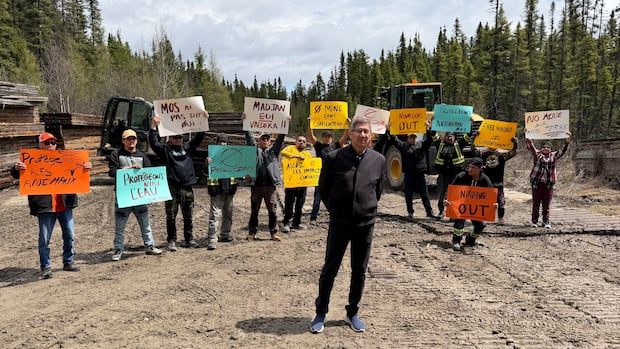
Last week, community members gathered at the site of the proposed project on ancestral land, located only eight kilometres from Lac-Simon, to deliver a notice demanding that workers cease exploratory work.
Some held signs reading: “Novador out,” or “We didn’t say yes,” while others carried signs raising environmental concerns.
In a phone interview, Lac-Simon Anishinaabe Nation Chief Lucien Wabanonik said his community has concerns about the prospect of new open-pit mines being carved into the land.
“There was a lack of good consultation, so we didn’t give them any consent in regards to their project,” said Wabanonik.
“The community itself decided not to accept any project on that scale, meaning an open-pit project.”
The Novador project was developed by Probe Gold, which was acquired by Mexican mining giant Fresnillo in January.
The company describes Novador as “one of Canada’s top undeveloped multimillion ounces projects,” with an average annual gold production of 255,000 ounces over a 12.6-year mine life.
“The opening of a new gold mine in the Val-d’Or sector would contribute to the socio-economic sustainability of the region,” creating a total of 550 jobs, according to a 2024 project summary.
It would also require an ore processing plant, new access roads and collection ponds in a 200-square kilometre patch of forest that already bears the environmental footprint of four old mines.
Some in the community of Lac-Simon fear that the new project would threaten the local watershed, as well as at-risk species like the woodland caribou and their traditional use of the territory, according to the project summary.
Consultation process is flawed, group says
Advocates say the dispute reflects a larger problem with the regulations surrounding mining in Quebec.
The province made legislative changes in 2024 that require companies to obtain authorization from the Ministry of Natural Resources and Forests for impact-causing exploration work — which is carried out with machinery using hydraulic power or explosives.
In the Novador case, the company was given authorization by the provincial government to drill some 260 new holes, according to Wabanonik.
To obtain authorization, the company needs to consult with affected communities. But Rodrigue Turgeon, a lawyer with the environmental group Mining Watch Canada, says that process is flawed.
“We need to stop saying it’s a consultation. It’s only a rubber-stamping process,” Turgeon said in an interview.
When it comes to consultations, Turgeon points out that all that is required of companies is to send a document to the executive director of the municipality or the band council for First Nations, outlining the nature of the work.
The community has a limited amount of time to review the documents and submit their questions or concerns.
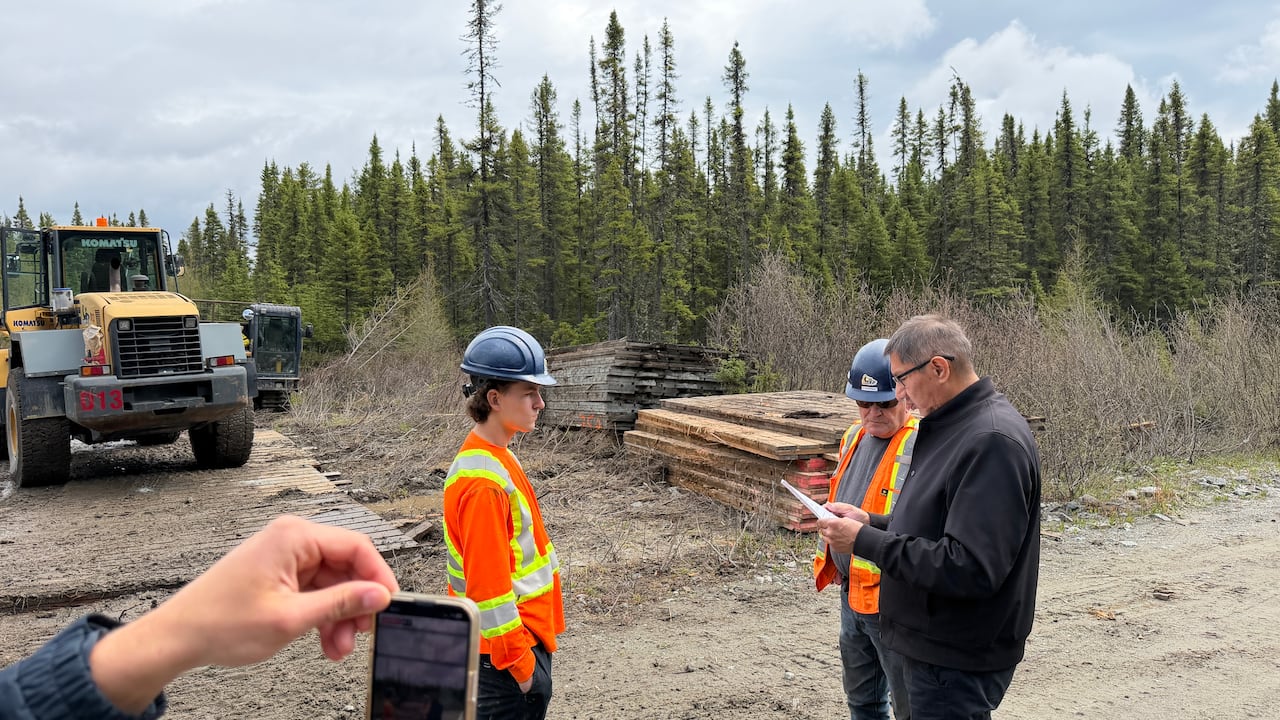 Lac-Simon Anishinaabe Nation Chief Lucien Wabanonik with workers at the site of the proposed Novador mining project. (Jean-Michel Cotnoir/Radio-Canada)
The company must respond to the queries but, according to Turgeon, the project will be granted authorization even if the community opposes it. He said the ministry can impose some conditions governing the work, but that rarely happens.
Turgeon pointed to a recent auditor general’s report critical of the ministry to support his assertions. The review revealed a major gap in how the law is actually being applied.
In a third of the cases examined (10 out of 30), the ministry ignored community concerns regarding deforestation, road restoration and environmental protection, choosing not to include them as conditions in the permits.
“The ministry does not effectively carry out its responsibilities regarding exploration activities, particularly with respect to their oversight and the authorization of work, in a manner that promotes the social acceptability of these activities,” the report reads.
Konstantia Koutouki, a law professor at Université de Montréal, said communities are rightly concerned that once exploration begins, the project becomes more difficult to stop, even if future consultations are planned.
“This creates a broader debate about whether consultation processes provide communities with meaningful influence or mainly allow them to react to decisions that are already moving forward,” Koutouki said in an email.
“So far, history dictates the latter.”
WATCH | Carney backs major graphite mine in Quebec: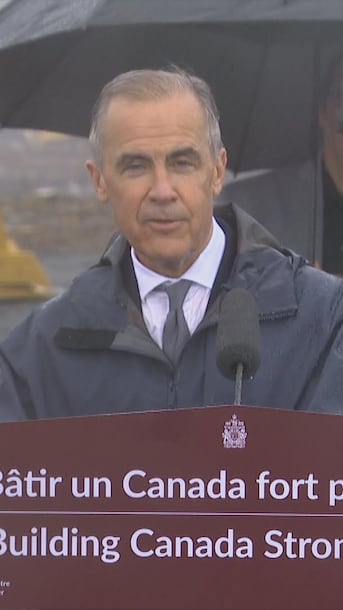
Carney breaks ground on graphite mine in Quebec
Prime Minister Mark Carney broke ground for what is slated to be the largest graphite mine in the G7. Carney spoke during a downpour outside of Nouveau Monde Graphite’s future Matawinie Mine in Quebec.Company open to dialogue
In a statement to CBC News, a spokesperson for Quebec’s Ministry of Natural Resources and Forests confirmed it granted a permit to Fresnillo for exploratory work on May 13, 2026, and that the community was consulted prior to this initial phase.
Spokesperson Simon Baillargeon said that if the project “progresses toward active mining operations, the community will be consulted again” as part of an Environmental Impact Assessment.
Only after that is completed will Quebec “issue a decree on whether or not to authorize the mining project,” Baillargeon said.
Fresnillo declined an interview request. The company said in a statement it was aware of the concerns among members of the Anishinaabe First Nation.
“We are available to discuss the matter with community representatives and reiterate our willingness to meet with them to continue the dialogue,” the company said in a statement.
“Since the start of the Novador project, outreach and information-sharing efforts have been carried out with various local stakeholders, including the Lac-Simon community, which has always been invited to participate in discussions regarding the project.”
The 2024 project proposal document, however, states there is no alternative possibility to an open-pit mine.
Wabanonik said that’s something his community is against, and it is considering taking the case to court.
“We’ve already decided that it’s going to happen if they don’t listen,” he said.