
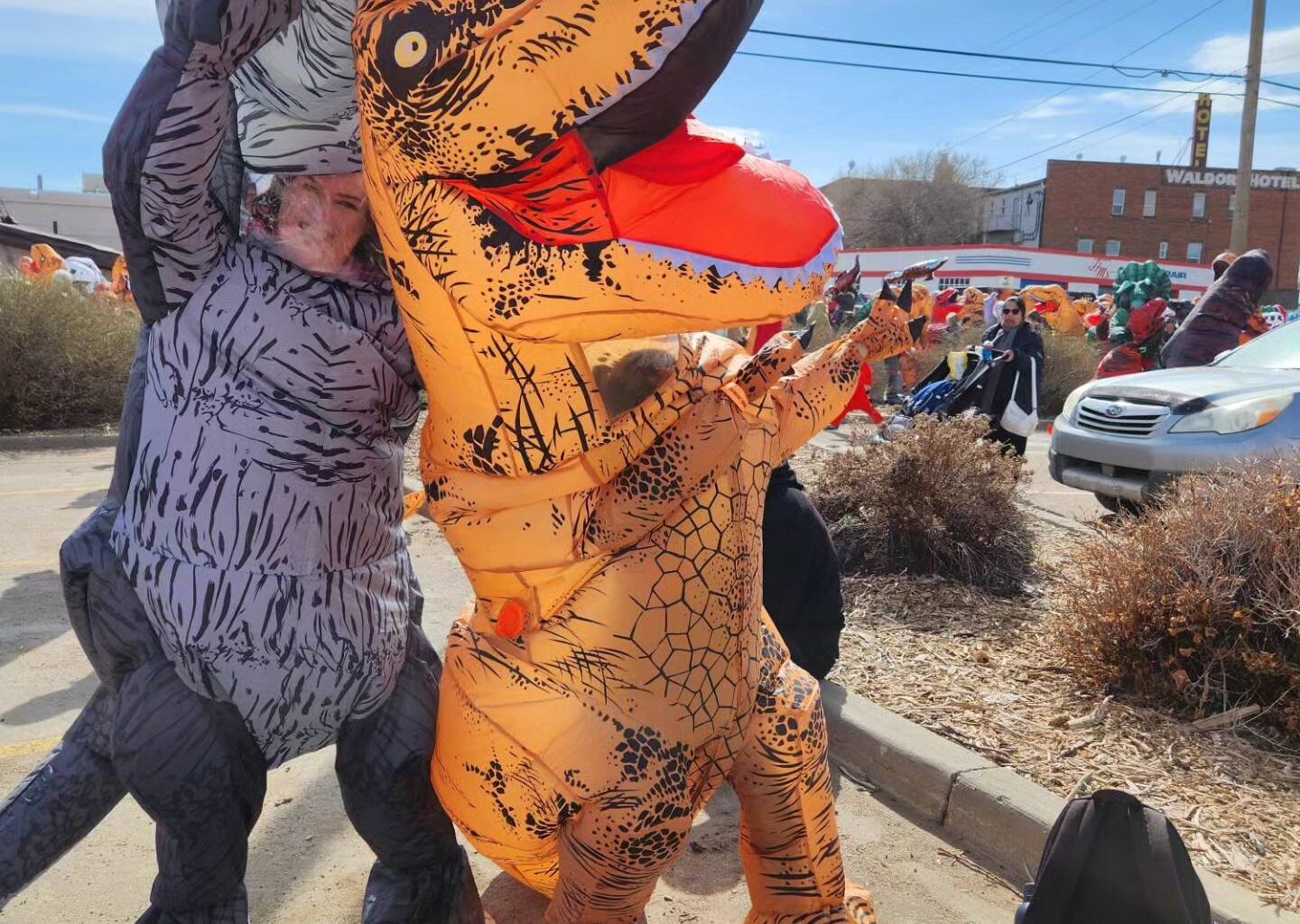
Today is National Dinosaur Day, a chance to celebrate the giant creatures that once ruled the Earth and test just how much prehistoric knowledge you’ve got tucked away in your brain.
A recent poll of more than 1,000 adults found that not everyone is a dinosaur expert. Nine per cent of respondents admitted they couldn’t name a single dinosaur off the top of their head, while only seven per cent said they could name 10 or more.
Of course, most people can probably rattle off the classics like Tyrannosaurus rex, Triceratops, Stegosaurus, and Velociraptor. But did you know some fascinating dinosaur discoveries have been made surprisingly close to Cochrane?
Dinosaur Discoveries Near Cochrane
While Cochrane itself isn’t known for major dinosaur fossil finds, there have been some remarkable discoveries within an hour’s drive of town.
One of Alberta’s most significant paleontological discoveries happened near Ghost Pine Creek, about 60 kilometres east of Cochrane. In 1884, explorer Joseph Burr Tyrrell discovered the first skull of Albertosaurus, a fearsome meat-eating dinosaur that was closely related to Tyrannosaurus rex. The find helped establish Alberta as one of the world’s premier dinosaur destinations.
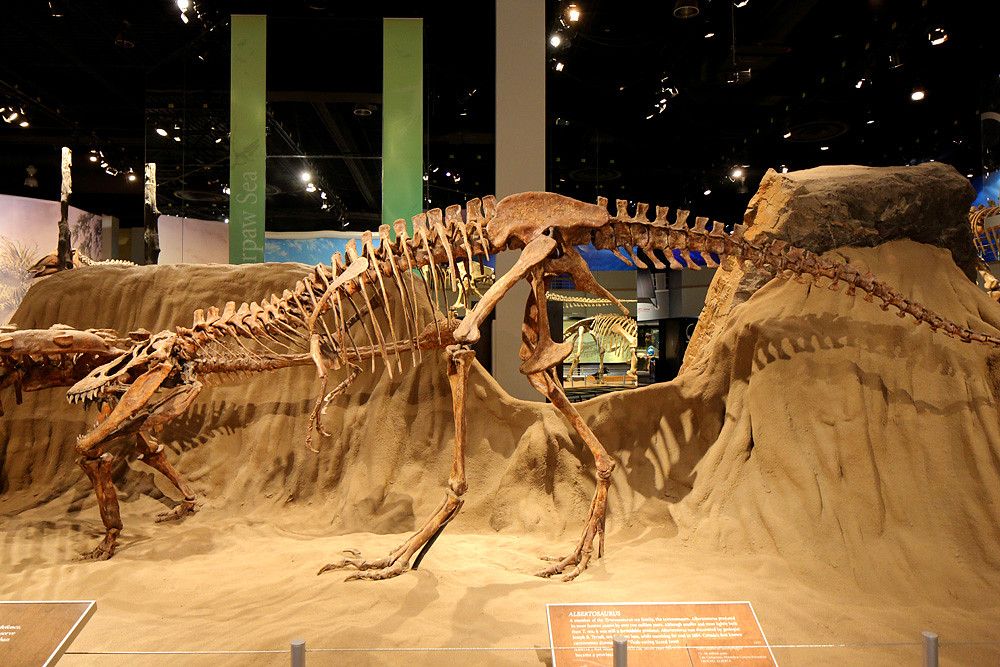 An Albertosaurus skeleton stands on display at the Royal Tyrrell Museum in Drumheller. The first Albertosaurus skull was discovered near Ghost Pine Creek, northeast of Cochrane. CochraneNow/CandiceJohnson
To the west, in Kananaskis Country near Pocaterra Creek, paleontologists uncovered what are believed to be some of the oldest dinosaur skeletal remains ever found in Alberta. The fossils belonged to an armoured dinosaur related to the ankylosaurs and date back roughly 140 million years.
The foothills and mountains west of Cochrane are also packed with ancient fossils, although many predate dinosaurs by hundreds of millions of years. Marine fossils from an ancient ocean can still be found in some of the rock formations throughout the region.
What Did Cochrane Look Like During the Age of Dinosaurs?
If you could travel back about 70 million years, Cochrane would look very different from the community we know today. Instead of foothills, ranches, and mountain views, the area would have been a lush coastal plain near the edge of a vast inland sea that stretched across much of Alberta.
Think warm temperatures, dense vegetation, and dinosaurs roaming a landscape that looked more like modern-day Louisiana than southern Alberta.
So whether you can name one dinosaur or 20, National Dinosaur Day is a good reminder that some of the world’s most incredible prehistoric discoveries happened right here in Alberta — including a few practically in Cochrane’s backyard.
Candice Johnson – The Homestretch