
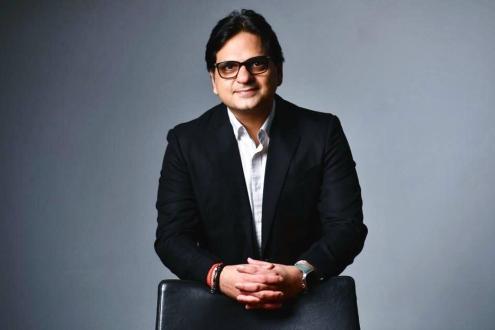
As India’s asset management industry continues to deepen, the expectations placed on investment managers are changing. Investors are no longer focused only on access to products or headline returns. They are looking for differentiated portfolios, style clarity, lower correlation, broader diversification, and managers that can serve increasingly sophisticated needs across mutual funds, PMS, AIFs, international strategies, and alternative assets.
For Akhil Chaturvedi, Executive Director and Chief Business Officer at Motilal Oswal Asset Management, this shift aligns closely with the firm’s long-standing equity identity. Over the past two decades, MOAMC has built its proposition around growth-style investing, focused portfolios, high active share, and a disciplined investment framework centred on Quality, Growth, Longevity, and Price.
Chaturvedi says the opportunity now is not simply to participate in India’s asset management growth story, but to do so with differentiated portfolios, stronger investor engagement, deeper HNI and UHNI propositions, broader distribution, and greater use of technology and AI to support scale.
Key Takeaways
MOAMC’s proposition is anchored in focused growth investing: The firm has built its identity around growth-style investing, high active share, and focused portfolios of under 35 stocks. Chaturvedi says this creates portfolios that are meaningfully differentiated from benchmarks and peer-group funds.
The firm’s investment philosophy rests on four core pillars: MOAMC’s investment framework is built around Quality, Growth, Longevity, and Price. These principles shape the investment universe and play a central role in portfolio construction.
Client expectations are becoming more sophisticated: HNI, UHNI and global Indian clients are increasingly open to experimentation and are seeking diversification across styles, strategies, platforms, geographies and asset classes.
Alternatives and international investing are becoming more important: While mutual fund AUM continues to grow, Chaturvedi sees strong tailwinds in PMS, AIFs, private equity, private credit, real estate, venture capital and outbound international investing.
The next priorities are market share, alternatives and GIFT City-led global access: MOAMC is focused on expanding its mutual fund market share, deepening its HNI and UHNI proposition through PMS and AIFs, and launching outbound-focused international funds through the GIFT City route.
India’s asset management industry is entering a long growth cycle: Supported by wider distribution, investor awareness and a younger, more financially informed workforce, Chaturvedi expects the industry’s investor base to expand meaningfully over the coming years.
Motilal Oswal Asset Management has spent the past two decades building a distinctive equity identity. For Chaturvedi, the firm’s core proposition is clear: it is an equity-led manager built around conviction, selectivity, and a defined investment discipline.
The firm’s portfolios are typically concentrated, with fewer than 35 stocks. Chaturvedi says this reflects a deliberate investment philosophy rather than a product design choice. MOAMC aims to create portfolios that are genuinely differentiated from benchmarks, with high active share and lower overlap versus many peer-group funds.
“Our differentiation stems from our investment style and philosophy,” Chaturvedi says. “We maintain high active share, and that results in portfolios that are genuinely differentiated from the benchmark.”
The firm’s investment framework is built on four pillars: Quality, Growth, Longevity, and Price. These principles define the investable universe and shape the final portfolio.
Quality focuses on the calibre of the business and its underlying fundamentals. Growth reflects the firm’s long-standing preference for companies with the ability to compound earnings and value over time. Longevity addresses the durability of the opportunity, while Price ensures valuation discipline remains part of the process.
This framework is intended to give MOAMC a consistent lens through which to assess companies, build portfolios, and manage risk. For investors, Chaturvedi says the result is a product set that can help diversify portfolios, de-risk returns, and reduce correlation with both the benchmark and many competing strategies.
“Our research helps us ideate earlier and more decisively,” he says. “That is reflected in portfolio construction and in the low overlap across peer-group funds.”
A More Experimental and Diversified Client Base
Chaturvedi says Indian clients have changed significantly. Investors are more informed, more willing to experiment, and more active in seeking new ideas. This is particularly visible among HNIs, UHNIs and global Indians, who are increasingly looking beyond traditional product categories.
The earlier model was often more straightforward. Investors looked for access, returns and recognisable products. Today, Chaturvedi sees a broader conversation emerging around diversification, portfolio construction, style exposure, platform choice, and global access.
“Clients today are far more evolved and willing to experiment,” he says. “They are actively seeking new ideas and platforms that offer meaningful diversification.”
This demand is playing out across multiple dimensions. Mutual fund AUM continues to grow, but clients are also showing greater interest in alternate assets, including private equity, private credit, real estate and venture capital.
International investing is another important theme. Chaturvedi says demand for non-Indian assets remains robust, with clients increasingly looking for access to global geographies and diversified offshore opportunities.
For MOAMC, this broadening of demand reinforces the importance of clear investment identity. As clients become more sophisticated, managers need to articulate not just what they offer, but what role each strategy plays in a wider portfolio.
This is where Chaturvedi believes MOAMC’s focused investment style becomes relevant. The firm is not trying to replicate benchmark exposure. It is seeking to offer differentiated strategies that bring distinct portfolio characteristics and can sit alongside other exposures in a client’s broader allocation.
Deepening the HNI and UHNI Proposition
MOAMC’s next phase is shaped by three priorities: strengthening its mutual fund business, expanding its alternate investment platforms, and building international access through GIFT City.
The first priority is to continue growing mutual fund market share. Chaturvedi says the firm wants to attract a broader base of unique investors, including first-time investors entering the market through wider distribution and greater awareness.
The second priority is to deepen the HNI and UHNI proposition through PMS and AIF platforms. This is where the firm sees scope to develop more innovative, theme-based strategies with fresh portfolio approaches and distinct positioning.
“We want to deepen our HNI and UHNI proposition through alternate platforms such as PMS and AIFs,” Chaturvedi says. “The focus is on innovative, theme-based strategies with fresh portfolio approaches.”
The third priority is international. MOAMC plans to launch outbound-focused international funds through the GIFT City route in the second half of the year. Chaturvedi sees this as part of a broader shift in client demand, as Indian investors look beyond domestic markets for additional sources of portfolio exposure.
Distribution will remain central to these priorities. MOAMC already has 68 offices across India, and Chaturvedi says the focus is now on deepening its presence in those markets rather than simply expanding for the sake of footprint.
This means strengthening local engagement, attracting new investors, and working more effectively with distribution partners. The aim is to bring the firm’s investment proposition to a broader investor base while maintaining clarity around style and portfolio role.
Technology, AI and the Challenge of Talent
Technology is becoming increasingly important to MOAMC’s growth agenda. Chaturvedi sees digital capability and AI as tools that can improve reach, execution, client engagement and campaign precision.
On the digital front, AI-driven strategies are helping the firm run more targeted campaigns across both existing and prospective investors. This includes better content, sharper marketing, more precise engagement and stronger execution.
“Technology enables scale and execution efficiency,” he says. “AI-driven advancements are helping stakeholders across the value chain deliver better client management and grow their businesses more seamlessly.”
For asset managers, this is not only about automation. It is about communicating with investors more intelligently, supporting distribution more effectively, and using data and technology to reach the right audiences with the right content.
However, scale also creates organisational demands. Chaturvedi identifies talent as one of the firm’s most significant challenges in the current environment. The industry needs to bring in new professionals while also upskilling and reskilling existing teams.
This matters because client demands are changing quickly. Investors are more informed, product sets are becoming broader, and advisers need to understand mutual funds, alternatives, international investing, portfolio construction and digital engagement.
MOAMC is therefore focused on both sides of the talent equation: attracting new-to-industry professionals and developing existing employees so they remain relevant and impactful.
For Chaturvedi, this is a practical requirement. The industry’s growth will not be sustained by products and technology alone. It will also require people who can understand clients, explain strategies, manage relationships, and execute effectively at scale.
India’s Asset Management Industry Enters Its Next Growth Phase
Chaturvedi expects India’s asset management industry to continue expanding strongly over the next five to 10 years. He sees annual growth of 13% to 15%, with industry AUM potentially doubling every five to seven years.
This growth will not be driven by AUM alone. He expects the investor base to expand even more meaningfully, supported by wider distribution networks and investor awareness initiatives across regulators, industry bodies, AMCs and the distribution community.
The growth opportunity is also demographic. Chaturvedi expects India’s young workforce to become a major catalyst for the industry over the coming decades. This generation is more financially aware, better informed about investing principles, and heavily influenced by digital platforms and social media.
“We see meaningful incremental growth coming from India’s young workforce,” he says. “This is a generation that is more financially aware, better informed, and likely to be the primary catalyst for industry growth in the decades ahead.”
This younger investor base is likely to change product preferences as well. Investors may be more open to market-linked assets, more comfortable comparing platforms and strategies, and more willing to explore new investment routes.
At the same time, HNIs, UHNIs and global Indians are expected to continue broadening their allocations. Chaturvedi sees interest across mutual funds, PMS, AIFs, private equity, private credit, real estate, venture capital and international strategies.
The asset managers that succeed will need to combine investment discipline with distribution strength, digital execution, product relevance, and talent development. For MOAMC, the objective is to participate in that growth while retaining a distinct investment identity.
Key Priorities
Motilal Oswal Asset Management’s agenda over the next 12 to 18 months is shaped by three priorities:
Building Mutual Fund Market Share: Expanding reach across India and attracting more unique and first-time investors.
Deepening the HNI and UHNI Proposition: Using PMS and AIF platforms to deliver more specialised, theme-based strategies for sophisticated clients.
Launching International Funds Through GIFT City: Building outbound-focused funds as Indian clients seek broader global exposure.
Into the Future
India’s asset management industry is expected to remain on a strong growth path over the next five to 10 years, supported by broader participation, wider distribution and rising investor awareness.
The next phase of growth will be supported not only by rising assets, but by deeper participation from first-time and emerging investors as formal investing becomes more widely understood and accessible.
Technology and AI will play an increasingly important role. For Chaturvedi, digital capability should help firms sharpen communication, improve client management, support distribution and strengthen execution across the value chain.
Demographics will also matter. A younger, more financially aware investor base is expected to become an important source of incremental growth, shaped by digital platforms, social media and greater familiarity with investing.
Product preferences are likely to broaden as investors become more sophisticated. Mutual funds will continue to grow, but HNI, UHNI and global Indian clients are also expected to seek greater access to PMS, AIFs, private equity, private credit, real estate, venture capital and international investing.
For asset managers, the next cycle will reward firms that combine investment clarity, distribution depth, technology adoption, talent development and differentiated portfolio construction.
Getting Personal with Akhil Chaturvedi
Akhil Chaturvedi was born in Mathura and grew up in Mumbai, where he completed his schooling and graduation. He later pursued postgraduate studies at the University of Leeds in the UK.
Family remains an important part of his life. His parents and sisters are settled, and he is married with two grown children, one in graduation and the other in postgraduation. He says one particularly proud personal moment is that his son intends to build a career in the same industry, in private banking.
Chaturvedi says his professional journey has been shaped by organisations that gave him the freedom and empowerment to learn, grow and take ownership. Each firm, including Motilal Oswal, has contributed to his development as both a professional and a person.
“I have been fortunate to work with organisations that gave me freedom and empowerment,” he says. “Each experience helped me learn, grow and take ownership.”
Outside work, Chaturvedi enjoys short getaways with his wife, often to religious destinations. At home, he likes unwinding with OTT content and popcorn. He has also found satisfaction in sharing his experiences through podcasts and with YouTubers, using those platforms to tell stories and, as he puts it, inspire others on their wealth creation journeys.
His advice to young professionals entering the industry is direct: work hard, work smart, stay curious, read widely and keep pace with global developments.
“Stay grounded and stay focused,” he says. “In my experience, these two qualities, more than anything else, will take you the distance.”