
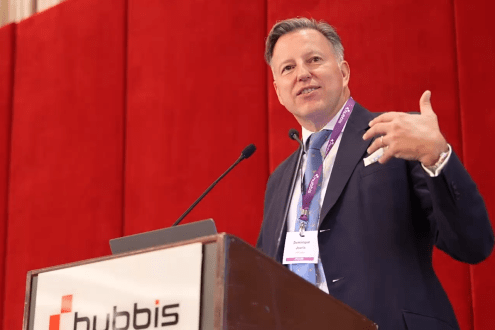
At the Hubbis Independent Wealth Management Forum – Hong Kong 2026, Dominique Jooris, Founder and CEO of WMCockpit, set out a view of the next stage in the evolution of private wealth management: a shift from managing portfolios to managing entire family estates.
Jooris argued that the traditional focus on portfolio performance, manager selection and fee compression remains important, but is no longer sufficient. For UHNW families, the larger risks and opportunities often sit outside the liquid investment portfolio, across real estate, private businesses, art, tax exposure, currency mismatches, family structures and generational planning.
His central message was that the adviser who owns the whole-estate view will be better positioned than the adviser who only manages the portfolio. As portfolio optimisation becomes more mature, whole-estate visibility, scenario analysis and integrated advice are becoming the next competitive frontier for private banks, EAMs and independent advisers.
Key Takeaways
Estates Are Larger Than Portfolios: Jooris argued that the full collection of a family’s assets often carries far greater exposure than the liquid portfolio alone.
Portfolio Gains Can Be Dwarfed By Estate Risks: In WMCockpit’s example of a SGD 50 million estate, a 10bps fee saving on the portfolio is worth SGD 12,500, while a 10% USD depreciation against SGD can create a SGD 1.25 million impact.
Whole-Estate Management Requires Broader Risk Analysis: Advisers need to consider jurisdictional risk, tax risk, currency exposure, illiquid assets and hidden liabilities, not just volatility and asset allocation.
Precision Should Not Block Action: Jooris argued that imperfect but directionally useful estate data is better than waiting for perfect valuations.
The 80:20 Rule Applies: Approximate exposure analysis can still support better decisions, especially where the alternative is inaction.
Spreadsheets Have A Ceiling: Excel-based estate tracking is often ad hoc, hard to audit, prone to errors and unable to support scenario modelling or simulations.
Purpose-Built Platforms Can Create A Single Source Of Truth: WMCockpit positions integrated estate platforms as a way to combine analytics, tax modules, document vaults, visualisation and family asset mapping.
The Family Advisor Role Is Strategic: Jooris argued that large families often rely on one trusted adviser for the holistic perspective, even if specialist legal, tax and insurance work is delegated.
Owning The Estate Conversation Creates A Moat: The adviser with the whole-estate view is positioned close to major liquidity events, asset sales, generational transitions and wealth transmission decisions.
The Direction Of Travel Is Clear: The industry is moving from fragmented data to integrated estate management, with whole-family visibility becoming central to future private wealth advice.
Jooris opened by challenging the industry’s tendency to equate wealth management with portfolio management.
In conventional portfolio discussions, advisers focus on volatility, asset allocation, manager selection, security-level performance and fee efficiency. These are legitimate areas of analysis, but they represent only one part of the family balance sheet.
The broader estate is often much larger and far more complex. It includes homes, operating businesses, private equity holdings, real estate, art, collectibles, family vehicles, jurisdictional structures, liabilities, tax exposures and currency mismatches. These assets may not move on a screen every second, but they can have a far greater effect on family wealth than marginal improvements in portfolio management.
“Portfolio optimisation matters,” Jooris said. “But the estate is where the larger quantum of exposure often sits.”
To illustrate the point, he used a simplified example of a SGD 50 million estate, with 75% held in real and business assets and 25% in a USD-denominated portfolio. Saving 10bps on portfolio management fees would create a SGD 12,500 benefit. Selecting a better third-party manager and generating an additional 2% return could create a SGD 250,000 gain.
But estate-level decisions were much larger in impact. Buying a SGD 3 million yacht instead of allocating that capital to fixed income could create an estimated SGD 390,000 effect. Failing to properly manage UK tax residency after relocating to Singapore could cost SGD 750,000. A 10% depreciation of the US dollar against the Singapore dollar could create a SGD 1.25 million impact.
The lesson was clear. Portfolio-level improvements matter, but they may be small compared with the risks embedded across the full estate.
The Hidden Risks Outside The Portfolio
Jooris was careful not to dismiss portfolio management. Manager selection, fee discipline and investment performance remain important, quantifiable and actionable. But they are typically based on observable securities and clean data.
Estate management is different. Many of the most important assets are illiquid, hard to value or held through complex structures. Real estate, private businesses, art collections and family assets may not have daily pricing. Yet they still create exposure.
For advisers, the challenge is to build enough visibility to support better decisions, even where the data is imperfect.
“Surgery with a kitchen knife is better than no surgery at all,” Jooris said. “In estate management, approximate visibility is often far better than perfect blindness.”
This was one of the core points of the presentation. Whole-estate management does not require every valuation to be exact. It requires enough directional accuracy to identify the major exposures and act on them.
If a family owns a property in the Mid-Levels, for example, the adviser may not have a perfect mark-to-market valuation. But they may know the purchase price, local market movement, insurance value or third-party appraisal. That is enough to create a working estimate.
WMCockpit’s presentation framed this through three principles: blend real-time and illiquid valuations, accept pragmatic anchors, and apply the 80:20 rule by choosing directional accuracy over inaction.
Moving Beyond The Spreadsheet Ceiling
Jooris then turned to the tools used by many advisers and families today.
In his experience, many whole-estate views are still managed through Excel spreadsheets, manual files, scattered documents and disconnected portfolio applications. While spreadsheets are flexible and familiar, they are poorly suited to the complexity of modern family wealth.
They are difficult to scale across families and entities. They are often single-function. They lack integrated analytics. They are prone to clerical and formula errors. They usually do not provide a proper audit trail or version control. They cannot easily run estate scenarios or stress-test decisions before execution.
“The spreadsheet was never designed to be the operating system of a family estate,” Jooris said. “At some point, flexibility becomes fragility.”
Purpose-built platforms, by contrast, can provide integrated functionality: AI-assisted tax exposure analysis, scenario simulations, document vaults, entity visualisation, asset allocation mapping and generational views. This allows advisers and families to move from fragmented information to a single source of truth.
The point is not simply operational efficiency. It is advice quality. Without a complete estate view, advisers may miss risks, opportunities and future liquidity events.
The Family Advisor As The Central Point Of Trust
Jooris then posed the strategic question for independent advisers: if they are not the family advisor, who is?
Large families often have one trusted adviser who holds the holistic view. That person does not need to be the technical expert in every area. Tax, legal, insurance, investment and structuring work can be delegated to specialists. But the integrated perspective usually rests with one central relationship.
WMCockpit’s presentation described this role as “the one confessor” – the trusted adviser who sees the full estate and understands how the moving parts connect.
“If you do not own the holistic view, someone else will,” Jooris said. “And once someone else owns that view, they are closer to the family’s most important decisions.”
This has direct commercial implications. The adviser who sees the full estate is more likely to know when a family is selling a property, restructuring a business, transferring wealth, planning succession or reallocating capital. That adviser is in the best position to guide the next decision, manage proceeds or allocate opportunities to the right intermediary.
In Jooris’s words, the whole-estate relationship gives advisers “front row seats” to the family’s major decisions. It is not only about deeper service. It is a competitive moat.
From Fragmented Data To A Single Source Of Truth
The broader industry evolution, Jooris argued, is from fragmented data to integrated estate intelligence.
Today, a family may have a will in one place, portfolio data in another, a spreadsheet for entities, separate records for real estate, and scattered documents for gifts, trusts, companies and insurance. That fragmentation makes it difficult to understand the estate as a whole.
The next stage is an integrated platform that allows advisers and families to consolidate asset data, entity structures, documents, risks and scenarios in one place. WMCockpit’s presentation framed this as the move “from fragmented data to a single source of truth”.
For private banks, EAMs and independent advisers, the implication is that wealth management is expanding beyond investment reporting. The future adviser will need to understand the estate, not just the portfolio.
“Managing the portfolio tells you how the liquid assets are performing,” Jooris said. “Managing the estate tells you where the family’s real risks, decisions and opportunities sit.”
The Next Frontier In Private Wealth Management
Jooris concluded that private wealth management is undergoing a Darwinian evolution.
Portfolio optimisation is not disappearing, but it is entering a more mature phase. The next layer of differentiation will come from helping families understand, visualise and manage the entire estate.
For advisers, this creates both a threat and an opportunity. Those who remain confined to portfolio reporting may become increasingly commoditised. Those who can provide a whole-estate view may become more central to the family’s decision-making process.
The conclusion was direct: the adviser who owns the estate conversation is better positioned to own the client relationship.
“Own the estate conversation, own the client,” Jooris said. “That is where private wealth management is heading.”