
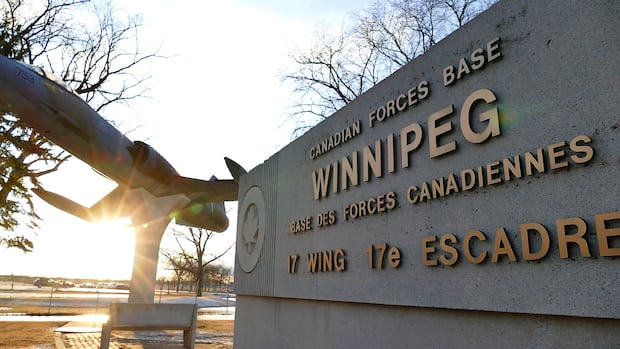
A Royal Canadian Air Force sergeant charged with assaulting a police officer says members of the military were hostile and violent when they removed her from an administrative area at Winnipeg’s 17 Wing base.
Sgt. Athena Morris testified earlier this week during a pre-trial hearing before a court martial held at HMCS Chippawa, a Royal Canadian Navy reserve division in Winnipeg.
She is facing four charges — three of assaulting a police officer and another of resisting or escaping from arrest or custody — stemming from an incident that happened March 31.
Morris told court she was shocked with an energy conductive weapon by military police after she tied herself to a chair with a scarf and refused to leave an area of the base she didn’t have clearance for.
She said she decided to breach the rules after a request to change her gender marker on the Canadian Armed Forces’ national human resources records system was denied.
“I was willing to do that in order to bring heat and light to the discrimination I was facing at 17 [Wing],” Morris told court Monday.
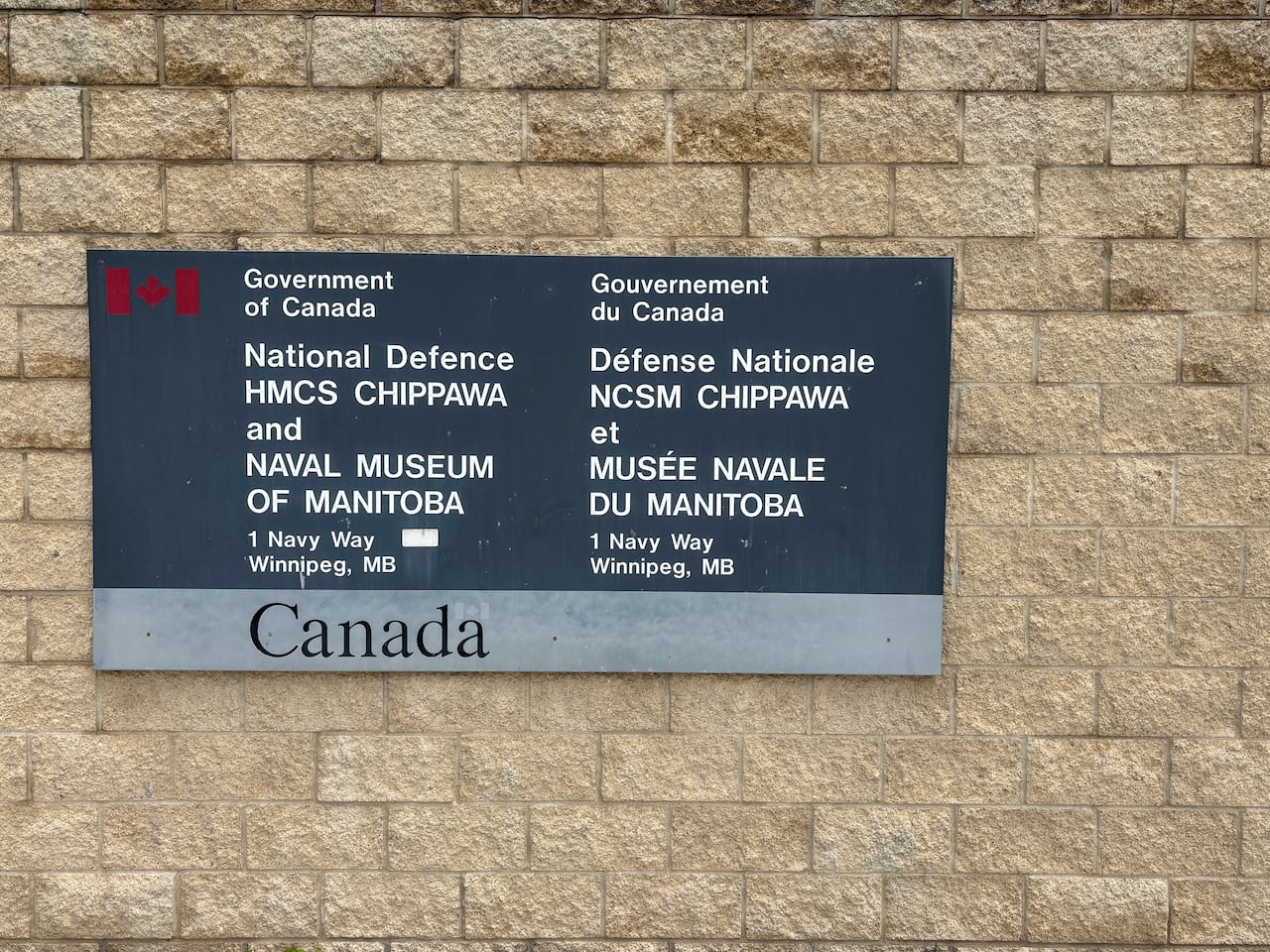 Sgt. Athena Morris testified during a pre-trial hearing before a court martial held at HMCS Chippawa in Winnipeg. (Santiago Arias Orozco/CBC)
Morris testified she tried to change her identity marker last winter but was refused. She said she thought all she needed to do was show government-issued identification with her new gender.
She escalated her request and told court she was advised by a higher-up in the military in late March to push on with getting the change made because 17 Wing had received direction on how to process the request.
Morris said a clerk at the orderly room declined the request again on March 31. She testified that as she was leaving the building, she saw a flag raised on a pole to mark International Transgender Day of Visibility.
“I was outraged that the CAF would be performative in their support of trans rights but not actually follow through,” Morris testified.
She told the court she went back into the building, hopped over a service counter, walked into an office space and sat in a chair. Morris was asked to leave but told staff she would only do so when her gender identity was changed.
Military police called in
Court heard two military police members arrived and escorted personnel out of the building. Morris said she moved to another chair, where she wrapped a scarf around her wrists, one of her legs, the seat and the handle of a filing cabinet.
“I wanted to make it really clear that I wasn’t there to be violent. I wasn’t there to hurt anyone,” she said.
During the pre-trial, defence counsel Maj. Carlos Da Cruz played audio Morris recorded with her phone of the interaction with military police, including a third member who arrived at the building later.
The members are heard repeatedly asking Morris to leave as the accused interjects, saying she would exit the room when her gender identity marker is changed.
Morris told court that as the conversation went on, the members moved closer, and one of them lunged forward, grabbed her and started pulling on the scarf, making it cinch up on her hands.
One of the members is heard asking Morris to “let go” several times, and the accused says, “Please don’t touch me.” The recording captures Morris screaming seconds later.
The accused told court military police began grabbing the scarf and pulling her body down before she fell to the ground. An energy conductive weapon pressed against her leg was used on her, she said.
 Three military police members tried to remove Morris from the administrative building. (CBC)
“I was panicking. I had three men on top of me holding me down,” Morris said. “All I could do was try to crawl away under the chair.”
On the recording, one member is heard saying, “She bit me,” something Morris denies.
She says one of the members put his hand over her mouth as she was hyperventilating and she tried to move it away.
During her testimony, Morris also denied kicking, striking or otherwise behaving violently against military police, arguing she only wanted them to get off after they kept pulling her scarf and pushing her against the ground.
Morris was told she was under arrest. After the officers handcuffed her, she said one of the members rolled her over and began searching her body, at times underneath her bra and close to her groin, even though she had asked for a female officer to do it instead.
“I was just in shock and panic,” Morris said. “I felt afraid of everything.”
She said she was carried to the back seat of a police cruiser. Morris told court the energy conductive weapon was used on her again after she couldn’t sit up.
During Morris’ testimony, the court heard that a nurse who knew her mental health diagnosis went into the vehicle and gave her medication for panic attacks. But she was still hyperventilating, and paramedics sedated her.
Morris said she woke up handcuffed at Health Sciences Centre, where military police read the charges and released her on an undertaking.
“This is not how I had thought it would go. I was waiting for them to arrest me peacefully when instead, the officers grabbed me,” she said.
‘They chose to become hostile’: Morris
During cross-examination, navy Lt. Alex Keaveny asked Morris if her intention was to resist the officers if they didn’t act in the way she wanted.
Morris said she never expected the officers to use force in the way they did.
“They chose to become violent, they chose to become hostile, and they chose to start grabbing and pulling … escalating the situation,” Morris said.
The accused also said the military police asked her to leave but didn’t give her a direction to do so.
Keaveny argued the difference between the two was semantic.
“They’re telling you you got to leave. They’re following through on their escalation. And your evidence is that you thought this was just sort of like a casual request?”
Morris disagreed, saying she wasn’t waiting for a “magic word,” but an order that if she didn’t follow would lead to her arrest.
“I was secured to a chair, unable to run, unable to hide, unable to do anything … I just started begging for my gender identity to be respected.”