


Image courtesy Leio McLaren/Unsplash
Almost two years ago, in September 2024, Archinect spoke with former HOK CEO and Chairman Patrick MacLeamy for advice on how architects could navigate through economic downturns. Back then, high interest rates, inflation, and post-pandemic construction costs all contributed to concerns from our readers over the health of the industry.
In 2026, many of those same challenges remain, coupled with domestic unpredictability through the Trump administration‘s wielding of tariffs and international uncertainty from the war in the Middle East.
Against this backdrop, Archinect’s Niall Patrick Walsh spoke with MacLeamy once again last month on the state of the profession and his view on the need for architects to find new value and relevance in the 21st century. MacLeamy’s insights build upon his book Designing a World-Class Architecture Firm and his podcast BUILD SMART.
Our conversation with MacLeamy, edited lightly for clarity and length, is published below.
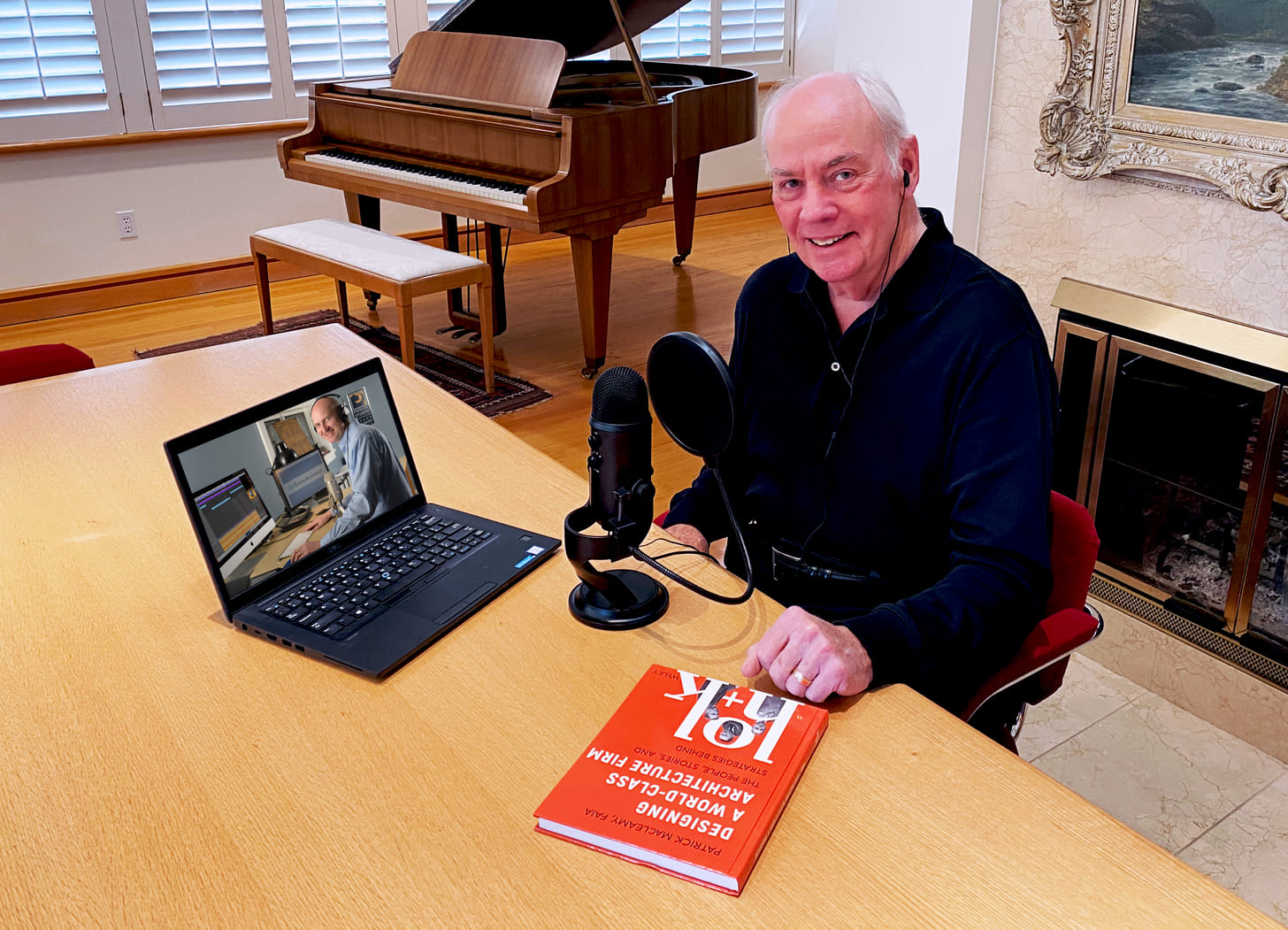 Patrick MacLeamy. Image courtesy: Patrick MacLeamy
When we look at metrics such as the Architecture Billings Index and feedback from our readers, the industry seems to be struggling at the moment. What have your own observations been?
It’s difficult out there. I worked as an architect for 50 years. I’ve seen boom-and-bust cycles many times, as well as inflation cycles. So the dilemma we are in of scarce work, of architects having difficulty getting jobs, and so on, is nothing new.
My own observation is that economic conditions around the world are actually fairly decent. The U.S. economy continues to grow despite the problems in the Middle East. Inflation is nonetheless a huge problem, and the reduced flow of oil and gas through the Strait of Hormuz is having an impact everywhere. When the price of oil goes up, so does everything else.
I think there is something else underlying the economic struggles of architects today: Architects are lost as a profession. It’s quite a bad indictment, but we’ve lost our relevance. People don’t understand why they need to hire an architect for their new project. They say: “Gee, it’s a lot of bother to hire an architect; why can’t we just go down the street and ask a contractor to build the project for me?” Look at the wider world today. I can go to Amazon online and buy pretty much everything I need. Once Amazon starts offering houses and buildings, architects will be in bigger trouble.
There are individuals, such as starchitects, whom clients collect almost as pets to design their museums of modern art or other prominent buildings. But most people are looking for an escape from using an architect because we have not made ourselves relevant.
Once Amazon starts offering houses and buildings, architects will be in bigger trouble. — Patrick MacLeamy
In the last few decades, we have become overburdened with more complex buildings, more complex regulatory environments, and a flood of new materials and manufactured products. The days of buildings being built one brick at a time are gone; buildings are manufactured now. Architects need to understand this new world and find ways to make themselves relevant in it.
It’s not enough to be registered as an architect in practice; people can find ways around that. We have contractors who employ registered architects on staff who will stamp their drawings and so on. Why would they hire an external architect?
Architects must become relevant by rescuing what good design really means and what good service means. Good design is not superficial. It’s not about style or the latest colors. It’s about buildings that work really well, that serve their clients’ needs.
My ‘Exhibit A’ is the iPhone. It’s well designed, it fits in my hand, and it’s useful as hell. It is indispensable now. Steve Jobs and his team came up with a great design that not only looks good but works exceptionally well. The indictment of the architect is that when you hire an architect, buildings sometimes end up costing more than they should and don’t work as well as they should.
This sounds negative, but there is hope, too. We need to find our true calling, which is giving people great design and great service. We’ve lost our way in this era of digitization and the proliferation of products on the global marketplace, and so we have to go back and find where there is a great need for us. If people know that you can do something well, they will beat a path to your door.
We need to find our true calling, which is giving people great design and great service. — Patrick MacLeamy
And it’s not just large firms like HOK that will survive. Small, nimble firms can run circles around the big firms, but they have to be well-led and be hard-headed and realistic about the business of architecture, rather than just the design of architecture.
A final problem I see in the profession is that architects too often form partnerships of convenience. It’s a bit like living together in a marriage that you’re both not committed to. The predecessor to HOK had this problem a century ago, where two brothers leading the firm fought tooth and nail about which one would design what building. They eventually said that whoever brought the client in would design the building.
That’s not the way to do it. The way to do it is to work as a team; architecture is a team sport. Yes, somebody has to lead the design, but somebody also has to put together a good set of documents, ensure the building meets code, ensure a trouble-free construction process, take care of staff payrolls, and so on. Architects have a lot to do to make our way in this environment, and it will not get any easier.
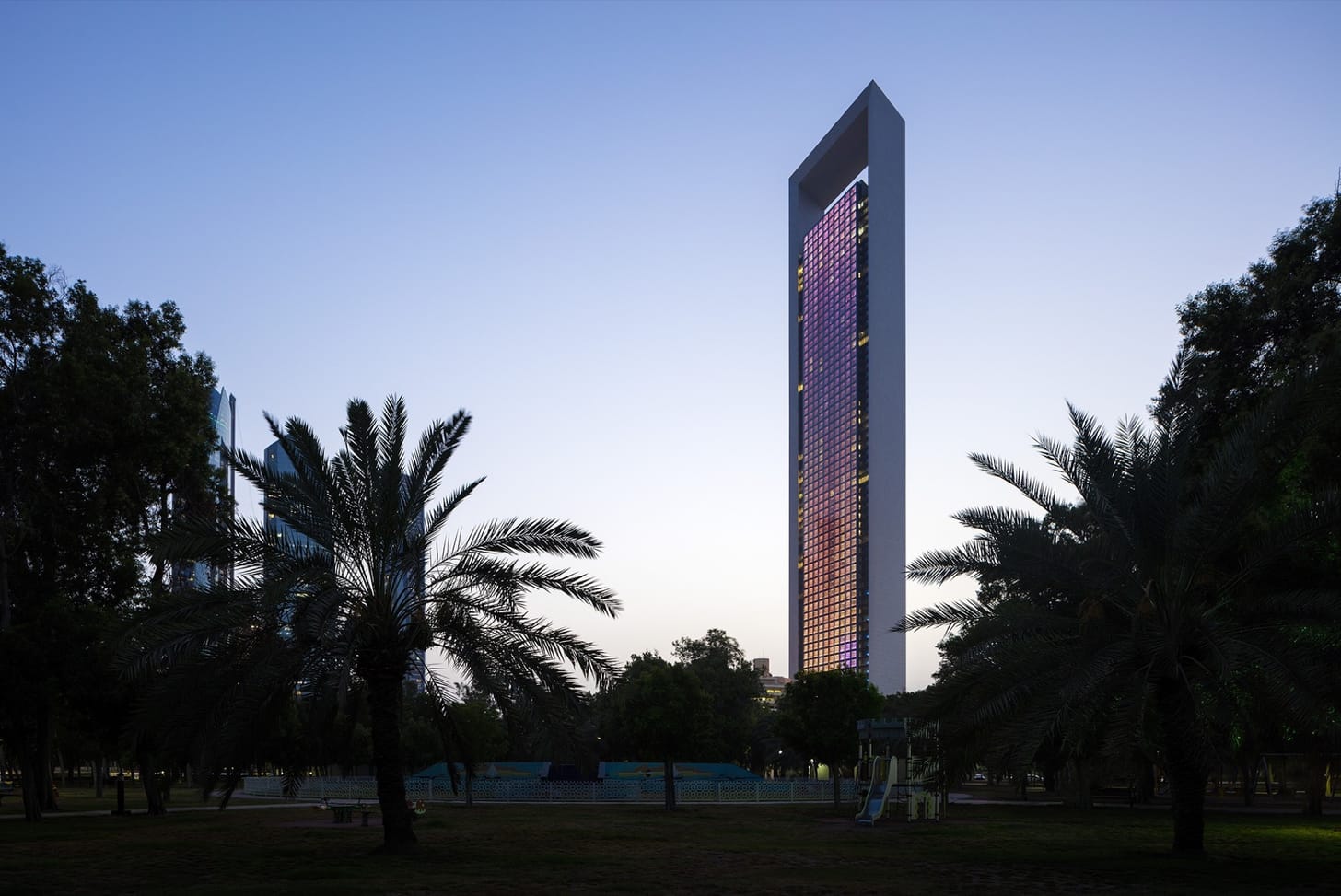 ADNOC Tower by HOK. Image courtesy of HOK
Before we talk about ways forward, I want to pick up on your last point about partnerships. In the past few years, we have seen dozens of significant mergers and acquisitions among architecture firms. Do you have thoughts on what is driving that?
That’s true, and HOK has gone through mergers. We merge with or buy other firms, as that is an effective way for big firms to get talent. We aren’t buying the other firm per se; we are buying the access to some talented, knowledgeable individuals who are exceptional at something, such as healthcare design.
What that means is that the firms that pay attention to business, who know how to make a profit, collect their fees, and set aside some earnings rather than spend all the money they bring in, will prosper because they’ve learned how to operate not as a practice but as a business.
A well-run firm also takes care of its staff and treats them with the respect that professionals deserve. Too many firms are lax about this. When I was in university, we had a course twice per week for one semester about the business of architecture, and it was taught by a professor who had never practiced. But learning how to practice, how to deal with clients, how to handle insurance or a claim if there is a problem with the building, these are all things that we too often neglect as a profession.
Great design can only come from a firm that is organized as a business that takes care of its staff and takes care of its clients. — Patrick MacLeamy
Another reason firms end up being acquired is poor forward planning. Many practices emerge because the founder had some early success that allowed them to hire people, which helped the firm prosper during the lifetime of the founder. But when the founder wants to retire, they typically find they haven’t made any provision to be bought out by younger members; there is no succession plan. A lot of these mergers happen when someone says: “Gee, I need to retire, and I’d like to get some value out of my company.” Who has the money to buy them out? The firms that have been well run as a proper business. There is no magic secret to it.
It breaks my heart to see the profession struggling. I’ve said it a million times that the world needs great design. In many respects, the world is less beautiful today than it was when I started in practice. There’s a good building here and there, but mostly in the morass of big urban sprawls that leave me cold.
If we put great effort into understanding what clients want and need from us, they will beat a path to our doorstep. — Patrick MacLeamy
But great design can only come from a firm that is organized as a business that takes care of its staff and takes care of its clients. If we put great effort into understanding what clients want and need from us, they will beat a path to our doorstep.
I’ve been in job interviews with clients hundreds and perhaps thousands of times. What I’ve learned is that when architects get in front of a client, it is our opportunity to engage with the client. What are their needs? They want a new building? What kind of building? If it is a hospital, how might it help you practice better medicine?
Instead, architects are all about me. “Look at my work! Here’s my latest project, isn’t it beautiful?” We need to focus on the client, big-time. Another word for ‘client’ is ‘customer.’ If you don’t put their needs first, why should they bother with you? They want someone who knows and understands their company and has shown evidence of researching this before the interview. Too many architects think it is all about showing off their design work instead of being sincerely interested in the client.
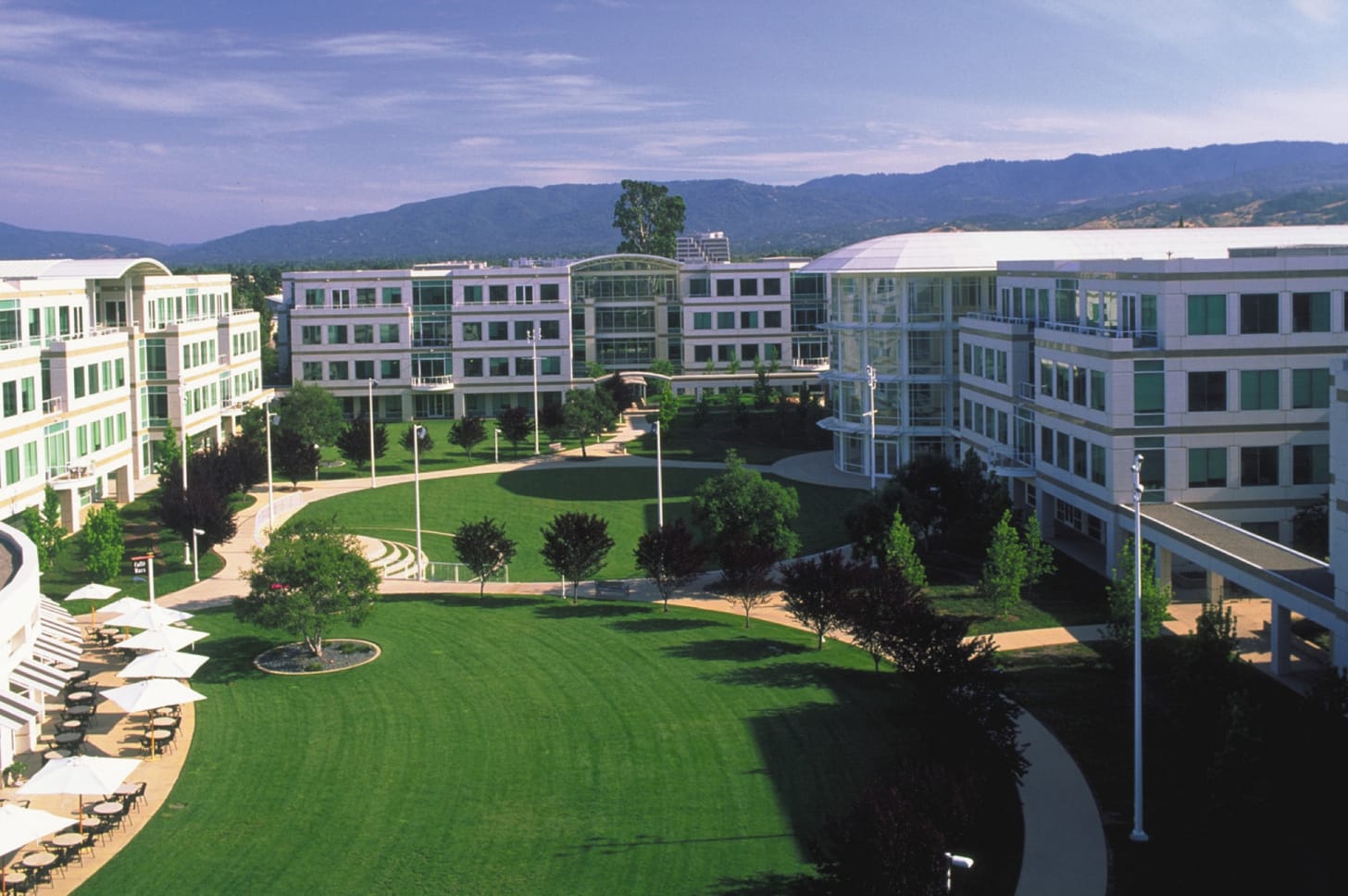 First Apple Headquarters by HOK. Image credit: John Sutton, courtesy of HOK
You mentioned the iPhone earlier. The way mergers, acquisitions, and business structures operate in the tech industry is so different from architecture. In technology sectors, you often see young people come up with a great idea and launch a startup whose entire aim is to be acquired by a larger company. In contrast to your last point about architects, it is never about the tech founder. It is about the product, about market fit, about trying to solve someone else’s problem.
We have the choice of starting to think that way, or facing oblivion. You have it exactly right. These young, talented people who launch startups are not selling themselves; they are selling their idea and how well they can make their idea work to serve some purpose. Some of them are so young, and they are already making millions of dollars. If I’m an architect, I want to be an architect like them!
Focus on your client, focus on the service to your customer, and what your customer really needs. There are 8.3 billion people on the planet, and over seven billion smartphones. Even in the developing world, people are using smartphones for easy access to the world, for selling products or doing business. Yes, it is a phone, but it is so much more. As architects and designers, we need to think much more like that, and perhaps less like how we were taught in university.
To come back to the economic struggles architects are experiencing today, how do you compare today’s downturn compared to previous crises such as the 2008 financial crash or the COVID pandemic?
When I entered practice in the late 1960s, things were tough. It was hard to get a job, not unlike today. In the 1970s, when I was a young architect at HOK, inflation was eating the building industry alive, and the wider U.S. economy. Inflation in the construction industry was 1% per month. Not per year, per month!
So what did we do? We still had clients who wanted to build, and it was all about how fast you could design. We were part of a group that helped to invent fast-tracking a project, where they would dig the foundations while still working on the superstructure, and so on.
Basically, you take a challenge and make it into an opportunity. We actually prospered in that time. Don’t get me wrong, inflation is brutal. If you are in a firm that is well run, you have to be nimble enough to be able to give people raises so they can feed their families as prices go up, but at the same time, be competitive on your fees and still make a profit. There’s no substitute for being really highly efficient. Architects can’t control inflation. Therefore, we have to be nimble enough to surf the water. Today, clients are looking not only for a good architect but for the best price. So we have to learn to do our work incredibly efficiently and not waste money.
Architects need to do more to show people what we are capable of, and not just sit and wait by the phone. — Patrick MacLeamy
In terms of how today’s economy compares to recent decades, I’ve seen worse, and I’m sure we’ve all seen better. I’d call this a medium problem; not the worst I’ve ever seen, but something you have to be prepared for. There will be another boom, and then another bust. That is the rollercoaster of life.
That brings us to the question of how architects can accommodate these booms and busts. George Hellmuth, the co-founder of HOK, did it by diversifying what the firm was capable of designing. If people didn’t need schools, maybe they needed hospitals, airports, or stadiums. If you know how to do more than one thing, the chances are you can keep going. If you are only a specialist in one thing, such as a school, and the school market goes down, you are in trouble.
I also believe there is a huge opening for architects to be more thoughtful about urban design and planning. This is a topic we don’t talk about enough. It is not enough to design one good building in the middle of a city that doesn’t work. How many architects have gone to their city officials with a master plan for a section of the town that needs help, just to open up the possibilities for thinking about the neighborhood? Not only could that improve our cities, but it would put architects on the map as thoughtful, civically minded firms and individuals. Architects need to do more to show people what we are capable of, and not just sit and wait by the phone.
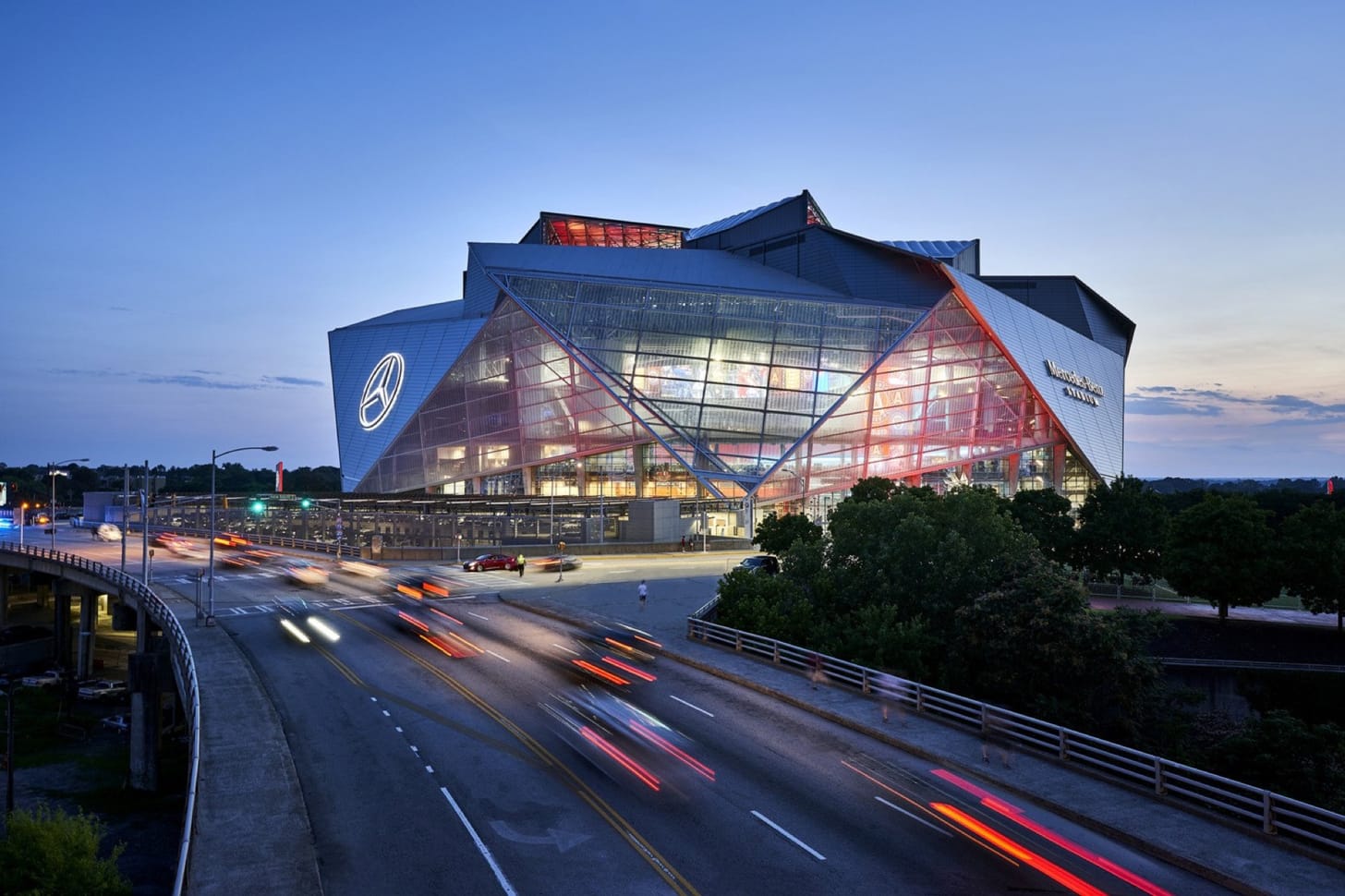 Mercedes-Benz Stadium, Atlanta, by HOK. Image credit: Mercedes-Benz Stadium/Michael Robinson
When it comes to changing our approach to business, where do you think that change will come from? Sometimes, I think we assume too much expectation on institutions such as AIA, NCARB, or RIBA to lead change, when, if you look again at the technology sector, industry-wide change can come from a relatively small number of people carving a new path and showing everybody else a new way is possible. For architects, it might be more about a small group of architects taking your advice and actually implementing it as intensively as they can, and the wider profession taking note.
For many years, I was the co-founder and chairman of buildingSMART. That organization grew out of my frustrations as an architect, not knowing how to coordinate my project well enough with contractors, which just created unhappy clients. I went to my local AIA chapter in San Francisco for ideas, and all I found was architects getting together to complain about contractors, and saying that if clients would just pay us more, we could do a better job.
Finally, I gave that up and started talking to contractors and software companies. Eventually, we saw that it is a continuum. Architects are not isolated. We are part of a process that, if done well, can fill a need with a piece of architecture, landscape, or urban design; a design helpful enough that people are willing to pay us to do it.
In this continuum, contractors and subcontractors need to be our partners. I think the design-bid-build method is on its way out for this reason. All it does is set up an adversarial relationship. Rather, at HOK, we had some great successes partnering with contractors from the outset, going after projects and being successful not just with a clever, helpful design solution but with a bottom-line price that a contractor is able to deliver on.
You have to figure out how to harness technological change and ride it instead of shirking from it, because it won’t go away. — Patrick MacLeamy
Be creative! Don’t think you are going to find all the answers in the AIA or RIBA, or in contractor groups such as the AGC. You’re going to find the answers with people who are thinking outside the box and thinking in their own smaller groups. My little group, buildingSMART, is now 30 years old and is having a major effect on how we exchange information and coordinate our work.
Use your own common sense. Ask what is working, and what isn’t. Think outside the profession and look at how manufacturers do things. Look at the smartphone creators and at technology companies. Don’t be afraid of it. People can worry that technologies such as AI will eat their jobs, and indeed, it is going to eat part of it. You have to figure out how to harness technological change and ride it instead of shirking from it, because it won’t go away.