

Are injuries in professional baseball cyclical, bad luck or a sign of deeper issues? It depends on who you ask.
You can sort publicly available lists of injuries any way you want — and The Athletic did, coming up with nearly a dozen different combinations — and the same three teams stay at or near the top of the list of organizations with the most injuries: the New York Yankees, New York Mets and Baltimore Orioles.
We looked at data on injured major leaguers, injured minor leaguers, as well as separating injured hitters from injured pitchers. We looked at small sample sizes and bigger ones. In all of those data groupings, those three organizations have the most days missed due to injury since 2024, since 2022 and even dating back to the 2012 season.
When looking at days missed due to injury from year-to-year within an organization, the previous year’s injury numbers explain about 40 percent of the current year’s injury numbers, i.e., organizations with lots of injuries the year before tend to have lots of injuries the next year. That means there’s some signal in the data, though the pure numbers can still be misleading because of how teams use their injured list.
Why do the most injured organizations tend to stay that way? Is it possible to change things and create healthier outcomes for players? And, ultimately, does it matter to a team’s overall success?
Let’s start with why those three teams seem to always be at the top of the hurt list. Here are major- and minor-league days missed on the injured list, grouped by organization, courtesy of The Baseball Cube’s injury database.
Most days lost to injured list, 2024-2026
TeamMinorsMajorsOrg
21,042
2,339
23,381
18,138
2,731
20,869
17,045
2,549
19,594
14,334
2,520
16,854
14,964
1,815
16,779
14,551
2,119
16,670
13,768
2,402
16,170
14,046
1,955
16,001
13,737
2,152
15,889
13,971
1,690
15,661
Big-market teams like the Yankees and Mets, who both rank among the top three in current big-league payroll, have a few advantages. They are typically less risk-averse when it comes to signing players who are hurt or have a lengthy injury history.
“Teams with deeper pockets are much more apt to stuff a player who is day-to-day on the IL,” an NL executive said. “Versus small- and mid-market clubs who have to consider the cost. Having a lot of big leaguers on the IL gets expensive.”
The Yankees spent an MLB-high $75 million on players on their major-league IL last season, according to Spotrac. The Mets were fourth, with $60 million, though neither team had as many players on the IL last season as the Orioles (29), who were tied for the second-most in MLB with the Dodgers.
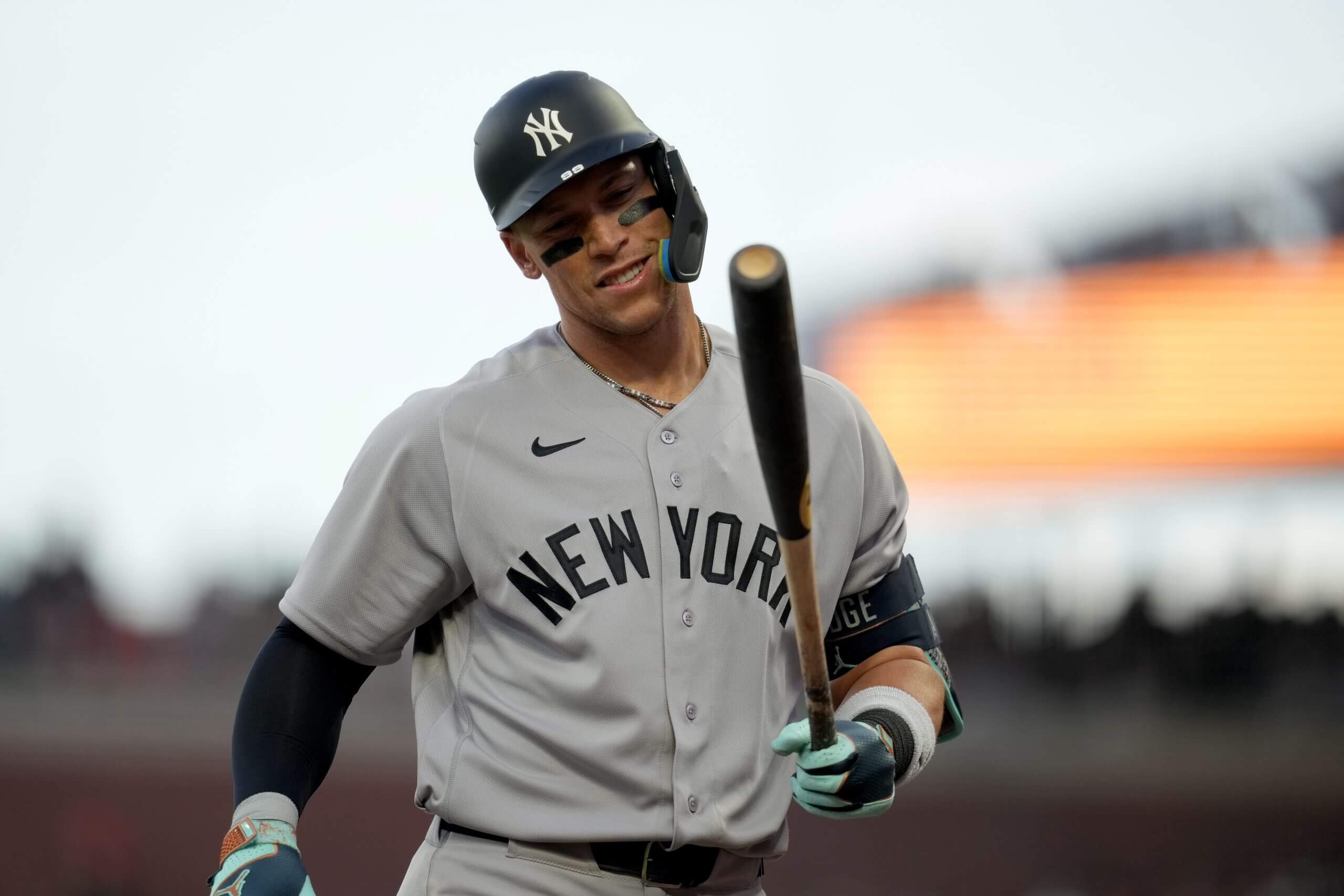
When Aaron Judge misses time due to injury, it’s costly to the Yankees on the field and on the balance sheet. (Cary Edmondson / Imagn Images)
The Yankees and Mets also tend to have rosters on the older side, which makes the smaller-market Orioles’ appearance on this list more concerning. According to Baseball Reference, which weighs playing time in its calculations, since 2024, the average age of Orioles big-league hitters is 26.8 years old. Over that same stretch, the Yankees’ average age was 28.9 and the Mets’ was 29. (Among their pitchers, all three teams averaged between 30-31 years old as the average age over that span.)
The Dodgers, who have had the oldest average age of MLB hitters in that span, and the game’s biggest payroll, unsurprisingly led the league in days missed on the big-league IL.
Most MLB days lost to IL, 2024-2026
TeamMLB Days Lost 24-26
3,752
2,893
2,845
2,731
2,667
2,549
2,520
2,402
2,339
2,183
But if it was only that richer, older teams get hurt more, the Dodgers would be on every IL list. They aren’t. In the minor leagues, the Dodgers ranked among the 10 healthiest teams, at least judged by minor-league days missed by players 26 years old and under since 2024.
Why focus on 26 and under in the minor leagues? Some of the same caveats apply in the minor leagues: richer teams are often more apt to sign older minor-league free agents, or even currently hurt and rehabbing older players who didn’t get a major-league deal. As the age of a player goes up, so does the injury risk.
Teams with deeper pockets or who are less risk averse can stash hurt players on the IL as future depth. The Yankees, for example, may be more willing to sign a minor-league pitcher working back from Tommy John surgery, absorbing 250-plus IL days, in hopes of getting a good half-season.
“(The) goal is to ensure you have enough depth to stabilize in the absence of high-performing players,” an American League executive said. “Something the Dodgers do best in baseball.”
By limiting minor league IL days to players under 26 to try to remove the older free agents, we have a little clearer outlook on how each organization is doing in keeping its young talent healthy. That said, like with in the major leagues, the way organizations use their minor league IL can vary significantly. Regardless, you still have the Yankees, Mets and Orioles in the top five if you limit the scope to players 26 or younger.
It’s important to note that some organizations are more ruthless than others in releasing injured players to save money and trim their IL list down. Still, there’s no prize for the fewest IL days if it doesn’t translate into organizational performance and ultimately wins.
“Some small-market teams look like they have a phenomenal medical staff,” said another AL executive. “In reality, the organization is just releasing all the broken guys so that they don’t count against that number. It’s wrong.”
Other teams carry those players through the rehab process because they feel it’s the right thing to do or because those players still represent some upside once healthy. Workers comp covers physical therapy, but released rehabbing players can often lose wages unless they’re on guaranteed deals.
Those outside of an organization (and sometimes within it) often place the blame for injuries on an organization’s medical and training staff, but that is often misguided. Multiple people interviewed for this story felt athletic trainers and medical staff often unfairly take the blame for mounting injuries when in reality those people are typically reacting to a preexisting injury. Finger pointing is often the mark of an organization with some internal strife.
Fewest total days lost to IL (entire org.), 2024-2026
TeamSum ORG 24-26
8,136
10,049
10,110
10,421
10,767
10,867
10,906
12,456
12,591
13,031
Among the organizations with the fewest IL days, only three are in the top 10 of The Athletic’s preseason farm system rankings (Mariners, Guardians and Red Sox). Some of the organizations with the fewest IL days are also some of the most data-averse. Both the Angels and Rockies — who are implementing more analytics this season with the hiring of president Paul DePodesta — are well-documented as organizations who are behind the analytics curve. Why do these things possibly matter?
In the age of advanced analytics and technology, everything in the minor leagues is tracked and measured. And nothing matters more than velocity: how hard can you swing and how hard can you throw? Does chasing bat speed and pitch velocity and shape lead to more injuries?
According to minor league numbers provided by Watch Marquee player development analyst Lance Brozdowski, it appears the Yankees swing harder than most teams in the minor leagues because of their top-shelf exit velocities, and the Blue Jays do pretty well by the same measures. Both teams also have lots of hurt hitters. Could modern hitting coaching, which often prioritizes bat speed, be contributing to this problem?
MiLB position players younger than 26, IL days lost
The hardest swingers don’t line up exactly with the most injured hitters, and the hardest throwers don’t line up exactly with the most injured pitchers. The Yankees, Mets and Orioles have the most injured pitchers in the minor leagues and don’t throw the hardest, but all three rank among the top 10 in Triple-A Stuff+ leaders. There is no one-to-one correlation on these things, but those organizations being among the leaders in those categories does raise questions.
MiLB pitchers younger than 26, IL days lost
“Bat speed and velocity pursuits have downstream effects,” said an AL executive. “Bigger, stronger, faster leads to more force generation. The greater the force you apply, the more pressure you create. Pressure eventually breaks things.”
A few years ago, as oblique injuries seemingly swept through the game, one AL organization closely examined their weighted bat program. They talked to players and looked at their strength and conditioning rotational movements. They crunched the numbers to see how their oblique injuries stacked up to the rest of the league. They were just about average. Should they have cared more? Spent more time and resources evaluating their programs in hopes of avoiding one or two more injuries? Would it even have helped? In the end, that organization kept things mostly the same.
The savvy organizations — regardless of market size — are constantly evaluating their programs, measuring output and seeking feedback.
“Teams listening to players is critically important and teams do whiff on that,” said another NL executive. “Part of the rehab process is always what players are experiencing and I think teams discount it heavily relative to what they see on scans when it comes to long-term rehabs. They often prioritize scans over symptoms along the way.”
It can vary widely how much teams invest in support staff, sports medicine equipment and the proper personnel to help effectively diagnose little injuries before they become big problems. Workload management has become a buzzy term in professional sports over the past decade but truly monitoring fatigue for injury prevention is more complex than it appears.
“I’m not sure any of the MLB teams do workload management as well as it could be done,” said Casey Mulholland, who is a former pitcher and owner of KinectPro Performance training center. “I’d say a handful try really hard and have had some solid buy-in on wearing the sensors.”
Those wearable sensors are meant to track every swing, pitch, lift or movement and give feedback to the organization and player on fatigue. Less than a handful of organizations use the sensors with various degrees of compliance. (As with every weighted bat, ball or even lifting program, players can opt out.)
A few teams have hired people directly to oversee how fatigue is impacting their players. The Chicago Cubs were an early adopter, hiring Mike Sonne as a baseball scientist prior to the 2023 season. Sonne has a PhD in biomechanics and studied muscle fatigue. Other sources mentioned this hire — and other teams that have followed suit in hiring fatigue-specific personnel — as being a potentially important step forward for the league in preventing injuries.
But even keeping players from getting fatigued — which leads to injury — isn’t always an easy math problem. Compliance is key, but so is avoiding the one-size-fits-all workload for players. If a player wants to get extra throws or swings in, they should be able to. That’s part of what makes who should be accountable for injuries so difficult.
Another is the mileage already on players due to increased demands that can start, alarmingly enough, as early as youth sports. The MLB-sponsored injury report showed that more than half of all Tommy John surgeries are happening before players turn 20 years old. That means a fair amount of these injuries have their roots in usage before the player was ever drafted by a major-league team. Here’s how that looks at one institution of the many performing elbow surgeries on pitchers these days:
“Injury (for pitchers) at the MiLB/ MLB level is probably less about how a team ‘manages’ the guys today to stop injury and more about how vulnerable some of these guys are to load exposures because of prior throwing load,” Mulholland said.
“I think it has less to do with ‘chasing velo/stuff’(now) and more to do with how those athletes were managed at a younger age when they chased velo/stuff.”
Meaning a guy who did damage to his arm in college might see an old injury re-appear three years later, not because of anything the big-league organization he’s in did, but because he was already vulnerable and a normal increase in innings exposed that vulnerability.
Players coming out of the draft now, even high school prospects, are “ticking time bombs”, noted one veteran scouting director, who admits his organization is less shy about drafting players with significant injury history. Teams who have a similarly aggressive approach may find themselves with a lot of players on the minor-league IL.
“There’s three components to injuries: your actual medical conditioning processes, the selection of your front office/scouting director who may give you more high-risk players and just dumb luck,” said the NL exec, who believed the players drafted into an organization were the single most important thing to take into account when looking at overall injury data.
Added an AL exec: “I just think certain orgs value certain traits. If those traits are inherently more injury-prone, they will lead in days missed.”
So what does that mean for our top three organizations in terms of time missed in the minor leagues? What are the Mets, Yankees and Orioles doing differently that’s leading to this outcome?
The answer is probably all of what we’ve discussed here. They are decently well-heeled organizations that are willing to sign and retain hurt pitchers if they can possibly help down the line — at the major- or minor-league level. (Though of the three teams, the Mets and Yankees obviously have much higher payrolls than the Orioles to take on more risk.) All three feature data-driven player development processes that could be pushing their players to physical limits in order to try and get the best out of them while trying to figure out how to monitor fatigue without full buy-in from every player. And then on top of that, they’re dealing with the same rash of pitching injuries that the entire sport has seen.
Even the teams who are more risk-averse in the draft don’t have it all figured out. There are no safe picks in professional baseball where injury is baked in. Players on the IL accounted for roughly $2 billion in salary last year.
One exec laughed as he told the MLB Draft story of Max Scherzer, whose throwing mechanics scared off enough teams leading up to the 2006 draft that half of them took Scherzer off their boards altogether.
Teams thought Scherzer — who exerted so much effort in a violent delivery — was a massive injury risk. Fast-forward 20 years and Scherzer, the No. 11 pick in the 2006 draft by the Arizona Diamondbacks, is a first-ballot Hall of Famer in his 19th big-league season who is closing in on 3,000 career MLB innings.
“We have so much information now we’ve almost tricked ourselves into believing we have the slightest clue about predicting injuries,” said the scouting director. “And we don’t. Injuries are always going to happen and teams are always going to try to find a way to solve the unsolvable problem that is trying to keep them in check.
“When I look at this list, I don’t give a s— where my team is on the IL. I want to know where we are in the standings. Would you rather be the Yankees or the Angels?”
Maybe it’s that simple.