
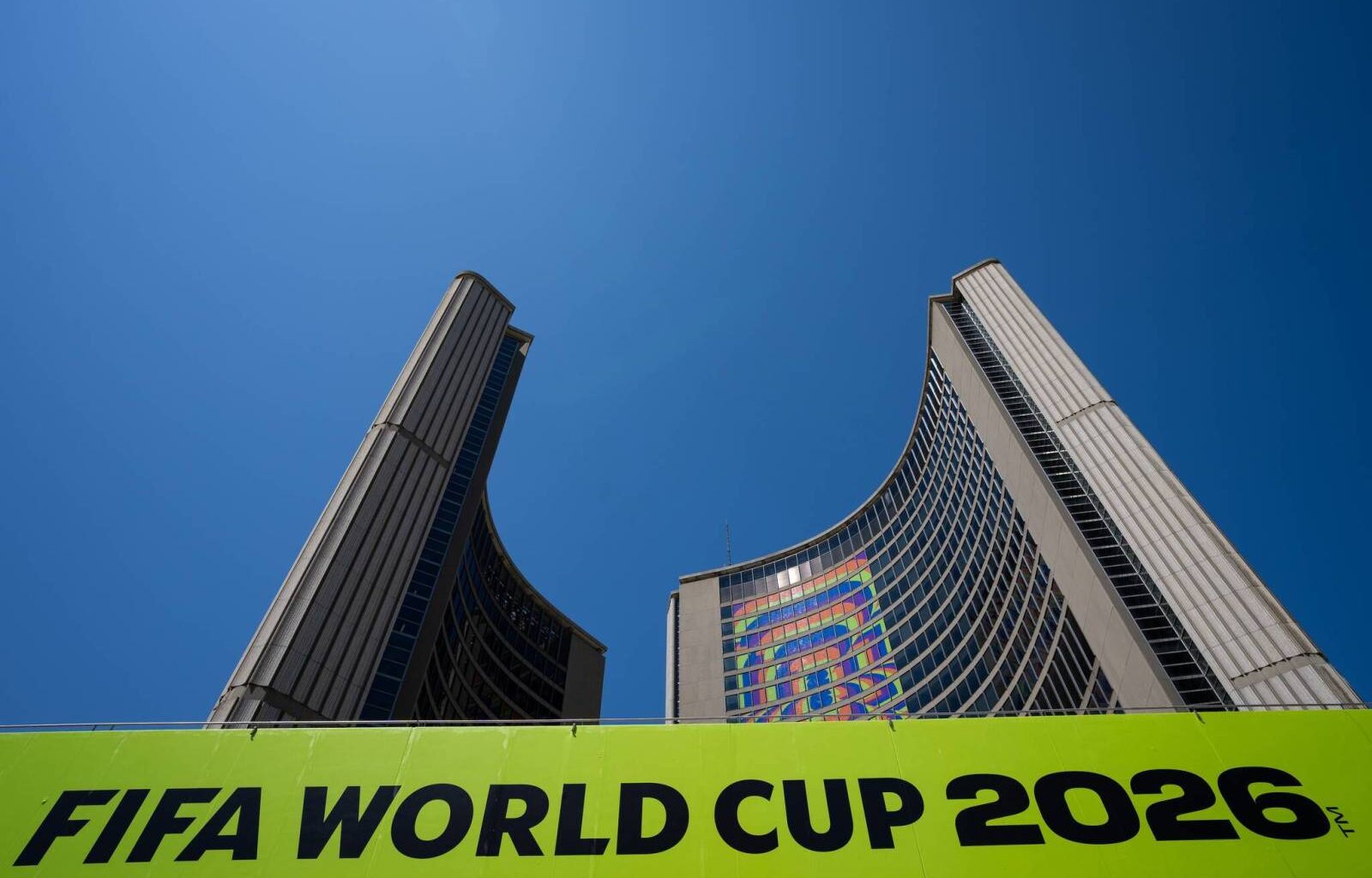
The world’s soccer fans will converge on Toronto and Vancouver in a few days for the start of the 2026 men’s World Cup, revelling in the euphoria (and deep disappointment) that often is endemic to the planet’s premier sporting event.
Undoubtedly, many hope to scream “goal” as their favoured nation scores and clinches a victory. Yet the biggest winner is arguably FIFA, the global organization running the World Cup and other vaunted soccer events.
The non-profit is forecast to rake in more than $10 billion from the event, double that of the 2024 Paris Summer Olympics.
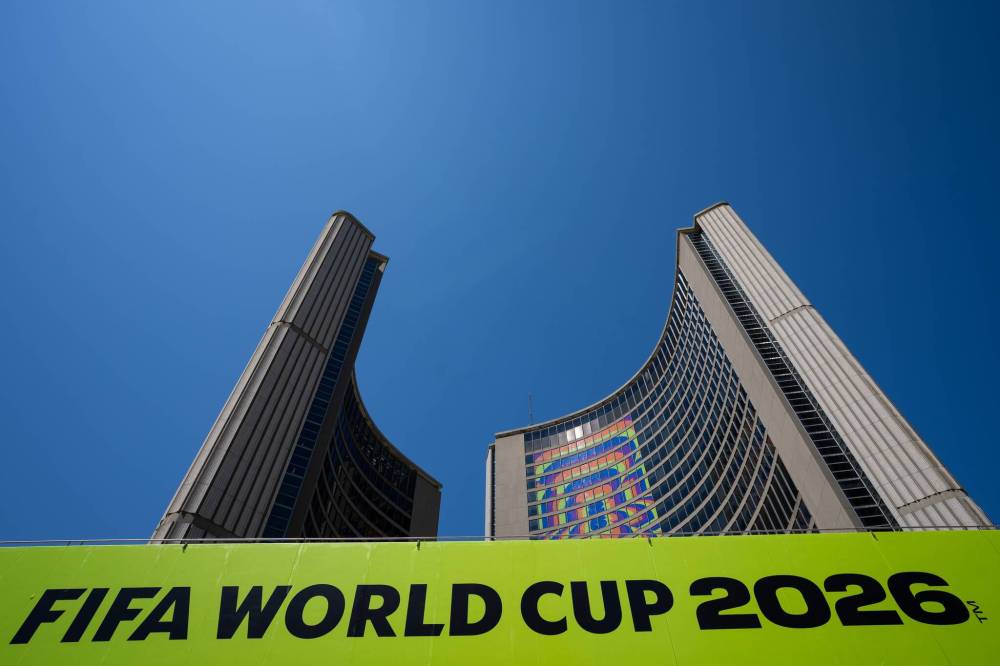
Arlyn McAdorey / THE CANADIAN PRESS
FIFA World Cup 2026 branding is displayed on city hall during a men’s World Cup trophy tour event at Nathan Phillips Square in Toronto.
What’s more, Canada — with Toronto and Vancouver as host cities — is expected to see an additional $3.8 billion in economic activity from the event.
That said, it is estimated to cost taxpayers about $1 billion to host.
The cost is not lost on local soccer fans, including those footing a big bill for a ticket.
“The ticket prices are very high … excessively high,” says Damian Truong, referee development manager with the Manitoba Soccer Association.
The high price tag aside, he and his father are attending a Group of 16 game in Vancouver in early July. They’re among a handful of fortunate soccer fans who won an RBC-
sponsored lottery, giving them the right to purchase a ticket to any game hosted in Canada.
Even though the tickets cost about $850 apiece, it’s still worth it, he adds. “It’s always been a dream of mine to go to a World Cup game,” Truong says.
Yet he sees the painful irony for many other unlucky footie fans in Canada. “It’s kind of a shame that when it’s in my own country, it’s so hard to get tickets.”
It’s also ironic that what is often considered the “game of the people” costs so much to watch live as the best soccer nations battle for supremacy on the pitch.
FIFA even kicked it up a notch this time around. Tickets are by far the most expensive for a World Cup, says Jim McCarthy, a U.S.-based live event consultant and founder of Impresario Strategic Growth Service.
The 2026 event is “a big jump up from Qatar four years ago, which was the most expensive World Cup at the time.”
Yet McCarthy argues FIFA — in charge of ticket prices and sales — has taken a risk this time by expanding the event to 48 nations participating, up from 32 in previous events.
“The result of that is that the first round will not be nearly as competitive as it has been.”
In turn, he is skeptical that every match, especially those involving smaller nations like Curacao and Cabo Verde, will see significant demand, given that tickets cost hundreds of dollars.
“In North America, we have a very robust resale market,” he says about websites like StubHub. “What’s interesting about that is it basically tells you what people think these tickets are worth.”
McCarthy notes group stage ticket prices have generally trended downward in recent weeks — though the least costly (Senegal v. Iraq in Toronto) remain about $440.
By comparison, a soccer fan in the Greater Toronto Area could get season tickets for the Hamilton Forge FC, part of the Canadian Premier League, starting at about $464 at the low end.
It may not be the World Cup but it’s accessible for average families, says Marty von Wuthenau, president of public affairs at Earnscliffe and a former vice-president of communications for New York City FC.
A long-time soccer fan who is not attending a 2026 World Cup game, he understands the frustration Canadian fans feel.
FIFA has justified the high cost “because of North America’s entertainment economy,” he adds. It likely recognized, based on Taylor Swift’s lengthy Eras Tour, that people are willing to pay obscene sums to be entertained.
Von Wuthenau adds he understands FIFA’s thinking: the World Cup is its main revenue event, with 90 per cent of profits going toward supporting soccer globally.
So fans paying big money to attend can take heart — they are helping the sport grow.
Of course, if you are spending that much on an event, which includes travel, accommodation and food, it is also an investment worth protecting, says Matt Hands, vice-president of insurance at Ratehub.ca.
“I always tell people that, if you’re thinking of relying on credit card coverage, do your research,” he says, noting many credit cards provide travel and purchase insurance.
The devil can lurk in the details. Don’t assume just because you bought tickets, flights and hotels with your MasterCard, you’ve got coverage if things go awry, he says.
Another tip that is obvious, but still worth mentioning, is to steer clear of social media to purchase tickets.
“It is where you find the greatest risk, because you can’t verify who you’re dealing with and if something bad happens, there’s really no recourse,” says Ryan Sydor, country Canada manager at Okta, which provides authentication technology for event ticket purchases.
The temptation to use social media has likely never been higher in the wake of a new Ontario law prohibiting resales above a ticket’s face value.
Ticket-holders with legitimate reasons to sell face doing so at a loss through resale sites under that province’s law after transaction fees.
Winnipeg Free Press | Newsletter

In turn, more sellers try social media to resell tickets for more than face value, but Sydor says it’s still not worth the risk for buyers.
Truong and his father, of course, have no intention of selling their tickets. What’s more, they do not even have to worry about accommodation costs.
“Luckily, I have a grandma who lives in Vancouver, and we’re going to stay with her, because even the hotel prices shot up so much.”
Joel Schlesinger is a Winnipeg-based freelance journalist
joelschles@gmail.com