
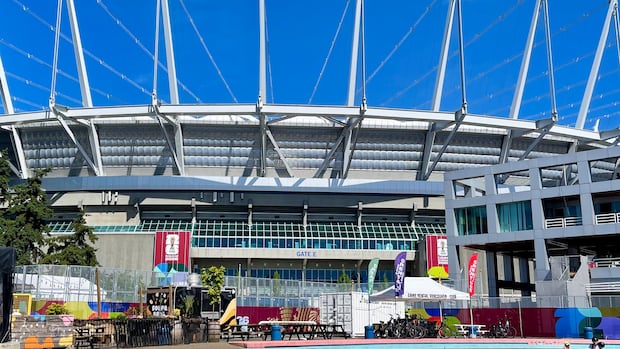
With the opening game at B.C. Place stadium just one week away, the FIFA World Cup is finally starting to feel real for the casual fan. But for people who live and breathe soccer every day, anticipation has been building for a while.
That’s evident at Soccer B.C., the province’s governing body for the sport, where metrics show that interest and engagement in all facets of the beautiful game have spiked 200 per cent in the past year.
“The FIFA World Cup is a major opportunity to give visibility to the sport,” said CEO Gabriel Assis. “That’s certainly the challenge in front of everybody working in the system: how do we turn this moment into momentum?”
At Vancouver Athletic FC, the city’s largest amateur soccer club, players and staff alike have been eagerly awaiting the World Cup kickoff.
“It’s really in the stretch now where people are getting excited,” said VAFC executive director Josh Bender. “These kids are feeling inspired by the teams – not just Canada but all the stars from all the teams.”
Along with the buzz, however, is a measure of disappointment that the world’s premier soccer showcase hasn’t sparked any outreach to local youth organizations.
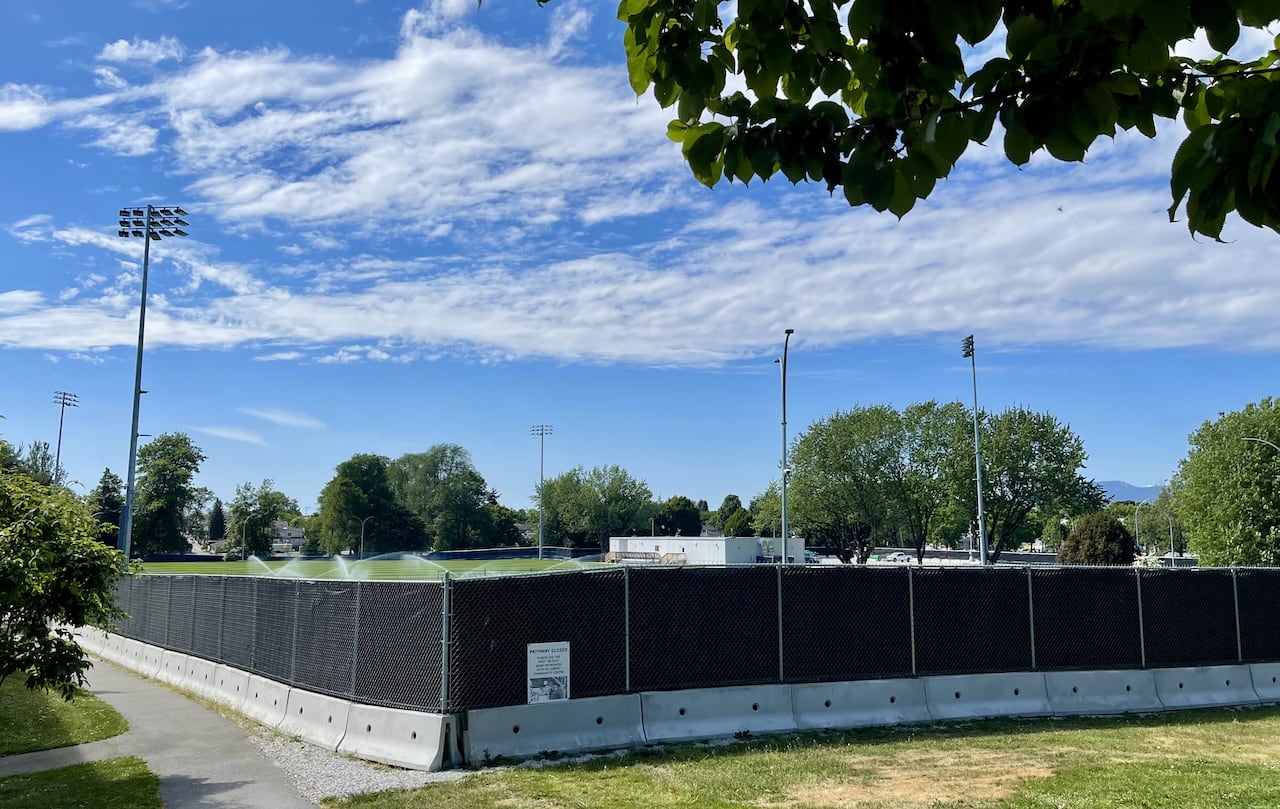 A blacked-out chain-link and concrete fence encircles the high security FIFA World Cup training venue built at Killarney Park in East Vancouver. (Karin Larsen/CBC)
“We know the city and parks board are doing a great job in getting the city ready, but we’d just like to see them fulfil some of the promises they made to engage us a little more and get ready
“Engagement to us would be using pitches around the city to demonstrate our skills, or to put on clinics or training sessions with public. We’ve got over 3,400 players ready to go.”
Soccer is the most popular sport in the province with 120,000 registered players across all age groups, plus 30,000 coaches and officials.
The World Cup could drive those numbers even higher. And while that would be welcome, in many communities it also creates challenges because there’s not enough fields.
“We can only grow as much as our infrastructure allows,” said Assis. “That is one of the biggest focuses for us, that we are able to leverage this event to bring awareness to the infrastructure gap that exists.”
The World Cup won’t fix the gap, or deliver legacies in the quantity of the 2010 Olympics with the Richmond Oval, Hillcrest centre, Whistler Olympic Park and Whistler Sliding Centre.
Killarney field facelift
Killarney Park in East Vancouver is an exception. A major facelift has turned a substandard field into a “venue-specific training site” for World Cup teams coming to town, replete with a natural grass field that meets the FIFA specifications for the playing surface at all 16 World Cup host stadiums.
There are also new floodlights so practising teams — despite being in town during the longest daylight hours of the year — can simulate night games, according to the FIFA description.
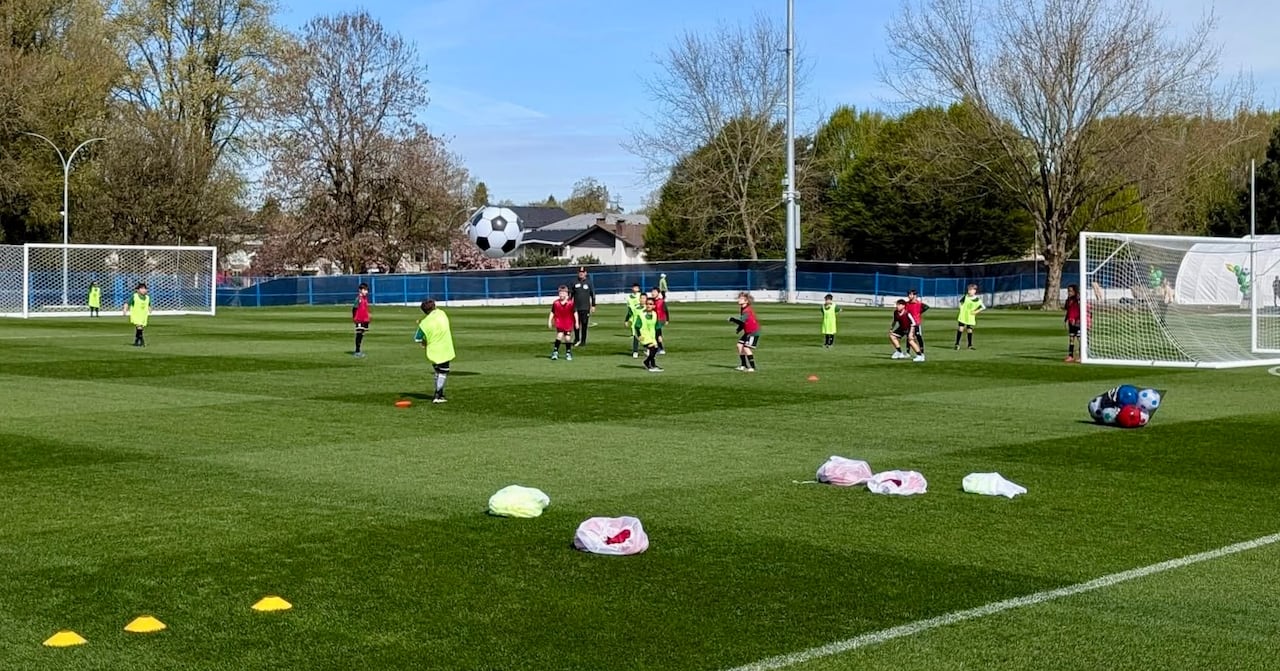 Members of the Killarney Youth Soccer Association got to play at the new FIFA venue-specific training site during the club’s 60th anniversary celebrations in April. (Warren Creighton-Killarney Youth Soccer Association/Submitted)
The Killarney field is a high-security venue for the World Cup, encircled by a three-metre high, blacked-out chain-link and concrete fence.
But once FIFA leaves town, the fence and buildings will be removed and the field returned to stakeholder groups like the Killarney Youth Soccer Association, whose players got an exclusive peek at the upgrades back in April when the club celebrated its 60th anniversary.
“That particular field was not really in very good shape. In the wintertime, it wasn’t really usable because it was swampy,” said association president Warren Creighton. “So the investment they put into it, doing all the irrigations and building on top of it, it should make that field last for quite a long time.”
To avoid ruinous wear and tear, guidelines are that natural grass fields in Vancouver can only be permitted for use 14 hours per week – fewer during heavy rain or when it’s freezing. That’s why all-weather artificial turf is simply more useful for soccer.
Field crunch
But in Vancouver, there’s not enough artificial turf to go around for the city’s 7,000 players, to the point where Bender wonders if clubs might eventually be forced to curtail programs and participants.
“Right now, the demand far exceeds supply,” he said. “We’d love to see the city and the parks board convert fields to artificial turf so there are enough places for all the kids and adults that want to play.”
The field crunch is also a problem for the 7,000-member Langley United Soccer Association.
But in Langley Township, a small legacy has sparked a big response, thanks to a first-in-Canada FIFA Arena mini-pitch, installed at the Langley Events Centre in partnership with the Canadian Soccer Association and B.C. Soccer.
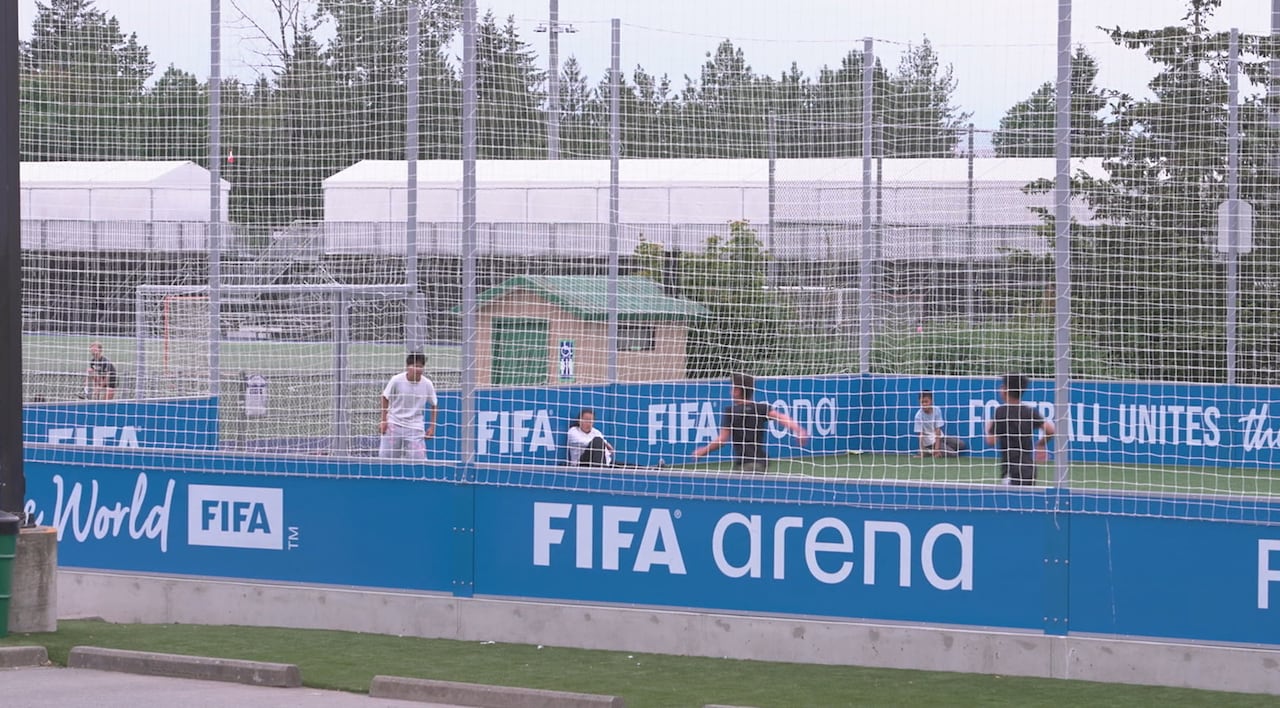 Players scrimmage on the FIFA Arena mini-pitch at the Langley Events Centre, the first of its kind installed in Canada. (Mike Zimmer/CBC)
Marcel Horn, technical director with Langley United, said the mini-pitch is often jammed with kids — even those who don’t play organized soccer.
“In many ways, it has organically become a social and community meeting place for youth from different schools, backgrounds, and skill levels who otherwise may never have crossed paths,” he said.
“It’s genuinely wonderful to now see accessible, safe, unscheduled soccer spaces being created specifically for kids to simply enjoy the game.”
Twenty more mini-pitches are coming to B.C. in the next few years thanks to a $10-million investment from the province and a $3-million contribution from the Vancouver Whitecaps.