
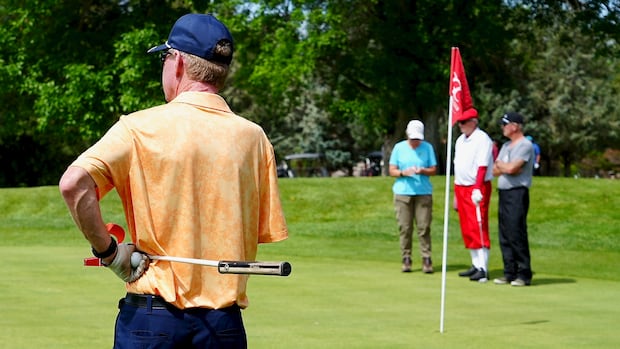
It may have been the site of a North American championship, but to three dozen golfers who descended on Connaught Golf Course in Medicine Hat, Alta., this past week, the green felt more like a relaxed getaway.
“We want to play well, but it’s really just such an awesome family,” said Dan Aldrich, the president of the North American One-Armed Golfer Association.
The group was formed in 2000 to connect golfers with the same abilities and provide an avenue to play against each other, apart from other adaptive tournaments.
“In my own little world, in my little city or wherever my course is, I don’t play with anybody with one arm. You know, I played with ‘normies,’ if you want to call it that,” said Aldrich.
“We get to come out here, and we all get to hang out.”
Aldrich lost the use of his left arm in an accident when he was 18. That ended the Los Angeles resident’s goal of playing college golf, but not his time on the course.
He recently celebrated his 40th year of golfing and ninth year as president of the group that gathers once each year in a locale in Canada or the United States.
Tournament comes to Canada
This year’s host and organizer is Jesse Florkowski, a multiple-time tournament winner and the golf pro at tournament course.
“They’ve been bugging me for the last couple of years to host it … it’s been an honour,” said Florkowski, a scratch golfer, who finished the opening rounds of play at 2 under par.
WATCH | Players gather from across the continent for one-armed golf tournament: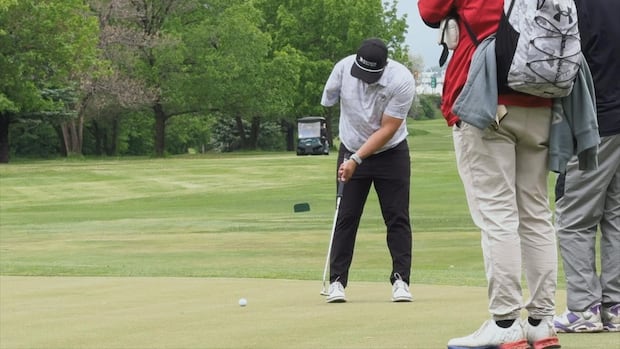
Southern Alberta hosts North American one-armed golfers’ championship
Medicine Hat golf pro Jesse Florkowski is hosting and competing in the North American One-Armed Golfer Association tournament. About three dozen competitors from across Canada and the United States say the event creates a space for camaraderie and competition against others with the same abilities.
“I think the biggest thing is showing other people — not in the circle or not in the association — that anything is possible no matter what you’re going through,” he said. “As long as you put your mind to it and you got people backing you.”
In the championship playoff match on Thursday, Florkowski trailed by two strokes after 15 holes, but caught fellow finalist Vince Biser and won with a birdie on No. 18.
Both now have seven championships.
“I probably have more runner-up [finishes] than that,” joked Biser, who hails from Baltimore, Md.
Next, both players are off to the United States Golf Association’s Adaptive Open championship in Biser’s home state.
A strong left arm and a life in sports
Florkowski, who finished fifth at last year’s USGA event, was born without a right arm and picked up golf as a pre-schooler.
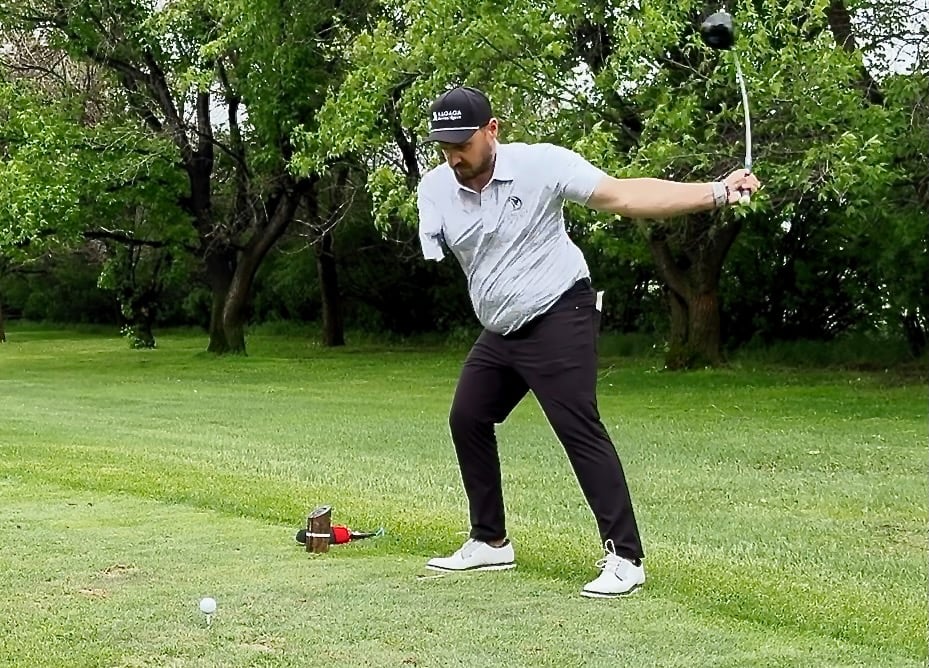 Jesse Florkowski tees off at the North American One-Armed Golfer Association Championship held in Medicine Hat. (Collin Gallant/CBC)
He has become a local sporting legend in Medicine Hat, also having bowled a number of perfect games over the years.
While playing golf at the Canadian college level, he earned a business degree from Medicine Hat College and has applied it to golf course management.
The 37-year-old is the golf pro at Connaught Golf Club, advising all members on improving their game.
Breaking down one-handed play versus two
The North American association focuses on upper extremity disabilities, and in recent years has added categories for players with partial paralysis, missing hands or fingers, or those who use prosthetics, along with ladies, seniors and junior categories.
“Depending on the sport, arms are more important than some sports and legs are more important than others,” said Aldrich.
He said that club control is obviously a big factor in golf, magnifying the difference between one-and two-handed players, even if that two-handed player is missing a leg.
“Guys that have either leg amputations or dominant injuries, tend to have a little bit of an advantage [in how and] where the turf interacts with the club,” he said.
“With one hand touching on it, it tends to be more variable. So our misses tend to be big.”
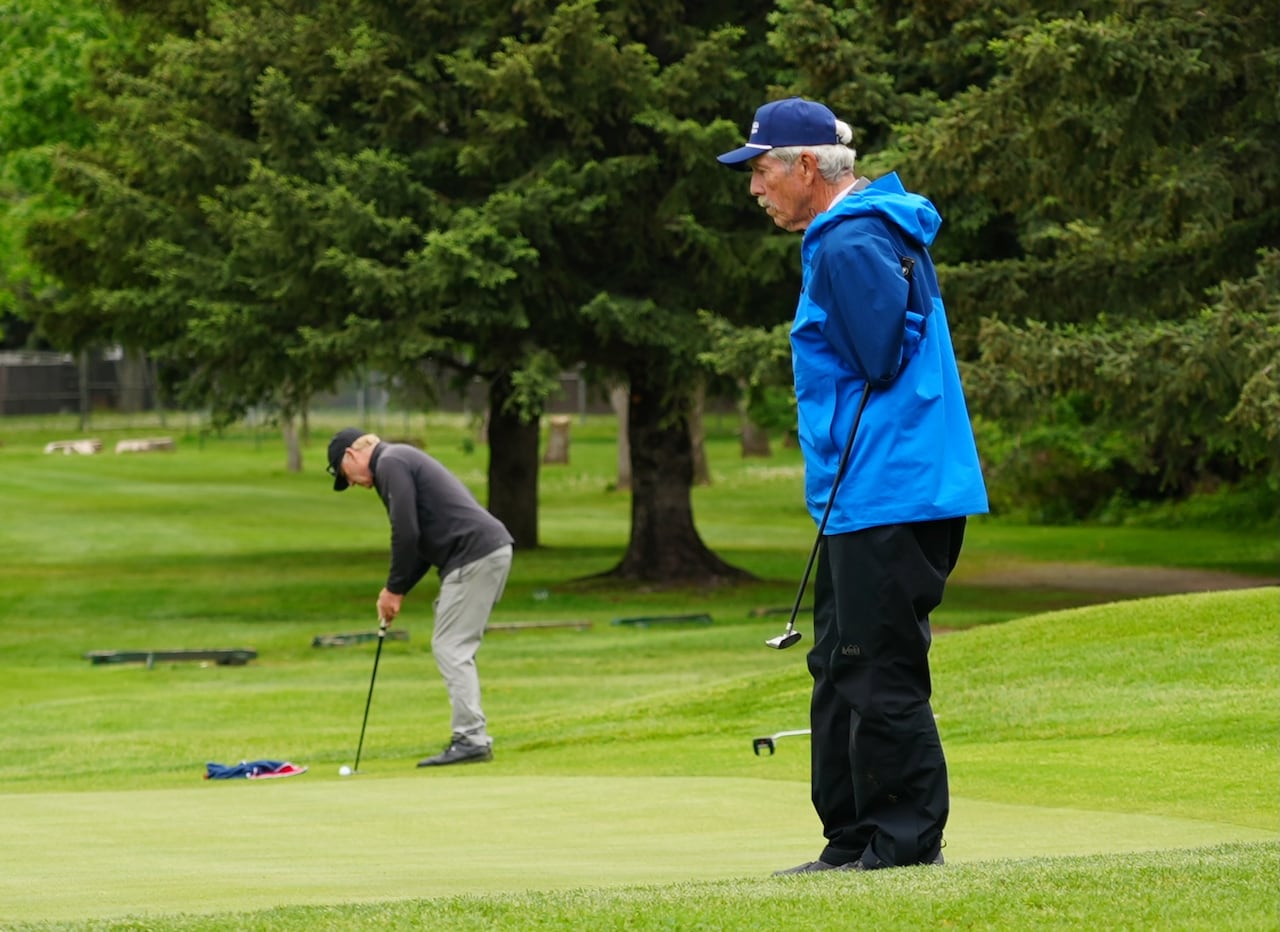 Competitors in the North American One-Armed Golfer Association line up their putts during play this week in Medicine Hat. (Collin Gallant/CBC)
Florkowski said the difference between one- and two-armed players isn’t as large as people may think.
He said the basis of any golfer’s game should be focus and club control, rather than strength. Since one-armed players must prioritize shot making, they can post quality rounds.
“I swing almost identical to some of the two-armed players, just with one hand,” he said. “I think with a lot of hand-eye co-ordination and a lot of practice, you can get good at something if you put your mind to it.”
From local courses to golf’s top destinations
Also competing in Medicine Hat was Alexander Gibbs, who was born premature without the use of his right arm and works at a course in his hometown of Peachtree City, Ga.
He finished fifth at the 2024 North American One-Armed Golfer Association tournament held at the PGA West course in Palm Springs, Calif. — the kind of green most any serious golfer would dream of playing.
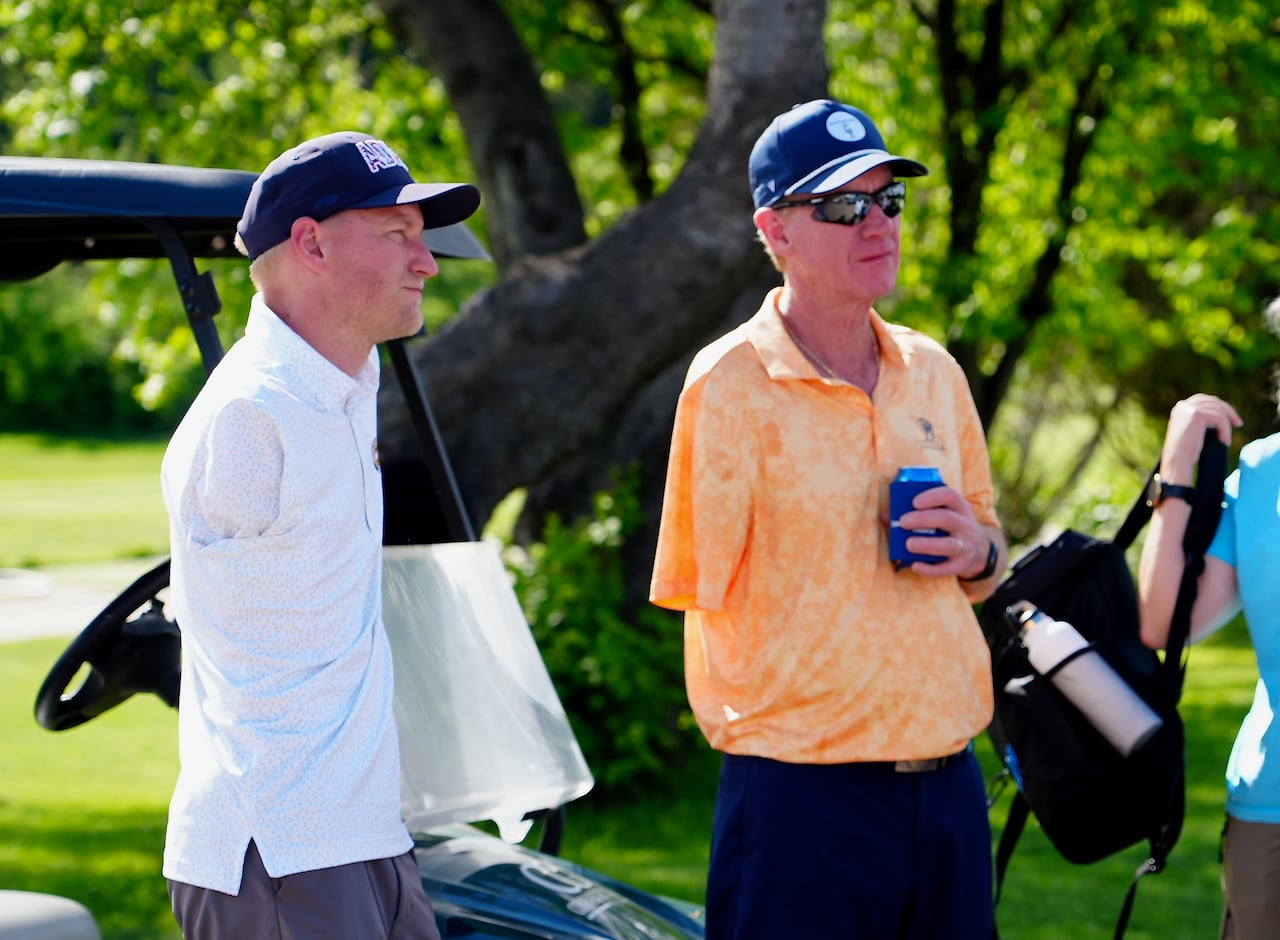 Members of the North American One-Armed Golfer Association say the annual tournament is as much about maintaining friendships and community as it is about playing good golf. (Collin Gallant/CBC)
Every two years, the association plays in a Ryder Cup-styled event against European counterparts. The hope is to stage the 2027 event in Ireland.
“It’s a sport that I can play without, really, too many injuries,” Gibbs said.
“I can’t do any other contact sports. So it’s golf.”