
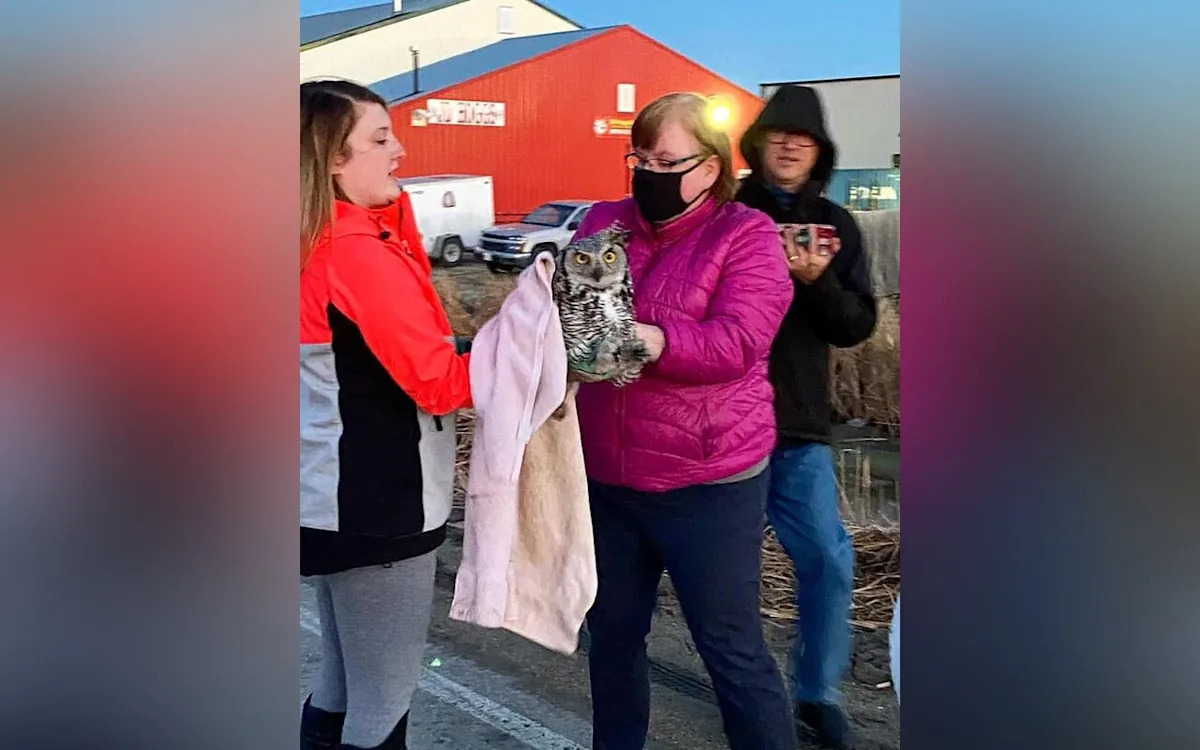
Melissa Powell says she’ll never forget the time a Winnipeg-area wildlife rehabilitation centre helped her rescue a great horned owl she found injured.
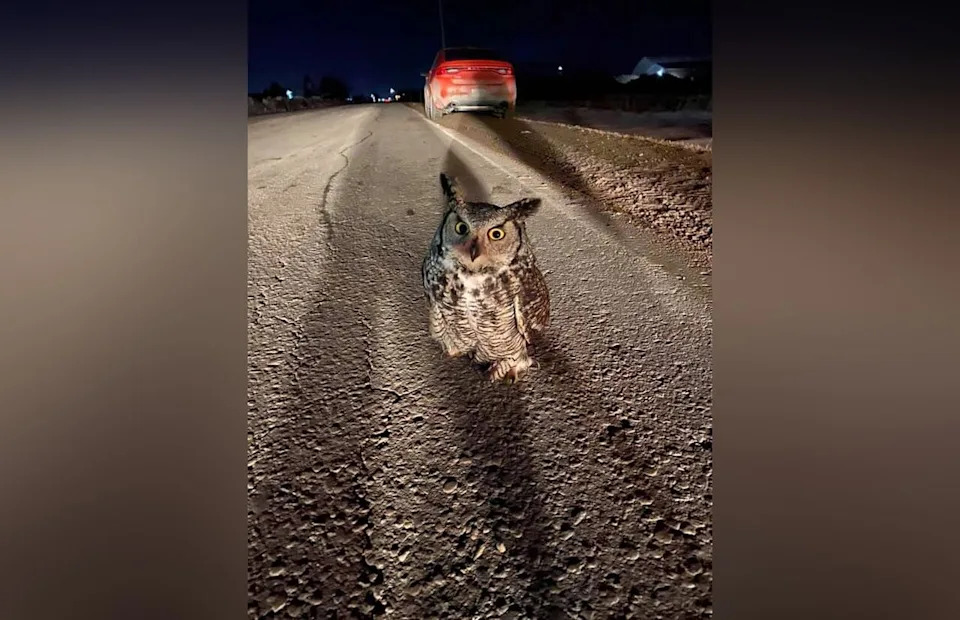
She spotted the owl, which was sitting in the middle of Springfield Road in the Transcona area, while driving one night in March 2021. She pulled over and called the Prairie Wildlife Rehabilitation Centre for help.
PWRC coached Powell through getting the injured bird to the side of the road. She sat there with the owl until volunteers arrived and took him in for care.
“It was just surreal. I was like, ‘I’m hanging out at night with this owl on the road,'” she recalled, adding the owl was initially stressed and panting but calmed down as she sat with him.
Powell didn’t expect to get owl updates when she said goodbye to him that night. To her surprise, PWRC quickly followed up to let her know the bird had lost his tail and had bruising around his mouth — but that he could still fly and would heal up.
(Submitted by Melissa Powell)
The owl recovered quickly and Powell was invited to help release him.
“What made it special was that Prairie Wildlife involved me in the whole process,” she said.
“They actually called and invited me to come to the release at the same place that I found him at. They actually let me hold him and throw him up to let him fly,” Powell said, remembering how attached she felt to the owl as she watched him fly away.
It meant so much to her, in fact, that she got a great horned owl tattoo on her leg to commemorate that special moment.
However, those days are over.
The PWRC stopped intake for injured and orphaned wildlife patients on Thursday, the organization said in a social media post announcing it will close at the end of the summer.
“After much consideration, we have made the difficult decision to begin winding down the organization,” PWRC said, citing challenges with funding, staffing and the increasing costs of wildlife rehabilitation.
“This has been an incredibly difficult decision, but we are proud of the work we have done and the effort we have made to help injured and orphaned wildlife over the years.”
The organization is focused on rehabilitating the remaining animals at its site in St. Adolphe — located about 20 kilometres south of Winnipeg — including a litter of four fox kits that are currently eating a specialized diet.
PWRC says anyone who comes across injured and orphaned wildlife should contact Wildlife Haven Rehabilitation Centre at 204-202-3806, Manitoba’s Conservation Officer Service at 1-800-782-0076, or Bridgewater Veterinary Hospital at 204-452-0911.
CBC News reached out to PWRC for comment. The organization declined an interview, saying the decision to close is “too fresh to chat about at this time.”
In a statement on Thursday, Wildlife Haven thanked PWRC and its volunteers for its years of service helping Manitoba wildlife. Wildlife Haven said patient admissions have already increased by 60 per cent compared with this time last year, and PWRC’s closure is expected to put further pressure on the rehabilitation centre.
Powell says she was sorry to hear PWRC was closing because she felt a special connection with the organization after being included in the great horned owl’s rehabilitation journey.
“It feels sad that they have to close,” she said.