

Listen to this article
Estimated 3 minutes
The audio version of this article is generated by AI-based technology. Mispronunciations can occur. We are working with our partners to continually review and improve the results.
Ottawa paramedics fell short of their response time targets for the most serious medical emergencies in 2025, according to a new city report.
In 2025, the Ottawa Paramedic Service missed its council-approved target for responding to the highest priority calls on the Canadian Triage Acuity Scale (CTAS).
The CTAS sets a score from one to five for patient urgency. CTAS 1 calls are the top priority and involve life-threatening emergencies.
Council’s target requires paramedics arrive within eight minutes on 75 per cent of CTAS 1 calls. In 2025, crews achieved that 70.4 per cent of the time, down from 75.1 per cent in 2024.
The report, prepared by Ottawa’s chief paramedic Pierre Poirier, says the shortfall is a result of “a growing population, [an] aging demographic, and health-care system challenges.”
The report also says the benefits of council’s 2024-2026 Paramedic Service Investment Plan — which include funding for 99 new paramedics and support staff — haven’t fully kicked in.
Since 2023, the city and the province have funded 141 new positions across the service.
‘Level zero’ events down sharply
While paramedics didn’t hit the response time target for CTAS 1 calls, the service exceeded targets for every other category.
They arrived within the target times on 78.3 per cent of CTAS 2 urgent calls, 81.8 per cent of CTAS 3 calls, 87.3 per cent of CTAS 4 calls and 91.8 per cent of CTAS 5 calls.
The paramedic service also sharply reduced the amount of time ambulances were unavailable to respond to an emergency call, something that’s known as a “level zero” event.
There were only 866 minutes when no ambulances were available in 2025, down 92 per cent from 11,372 minutes in 2024.
First responders also hit council’s response time targets for sudden cardiac arrests, the report said.
The city aims to have someone equipped with a defibrillator — not necessarily paramedics —arrive within six minutes in 65 per cent of cases. That target was met 74.9 per cent of the time in 2025, according to the report.
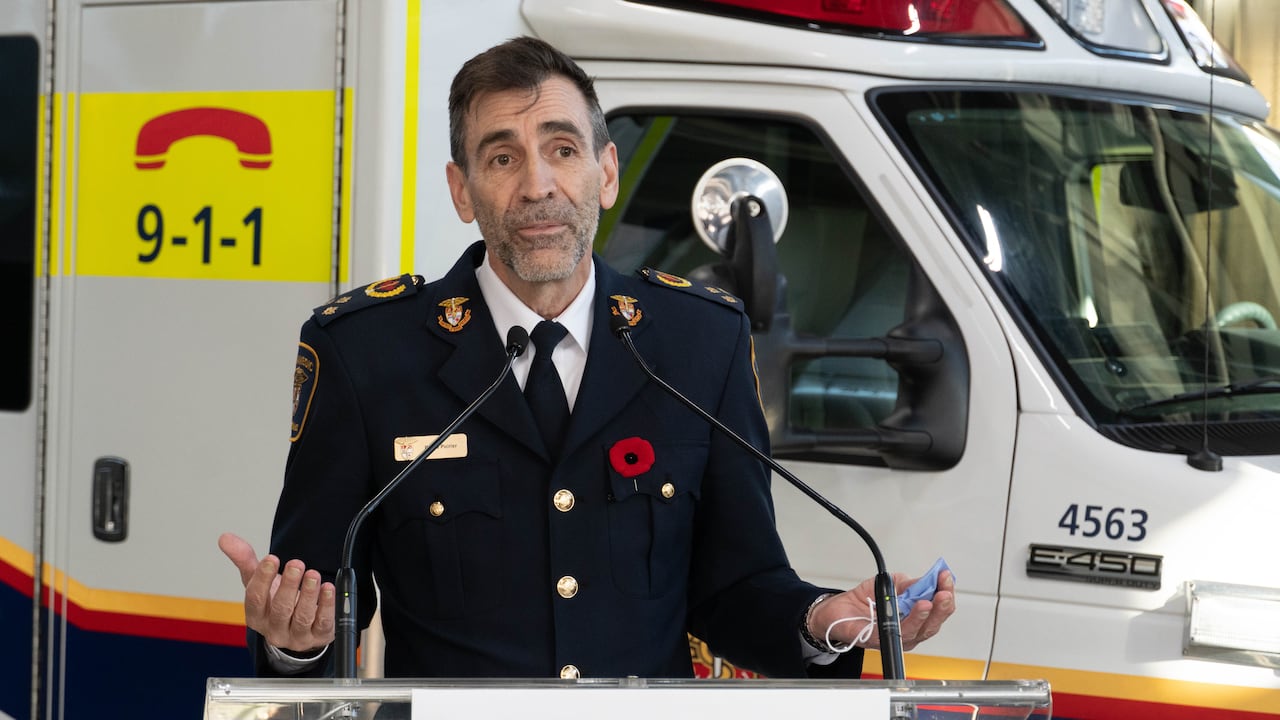 The failure to meet the targets for high-priority calls is due to factors like the city’s aging population and wider challenges in the health-care system, according to Pierre Poirier, the paramedic service’s chief. (Jean Delisle/CBC)Notification goals missed
Ontario’s Ministry of Health requires ambulance communication centres to notify paramedics within two minutes for at least 80 per cent of sudden cardiac arrest and CTAS 1 calls, and at least 75 per cent of CTAS 2 calls.
The report shows Ottawa’s centre missed the target for all three.
Dispatchers achieved their goal just 33.7 per cent of the time for sudden cardiac arrests, and were even less successful for CTAS 1 (17.9 per cent) and CTAS 2 (11 per cent) calls.
However, paramedic officials say the province’s current standards don’t account for the new Medical Priority Dispatch System, introduced in 2024, which requires dispatchers to get more information from callers than the previous system.
The new system allows communication centres to better assign a CTAS score, but it takes longer to complete, the report said.
The service is advocating with the Ministry of Health to revise the standards, according to the report.
In 2025, Ottawa’s central ambulance communications centre answered 155,032 calls for service and dispatched 205,496 paramedic responses.
The report is headed to an emergency preparedness and protective services committee meeting on June 15.