

Listen to this article
Estimated 4 minutes
The audio version of this article is generated by AI-based technology. Mispronunciations can occur. We are working with our partners to continually review and improve the results.
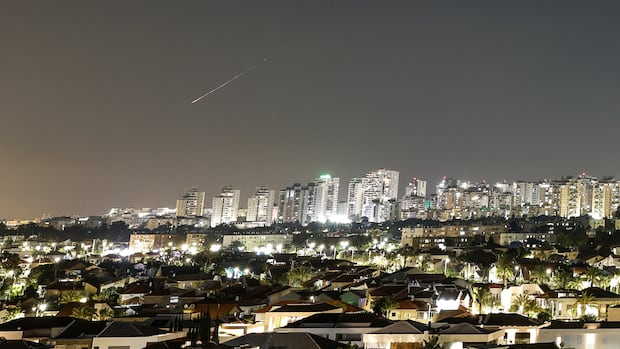
Israel says Iran has launched missiles at it in the first such bombardment since a fragile ceasefire took effect in early April, complicating mediation efforts for a deal to end the war.
Iran’s state broadcaster confirmed the missile launches. Tehran had warned of retaliation after Israel on Sunday struck Beirut’s southern suburbs without warning, in defiance of Washington’s request days ago to stand down. Israel called it retaliation for Hezbollah firing at northern Israel earlier in the day.
“Should these acts of aggression be repeated, the responses will be broader in scope and will encompass all American and Zionist targets throughout the region,” Iran’s Islamic Revolutionary Guard Corps said in a statement that also referred to attacks on Iran’s coast and vessels around the Strait of Hormuz.
Israel’s military said it intercepted the missiles, and less than an hour later it said people could leave shelters but stay near them. Sirens sounded in several areas of the country. Multiple explosions were heard in northern Israel.
“Iran has made a grave mistake,” Israel Defence Forces spokesperson Brig.-Gen. Effie Defrin said.
Follow live coverage of this story here.
Iran had warned that an attack on Beirut would renew full-scale war across the Mideast, even as Pakistan tries to restart talks between Tehran and Washington.
“U.S. forces across the Middle East remain vigilant and ready,” the U.S. Central Command posted on social media platform X shortly before the missile launches.
Mediation efforts
Israel’s attack on Beirut came a few days after the Lebanese and Israeli governments agreed to a ceasefire in U.S.-hosted talks, though Hezbollah rejected the deal. The strike on a residential building killed two people and wounded 20, Lebanon’s Health Ministry said.
Israel’s strikes and ground invasion in Lebanon in pursuit of Hezbollah, and the militant group’s resistance to disarming, have complicated an overall deal to end the war in the Middle East, which began when the U.S. and Israel attacked Iran on Feb. 28. Iran says any deal must include an end to fighting in Lebanon.
After Iran’s launches, U.S. President Donald Trump told a Fox News Channel reporter that he wanted the Iranians to stop firing missiles and return to the negotiating table. He also said that Israel’s strikes earlier Sunday were not co-ordinated with the U.S. and “I’m not happy about it.”
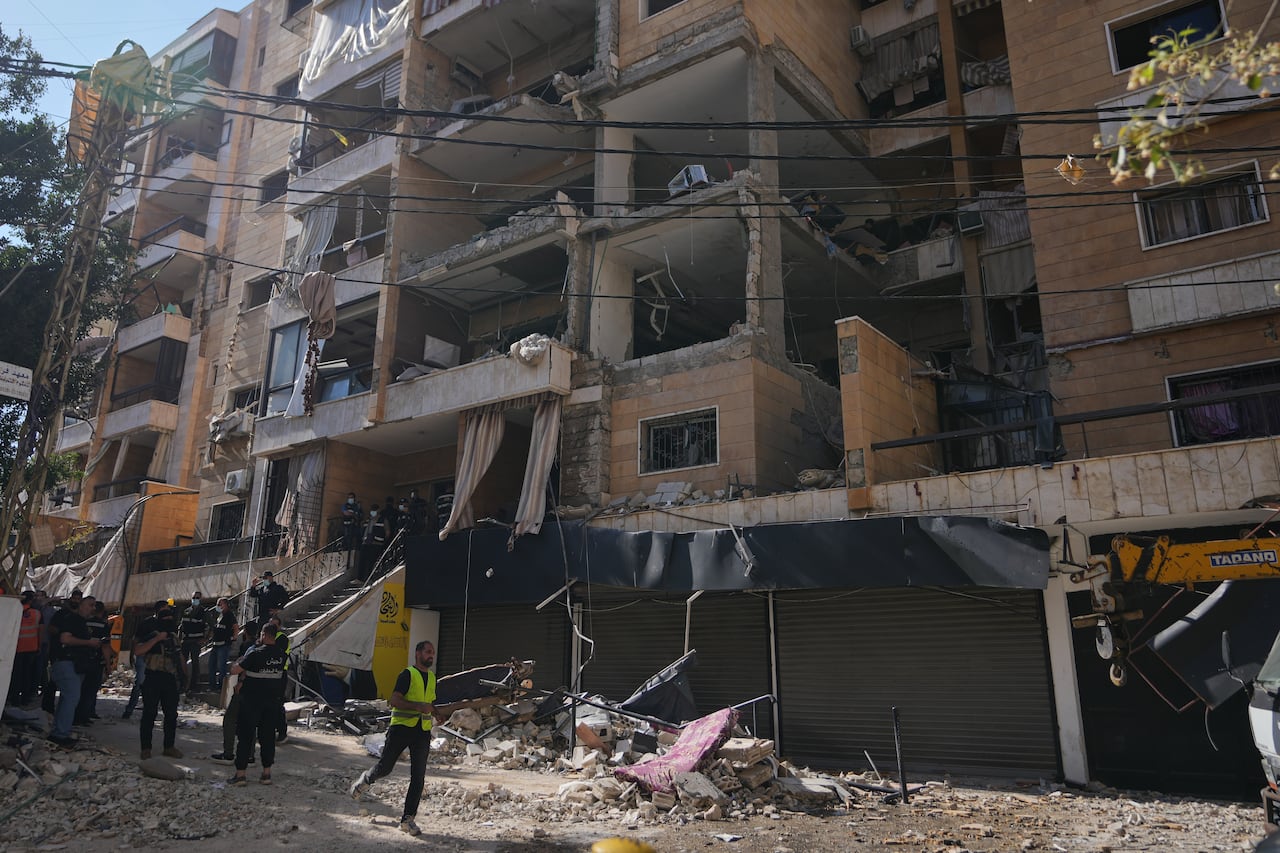 Lebanese security officers gather at the site where an Israeli airstrike hit a building in Dahiyeh, Beirut’s southern suburb, on Sunday. (Hassan Ammar/The Associated Press)
Israel on Monday had announced it would strike the southern suburbs of Lebanon’s capital, but urgent talks via Washington halted that on the condition that Hezbollah stop targeting Israeli border towns.
Hezbollah, which claimed responsibility for firing at Israel earlier Sunday, wants the direct talks between Lebanon and Israel to end. Instead, it supports Iran’s stance that an overall ceasefire deal between Tehran and Washington include the situation in Lebanon.
Trump, in an interview with NBC’s Meet the Press that aired earlier Sunday, said he would like to see a “more surgical attack on Hezbollah.” He also said he was “not demanding” that Lebanon be part of an overall ceasefire deal in the Iran war.
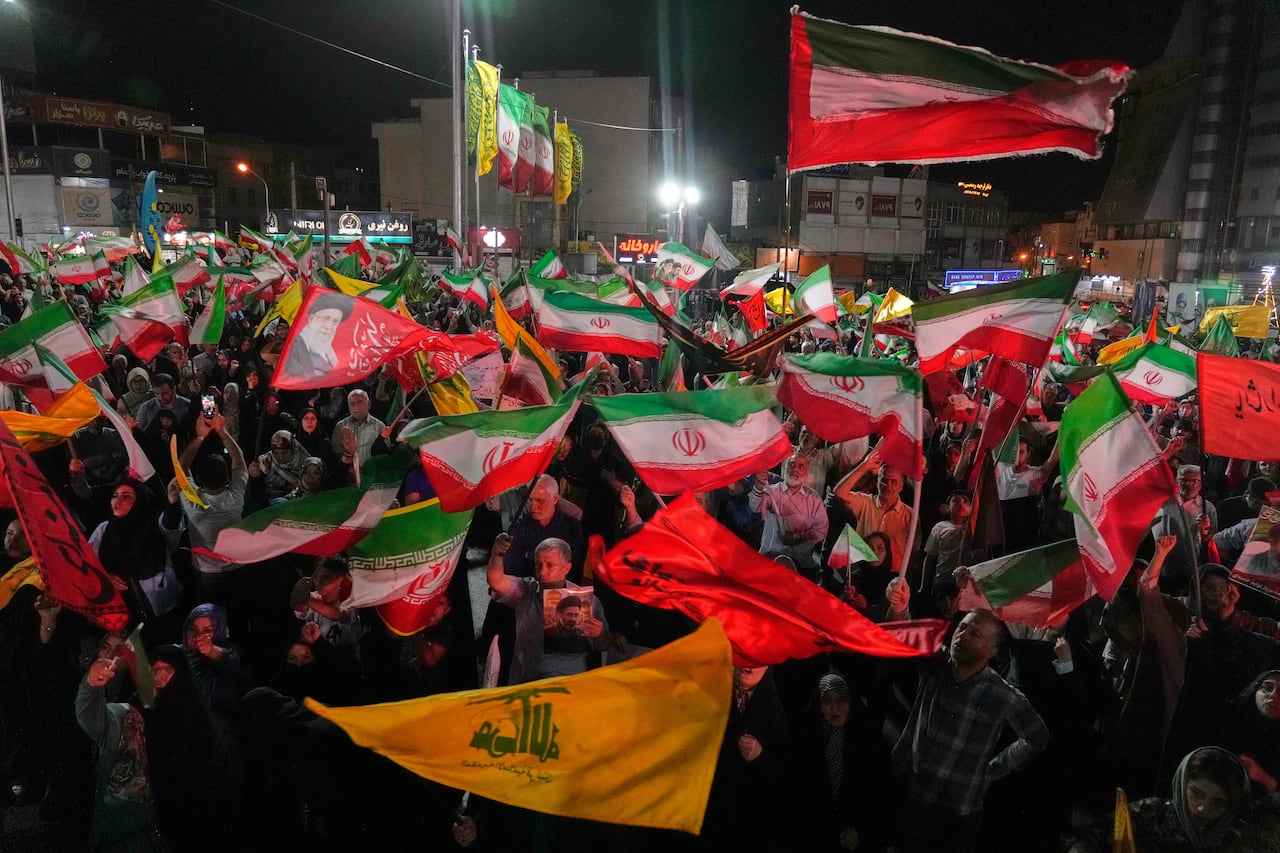 Demonstrators wave Iran and Hezbollah flags in Tehran on Sunday. (Vahid Salemi/The Associated Press)
Mediation efforts on that larger deal continued on Sunday as Pakistan’s interior minister visited Iran to talk with officials, and Egypt said its foreign minister and his Qatari counterpart discussed “proposed elements” of a potential agreement, with no details.
Meanwhile, Iran continued to assert its grip on the Strait of Hormuz, and the U.S. continued its blockade of Iranian ports, with shipments of oil, natural gas and fertilizer affected and the global economy in pain.
Since the ceasefire took effect, Iran has launched missiles and drones at Gulf nations and said it was targeting the U.S. military presence. After its launches against Israel, Iraq’s Civil Aviation Authority announced that the country’s airspace would close for 72 hours, and Syria’s aviation authority announced a 12-hour airspace closure.