
A new art exhibit is exploring socio-political themes through a unique medium.
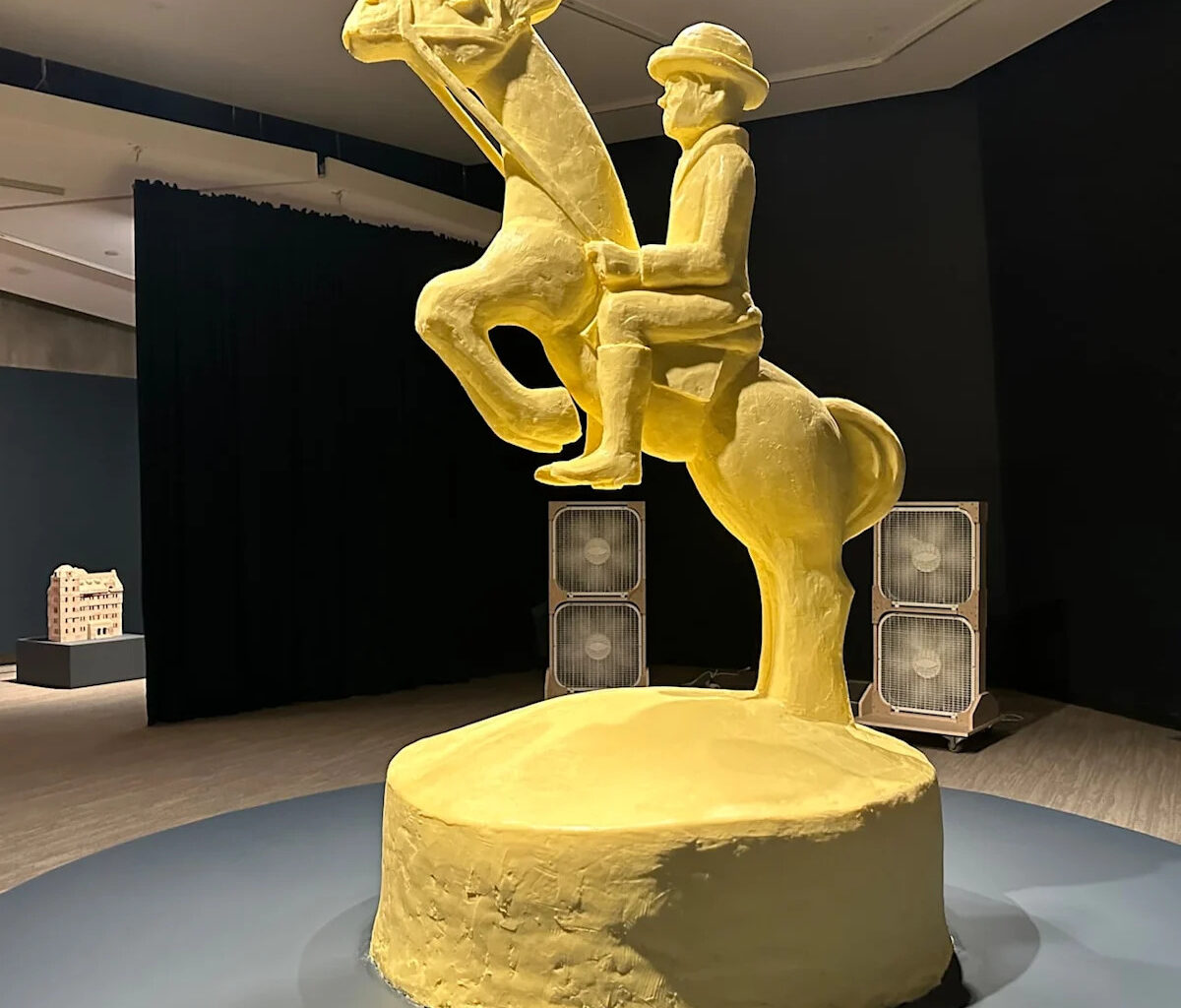
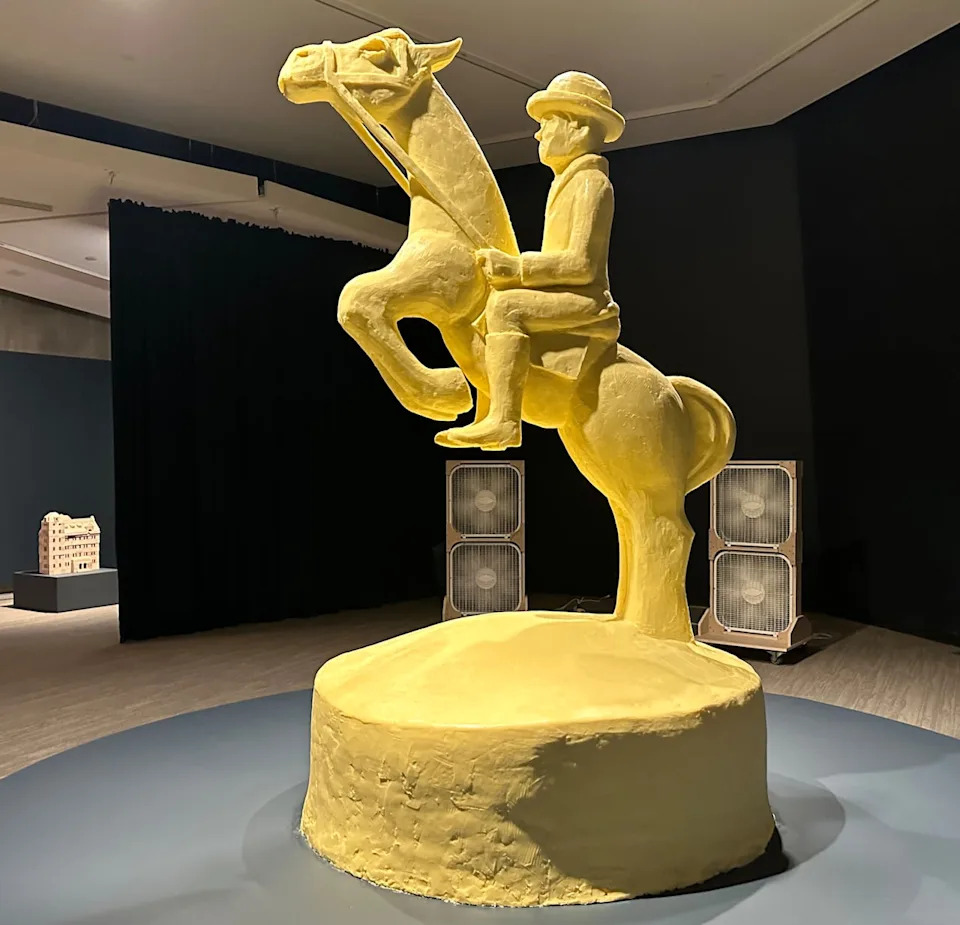
Ghazaleh Avarzamani’s Churn, Earn, Burn and then Return exhibit at Contemporary Calgary is centered around a 500-pound butter sculpture of a cowboy on horseback.
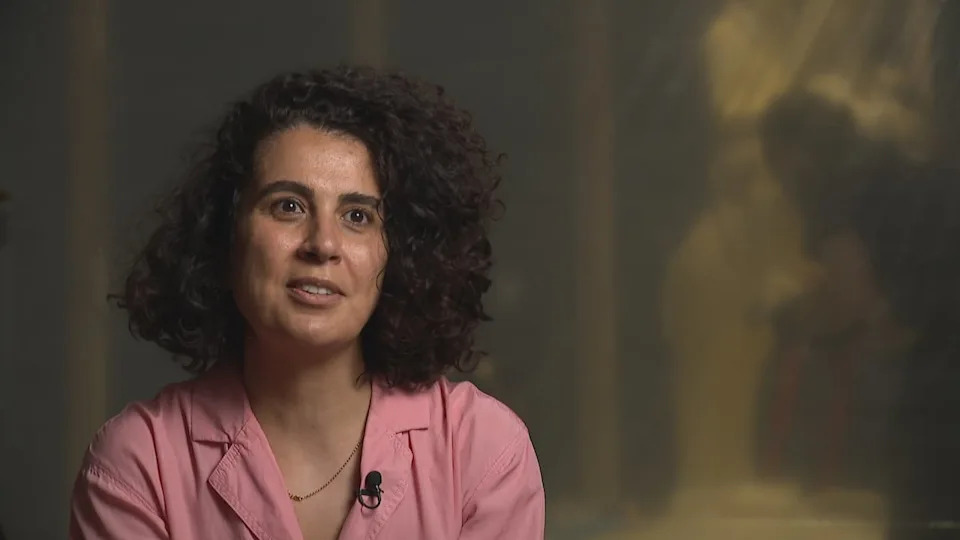
“Material carries a lot of messages for me,” the artist said. “It’s the material that decides what I do, and sometimes I need the material to be ephemeral. I need to it to be responsive to the environment, or to the people.”
And in this case, that material is butter.
(Amir Said/CBC)
Avarzamani said she wanted to work with butter since it’s something that changes, distorts and is affected by the environment, similar to soap she’s worked with in the past.
She expects the sculpture to naturally break down during the five-month exhibition period, with that degradation symbolizing how power can degrade and change over time.
“There’s gonna be a lot of cracks in this sculpture, and that’s very important for me,” she said.
She said the art will truly start once those cracks start appearing, and that even in its destruction, the sculpture will still try to look powerful, which further emphasizes the changing nature of power.
(Nate Luit/CBC)
Avarzamani also noted that she was fascinated by the history of butter, which for centuries was not a food but rather used for royal people, ceremonies, and rituals, gradually becoming food later.
That history includes a 3,000-pound butter sculpture of Edward, Prince of Wales, displayed at the British Empire Exhibition, an event showcasing creations from across the British territories in 1924 and 1925.
“Canada at the time, to show their achievements and power, they made a huge sculpture out of butter of Prince Edward,” Avarzamani said.
Exhibit uses Monopoly to explore complex themes
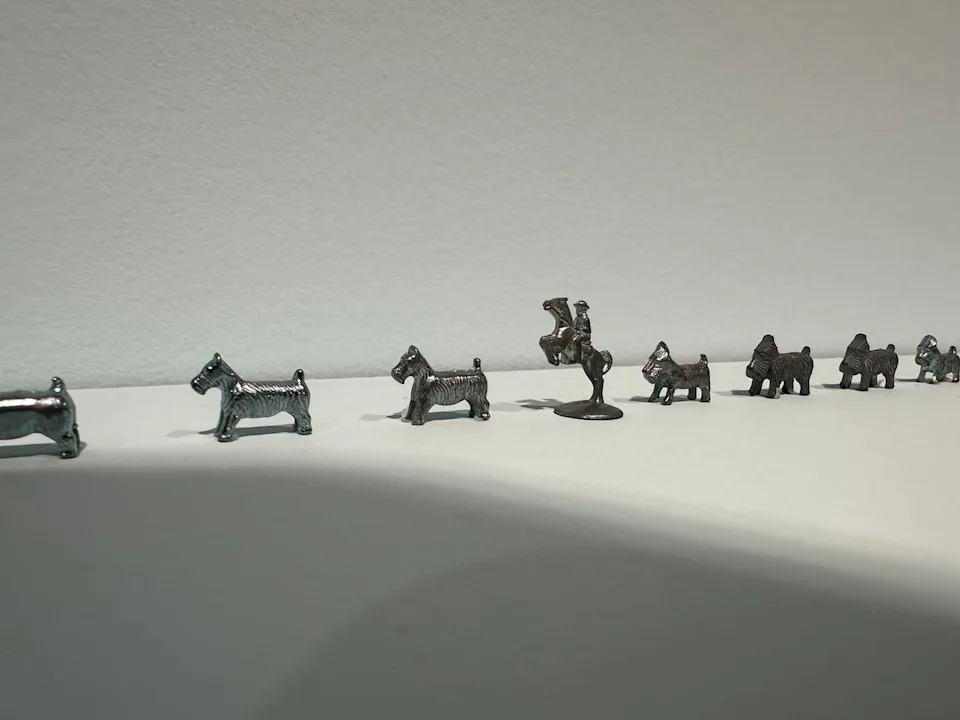
The sculpture is a Calgary Stampede-themed recreation of a Monopoly playing piece depicting a man riding a horse.
(Amir Said/CBC)
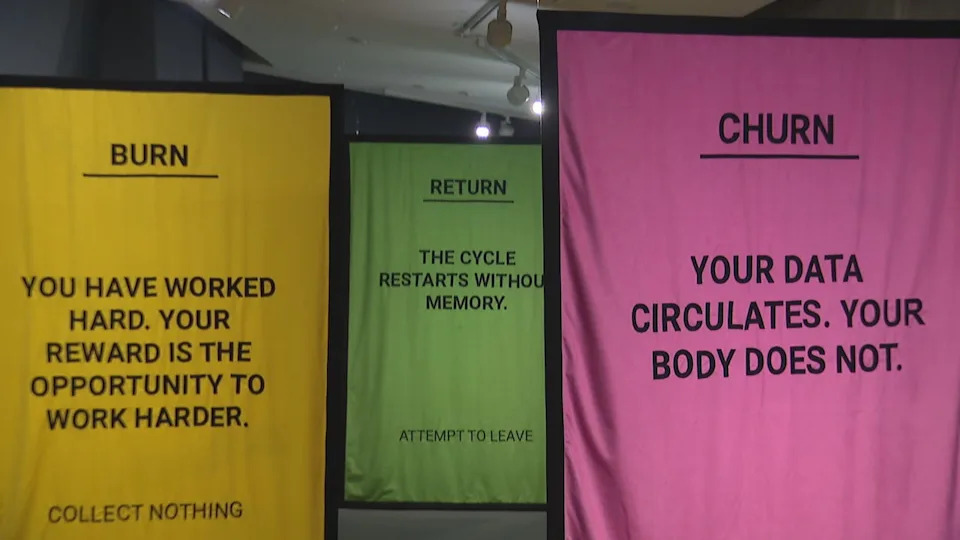
Avarzamani’s exhibit is filled with different Monopoly-themed imagery, which curator Mona Filip says is designed to mimic the board game with a grid on the floor and flags acting like Monopoly cards that dictate moves and power gains or losses.
“It’s a game of accumulating property, conquering territory, competing with others, and it reflects of course things that happen in reality, and how we’re all competing to make more money, to make a living, but also to have property, because of course it’s what lasts and sustains us,” she said.
(Nate Luit/CBC)
Filip said she was “both nervous and excited” about Avarzamani’s butter sculpture, which was made with local Alberta dairy.
“I had worked with her before, and I knew of this other butter sculpture that she made a few years ago,” she said, referring to a 2023 piece of artwork exhibited in Montreal.
“It’s a material that will change over time, and that’s something that [Avarzamani] uses often in her work, because she doesn’t want these works that she’s creating to be static,” Filip said.
“She wants them to be affected by the site, by temperature, by the warmth of people gathering around them,” she said. “And so the sort of transformation, sometime failure of these materials are very much part of the work.”
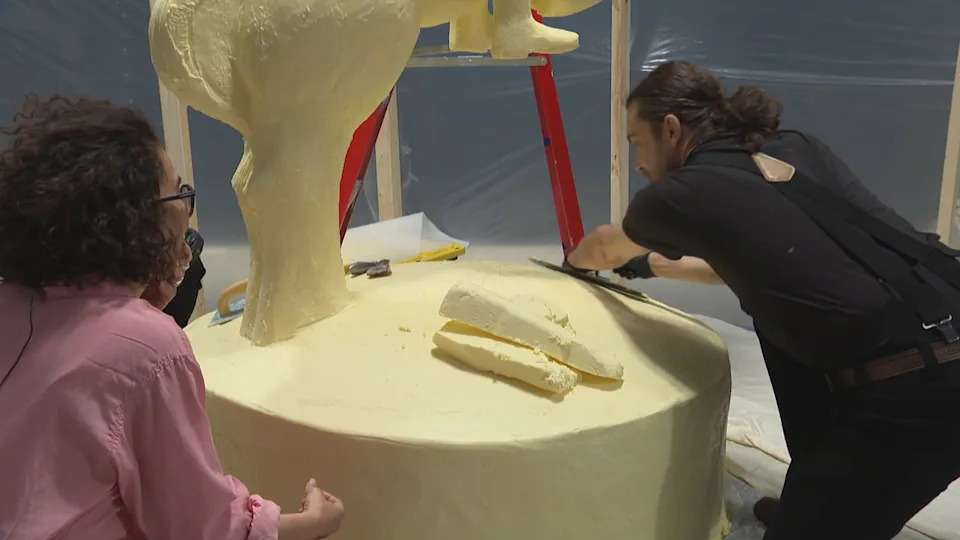
Ghazaleh Avarzamani, left, and sculptor Ryan Kurylo work on the butter sculpture. (Nate Luit/CBC)
Sculptor Ryan Kurylo, who helped Avarzamani create the sculpture, said this was his first time working with butter.
“I quickly did some research when the word ‘butter’ came up, and it is a very, somewhat commonly used material in sculpture, ” he said. “It reacts quite a bit like clay, so I wasn’t necessarily afraid of it.”
“Butter is a very unique material,” Kurylo said. “It’s really susceptible to the temperatures, and so it’s very unlike clay like that. Clay dries out in the environment, and we can kind of keep it moist or dry and deal with the firmness of it. The butter melts very quickly.”
He said using wooden tools and keeping temperatures down allowed them to complete the sculpture, which is built around a core structure and not 100 per cent made of butter.
But the sculpture is set to naturally melt away and deteriorate, which is unlike the more permanent creations Kurylo is accustomed to.
“When I’m trying to make a bronze monument for instance, that’s very much meant to last forever and ever,” he said. “However, other people are focused on [ice, snow and sand sculptures] so, in the world of of sculpture, it’s quite common to have temporary materials.”
Churn, Earn, Burn and then Return is on display at Contemporary Calgary until Nov. 8.