

Listen to this article
Estimated 4 minutes
The audio version of this article is generated by AI-based technology. Mispronunciations can occur. We are working with our partners to continually review and improve the results.
The union representing six Indigenous student support co-ordinators at the Ottawa-Carleton District School Board (OCDSB) is raising concerns about potential plans to cut those jobs by half.
Three co-ordinator positions have been “made redundant” as part of the board’s broader effort to restructure toward a “stronger model,” according to Melodie Gondek with the Ontario Secondary School Teachers’ Federation (OSSTF).
“There is some restructuring happening in September,” wrote Gondek, the federation’s district 25 president for office, clerical and tech workers, in an email to CBC.
“At this time, there’s no funding for those roles, and so those members will be on a recall list.”
In its own email, the English public school board neither confirmed nor denied that the three positions would be cut.
Instead, the OCDSB said it was “establishing new, permanent positions as part of an expanded Indigenous education team that will directly support Indigenous students, Indigenous ways of knowing and being, Indigenous culture, student achievement and well-being.”
In a 2024 survey, 3.7 per cent of the OCDSB’s student body, or nearly 3,000 students, identified as being Indigenous.
Co-ordinator role ‘a bit of everything’
Indigenous student support co-ordinators are not assigned to specific schools, Gondek wrote, but rather are “itinerant,” travelling to individual schools and “[meeting] the needs of students at each site.”
They’re part of a broader Indigenous education program at the OCDSB that employs 18 people and which is overseen by the board’s superintendent. The program also includes social workers, instructional and graduation coaches and a language team.
The role of the support co-ordinator is to enhance communication and engagement between the school board and Indigenous students and families, both at the elementary and secondary school levels.
“It’s almost a bit of everything,” said Kyrstin Dumont, a member of Kitigan Zibi Anishinabeg who worked as a co-ordinator at the OCDSB from December 2022 to June 2023.
“In some cases, you’re a social worker. You’re a counselor. But you’re also an academic guidance provider and somebody who’s helping these young people to succeed both academically and culturally.”
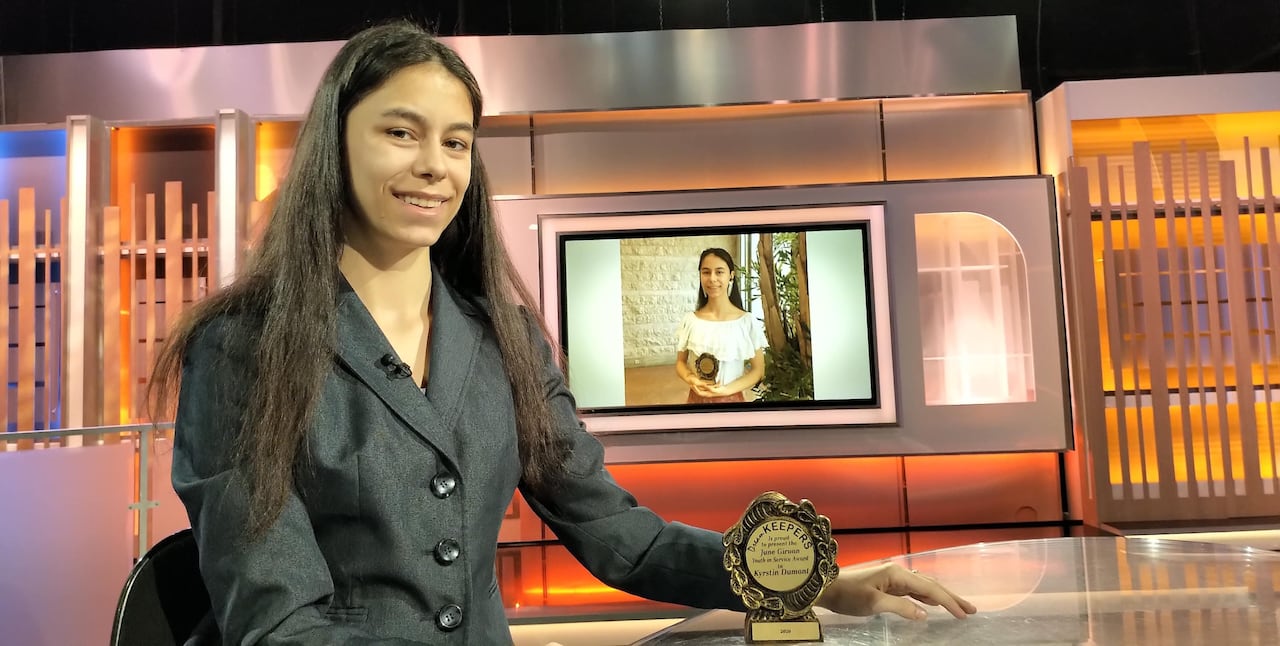 Kyrstin Dumont worked as an Indigenous student support co-ordinator at the OCDSB from December 2022 to June 2023. (CBC)
During her time as a co-ordinator, Dumont was responsible for at least one student in 37 schools across the OCDSB.
She said she was on-call nearly 24 hours a day, acting as a cultural bridge for students who may have had difficulties attending school.
“A lot of the time, these young people struggle with … bringing themselves into colonial buildings and institutions,” she said.
Board vows to boost Indigenous investment
The OSSTF has been given no details about what the OCDSB’s restructuring will look like, Gondek said.
“We don’t know if there is going to be anything for the Indigenous co-ordinators to return to, and which students will be supported and mentored and monitored throughout their academic career,” Gondek said.
In their statement, the OCDSB said they’d increase financial and human resource investments in Indigenous education in their 2026-27 budget.
“Our focus is on targeted success initiatives that will improve graduation rates and post-secondary outcomes, and the holistic well-being of our students,” the statement said.
“Some changes in staffing may result as the new programs achieve better outcomes; however, these do not represent a reduction in investment in Indigenous staffing or programming.”
The OCDSB did not respond to further questions from the CBC about whether any more positions on the Indigenous education team will be cut.
Dumont, who has a sister in Grade 10 in the OCDSB, called any cuts a backward step for the school board when it comes to its relationship with Indigenous students.
“When you remove positions like these that have taken decades to implement, that shows me that we are going backwards,” she said. “And it makes me question what kind of future people like my sister will have.”