
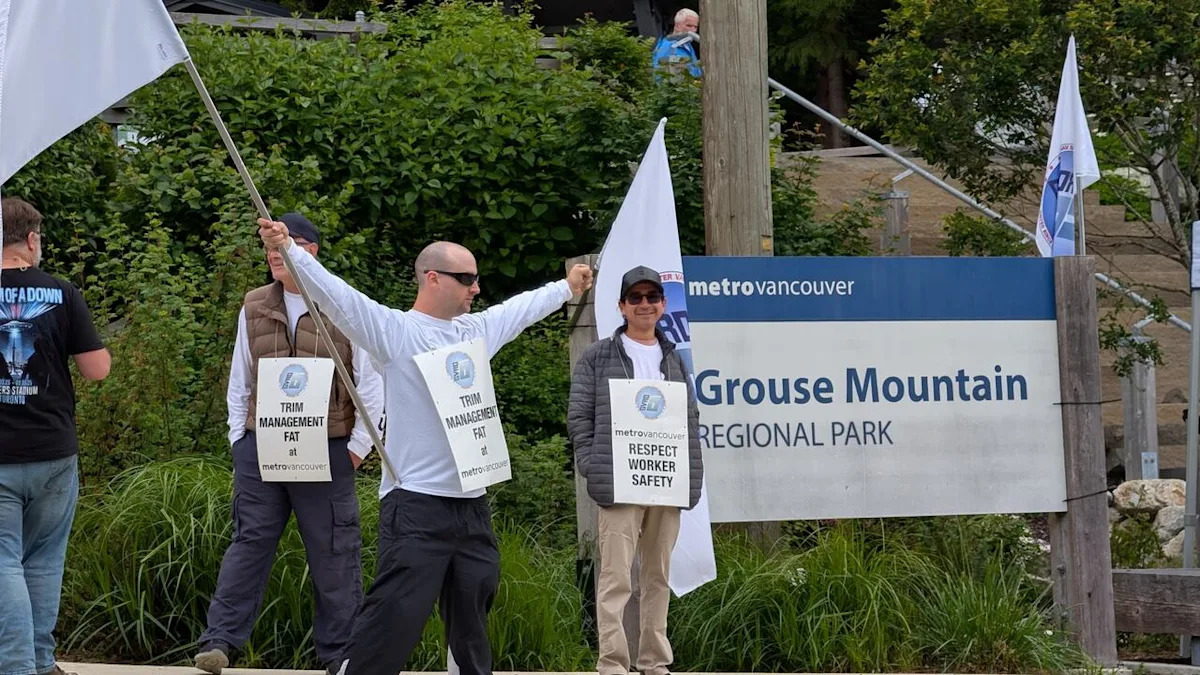
Hikers at North Vancouver’s popular Grouse Grind trail were greeted by picketing Metro Vancouver employees on Monday.
The union representing hundreds of Metro Vancouver outside workers urged the public to avoid the trail and two other regional parks as it escalated job action amid stalled contract talks with the regional district.
“We want to make sure that we let the public know that we’re here, and we want to get the message to the employer that we’re not going away,” said Chad Esplen, a member of the Greater Vancouver Regional District Employees’ Union (GVRDEU) bargaining committee.
Workers also set up picket lines at Deas Island Regional Park in Delta, Derby Reach Regional Park in Langley, and West Vancouver’s Lions Gate Wastewater Treatment Plant.
The union said it wasn’t stopping the public from accessing the parks, but said it did expect unionized park rangers to respect their picket line. It said anyone entering the park should use added caution, or think of coming a different day.
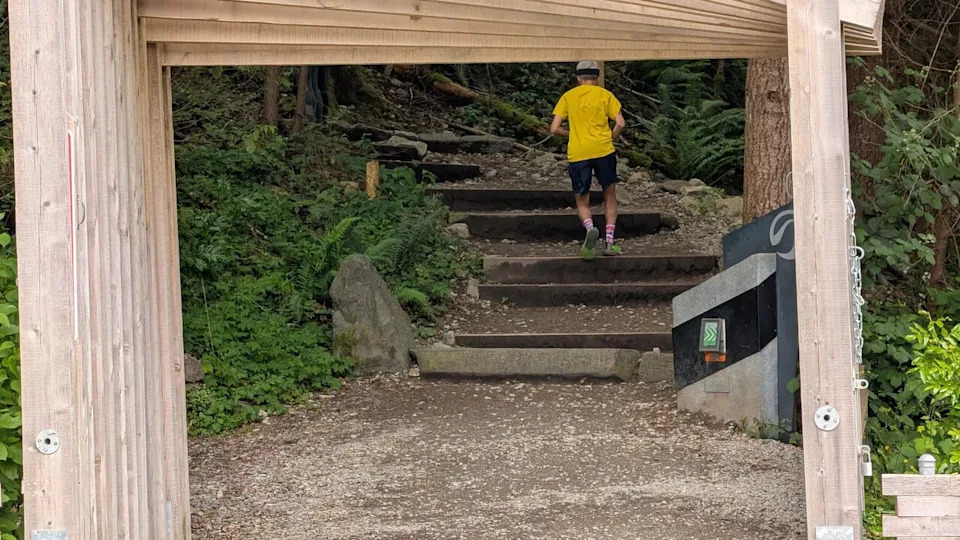
(Simon Little)
Esplen said a number of hikers stopped to learn about the labour dispute, but no one opted to scrap their planned hike on Monday morning.
The union represents about 600 full-time members and roughly 150 contract workers who operate the region’s five wastewater treatment plants, monitor air quality and build infrastructure.
They’re also in charge of maintaining trails like the Grind.
The GVRDEU launched job action last month with an overtime ban and has been holding rotating pickets at Metro Vancouver’s head office and various wastewater treatment facilities, after talks broke off in April.
The union has been without a contract since December 2024, and says negotiations have stalled on several sticking points.
“Worker safety is one of the key aspects, we all want to make it home at the end of the day,” Esplen said.
“Also retention and recruitment, they’re having a hard time getting people to come into these positions because of the rate of pay.”
Esplen said the union is further seeking protections from GVRDEU work being contracted out.
The union has alleged Metro Vancouver won’t return to the bargaining table unless the union accepts parts of the employer’s previous offer.
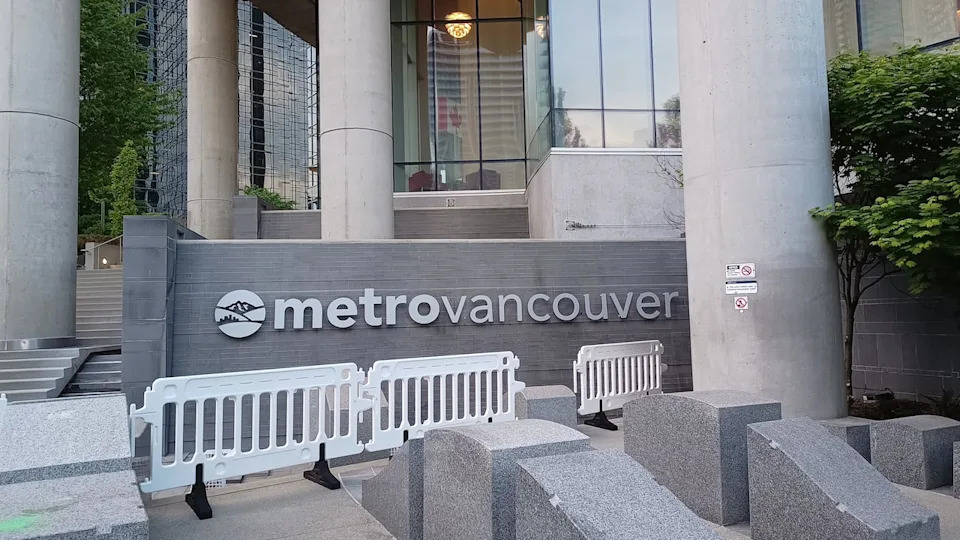
The regional district is responsible for co-ordinating air quality monitoring, wastewater treatment and regional parks across the region. (Akshay Kulkarni/CBC)
Metro Vancouver spokesperson Amanda McCuaig denied that the employer has set any conditions on resuming negotiations, and has requested that the union agree to work with mediators.
“We’ve made suggestions multiple times to come back to the bargaining table, there have not been preconditions, but after a year of bargaining the list remains very, very long,” she said.
She said the district’s latest offer includes a general wage increase of more than 10 per cent over three years.
She added that the district is already ranked in the top three for safety among 71 peer employers by WorkSafeBC, and said the regional district has been “actively” finding ways to bring more work in house.
“These staff that are out there picketing are incredibly important to Metro Vancouver, that’s why we’ve made the offers that we can,” she said.
“We want to make that fair both for people in the region who are paying for these services through their taxes and their utility fees, it also needs to be fair to the union.”
McCuaig added that essential services provisions remain in place during job action and that all affected parks remain open to the public.
The union says it is prepared to further escalate job action if it doesn’t feel like its demands are being met.
No dates have been set to return to bargaining.