

Bike Week Winnipeg is piloting new student-friendly pit stops Tuesday as part of its signature event.
This year, for the first time, bike-to-work day is also being branded as bike-to-school day.
“When students ride, their families ride,” said Andraea Sartison, event producer for the volunteer-run organization promoting cycling with activities scheduled through Sunday.
“(This initiative) is a really good way for us to reach more people, I think. School communities are much larger than the student population, so this is a really nice way to get into neighbourhoods.”
MIKAELA MACKENZIE / FREE PRESS
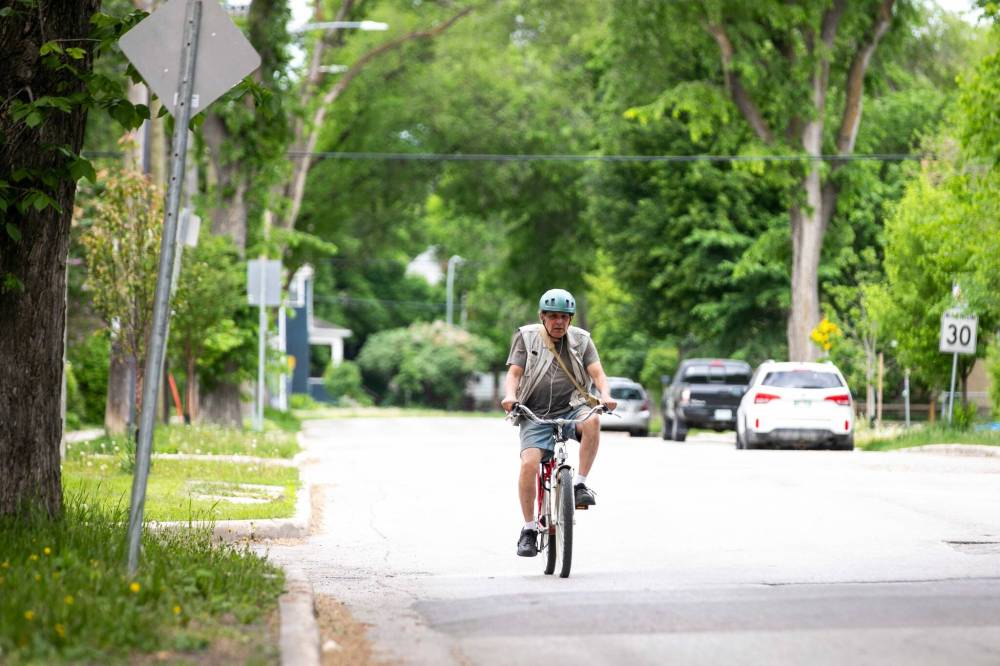
A cyclist rides down Wolseley Avenue. Bike Week Winnipeg is piloting a new student-friendly event by also branding bike-to-work day as bike-to-school day.
St. Boniface’s École Provencher — where Sartison sends both her pre-schooler and Grade 2 student — is hosting one of seven bike-to-school stations.
Rounding out the roster are Stanley Knowles School in Tyndall Park, Wolseley’s Laura Secord School, Gonzaga Middle School in Point Douglas, General Wolfe School in the West End, Earl Grey School in Fort Rouge and the aptly named Sage Creek School.
Each school was chosen based on its reputation for “bike-friendly programming,” said Sartison, who will be staffing the Provencher pit stop with her seven-year-old from 6:30 to 9 a.m. at 320 De La Cathédrale Ave.
SUPPLIED
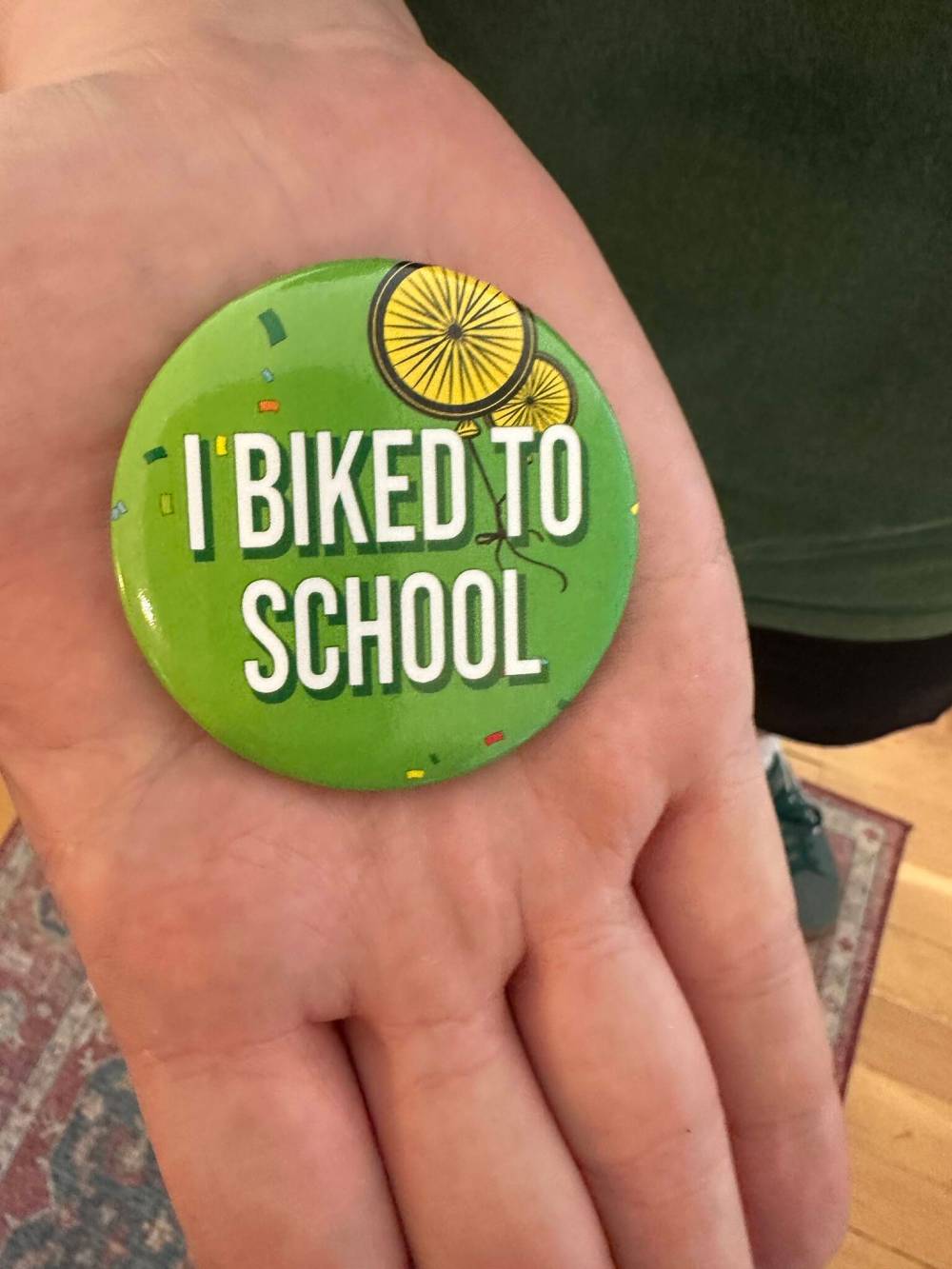
Bike Week Winnipeg is supporting seven specific bike-to-school stations for the first time on Tuesday.
Several of the participating schools have an active “bike bus,” a commuter club organized by experienced cyclists who wear high-visibility gear to escort students to school safely via parades that often feature music and costumes.
Cyclists who visit bike-to-school sites will be greeted with snacks, handlebar and spoke decorations and other freebies. Organizers are anticipating there will be up to 100 visitors at each stop.
Teacher Doug Hemmerling said he’s taking his tools to a pit stop underneath the Disraeli active transportation bridge in case anyone requires a morning tune-up.
“It’s significant that they’re acknowledging that kids get to school via bike and it’s not just about the workday. That’s an education piece in and (of) itself — to highlight for kids it’s a viable way of transportation going into their adulthood,” said Hemmerling, student and graduate support director at Gonzaga Middle School.
The bike-to-school day volunteer said he’s seen first-hand how biking infrastructure surrounding a school can promote or discourage ridership.
ParticipACTION’s latest report suggests 43 per cent of students between the ages of five and 17 regularly commute to class using an active mode of transportation.
The national charity polls children and parents on their exercise habits as part of its mandate to promote healthy living.
Canadians earned a C- in active transportation in ParticipACTION’s 2024 “report card.” The same mark was issued in 2022, an improvement from the D- assigned both in 2020 and two years before that.
Winnipeg Free Press | Newsletter

A year-round cyclist, Hemmerling said the COVID-19 pandemic and proliferation of e-bikes have both increased ridership across Winnipeg in recent years.
“What we can’t underestimate is the amount of people that are getting on their bikes, generally,” he said, adding that Point Douglas doesn’t get enough credit for being a key connector with cycling routes frequented by commuters, himself included.
Bike Week Winnipeg — not to be confused with Bike Winnipeg — does not define itself as a political or advocacy organization.
Sartison said her team is focused on promoting the joy of cycling for participants in bike-to-school day, which is sponsored by Tire Stewardship Manitoba, and related events this week.
maggie.macintosh@freepress.mb.ca

Maggie Macintosh
Education reporter
Maggie Macintosh reports on education for the Free Press. Originally from Hamilton, Ont., she first reported for the Free Press in 2017. Read more about Maggie.
Funding for the Free Press education reporter comes from the Government of Canada through the Local Journalism Initiative.
Every piece of reporting Maggie produces is reviewed by an editing team before it is posted online or published in print — part of the Free Press‘s tradition, since 1872, of producing reliable independent journalism. Read more about Free Press’s history and mandate, and learn how our newsroom operates.
Our newsroom depends on a growing audience of readers to power our journalism. If you are not a paid reader, please consider becoming a subscriber.
Our newsroom depends on its audience of readers to power our journalism. Thank you for your support.