
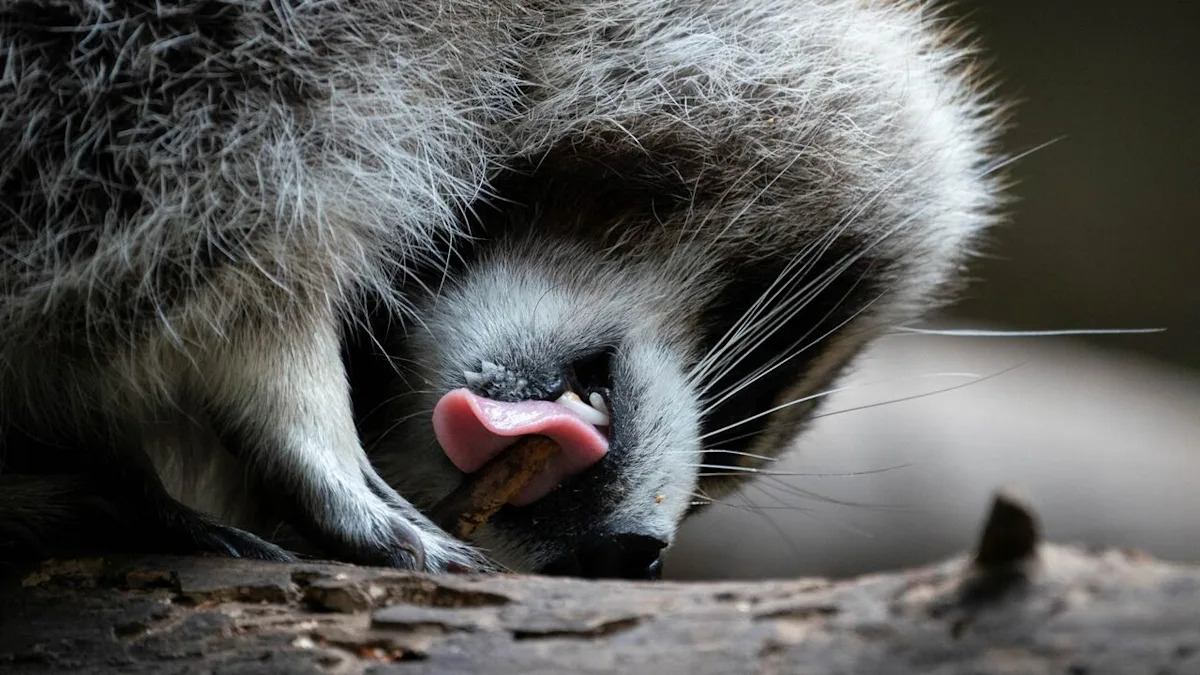
The province kicked off another vaccination campaign to fight the spread of raccoon rabies on Monday, after it’s seen a significant increase in cases across the Montérégie since March.
Over the next two weeks, wildlife officials hope to immunize between 800 and 1,000 animals in their “catch and release” operation. Traps will be placed in an area covering 750 square kilometres, encompassing 32 municipalities on Montreal’s South Shore.
Biologist Marianne Gagné, who is leading the province’s rabies management program, says the effort is mostly preventive at this point. Last year, Quebec led intensive vaccination campaigns near the Quebec border with Vermont after outbreaks were detected in Saint-Armand and Stanstead.
Speaking on the broader scope of this year’s operation, she said, “these aren’t sectors that are usually targeted or where there are current cases, it’s really to maximize the immunity of raccoons … and stop the chains of disease transmission in the natural environment.”
So far in 2026, 65 cases of rabies have been detected in areas from Saint-Armand north to Saint-Mathias-sur-Richelieu, according to the Environment Ministry.
This year, 21 municipalities in the Estrie, Montérégie and Centre-du-Québec regions were added to Quebec’senhanced surveillance zone, where the probability of detecting raccoon rabies is highest.
Reporting ‘aggressive’ behaviours
The Environment Ministry is asking Quebecers living within the zone to report aggressive or odd behaviours in raccoons, foxes and skunks, saying help from the population is key to tackling these outbreaks.
The ministry has also extended a ban on the transportation of animals such as raccoons, skunks and foxes in municipalities around the sectors where cases of raccoon rabies have been confirmed.
“Moving an unwanted, injured, or seemingly orphaned animal can contribute to the spread of rabies to areas currently free of cases,” the ministry wrote in a news release earlier this month. “An apparently healthy animal can carry the virus and develop signs of the disease several weeks, or even months, after infection.”
Raccoon rabies was essentially eliminated in Quebec three years after a case was first detected in 2006. A single isolated case was reported years later in 2015. However, as the number of cases began to grow in Vermont starting in 2022, the disease began to spread among Quebec’s raccoon population.
Rabies is a deadly disease that can be transmitted to humans through the saliva of an infected domestic or wild animal. The last case of rabies in a human in Quebec was reported in October 2000.
The Environment Ministry says that if a person believes they were bitten or scratched by an infected animal, they should quickly clean their wound, no matter how small, with soap and water for 10 to 15 minutes. The ministry also suggests calling 811 to speak with a nurse and to keep the animal that bit or scratched them alive.
If a person believes their domestic animal was infected, they should clean the wound and take them to a veterinarian. The incubation period for dogs and cats varies from two weeks to six months, according to the ministry. Healthy-looking animals can therefore still transmit the disease.