
The wealthiest families in the world are no longer content to manage their affairs from a single centre. Over the past 15 years, the dominant model has shifted from a single vertical wealth management structure, one family office, one jurisdiction, one set of advisers, towards a multi-hub architecture in which different family members oversee distinct verticals across different markets. The implications for how advisory firms position themselves, where they locate their people, and how they capture deal flow are profound.
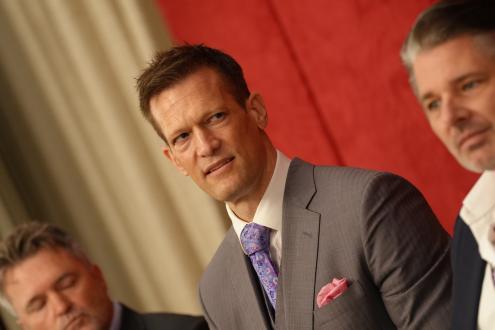
At the recent Hubbis Independent Wealth Management Forum in Hong Kong, Yann Mrazek, Founder and Managing Partner of M/HQ, drew on his firm’s experience advising more than 400 single family offices globally to map the structural evolution underway in how ultra-high-net-worth families organise their wealth. Speaking on the third panel of the day, Mrazek offered a perspective shaped by years of working across jurisdictions from Hong Kong to the Middle East, arguing that the multi-hub model is not a temporary response to geopolitical uncertainty but a permanent shift in how sophisticated families consume wealth management, and one that demands a fundamentally different approach from the advisory industry.
Key Takeaways
The Single-Vertical Model is outdated: The most sophisticated families have moved from one family office in one jurisdiction to multi-hub structures spanning two or three centres, each with a distinct investment mandate.
Deal Flow Follows Geography: Families (particularly multi-generational) are expanding their geographic footprint by establishing presences in a range of markets to capture opportunities that would not reach their home jurisdiction, or would arrive too late.
Structures Should Mirror the Multi-Hub Approach: As families expand across multiple jurisdictions, their governance and structural architecture is being built to support distributed operating models across different markets, advisers and investment verticals.
Clients want Human Beings, Powered by Technology: The relationship model has shifted from remote advisory through representative offices to a demand for skilled advisers physically present in key jurisdictions where clients operate, with technology acting as an enable rather than a substitute.
Custody Location is Becoming Secondary: Families are increasingly comfortable operating with multiple custodians across different jurisdictions, while aligning advisory, governance and investment functions around jurisdictions most relevant to each family office vertical.
Multi hub families are reshaping the advisory landscape: The shift towards multi hub family office structures is creating opportunities for advisers in select wealth centres, as families seek specialised support across multiple jurisdictions and investment verticals.
From One Vertical to Many
Mrazek’s central thesis was built on a pattern he has observed across hundreds of family office engagements over the past decade and a half. The traditional model, in which a single family office operates from one jurisdiction and manages the family’s entire wealth from that base, is giving way to something more distributed and more deliberate.
“What we have seen over the past 15 years is an evolution from often a single vertical wealth management allocation strategy, a single family office, to a multi-hub strategy,” he explained.
The shift is not simply about opening additional accounts in different booking centres. It is about creating distinct operational verticals, each with its own investment mandate, its own deal flow, and in many cases its own family member at the helm.
“As families become multi-generational and more sophisticated, what you increasingly see is the first generation of the family, keeping focus on the jurisdiction and region of origin,” Mrazek said. “And another family member, perhaps of a different generation, taking charge of a second or third vertical that is in a different market, with a slightly different investment approach, to capture deal flow that would not necessarily come to the jurisdiction or region of origin or would come too late.”
This is not diversification in the conventional portfolio construction sense. It is an organisational strategy designed to ensure that the family’s capital is positioned to access opportunities wherever they originate, with the speed and local knowledge required to act on them.
The New Normal
Mrazek was explicit that this multi-hub model represents what he called “the new normal,” and he framed it as a direct opportunity for the advisory community.
“It is an opportunity for all of us,” he said. “Perhaps you do not talk with the epicentre in Hong Kong, but you talk with the new family office in Abu Dhabi or somewhere else around the world.”
The competitive landscape for advisory firms is no longer defined by presence in a single financial centre. Families operating across multiple jurisdictions will seek advisers in each, creating new points of entry for firms that might not have a relationship with the family’s primary office.
Structures Must Follow the Same Logic
Mrazek was keen to emphasize that the multi-hub approach should not be limited to custody and asset management. The same logic, he argued, must extend to legal structures.
“The panel has a consensus of a multi-hub approach making sense from a custody, asset advisors, and we didn’t talk about currency exposure standpoint,” he noted. “We believe that families should look at the same way for their structures.”
As families adopt multi-hub operating models, their structural frameworks, the choice of trust jurisdiction, the domicile of holding companies, the location of foundations, must be designed to support that architecture from the outset rather than being retrofitted after the fact.
The Human Element, Selectively Deployed
One of the sharpest observations Mrazek offered concerned the changing expectations around how advisory relationships are conducted. The old model, in which a client was content to deal with a representative office or a remote adviser who visited periodically, is no longer sufficient.
“The client’s method consuming asset management has changed big time,” he said. “In the past, people did not want their banker to travel to their jurisdiction… they were very happy to deal with a rep office and communicate with someone abroad. I think this has changed.”
His prescription was not that every advisory firm should attempt to become a global operation, but rather that firms should be “selectively global,” establishing presences of skilled people in the jurisdictions that matter most to their client base.
“The client wants to see and touch a human being powered by technology,” Mrazek said. “And that happens by having multiple presences of skilled people in key jurisdictions.”
The phrase “powered by technology” is instructive. Mrazek was not arguing against the use of digital tools or AI in the advisory process. Rather, he was making the case that technology enables human advisers to operate more effectively across jurisdictions, but does not replace the client’s fundamental expectation of face-to-face interaction with a trusted individual.
Custody Is Not the Centre of Gravity
Mrazek also challenged a widely held assumption about the relationship between custody location and advisory presence. In his experience, clients do not require their asset manager to be domiciled in the same jurisdiction where their assets are custodised. What matters is that the adviser is physically present where the client operates.
“You do not need to have your asset manager in the same country where you’re custodised,” he said. “There is no benefit.”
However, he noted an observable pattern. “Our clients tend to operate in a jurisdiction, structure in the same one, deal with an asset manager in the same one, and often do multi-custody from there,” he said. “I think that will become the new model.”
The distinction is significant. Families are clustering their operational, structural, and advisory relationships in one jurisdiction while distributing custody across multiple centres. For advisory firms, winning the operational relationship in a given jurisdiction carries strategic value, even if custody sits elsewhere.
Positioning for the Multi-Hub Future
Mrazek’s contributions painted a picture of an industry in structural transition. The families his firm advises are not reacting to short-term geopolitical events; they are building permanent multi-hub architectures that reflect a sophisticated understanding of where opportunities originate and where risks concentrate.
For Hong Kong, the implications are clear. The city’s proximity to Greater China, the depth of its capital markets, and the sophistication of its advisory ecosystem position it as a natural anchor within a multi-hub framework. But it is unlikely to be the only anchor. The firms that will thrive are those that understand this and build their capabilities accordingly, whether through partnerships, selective international expansion, or ecosystem collaboration.
The single-jurisdiction model served the industry well for decades. But as Mrazek made clear, the families at the top of the wealth pyramid have moved on. The advisory firms that serve them must do the same.