

Listen to this article
Estimated 5 minutes
The audio version of this article is generated by AI-based technology. Mispronunciations can occur. We are working with our partners to continually review and improve the results.
Two spring graduates of NOSM University’s medical school say their roots are in northern Ontario, and they’ll build their practices in the region.
Dr. Ashley Gillies and Dr. Emma Etherington met when they were accepted to NOSM University and quickly found out they had a lot in common.
“There was an instant connection to the point where people thought we must have known each other before,” said Etherington.
They both went to different high schools in Timmins at the same time, they both have family in First Nations on the James Bay coast, and they both worked as nurses prior to medical school.
Gillies said it felt like they knew each other right away.
“All our classmates would laugh and say, ‘I thought you guys were cousins,’” she said.
Etherington said it’s not a coincidence they’re both doing their two-year residencies in Timmins.
They’re both close to the people in that city and have strong connections to James Bay First Nations.
Etherington, the eldest of five children, is originally from Moosonee and knew early on she wanted to be a doctor.
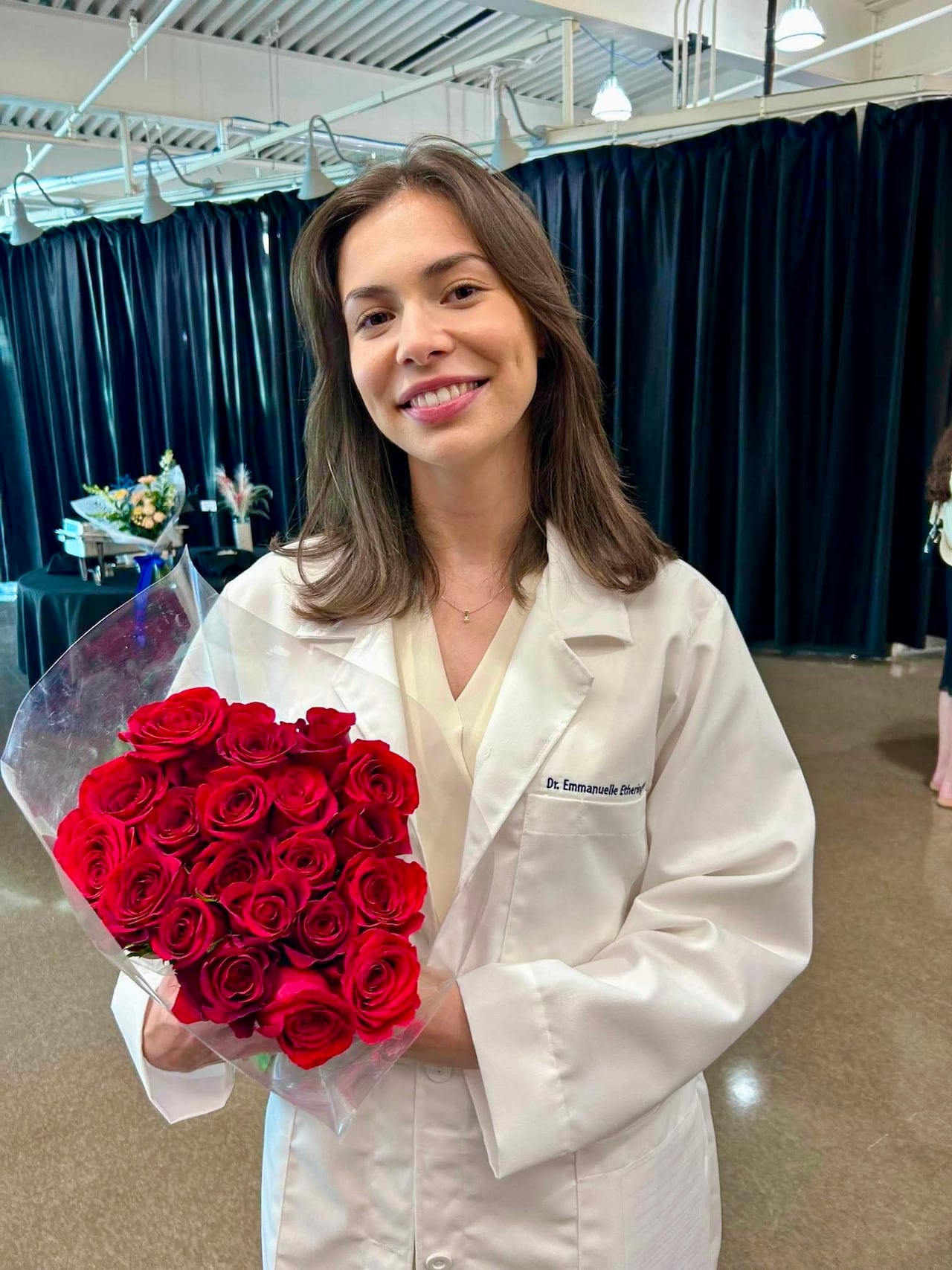 Dr. Emma Etherington is a recent graduate of NOSM University and planning to set up a practice in northern Ontario. (Fawn Etherington)
She said she was a good student and when she was fourteen, she persuaded her family to relocate to Timmins where she could go to a bigger high school.
She said getting the family from the fly-in community on the coast to the city wasn’t easy. “It kind of had to happen in steps just because of the nature of it being you have to take a train to get into the community. It happened in steps and my family downsized a lot to make the move.”
She did not know at the time that her future friend in medical school was taking classes at another high school in Timmins.
Ashley Gillies grew up in the city but said her father is from Fort Albany.
“My dad, he brought us out hunting and fishing,” she said. “We do a lot of traditional learning on the land as well. I’ve been really privileged to, yes, grow up in Timmins, but also have community ties to Fort Albany as well.”
She also explored the area through her passion for hockey, playing in Indigenous tournaments throughout the region.
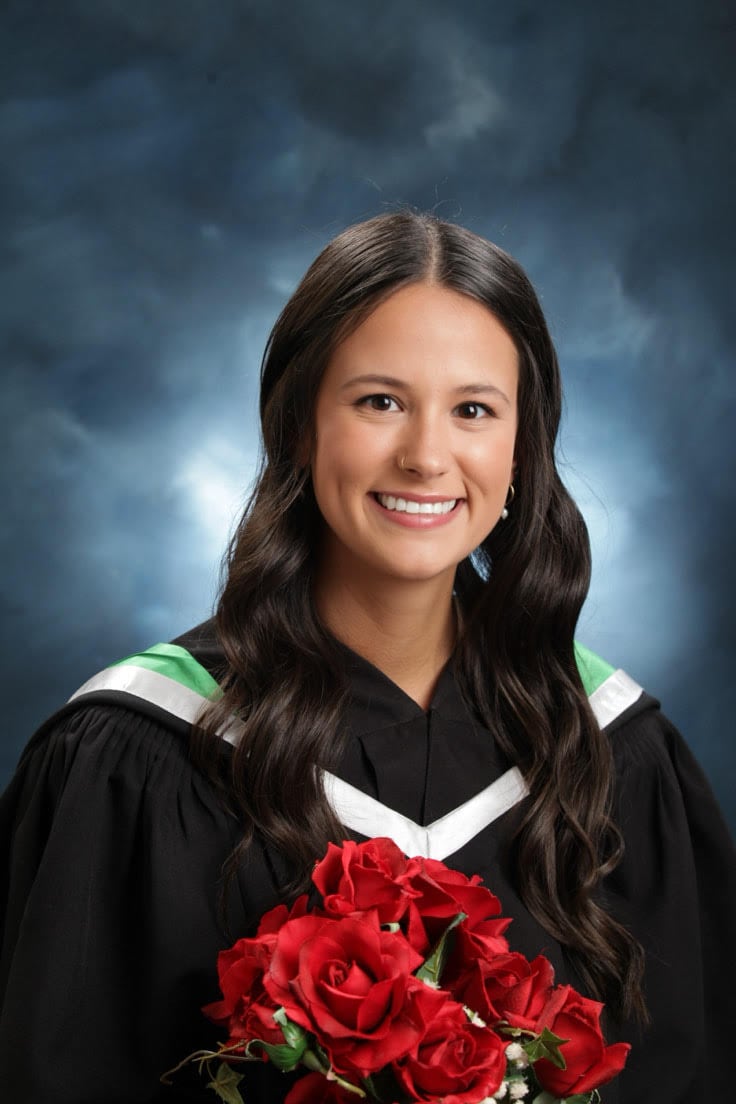 Dr. Ashley Gillies grew up in Timmins with family ties to Fort Albany and is pledging to practise in northern Ontario. (Submitted/NOSM University)
Both were nurses before proceeding to medical school to become doctors.
Gillies worked for a month at the Fort Albany Hospital.
“There weren’t any doctors there, which kind of surprised me,” she said. “I was very impressed also by the nurses who worked there. They wear many hats..”
She described how they would take patients’ blood, prepare and test it, interpret the results and then call doctors at the hospital in Moose Factory to consult.
“That’s a care model that I’ve never seen before. And also the way that they were able to deliver care with some of the resources that they had. I thought it was very impressive, but also kind of showed the need for increased health resources up north.”
New graduates advocate for more First Nations health care professionals
Gillies, whose mother is a family physician, said she is passionate about increasing Indigenous representation in health care.
While in medical school, she and Etherington were on a committee working toward that goal, and collaborated on initiatives with the Weeneebayko Area Health Authority which delivers health care to communities on the James Bay coast.
Etherington’s work experience as a nurse included almost a year at the hospital in Moose Factory, where, after being away for seven years, she treated relatives and friends, which hit close to her heart.
“Access to healthcare in the north is a challenge and there’s times where you wish there was better access, more resources or just situations that you hate to see people go through, where if they were in a city centre, they would have gotten the care they needed sooner.” she said. “Of course, to see anyone go through that is difficult. But it’s so hard when it’s people that you’ve known your whole life.”
However, she is optimistic she can be a strong advocate for her future patients and make a difference.
“Obviously, I can’t change the geography,” she said, referring to First Nations that are accessible only by air.
“I can’t change the historical and political context of our communities, but I’ll have that knowledge at least going forward. And being from those communities and having that knowledge, bringing that to my interactions with patients, I think that hopefully patients will be very trusting of me and I can build that rapport.”
Both new doctors plan to set up practices in northern Ontario although they are still considering their options while they spend the next two years fulfilling their residency requirements.