
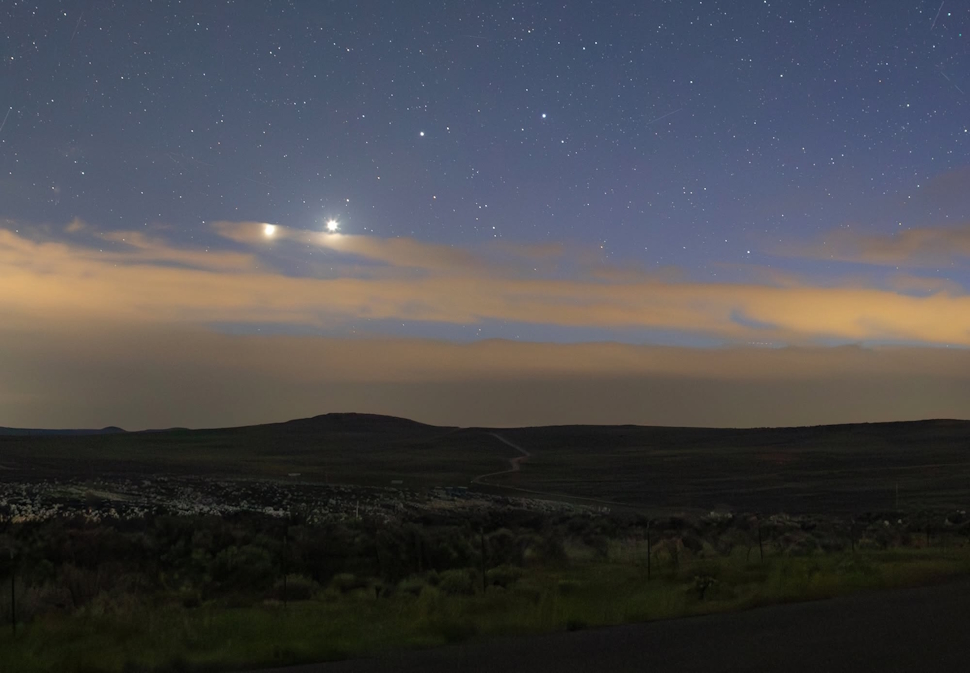
While some Pembina Valley residents spent part of last weekend watching for possible Northern Lights, local astronomy enthusiast Kenton Dyck says June still has plenty in store for anyone willing to spend a little time under the stars.
The Astro Club member recently joined Country 88’s Morning Show to highlight several celestial events visible this month, including a close pairing of Venus and Jupiter, the summer solstice, and the annual Strawberry Moon.
“We have something very exciting in the month of June. We have the Venus and Jupiter conjunction happening,” said Dyck.
Venus and Jupiter take centre stage
One of the month’s most anticipated sights is a conjunction involving Venus and Jupiter, two of the brightest objects visible in the night sky.
According to Dyck, skywatchers won’t need special equipment to enjoy the event.
“You go outside this evening, you look towards the west right at sunset and you’ll see the very brightest object in our night sky that isn’t the moon,” he explained.
That bright object is Venus.
“You’ll see Venus and to its left and slightly higher, you’ll see Jupiter, which is another very bright point of light.”
Even though Jupiter sits hundreds of millions of kilometres away from Earth, it remains one of the easiest planets to spot.
“It is massive,” Dyck said.
The conjunction offers a rare opportunity for casual observers to see two planets appearing close together in the evening sky.

The Sun is more powerful than most people realize
The conversation also ventured beyond June’s skywatching events and into the incredible forces at work on the Sun.
Recent solar activity sparked interest in possible aurora displays, leading to a discussion about coronal mass ejections and the immense gravity of our nearest star.
“If you ever look at footage of solar flares and coronal mass ejections, it looks like it’s lazily popping off the surface of the sun and it is not doing that,” said Dyck.
The eruptions themselves are difficult to comprehend in scale.
“These are tendrils of plasma that can be several times the width of the Earth in length.”
Not every eruption successfully escapes the Sun.
“Many of them don’t get ejected out. They simply burp out and then they fall.”
The reason comes down to gravity.
“The sun has a massive gravity well,” Dyck explained.
To illustrate the difference, he noted that escaping Earth’s gravity requires a speed of 11.2 kilometres per second, while escaping the Sun’s gravity would require 618 kilometres per second.
“That is the speed that you would need to escape the sun’s gravity.”
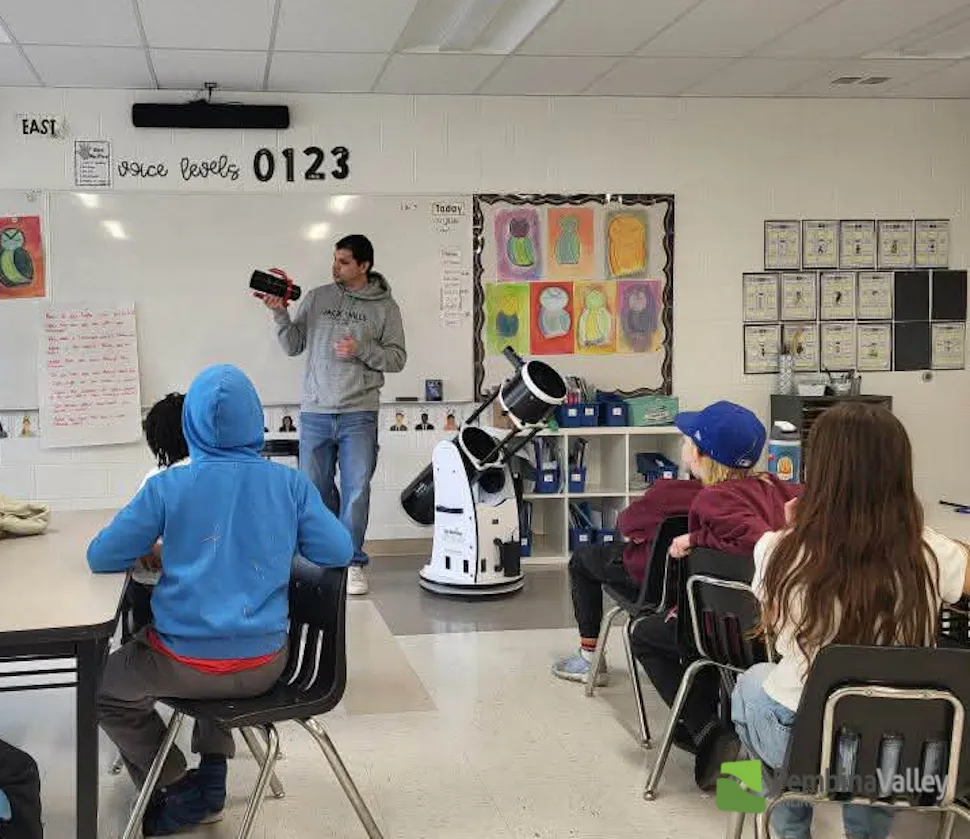 Kenton Dyck, Astro Club’s founder, giving a presentation on astronomy at a local school. Submitted photo.
Summer solstice marks a turning point
June also brings the summer solstice, the longest day of the year.
While many Manitobans enjoy the extended daylight hours, Dyck admits he is already looking ahead to longer nights.
“Things will finally start getting darker earlier,” he said with a laugh.
As someone passionate about astronomy, the return of darker evenings means more opportunities for observing the night sky.
“Oh, I’m so excited.”
Related stories:
Why is it called the Strawberry Moon?
The month’s full moon, expected later in June, carries one of the more recognizable names on the lunar calendar.
“The nickname for that full moon will be the Strawberry Moon,” said Dyck.
Despite what some people assume, the name has nothing to do with the moon’s colour.
“Strawberries are ready around that time.”
The name comes from Indigenous and agricultural traditions that used the moon as a seasonal marker for harvesting and planting.
For local residents looking for a reason to spend a few minutes outside on a warm summer evening, Dyck says June offers plenty of opportunities. From watching Venus and Jupiter shine in the western sky to catching the Strawberry Moon later this month, there is no shortage of reminders that some of nature’s most impressive sights happen far above our heads.