
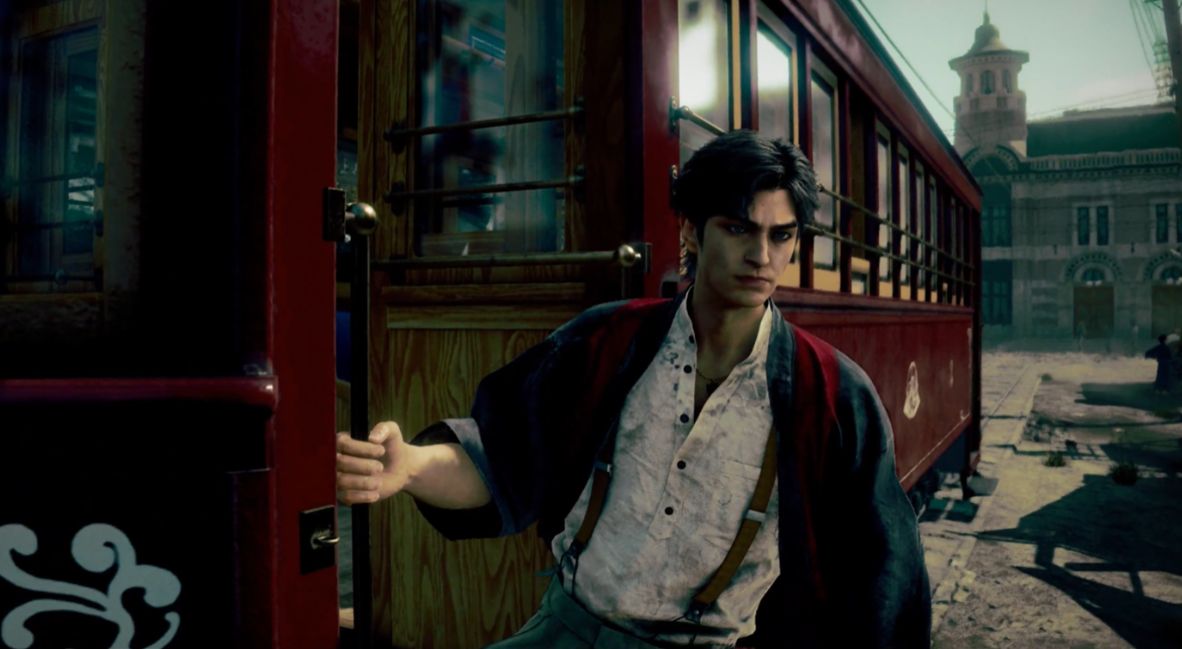
If you haven’t checked out Ryu Ga Gotoku Studio’s (RGG Studio) upcoming title (published by SEGA), the game is a brand-new action-adventure from the iconic studio behind the Like A Dragon (formerly Yakuza) series. Shot from a cinematic perspective, Makoto’s story captures a struggle to find where to belong and the shifting atmosphere of a Japan undergoing violent change.
It begins in 1915, San Francisco, where players meet a young boy named Makoto Daito, who sneaks aboard a suspicious ship in the harbor under the cover of night. Born to an American father and a Japanese mother, Makoto faces harsh persecution to the point that the only way to survive is to leave.
The racism he faces leads him to choose a different path with the smuggler Opheus (played by Snoop Dogg). Told across five decades and five cities, Stranger Than Heaven maps out Makoto Daito’s life, friendships, and hardships as he moves from an orphan in the US to a henchman to an entertainer, all while his new country is changing too.
RGG Studio is telling a cinematic story spanning a decade, pushing toward realism more than their previous games.
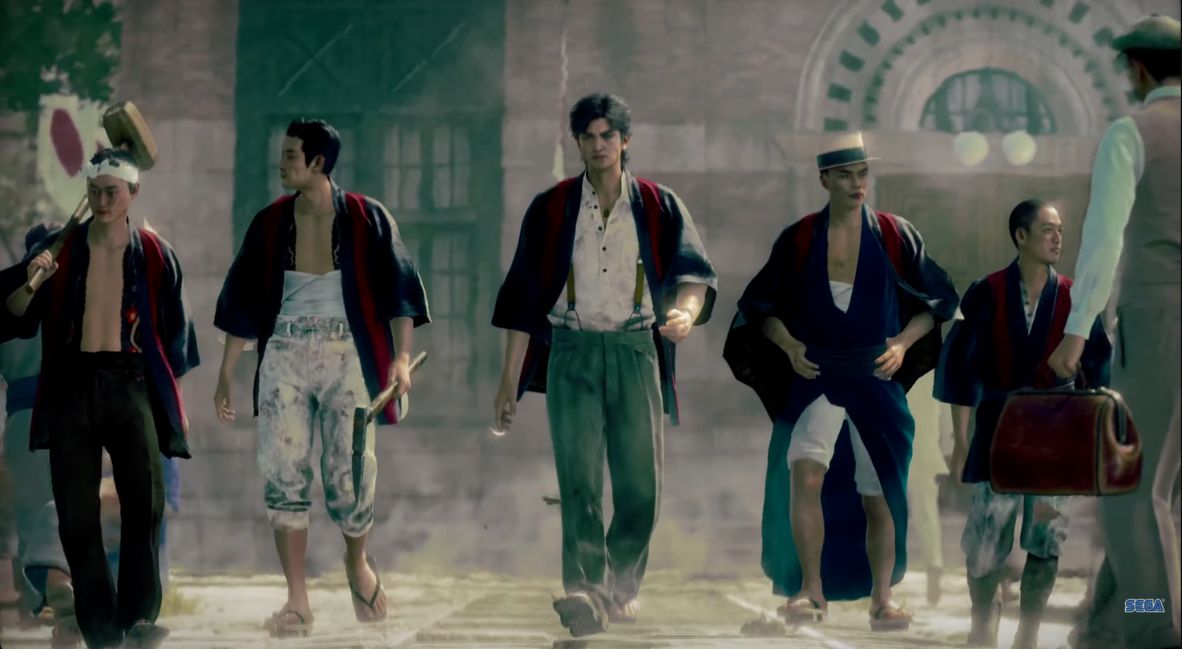
While I have been enamored with the overall diasporic narrative in Stranger Than Heaven, something rarely explored in major studio titles, some of RGG’s studios’ resurrection of the dead has left me questioning the game’s focus on belonging and identity. This comes after the Summer Game Fest showcase revealed that the late Tupac Shakur will be in the game.
That said, the team behind the game has always worn their action cinema inspirations right there on their sleeves, and it’s no surprise that renowned Japanese action director Takashi Miike has already tried to bring RGG Studios’ primary franchise to life on film.
Like A Dragon series oscillates among camp, seriousness, and the typical shonen demographic, while Stranger Than Heaven takes a more personal, historical approach. Told over multiple decades in one person’s life, the difficulty in narrative development stems from how the protagonist, Makoto Daito, ages and changes over the time we spend with him.
And ultimately, that has to come through combat as well. Who Makoto Daito is in 1915 Kokura isn’t who he is in 1929 Kure, and most definitely not who he is in 1943 Osaka, and neither is Japan. During the Summer Game Fest Play Days demo, the studio didn’t put a focus on the story or the characters; instead, we just went hands-on with the combat.
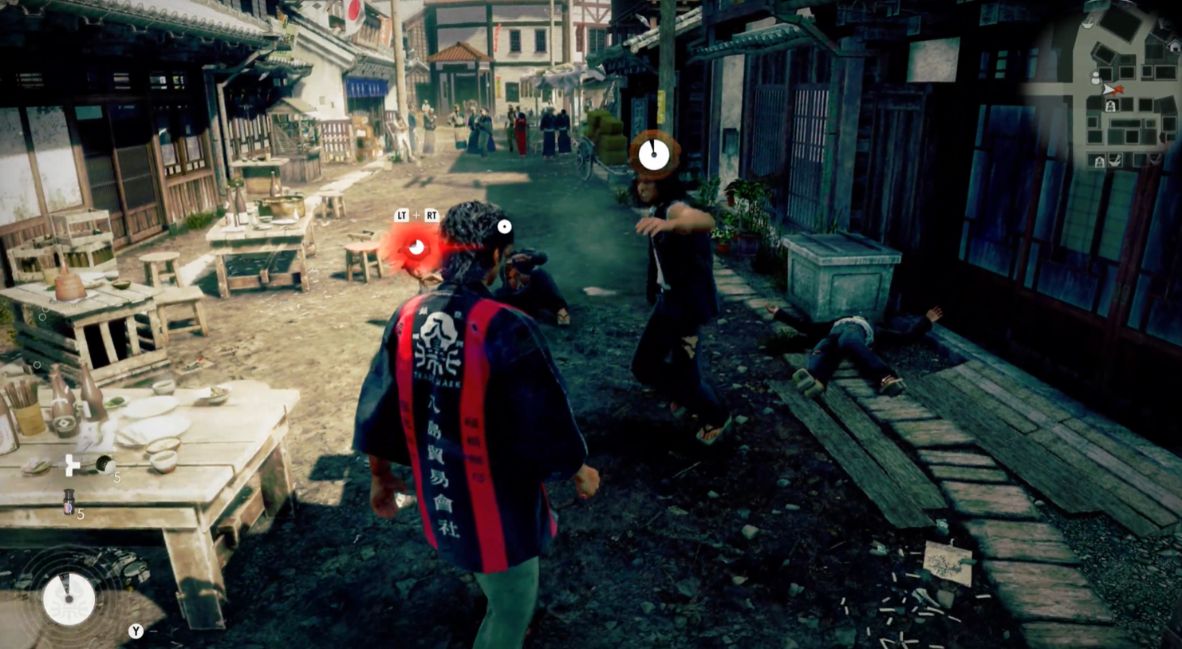
A unique combat system, to say the least, Stranger Than Heaven‘s combat is unlike anything I’ve ever seen, and it asks a lot of its players. With animated movements that feel ripped from a Miike film (and I say that lovingly), the world around you is interactive, layered, and begging you to explore it. As the crowd grows around you during your street fights, you’re confined to an area, and using things like carts or tables to avoid contact is only a temporary fix.
The goal is clear in Stranger Than Heaven’s combat: it’s all about realism. This is where the game’s grittiness pays homage to the long line of Japanese and even Hong Kong action cinema. We see it in how the game looks, but it’s captured even more so in the combat control scheme. To be good at combat in this RGG title, you have to be patient and, more importantly, you can’t waste inputs.
With a simplistic stamina and health system, it can sometimes be hard to gauge when you need to heal with either pills (instantaneous healing) or onigiri (healing over time). Layered beneath your health, you need to watch the bottom-left indicator, which can be red, yellow, or green, indicating how much stamina you have left.
Managing stamina is crucial, as you can only dodge when it isn’t completely depleted. That said, the HUD isn’t the only thing that takes some getting used to.
Combat is difficult to master in relation to stamina and health, but it’s fun.
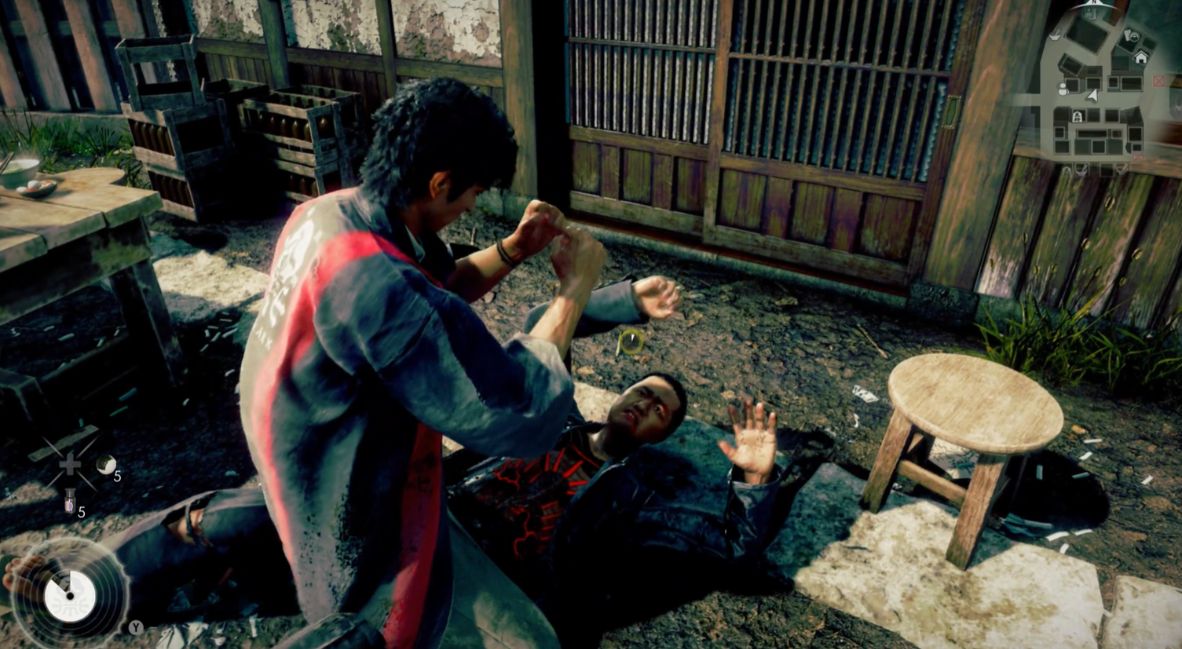
The core issue of combat in Stranger Than Heaven is entirely built around the body in a unique way. If you look down at your controller, split it in half. One side is the right side of your character’s body, and the other side is the left. The bumpers individually control the sides of your body.
This means that in combat, you need to time your left and right arms as you pummel enemies, relying on the left and right triggers to perform heavy attacks that involve a forward kick that can stagger an enemy when used just right. Additionally, to guard, press the “B” button to raise your right hand, and press the left bumper and “B” to guard with your left.
Jab, jab, cross, fall into your guard. It’s a pattern that works with either hand-to-hand combat or with your knife (my preferred weapon). You’ll land a punch or a stab to the gut, then you have to remember to use your left hand to bash the opponent and deplete their stamina. Using both sides of your body is important and central to combat; if you ignore it, you’re not in for a good time.
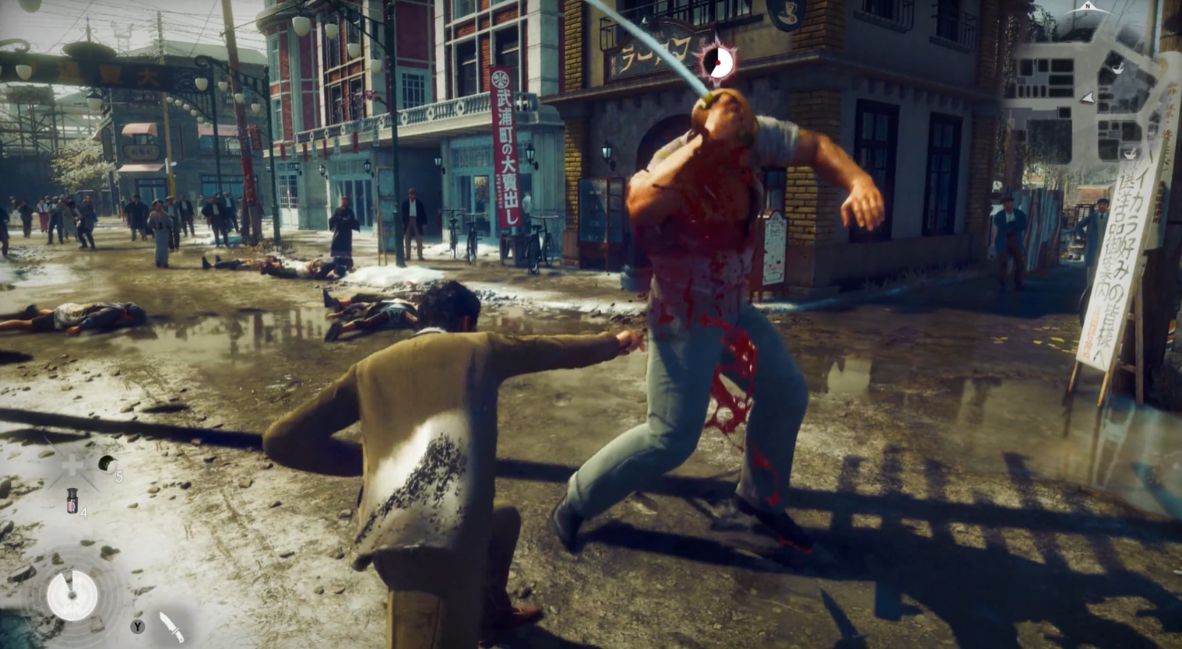
Additionally, Stranger Than Heaven also features other two-handed weapons, which, honestly, I could not actually figure out. Throughout our Summer Game Fest demo, we played through three boss battles. The first was set at the start of Makoto’s story, where you fight bare-knuckled with a group of opposing thugs.
With tables set with bottles to pick up and smash on enemies’ heads, this is an all-out brawl that makes for a good time. Right, right, left, right, guard, left, so on and so forth. But I’ll be honest, guarding wasn’t super effective since the mob itself was easily brute-forced through, especially if you follow the button prompts that trigger different combat animations.
Additionally, when grabbed by one enemy, you can use your other arm to beat on the NPC to get out of their grip. On top of that, if you’re knocked down, you’ll have to continuously press “A” to roll on the ground until your stamina lets you pop up. It’s a situation that brings action-movie grit to Stranger Than Heaven.
Stranger Than Heaven’s first hands-on preview gave us three types of combat to explore.
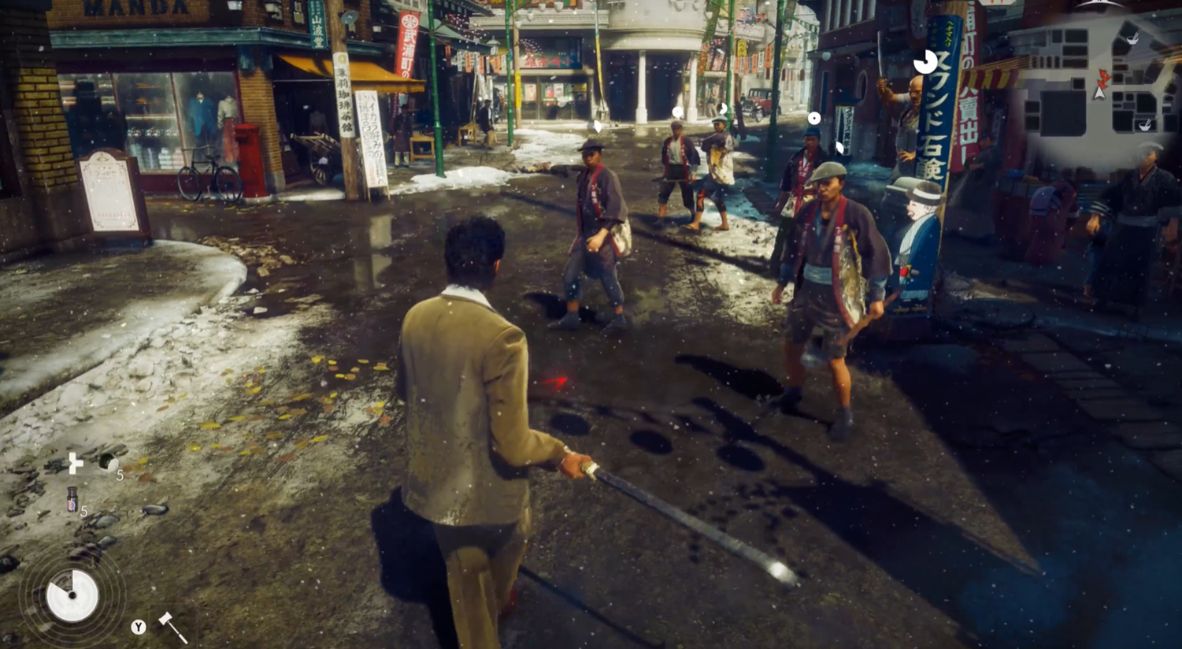
Next, we spawned into a combat sequence with one large man and a trash mob around him, with the two-handed weapon suggested. Having seen enough Yahya Ruhain and Miike films, I diched the two-hander quickly and took everyone down with a knife.
It was quick and effective, and it made me feel like I was taking part in an excellently choreographed one-vs-many fight. At this point, it was simple to fall into a rhythm between the two sides of the controller. Not only that, but guarding became more effective and necessary. Still, it wasn’t a be-all end-all if you missed a guard or just held the button long enough to defend most of your health.
That said, by the time that we got to the end of the demo, which was a 1:1 boss fight with a yakuza, everything you learned was supposed to work. Except when it doesn’t, fighting many opponents feels entirely different from fighting a boss one-on-one. Perfect dodges and guards are essential for clearing the boss, and managing your stamina becomes even more important.
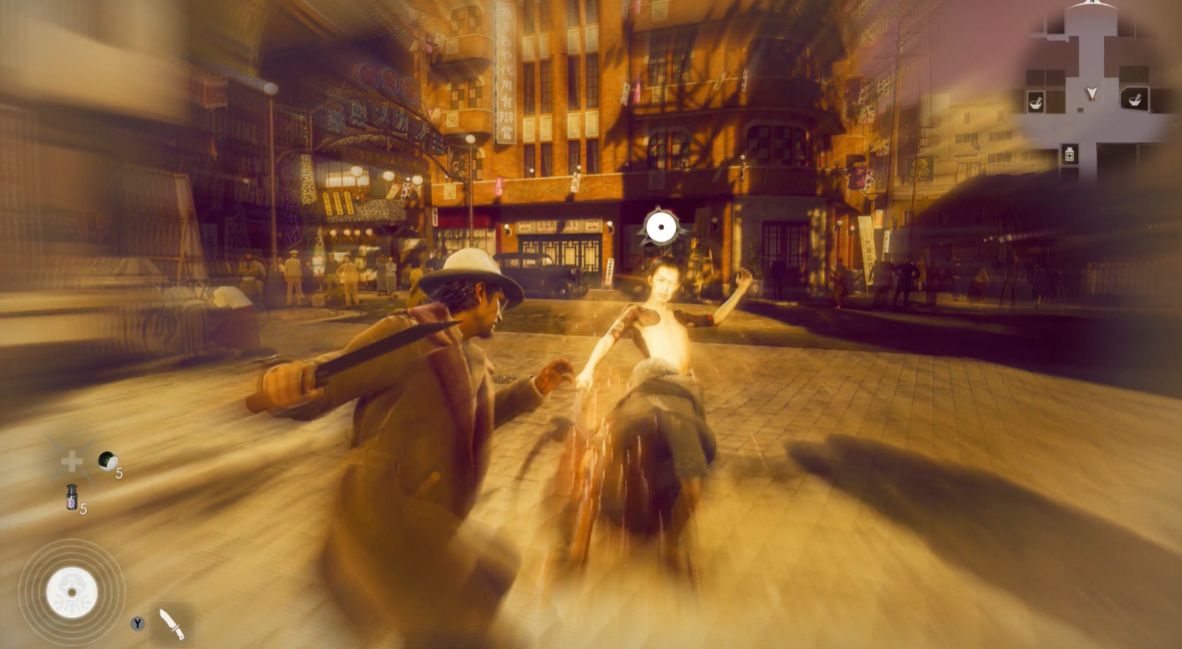
The final fight was the one that had my hands cramping in Stranger Than Heaven. With so many inputs, it was difficult to keep pace when you have arthritis, but it wasn’t entirely unapproachable. While Crimson Desert‘s combat was most easily described as a fighting game thanks to its combo-based system, Stranger Than Heaven doesn’t seem to have a set system, based on anything else, though elements of fighting are still present throughout the game.
Ultimately, though, as someone who spent years boxing, my issues with the skill ceiling and hand pain ended up falling behind how exciting it is to have a game that feels like I’m controlling the entirety of my survival. It feels like real boxing, and it creates a back-and-forth interaction with yourself on both sides of the controller (left and right). Additionally, when you fight bosses, especially without a mob around you, noticing where gaps in their block are and exploiting them is essential to progressing quickly as well.
RGG Studio’s attention to detail in Stranger Than Heaven’s combat is not going to be for everyone. In fact, there is a tedium to it that will turn some players off immediately. While being able to remap the controls will be central to the combat’s success, I would be lying if the part of me that remembers boxing wasn’t immediately in awe of how the studio has translated its video game combat.
Stranger Than Heaven’s combat feels like boxing, but that won’t be for everyone.
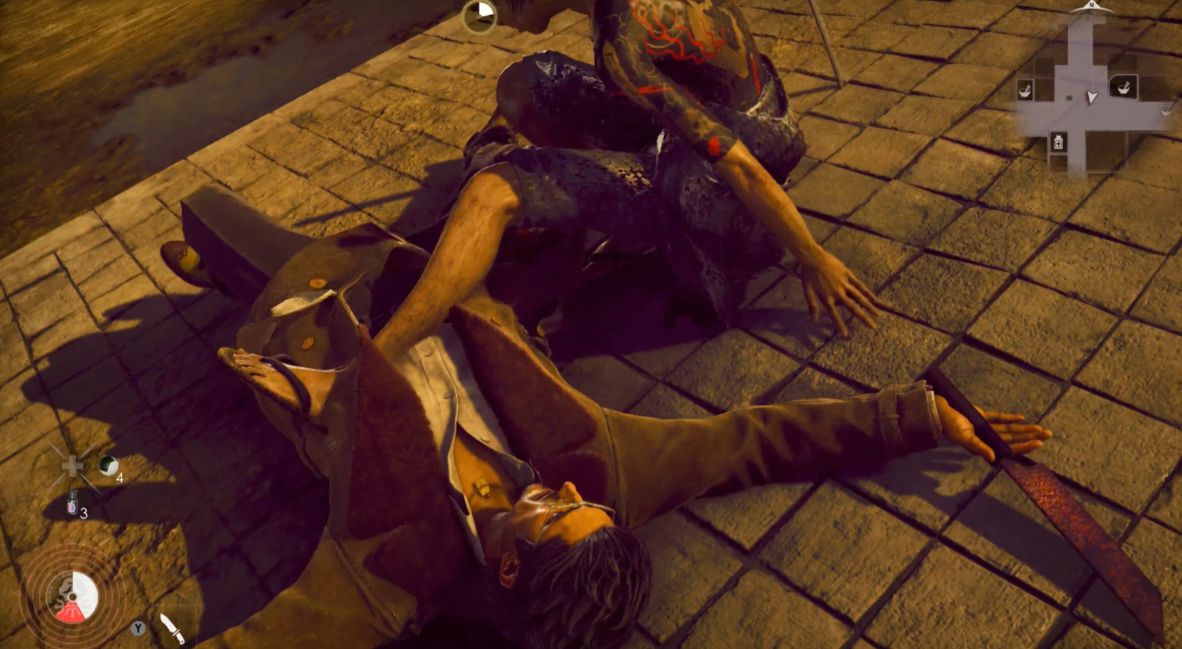
That said, the three fights we tackled revealed the tedium perhaps a little too much. How much the game lets you settle into the story and how often you engage in combat will be essential to players’ appreciation of the innovation and homage to action greats.
But even with a love of that, the hand strain it causes will be an accessibility hurdle, especially on less ergonomic controllers like those on the PlayStation 5. If mapping or simplification can help clear that hurdle, it will be easier to surmount. However, if you’ve played Like A Dragon titles, this stark departure from previous combat structures is going to take a large adjustment.
A sharp departure from their campy pirate romp, Stranger Than Heaven tries to embrace cinema, and you can feel it in the beauty of the cities you enter and in the score that keeps perfect pace with your fights, embracing jazz and the role it played in Japan in the early 20th century. While those easily land, combat will be a sticking point, but if you’re like, you may be just too enamored with the concept to notice that you need to pop your knuckles.