
NEED TO KNOW
NASA is defending its Artemis III crew selection amid criticism that no women were selected for the team
Critics, including female space professionals, argue there are many qualified women in NASA’s astronaut corps
NASA says crew selection prioritizes mission objectives and expertise, with women holding key leadership roles in the agency
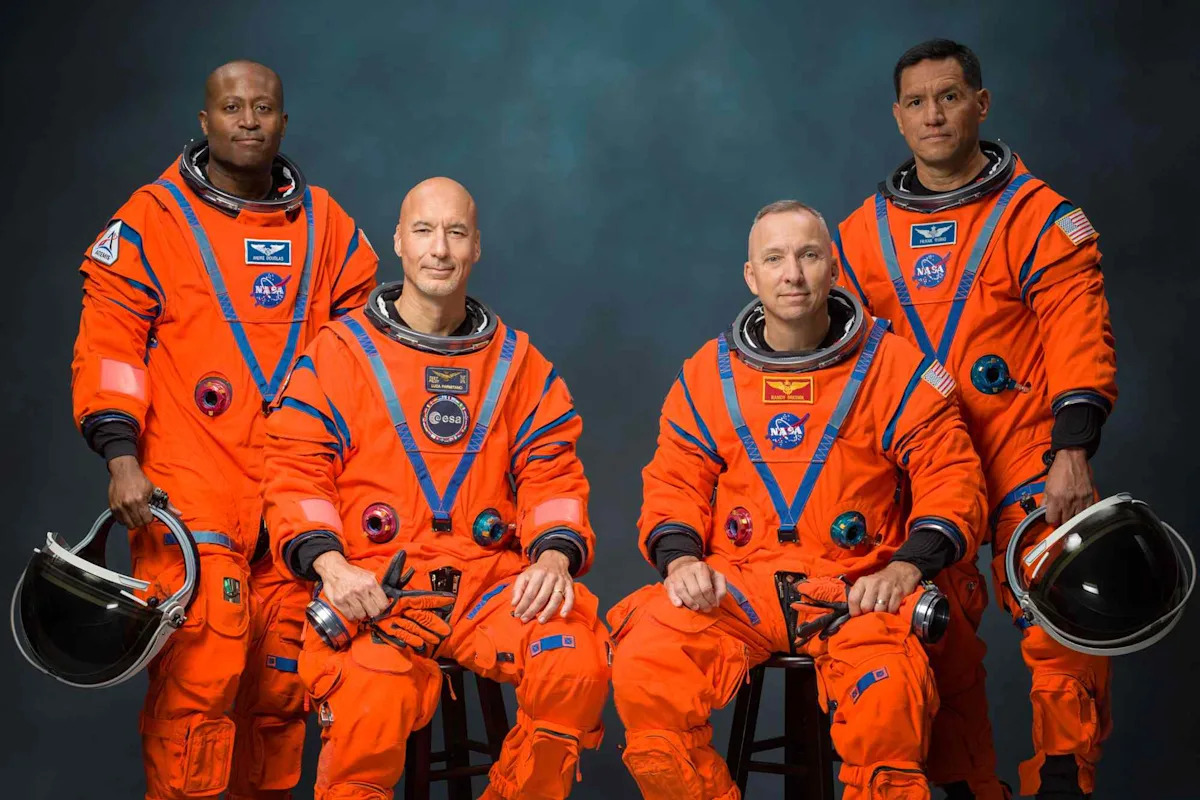
NASA is defending its Artemis III crew amid criticism that the team contains no women.
The four astronauts who will take part in the upcoming mission — mission specialists Andre Douglas and Frank Rubio, commander Randy Bresnik and pilot Luca Parmitano — were introduced at Johnson Space Center in Houston on Tuesday, June 9.
But NASA is now facing criticism for its decision not to include women on the team, which includes backup crew member Bob Hines.
In a statement shared on Wednesday, June 10, NASA Administrator Jared Isaacman came to the crew’s defense, calling them “experienced, qualified” and deserving of celebration.
“In a world with so much controversy, I hope this can be a moment where we celebrate the astronauts selected, respect the integrity of the process, and recognize the extraordinary depth of talent across the entire corps,” Isaacman said.
Many of the critiques surrounding the makeup of the Artemis III crew have come from women, including Camille Bergin, a space marketing professional who posts on social media under the name “The Space Gal,” and Emily Calandrelli, who became the 100th woman in space on a Blue Origin flight in 2024.
Both Calandrelli and Bergin expressed disappointment in the decision to have an all-male crew for Artemis III in separate Instagram Reels.
“It just feels like we’re taking a step backwards, and there are plenty, plenty of qualified women in this astronaut class,” Bergin said in her post.
In the caption of her post, Calandrelli said, “When there are plenty of rock star women to choose from – this is a deliberate choice.”
In his statement, Isaacman said the crew selection for Artemis II “does not involve any political appointees.” Instead, he said, the Astronaut Office “assigns the crew that gives the mission the best chance of meeting its objectives.”
As part of the decision-making process, Isaacman said officials take “many factors” into account such as “the background and expertise of the astronauts, such as test pilot experience, development work on specific programs, and availability.”
Isaacman also said some critics “may not be aware of the pipeline of crews already preparing to launch to the Space Station, or those who have been undergoing lunar-specific training that would be a better fit for a future surface mission.”
“We have an extraordinary astronaut corps,” the NASA administrator said, “and every mission and every crew is part of a larger campaign to get America back to the Moon and to build the future we all dreamed about as children.”
Never miss a story — sign up for PEOPLE’s free daily newsletter to stay up-to-date on the best of what PEOPLE has to offer, from celebrity news to compelling human interest stories.
Fifteen of the 37 active NASA astronauts, or about 40%, are women, according to Space.com. Additionally, except for two missions, there has been at least one woman on NASA missions to the International Space Station since 2021.
Isaacman said he has “personally been to space twice with 50% female crews” and noted that “nearly 50% of the Center Directors and Mission Directorate leadership are women.” The last astronaut candidate class, he added, “was majority female.”
“They were the best of the best,” the NASA administrator said, “including one astronaut I previously went to space with.”
It has been more than 50 years since astronauts last stepped foot on the moon during NASA’s Apollo 17 mission in 1972.
Training for the Artemis III mission began immediately after the crew’s announcement, according to NASA, which called this era “the Golden Age of innovation and exploration” in space.
Read the original article on People