
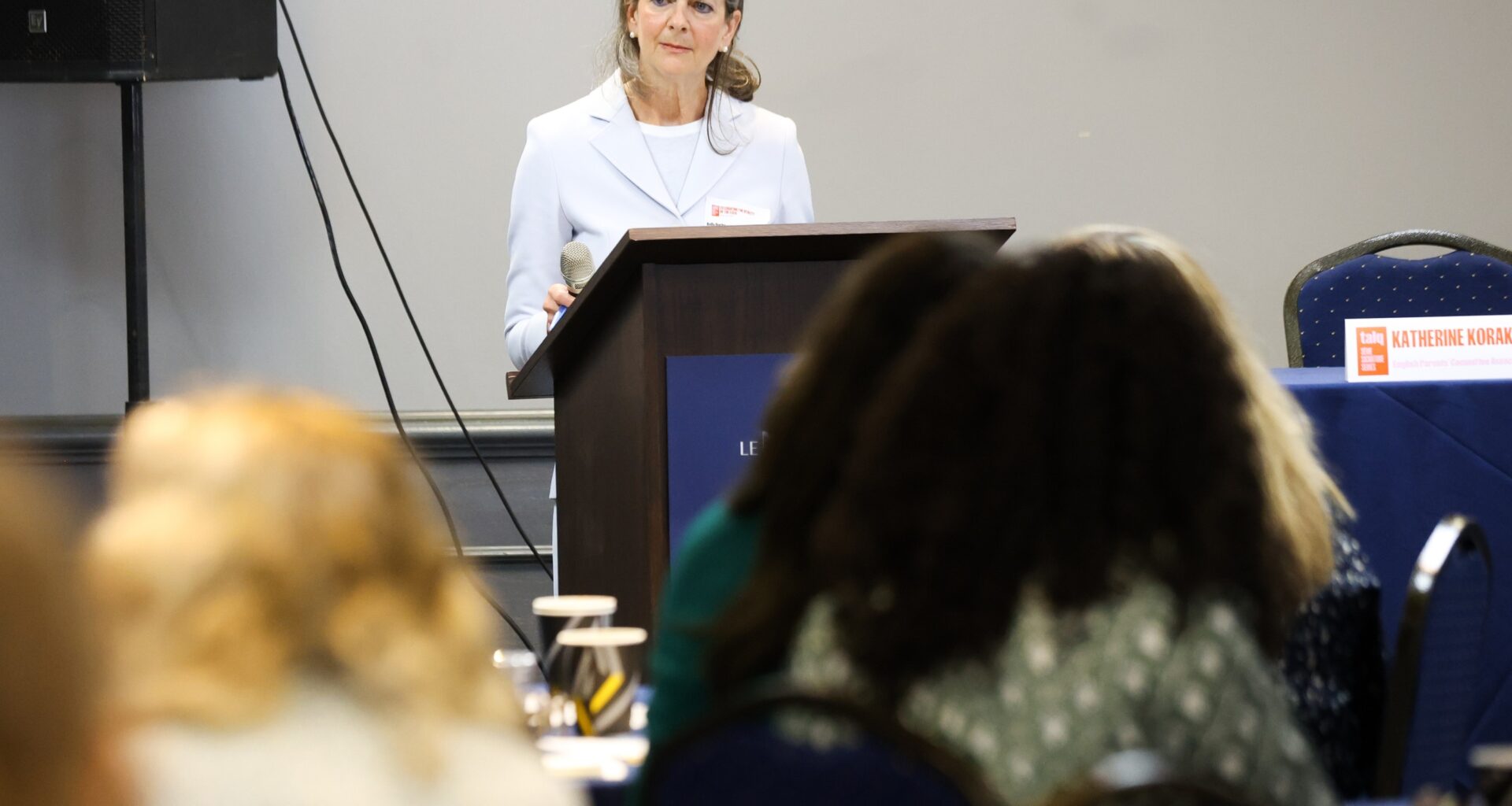
Canada’s new official languages commissioner on Friday acknowledged anglophone Quebecers’ frustrations in recent years and vowed to stand up for linguistic minorities when governments attempt to thwart their rights.
“We cannot chip away at rights, whether they be the anglophone rights in Quebec or the francophone rights in the other parts of the country,” Kelly Burke told a Montreal audience.
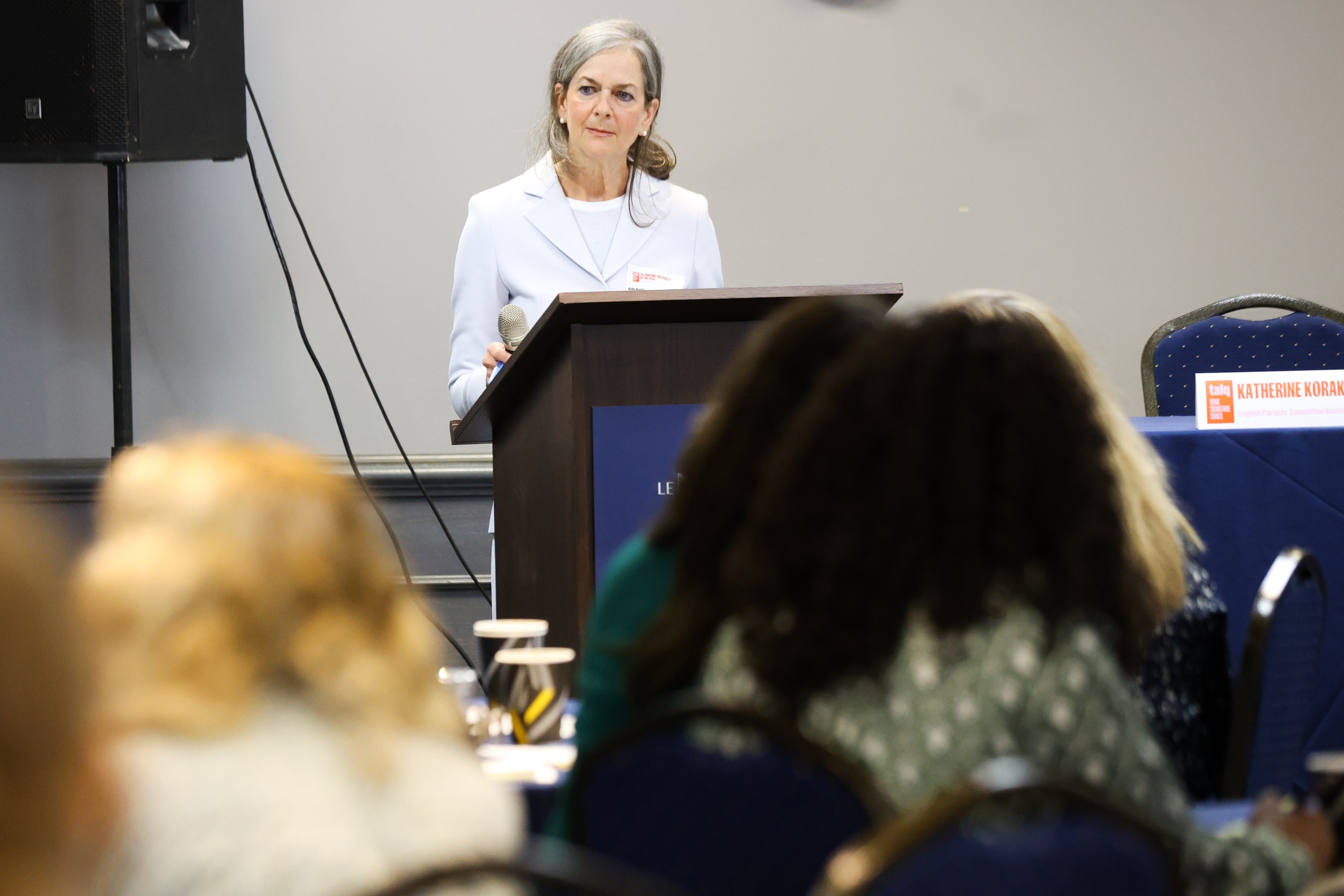 Kelly Burke, who became Canada’s official languages commissioner in March, addresses a gathering of Quebec anglophone organizations in Montreal on Friday, June 12, 2026. Tim Snow / Montreal Gazette
She added: “We also have to recognize where there are vulnerabilities. And the vulnerabilities are on both sides.”
Burke, who took over as Canada’s official languages commissioner in March, said her predecessors “played an active role in intervening in matters before the court, particularly in the Supreme Court of Canada, on issues of language.”
She added: “We will continue to be active, particularly on Section 23 matters.”
Burke was speaking at an event organized by TALQ, a federally funded coalition of Quebec anglophone groups.
Section 23 of the Canadian Charter of Rights and Freedoms protects minority-language communities’ right to manage and control their schools.
The clause was cited by the English Montreal School Board at the Supreme Court of Canada this spring, where it challenged Bill 21, Quebec secularism legislation that bans new teachers and other government workers from wearing religious symbols.
The federal language commissioner intervened in the case not on the broader debate over secularism, but because it raises questions about the scope of minority-language education rights protected by Section 23.
The next battle over Section 23 at Canada’s top court could be over Bill 40, CAQ legislation that aims to abolish elected English school boards and replace them with government-run service centres.
A lower court has sided with the Quebec English School Boards Association on that challenge. The Quebec government has asked the Supreme Court to review that decision.
The QESBA argues Bill 40 is unconstitutional because it contravenes Section 23.
Burke has previously said the plan to abolish English boards raises constitutional red flags. “Clearly, it has a significant impact on the rights of the anglophone community under Sectiobn 23 of the Charter,” she said in April.
About 100 people took part in the TALQ event, including anglophone leaders and observers such as Benoît Dubreuil, Quebec’s French language commissioner.
The anglophone community has clashed with the CAQ government over language laws, the financing of Concordia and McGill universities, a proposed Quebec constitution, and the bid to abolish English boards.
More recently, anglophone leaders have spoken out against the CAQ government’s plan to move 27,000 students from English-language adult education and vocational programs into the French system.
Against that backdrop, many anglophone groups have urged Ottawa and federal institutions to take a more active role in defending minority-language rights in Quebec.
Editor’s Picks
In a speech that opened Friday’s event, Burke acknowledged the challenges faced by Quebec anglophones in education, as well as concerns regarding access to health services in English.
She said anglophone Quebecers are “an integral part of Quebec society, and your concerns must be heard.”
English-speaking Quebecers have long been “explaining Quebec to other Canadians, promoting official and individual bilingualism to other English speakers, and defending the rights of francophone minorities outside Quebec,” Burke said.
More than 70 per cent of Quebec’s English speakers are bilingual — a fact Burke said deserves wider recognition.
She said her mandate is rooted in the idea that English and French are “at the heart of our Canadian identity, our cultural and economic sovereignty, and our national unity.”
Burke heard from anglophone leaders at the event.
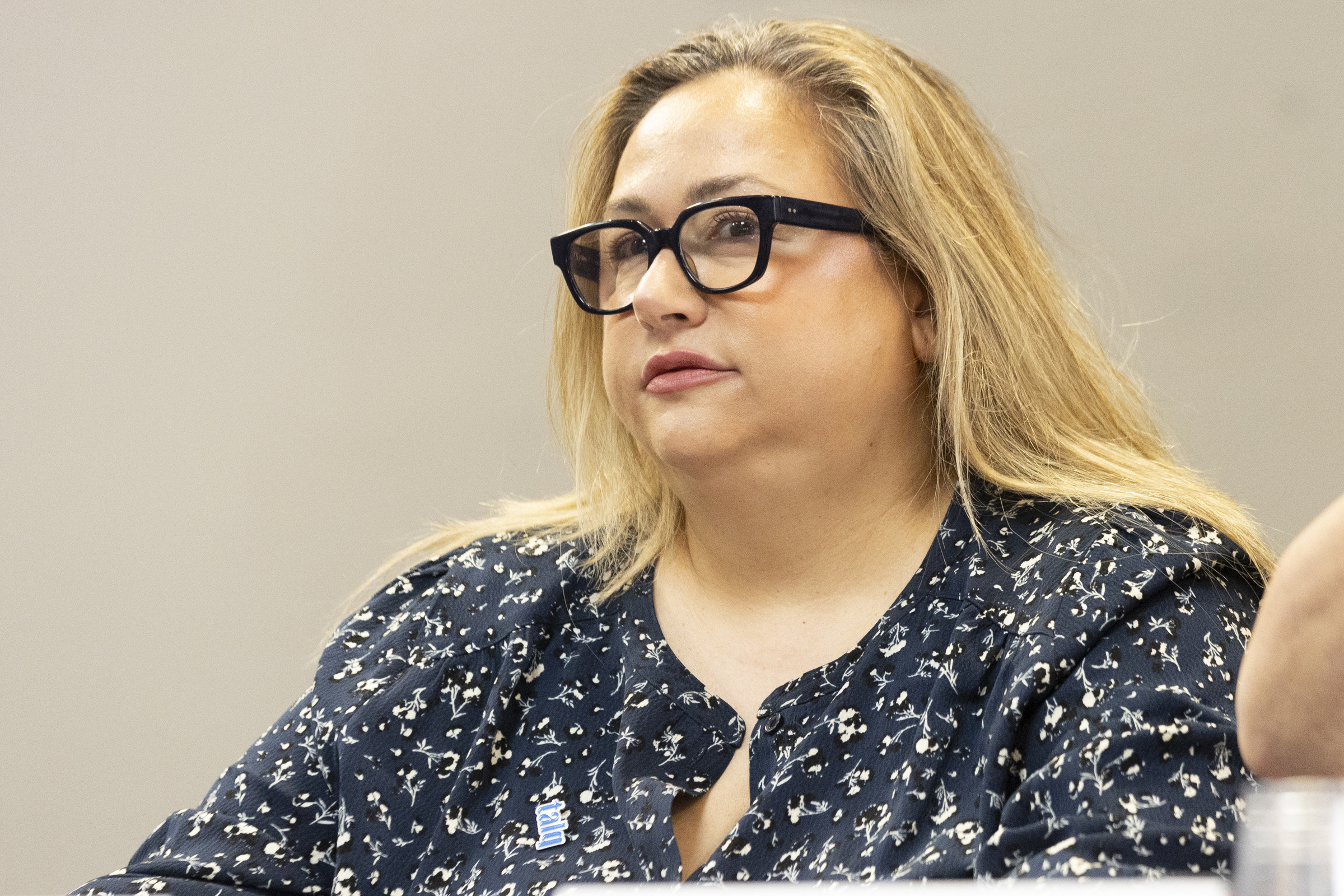 “The concern is that too often, measures intended to strengthen French are designed in ways that disproportionately impact the English-speaking minority,” says Katherine Korakakis of the English Parents’ Committee Association. Tim Snow / Montreal Gazette
Katherine Korakakis, president of the English Parents Committee Association of Quebec, said the English-speaking community remains committed to Quebec, but is losing confidence in its future in the province after years of legislative changes under the CAQ.
“Viewed individually, each measure appears manageable,” Korakakis said.
“Collectively, however, they have created a perception that English-speaking Quebecers are increasingly being asked to accept fewer opportunities, fewer pathways, and less influence over the institutions that serve them.”
Anglophones understand the importance of protecting French and their children are more bilingual than ever, Korakakis said.
“The concern is not with protecting French,” she said. “The concern is that too often, measures intended to strengthen French are designed in ways that disproportionately impact the English-speaking minority.”
TALQ president Eva Ludvig told Burke that a persistent misconception — that francophones outside Quebec are vulnerable while anglophones in Quebec are not — has led some federal politicians to conclude English-speaking Quebecers “do not deserve to get the support that they need.”
She added that many decision-makers in Ottawa fail to distinguish between supporting the English language broadly and supporting Quebec’s English-speaking minority community — “and that is a big concern.”
In response, Burke said she would work to bust myths about Quebec anglophones and to help find solutions to problems the communities face.
“No Canadian should feel vulnerable as a result of language,” she said.

A Montreal native, Andy Riga has been with The Gazette since 1991. He covers politics, language and other Quebec issues, and writes the On Quebec Politics newsletter. Montréalais d’origine, Andy Riga travaille au Montreal Gazette depuis 1991. Il couvre la politique, les enjeux linguistiques et d’autres sujets, et est responsable de l’infolettre On Quebec Politics.
ariga@postmedia.com