
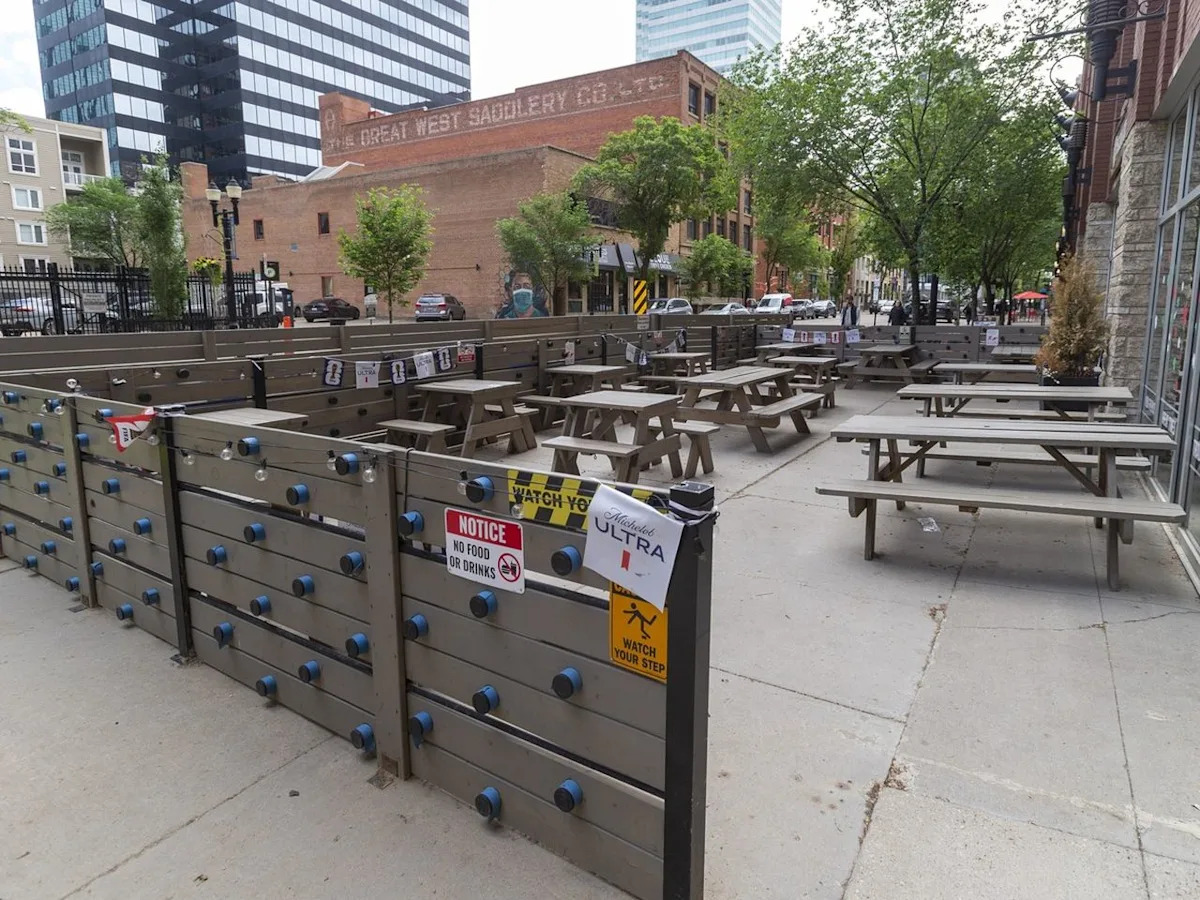
Mayor Andrew Knack admits he was mistaken when he voted against a motion earlier this year to freeze a plan to introduce patio fees.
But since learning the licensing fees could hand some establishments a $7,000 bill on top of other costs restaurants and bars are already paying — some up to $70,000 in fees — he’s had a change of heart.
“What I had thought was the patio fee was going to be the only charge,” he said. “What I have since found through numerous examples is there are a lot of other charges, particularly coming from the operational side of things that are impacting patios. I get there might need to be a one-time charge if you’re doing an encroachment onto city land, whether that be a sidewalk or a parking stall. But the way I understood it is these types of charges were coming every single year.
“I think we need to stop being so rigid as a city when we’re looking at activation of our streets. The loss of a city parking stall but the addition of a patio could be very valuable overall for the city.”
Knack motioned on Wednesday to direct administration to work with businesses toward a revised patio program for 2027, including finding alternatives to encroachment fees watering-holes have been saddled with this year, alongside other permitting costs and approval timelines.
Administration will also examine alternatives to cover the costs of the patio program, originally funded through the TAESR fund from photo radar revenue, which is no longer available. It doesn’t change encroachment fee requirements for this year, however.
Acknowledging the city is itself trying to compensate from the province moving goalposts, Canadian Federation of Independent Businesses (CFIB) senior policy analyst Kayode Southwood welcomed the motion.
“CFIB is very supportive of Mayor Knack’s motion,” he said. “The city’s funding stream doesn’t exist anymore for this program, so obviously they’re on the hook for paying for this patio program.
“I think this is definitely a step in the right direction. It’s good that the city has recognized there is this unfriendly business perception. So to have this motion go through, I think that really signals the city is listening to small businesses.”
With council looking to improve Edmonton’s reputation for being a good place to do business, Southwood said there are four areas the city should look at to make life easier for entrepreneurs. Those are property taxes, crime, construction and red tape.
Noting other cities like Calgary and Vancouver have minimal patio fees for restaurants, Southwood added CFIB would like to see the city expand its proposal of an industrial property tax sub-class to small businesses.
Knack said he wants a more holistic approach to economic development across administration.
“If you’re on the operations side, you’re rightfully worried about traffic safety, but do we apply a lens of economic development when somebody says they’re looking to do a patio?” he said. “How are we applying all that together? That’s what I think we’re missing now as a city.”
Related
Bookmark our website and support our journalism: Don’t miss the news you need to know — add EdmontonJournal.com and EdmontonSun.com to your bookmarks and sign up for our newsletters here.
You can also support our journalism by becoming a digital subscriber. Subscribers gain unlimited access to The Edmonton Journal, Edmonton Sun, National Post and 13 other Canadian news sites. Support us by subscribing today: The Edmonton Journal | The Edmonton Sun.