

Listen to this article
Estimated 3 minutes
The audio version of this article is generated by AI-based technology. Mispronunciations can occur. We are working with our partners to continually review and improve the results.
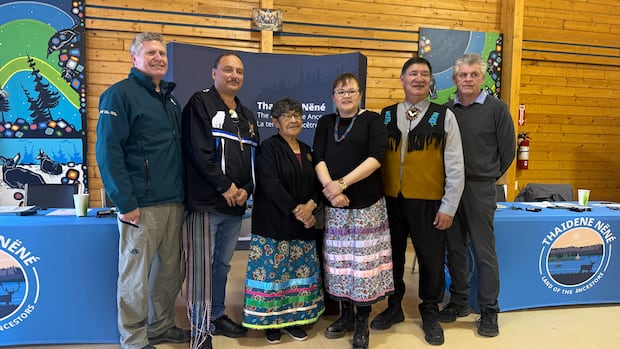
The community of Łutselk’e and fellow signatories — Parks Canada, the N.W.T. Métis Nation, and the territorial government — gathered in Łutselk’e Wednesday to celebrate the first relationship plan developed for the Thaıdené Nëné’ Indigenous Protected Area.
Thaıdene Nëné Badı Xá is a relationship plan that outlines a vision and five overarching goals to be achieved over the next 10 years. It’s different from a management plan typically created to determine how a protected area will be used and protected.
“It’s a relationship with the land, the water, animals, and everything that’s within Thaıdene Nëné, as well as the people that use the land,” said Adeline Jonasson, chair for Thaıdene Nëné Xá Dá Yáłtı, the operational management board of the protected area.
Indigenous knowledge, language and culture are foundational to the relationship plan and are embedded in every section, objective and target starting with the first goal: “promote nuwé ch’anıe,” which is the principle that describes Dene values and knowledge.
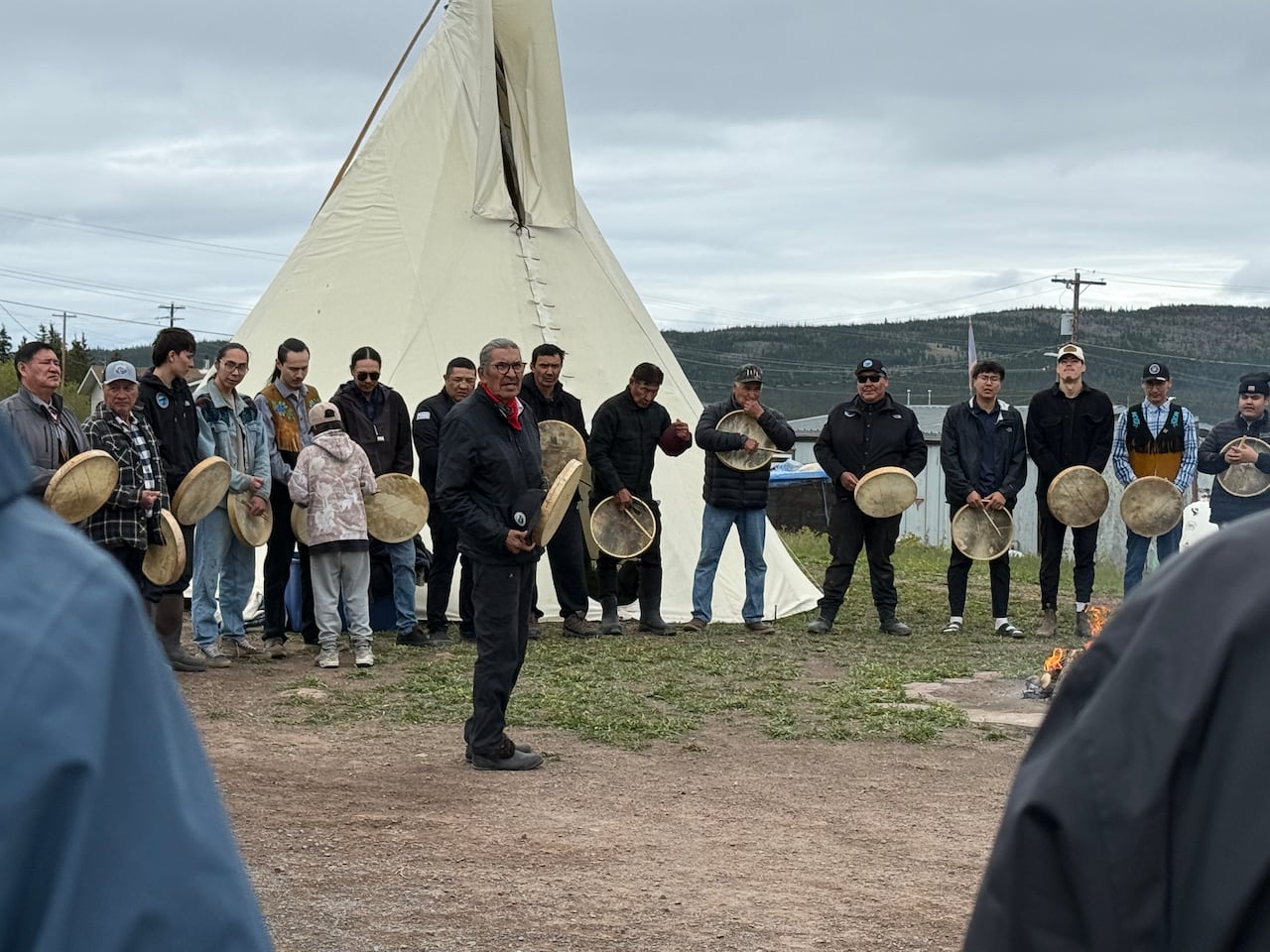 Junie Catholique gave opening remarks and led a feeding the fire ceremony with the community, dignitaries and guests at the Thaıdene Nëné Badı Xá celebration in Łutselk’e on June 10. (Kaila Jefferd-Moore/CBC)
“Our history, laws, language, spirituality, and ways of life flow from and are written in the land, ” said Iris Catholique, manager of the protected area for the Łutsel K’e Dene First Nation. “While Thaıdene Nëné Badı Xá is something new … it is grounded in old ways. It’s grounded in relationships, in respect, in care, in collaboration, and in ceremony.”
Some of the targets include developing a monitoring and research plan, creating a tourism strategy, and building a visitor centre and shared office in Łutselk’e.
“The work is not finished but the foundation is strong and it was built the right way,” said N.W.T. Environment and Climate Change Minister Jay Macdonald. “Together we have created something worthy of this place.”
Jonasson said she was thinking of ancestors, elders, families and community members that use the land and pass teaching on to their children.
“And I thought about the future, cause all this is for the yúnethé xá … that’s what our elders told us: it’s for the future. We want to make sure the land is here for the future.”
Rules and regulations vary within the protected area, due in part to the collaborative governance model and the protection of sacred cultural areas. Within the boundaries of the protected area are national park reserve lands, territorial park lands, and a wildlife reserve.
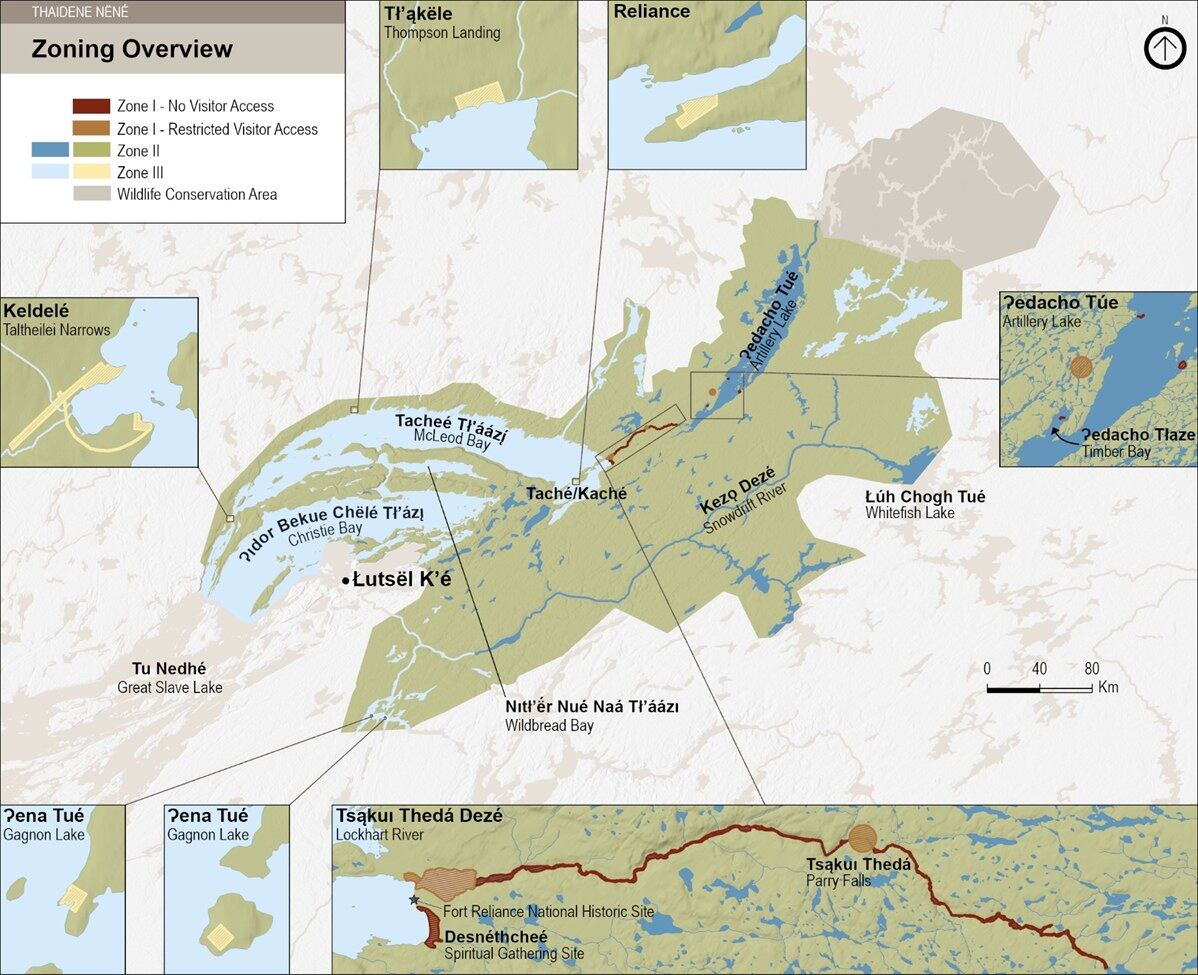 Thaıdené Nëné’ Indigenous Protected Area includes a handful of locations that are off-limits to visitors unless an Indigenous member of one of the signatory partners for the protected area, or accompanied by a Land Guardian or Parks Canada staff. Other areas are marked for commercial leases to continue uninterrupted. (Parks Canada)
“There’s certain areas that [visitors] would have to have help with,” said Jonasson, referencing “zones” identified in the relationship plan with restricted or no access, due to safety concerns for visitors or for the preservation of unique, threatened, or endangered natural or cultural features.
Registration through Parks Canada is required in the national park reserve as is a fishing licence, and hunting is not permitted for non-Indigenous visitors. Indigenous rights-holders may exercise their harvesting rights throughout the protected area.