
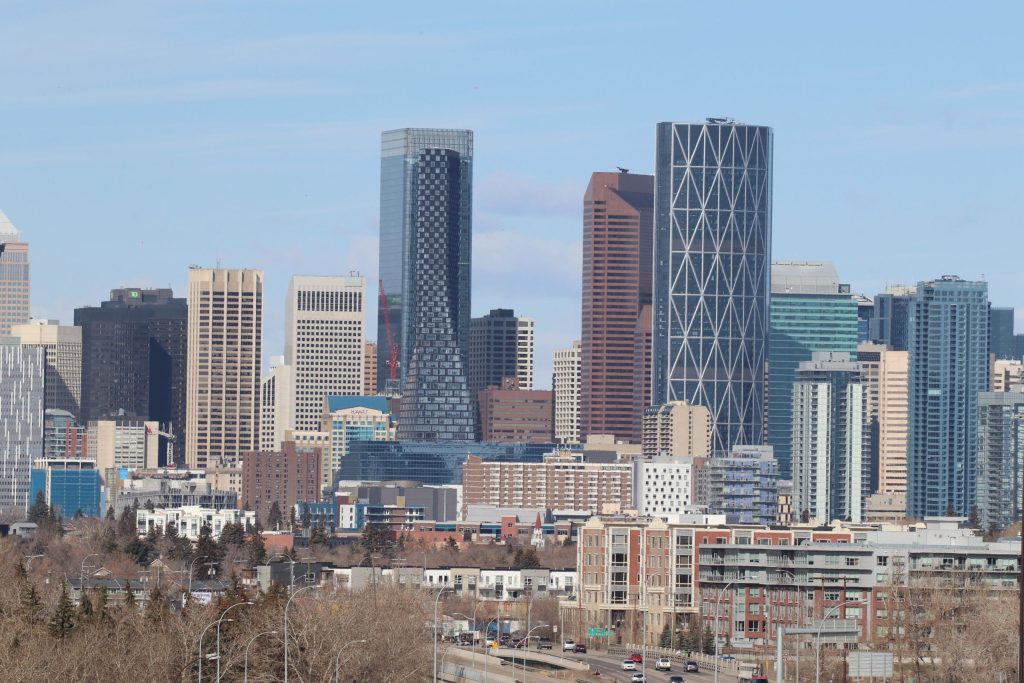
Six months after we landed in Ottawa from Lagos, we decided to up and move to Calgary. As we prepped for the move, we told the few friends and acquaintances we had built over the last few months about our next move. And loads of them had a warning ready.
Some said Calgary was cold with horrible winters. Others said it was boring, a slow fest where nothing happened once the Stampede was over in July. A few others told us that there was a lot of racism waiting for us out west and, as a Black family, we should steel ourselves for the various ways it could rear its ugly head.
We went anyway. And so, one year after landing in Ottawa, we started afresh in the city named after Calgary Castle on the Isle of Mull in Scotland. Within the first few months, I realized that the people who warned us had described a city none of us actually live in.
First off, I should say that I have felt racism and bias in Calgary. And I am not going to pretend it does not exist, or that wanting to belong somewhere makes the ugly parts vanish. What I can say is that in my four years here, it has never been the thing that defines a day, or my sense of whether I am wanted here.
Derek Sivers once told me about landing in Singapore, running into a couple of rude shop clerks and quietly writing the place off as unfriendly, until a friend set him straight.
“The first few people you encounter do not represent the country,” he said.
Especially because the overwhelming experience, for me and my family, has been positive. People here smile at strangers and mean it. They start conversations about everything and nothing that run long past the point politeness would let them stop.
I had always heard that Atlantic Canada was the friendliest corner of the country. After four years here, I think Calgary at least belongs in the argument.
Then there is the cold, which is the warning people deliver with the most confidence and the least information. Calgary is the sunniest major city in Canada. It gets around 333 days with measurable sunshine and close to 2,400 hours of it a year, more than any other big city in the country, according to Environment Canada. The thing nobody warns you about, though, is the Chinook (pronounced shin-ook — don’t worry, I made the same mistake too), a warm wind that blows down the east side of the Rockies and lifts the temperature 20 degrees overnight.
Calgarians don’t question it. We just walk outside wearing shorts and slides in February and act like we earned it. The word comes from the Blackfoot for “warm wind,” and it is one of the first pieces of local vocabulary worth learning, partly because the same wind that melts the snow can leave a headache behind your eyes by noon.
After a year in Ottawa, I came to Calgary expecting worse and got a winter I now prefer. The dry cold here is more bearable than Ottawa’s damp cold ever was, even though Calgary drops colder on the thermometer. The science is on my side for once, since damp air pulls heat off your body faster, so the same temperature bites harder in a wet climate than a dry one. Which means Calgary reads colder on paper and feels milder on the street.
As for boring, I think this is the verdict you reach before the city has shown you anything. Calgary does not perform for you, and it does not announce itself the way Lagos or Toronto do. You have to go looking.
The mountains sit an hour west, close enough that by 3 p.m. on a summer Friday the westbound Trans-Canada is a slow crawl of roof racks and coolers headed for Canmore and Kananaskis. Every July, the whole place changes its clothes and its manners for 10 days of Stampede. The food and music scenes are a beautiful sight, and you find them the way you find everything good here: by showing up rather than reading about it.
During my first couple of years in the city, I made the same mistake the warnings make. I measured Calgary against other places. I kept comparing it to the buzz of Lagos, the startup energy of San Francisco, and the lights and colours of Toronto. Next to them, Calgary felt slow. It took me a while, and a great conversation with a friend who had left Calgary and missed it, to see that the comparing was the problem. You cannot judge a city that is still being built against cities that think they’ve arrived. Calgary is still being built, and that is the best thing about it.
If you want to see what I mean, walk through Bridgeland. Today it’s one of Calgary’s most walkable neighbourhoods, with mid- to high-priced homes and heritage homes sitting beside new condos built on the site of the old Calgary General Hospital. That hospital was demolished in 1998 during the Klein government’s health-care cuts, and the cleared land became The Bridges, a 14.9-hectare mixed-use, multi-residential urban village. In the 1880s, Bridgeland was called Germantown, named after the Russian-German immigrants who settled in the area during Calgary’s first boom. By the early 1900s it was Italian and Ukrainian, and the stretch of 1st Avenue NE earned the name Little Italy, which some people still use. One of Calgary’s most desirable neighbourhoods today was once an arrival city.
What happened in Bridgeland is happening to the whole city now, only much faster. About a third of Calgary was born in another country. More than four in 10 Calgarians are a visible minority. The metro area grew by roughly 19 per cent between 2021 and 2025, adding close to 296,000 people. In a single year it grew by about six per cent, one of the fastest single-year rates Statistics Canada has recorded for any Canadian metro since at least 2001.
This is why the city is so hard to read, from inside and out. It rewrites itself faster than anyone can finish a sentence about what it is. The Calgary an old-timer grieves and the Calgary I arrived in are different drafts of the same place, and neither of us is the last person who gets to edit it.
I know the separatism talk does not help the city’s case from the outside. And I am not going to wave it away. What I can tell you is that it is not the whole room. Most of the people I have met here want to stay in Canada and build something where they are. They want the kind of genuine conversation the loudest voices never seem interested in having.
Four years in, this is the best place I have lived, and I have lived in plenty. An unfinished city had room for the life I wanted to make, so I made it here. This column is where I’ll try to describe it, the place and the people still arriving in it, partly to understand my own move, partly because a city this misunderstood needs someone willing to describe it while it works out what it is.
Sign up to theCanadian Immigrant NewsletterYour weekly dose of inspiration, information and newcomer news — all in one place!