
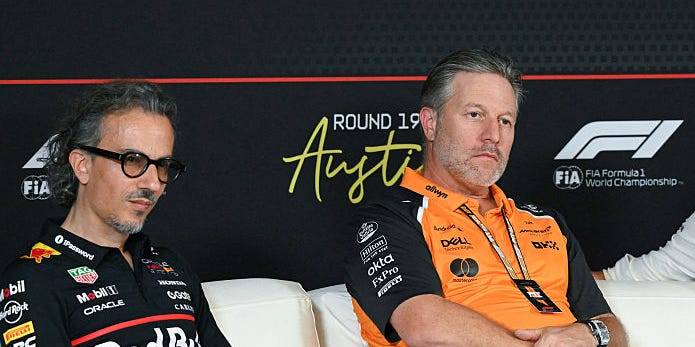
The McLaren and Red Bull Racing Formula 1 teams have both now formally lodged appeals against the outcome of the stewards’ decision that cancelled Pierre Gasly’s Monaco Grand Prix pit speeding penalties and returned third place to the Alpine driver. But the saga is not just about the final positions in the Monaco race, and the points lost by the two teams after the results were changed; it has much wider implications concerning the way the sport is run, which is now under close scrutiny.
In confirming that the team is pushing ahead with the appeal, McLaren took the unusual step of detailing the reasons behind its action, noting that “while we fully respect the FIA’s judicial processes and the role of the stewards, we believe this case raises important questions concerning sporting fairness, regulatory consistency and the integrity of competition.”
To recap: the story began on Monaco Friday, when four drivers were hit with speeding offenses for exceeding the mandated 60 kilometers per hour (37 mph) in the pits—namely George Russell (60.3), Kimi Antonelli (60.1), Fernando Alonso (60.5) and Alex Albon (60.2). Pit speeding is not unusual in practice, usually because drivers make mistake and push the limiter button too late or a car setting is wrong. They’re also meaningless, bringing fines of as little as 100 euros. However, the fact that all the offenses were so marginal suggested to the teams that the measuring system—controlled by loops in the pit lane—might be a little off-kilter, possibly because of the curves at pit entry and exit. While there was some discussion with the FIA, the teams were told the measuring system—which, like all official timing, is overseen by the F1 organization and not the FIA itself—was accurate.
NurPhoto//Getty Images
Teams have traditionally been obliged to accept the official speeds, and if any offset emerges during practice, they have to adjust to it for the race, when a five-second penalty is the norm. They can do that by tweaking the software to a lower figure to allow more margin—for example, setting the “cruise control” limiter to 59.5 kph, rather than the 59.95 kph they might usually run—and by telling the drivers to not cut across the white lines at pit entry or exit and follow a trajectory that trims the distance and impacts the speed.
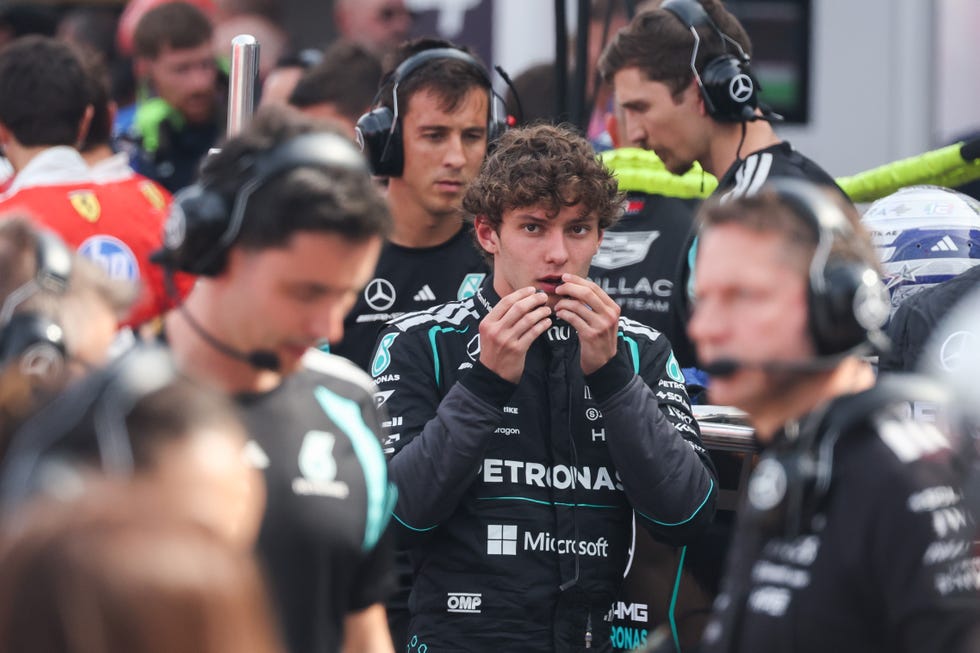
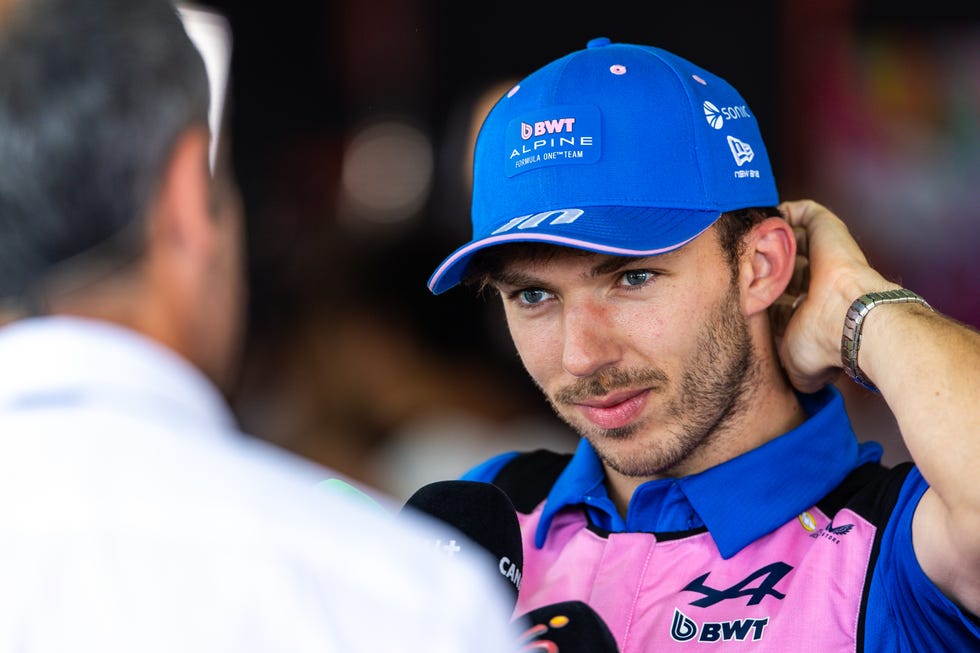
Despite such precautions in the race, five drivers from four teams were reported for speeding, one of them twice. Five of the offenses for Russell, Lewis Hamilton, Franco Colapinto, Oscar Piastri, and Gasly were at a marginal 60.1 kph, while Gasly had a second at 60.4. All drivers took the standard five-second hit in subsequent pit stops—except Gasly, who didn’t pit again. He thus had 10 seconds added to his final result, and having crossed the line in P3, he dropped four spots.
Most teams thought that was the end of it, because normally, such penalties cannot be appealed—and after all, four drivers had taken theirs within the race, and those offenses were now history. Alpine, however, surprised the field by submitting a right-of-review request to the stewards concerning Gasly. That was heard four days later in a virtual gathering of the original stewards, whose first task was to decide if there was new evidence that would trigger a review of their decision.
By then, something remarkable had happened; while Alpine’s original case was based mainly on the data from the car, genuine fresh evidence had emerged in the form of an admission from F1 that there had been a small error in measuring the distance between one of the pit lane loops, which could account for Gasly’s speed figures. The stewards took that on board as new evidence, and—after some deliberation—cancelled the Gasly penalties, while acknowledging that nothing could be done for those who had taken their penalties in the race. The stewards also pointing out that others had not followed up with a right-of-review request, and thus those offenses were not being re-examined.
Jayce Illman//Getty Images
On the face of it, this was justice. After all, if it had been proved that Gasly did not exceed 60 kph, was it right for him to lose a priceless P3 and drop to P7? However, the decision rocked the pit lane. The teams most directly affected were those who lost places and points to Gasly, with Red Bull’s Isack Hadjar going from P3 to P4, McLaren’s Piastri from P4 to P5, and Racing Bulls drivers Liam Lawson and Arvid Lindblad also losing a spot apiece. However, there was also massive frustration for Russell and Mercedes; the team screwed up when his original five-second penalty wasn’t served correctly, which led to a drive-thru penalty that saw him tumble out of the points—something that could cost him the World Championship come December.
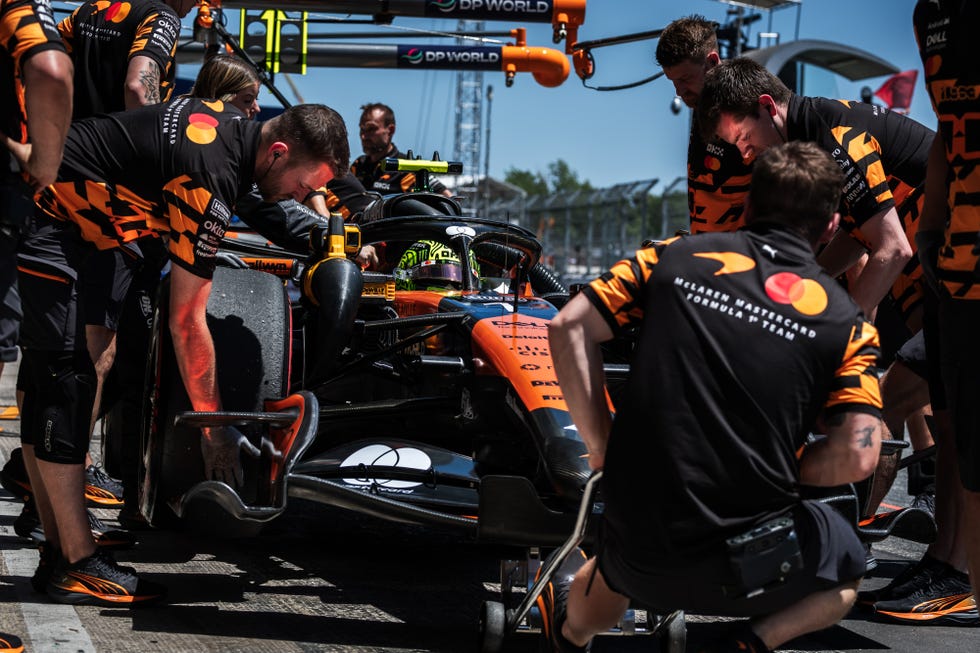
The penalties also changed the race in other ways. When asked by Road & Track, Piastri confirmed that he’d made an extra stop in the race just to get the penalty out of the way, because in the case of a late safety car—with the cars crossing the line in a group—five seconds added would have been more expensive. That stop cost him track position to Gasly. Meanwhile, the two Racing Bulls drivers drove as hard as they could in the closing laps to stay within the 10-second window of Gasly; as team boss Alan Permane told me, what if one had crashed while chasing what turned out to be a ‘phantom’ penalty?
However the real question is one of the rules being the same for everybody. The teams knew or suspected that the pit speed measurement might be off-kilter, and they adjusted to it, but some clearly not by enough. (Alpine actually turned Gasly’s pit limiter downward at the red flag break to avoid a third offense, although he didn’t make another stop.) In contrast, seven teams and 17 drivers got it right, and did not get pit speeding penalties on race day.
SOPA Images//Getty Images
The view of the majority is that the rules are the rules, and teams have to abide by the pit speeding system in the same way they have to trust the FIA’s weighing scales and other measuring equipment when cars are checked in parc ferme. McLaren made this point in its Tuesday statement: “Throughout the Monaco GP weekend—and in every event—all teams operated according to the regulations and established standard practices for what concerns the speed limit in the pit lane as they were applied at the time. Competitors adjusted their procedures accordingly and, where required, accepted and served penalties imposed under those regulations.”
Now that a precedent has been set, the theory goes, all kinds of penalties could now be challenged. “In our view, the subsequent removal of penalties creates a situation in which some competitors are disadvantaged by having acted in accordance with the rules and the stewards’ decisions,” said McLaren. “Such an outcome risks creating sporting inequity and undermining confidence in the consistent application of the FIA Sporting Regulations. Our decision to appeal is not directed at any competitor. Rather, it reflects our belief that the championship benefits from regulations that are applied consistently, transparently and fairly to all participants.”
Speaking after Sunday’s Barcelona race, Red Bull boss Laurent Mekies expressed similar sentiments.“We think it’s more a matter of principle, for the goodness of the sport,” he said. “In order for the sport to get the right clarity on how we go about non-appealable penalty during the race, and getting the right results at the end of the race.”
The Frenchman stressed that everyone has to abide by the referee’s decision. “No measurement system is perfect. There is not one single way to measure the speed, and they are all wrong,” Mekies said. “However, we have been working with that measurement system for a very high number of years. It was the same as the day before, so same as on Friday, so same as the previous years, and we have all adapted to it. And 17 or 18 cars have managed to be legal. So we just need to make sure that, as a sport, we have a solid enough approach, so that moving forward, we get the right clarity to the fans and to the competitors.”
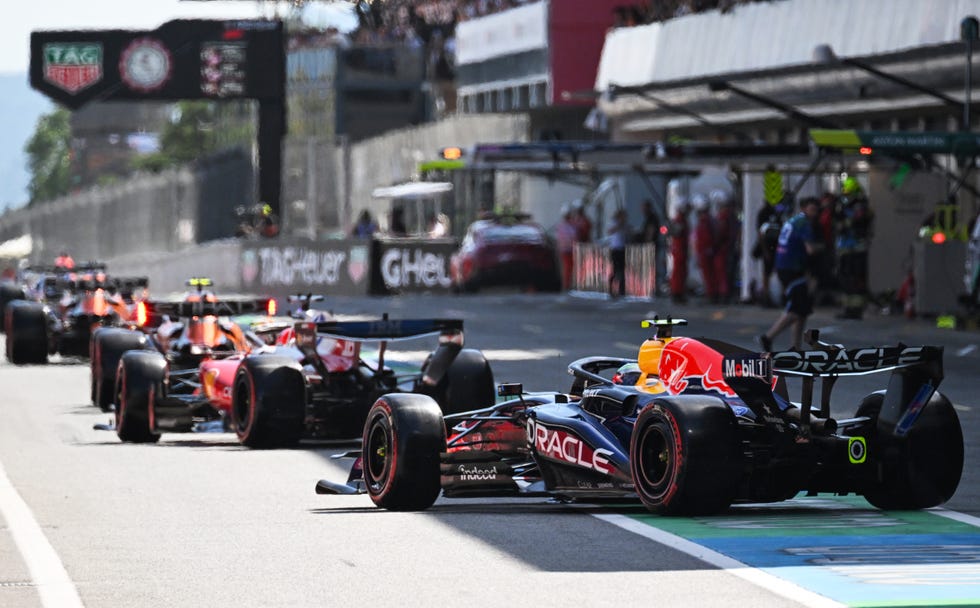
Mark Sutton – Formula 1//Getty Images
Meanwhile, another team’s choices are also in play. Mercedes hasn’t submitted an appeal, but instead played the right-of-review card, and is waiting to see if it has been accepted as admissible. That would go back once more to the original Monaco stewards. In contrast, the McLaren and Red Bull Racing actions now go to the FIA International Court of Appeal, rather than the stewards. The ICA is an independent body compromised of lawyers who will look at the wider legal aspects, not just the minutiae of pit speeding offenses—and thus it will be fascinating to see what direction they take, given what is at stake.

Will Sabel Courtney is a contributing editor at Road & Track. A 12-year veteran of journalism, he formerly worked at Gear Patrol, The Drive and RIDES Magazine, and contributed to the New York Daily News and Jalopnik, among other outlets. You can often find him test-driving new cars in New York City, cursing the slow-moving traffic surrounding him.