
Many cancers take time to invade or spread. In the case of colon cancer, for example, that process from initial polyp to invasive cancer which has spread to other parts of the body may take as long as 10 years. Therefore, if caught early enough many cancers can be treated and eliminated before they’ve had a chance to do a lot of harm. This is why screening is so important.
The usual reason for not starting a screening program is that the tests available aren’t accurate enough. They might miss too many cases so that a negative result can’t be trusted, or they may falsely indicate that someone has cancer when in truth it isn’t there — a false positive. Aside from the anxiety that such a false alarm would trigger, it also puts that person on the road for more invasive testing with all the risks and costs associated. This lack of reliable screening tools is one of the main reasons why many cancers aren’t currently being screened.
Colorectal cancer develops in the last part of the intestine called the colon and the very end, the rectum. In Quebec, screening for it in people who are at average risk starts at age 50. Unfortunately, for reasons that we don’t completely understand, colorectal cancer is appearing in people younger than the age when the screening programs start. The number of people less than age 50 who are presenting with colorectal cancer has increased by about three per cent every year and they now make up approximately 10-13 per cent of the colorectal cancer population. These statistics — combined with the reality that the colorectal screening tests work, are safe and accurate — have led to recommendations that colorectal cancer screening start earlier. PEI already screens before age 50 and Ontario is scheduled to start doing so as of July 1.
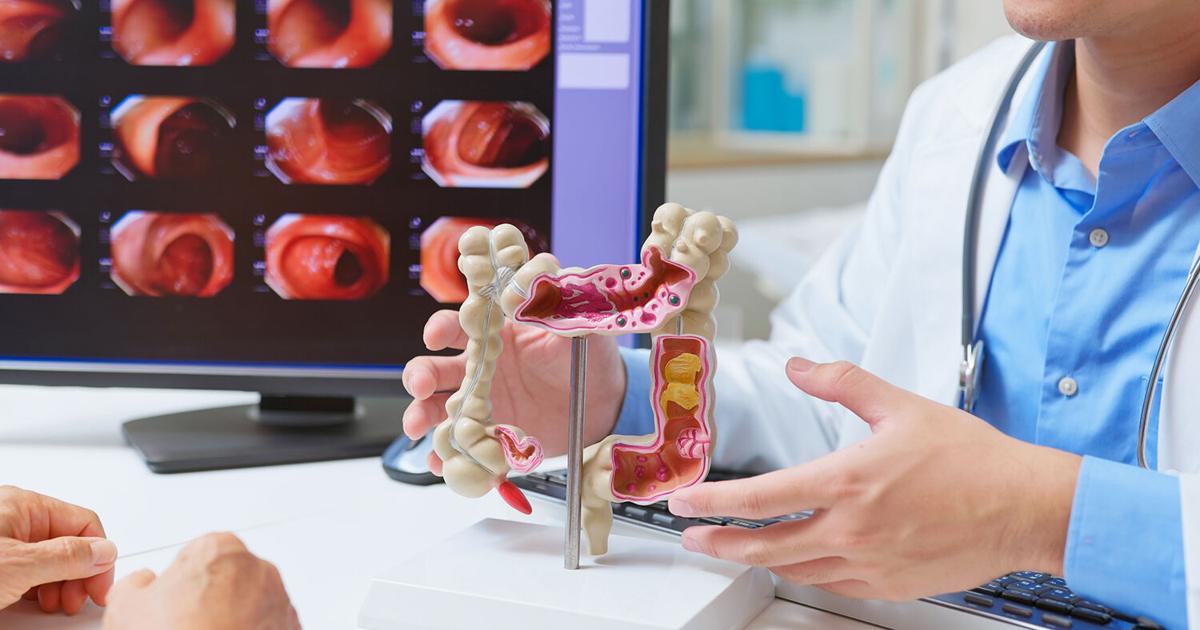
Screening for colorectal is done by FIT (Fecal Immunochemical Test) and colonoscopy. FIT tests a sample of stool for blood. A positive result means that the person should then go on to colonoscopy where under gentle sedation a camera is passed up into the colon. If any suspicious lesions are seen, using the same scope they are removed or a sample (called a biopsy) is taken to confirm what it is.

Screening for colorectal is done by FIT (Fecal Immunochemical Test) and colonoscopy. FIT tests a sample of stool for blood. A positive result means that the person should then go on to colonoscopy where under gentle sedation a camera is passed up into the colon.
Photo: Getty Images / aquaArts studio
For the same reasons (cancer appearing in a younger population and a screening program that works) a similar argument has been made to lower the age for breast cancer screening in Quebec from the current age 50 to 45 or lower. Presently, the screening program makes use of mammography, a form of X-ray. In Ontario, the age to start screening has been lowered to 40. Hopefully, Quebec will follow.
Whatever the official age to start screening, it’s important to take your own circumstances, including your family history, into consideration. For example, if a first-degree relative had colon cancer diagnosed at age 45 you should consider starting your screening 10 years before you reach 45. First-degree relatives are a person’s parents, full siblings or children. If on the other hand you have symptoms that suggest you might have colorectal cancer, such as unexplained rectal bleeding, then whatever your age you and your health care professional should decide what to do.
It’s understandable to be worried about the screening process and what the results might reveal, but catching cancer early gives you your best chance to survive.
Dr. Mitch Shulman is an Associate Professor in the Department of Emergency Medicine at McGill Medical School as well as an Attending Physician in the Emergency Department of the McGill University Health Centre. He’s also the CJAD AM 800 Medical Consultant.