
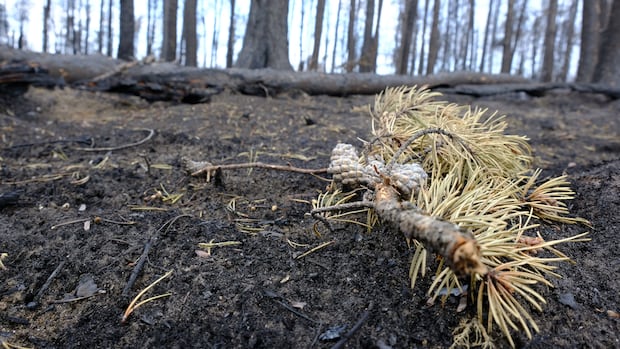
Candyce Paul says she remembers the lack of support from the provincial government in her community’s hour of need.
Paul is the emergency management co-ordinator for English River First Nation, one of the Saskatchewan communities hit hard by wildfire last summer.
“There was nothing available in the region to address the fire when it first took off,” she said. “It took out 350,000 hectares of forest, put numerous communities at risk and caused millions of dollars in evacuation costs and operational costs.”
An independent review from Canadian consulting firm MNP, released last Friday, found the provincial government could have done more to prevent and manage damage during last year’s wildfires.
The report found “significant gaps” in the mitigation, preparedness and recovery strategies employed by the Saskatchewan Public Safety Agency (SPSA).
In response, the Government of Saskatchewan released 11 action items it plans to implement based on the report’s recommendations.
Paul said there needs to be more funding for wildfire relief. She referenced the province’s new FireSmart grant program, which recently awarded $40,000 to the community of Wadin Bay.
“$40,000 is a drop in the bucket for what needs to be done to mitigate and address mitigation around our communities,” Paul said.
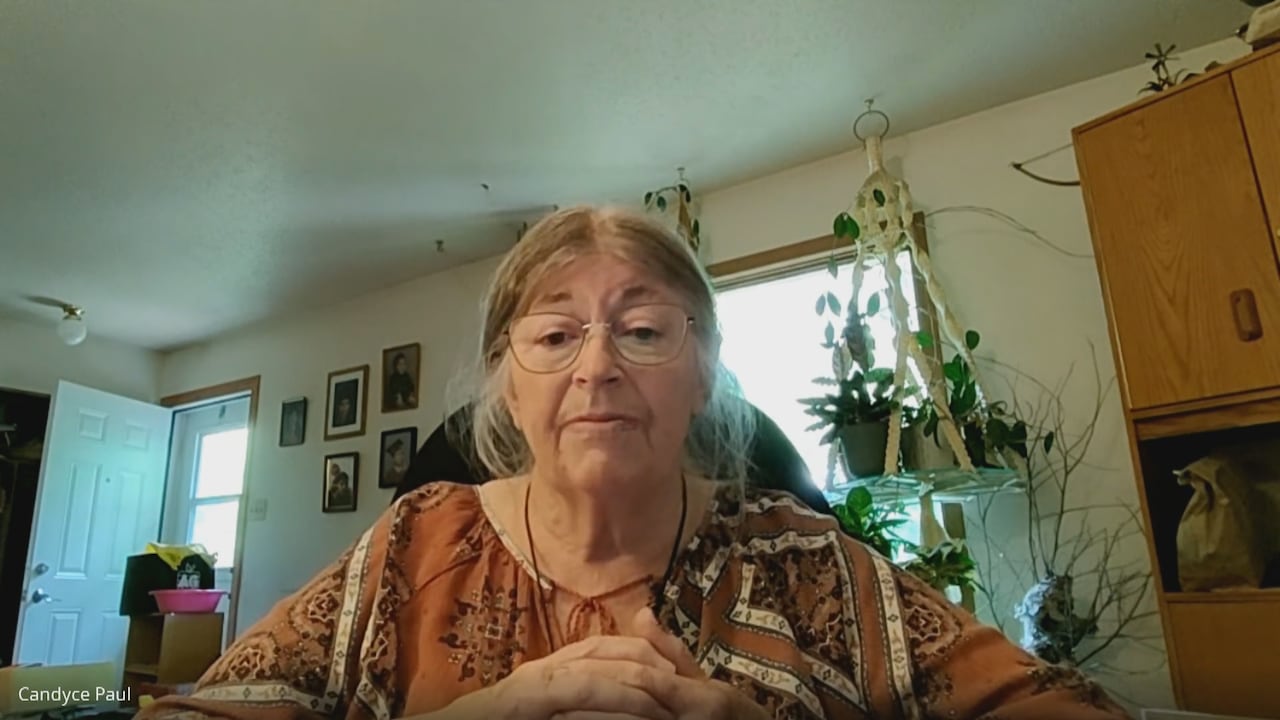 Candyce Paul, Emergency Management Coordinator for English River First Nation agrees with the recommendations (Randi LaRocque/CBC)
Paul said a proposal she put in this year is going to cost nearly $600,000.
“If I get funding for it, $40,000 isn’t going to do anything. You know, that might cover the cost of an education program for homeowners on how to firesmart their yards. That’s about it,” she said.
“That’s not going to address the risk factors that are around our communities living in the boreal forest areas.”
Better co-ordination needed
Paul said the government failed to respond to English River’s needs.
“I had two communities that were evacuated, the farthest community was not under a heavy fire risk and they could have gone home if [the province] had fought fire on the road,” she said.
She said the province left that road out completely, despite fighting fires on other roads in the area.
“Ours started first. Our people were consequently [left] out of that, out of their homes for between 45 and 50 days. It took me getting angry to actually get action on that road,” Paul said.
She said the government’s actions last year caused some distrust in the community.
“Not so much with the people on the ground, but with the people in the higher levels making the decisions. That’s where the mistrust is,” Paul said.
“It’s the decision-makers.”
Paul said she agrees with all the recommendations in MNP’s report, especially one calling for improved integration and co-ordination between the SPSA and other ministries, agencies, Crown corporations and communities.
“It seemed like the Department of Highways and SPSA were working independently, SaskPower working independently. We were told we could get a power generator to our one community where the power was knocked out. It never happened,” Paul said.
“It was like everybody was talking good but nothing was happening and there were no real answers.”
Opposition says report shows ‘bad leadership’
Jordan McPhail, the Opposition NDP’S northern affairs critic, held a news conference on Monday to address the report.
He said it was clear no one was “steering the ship while the North burned.”
“This report points to a lack of preparation, bad decision-making, and a missing-in-action leadership at a time when it was needed,” McPhail said.
McPhail called for the government to apologize.
He also said the government needs to listen to affected communities during wildfire season.
“Don’t push these folks away. Don’t make them feel like they don’t belong in their response. Embrace it,” said McPahil.
“Ultimately, that’s [whats] going to make us successful, is listening to those northern voices.”
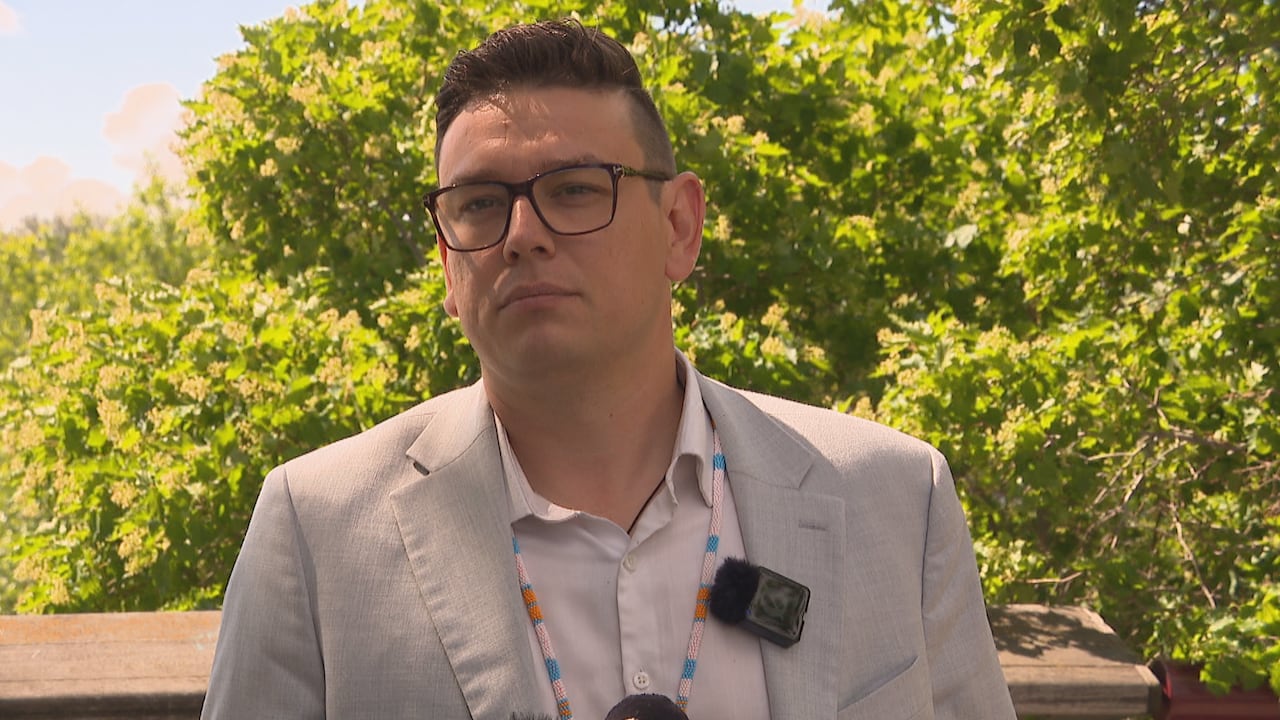 Sask. NDP northern affairs critic Jordan McPhail says the province should apologize for last year’s wildfire response. (Travis Reddaway/CBC)Premier responds
Premier Scott Moe also held a news conference Monday, where he addressed the report.
He said the province is committed to doing better.
“There’s a process the government went through to ensure that we had an adequate response to that review, and a response that, I think, would provide some level of confidence in people that live in communities across this province,” Moe said.
Moe said there is still a lot of work to do at SPSA.
“I won’t preclude what that looks like with respect to, you know, restructuring, expanding the agency, working possibly with northern communities, maybe First Nations communities,” he said.