
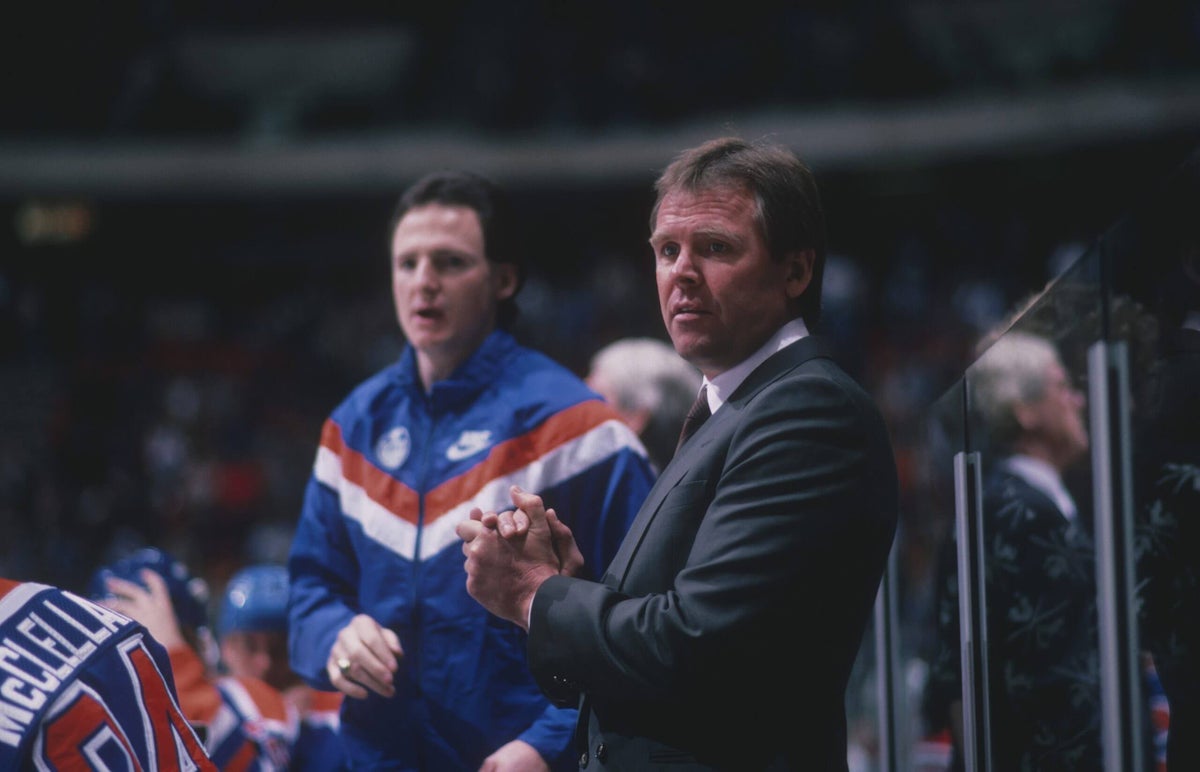
Since the Edmonton Oilers remain in limbo regarding the team’s next head coach, it’s a perfect time to look back on the 18 men who have occupied the position. From the peaks to the valleys, to the few who were genuinely underwater, it’s been a wild ride for Oilers coaches since the team arrived in the NHL. Here they are, every one of them, ranked in order of effectiveness.
1. Glen Sather
Sather won four Stanley Cups in Edmonton (1984, 1985, 1987 and 1988) as a coach, and five as general manager. Sather was smart and cunning as a GM, a deadly combination that allowed him to create the best team in NHL history, the 1986-87 Oilers.
As a coach, he was ruthless with the roster, aggressively seeking change each season. Sather served as both good cop and bad cop to a group of gifted young men who went from teenagers to battle-hardened veterans in record time. You could make the case for Sather as both the greatest general manager and coach in the game’s history; his record is that strong.
2. John Muckler
Muckler is best remembered for being the head coach of the 1989-90 champion Oilers. He did an exceptional job that season, finding ways to make everything rhyme in spite of massive trades in-season, goalie upheaval (five different men tended net that year) and pivotal moments that could have gone the wrong way. Muckler’s choice to stay with Bill Ranford after a ghastly start to the opening series against the Winnipeg Jets in 1990 was his finest moment, with Ranford delivering a Conn Smythe performance as a reward.
Muckler was hired as an assistant coach in Edmonton in time for the 1982-83 season, moved up to co-coach by 1985, and got the head job in the fall of 1989. He was an expert tactician for the time, often described by the media as the Oilers’ X’s and O’s mastermind.
3. Craig MacTavish
MacTavish is the first name from this century to appear on the list. Blessed with rapier wit and an ability to communicate with fans that has yet to be duplicated, his openness about roster construction and deployment fuelled analytics work done by now-famous hockey executives like Tyler Dellow and Tim Barnes.
MacTavish eschewed the high draft picks in favour of hard workers who were intelligent and coachable. His five-on-five deployment led directly to Edmonton’s appearance in the 2006 Stanley Cup Final, possibly the finest single season by an Oilers head coach. His 2001-02 team allowed 182 goals, the fewest in team history.
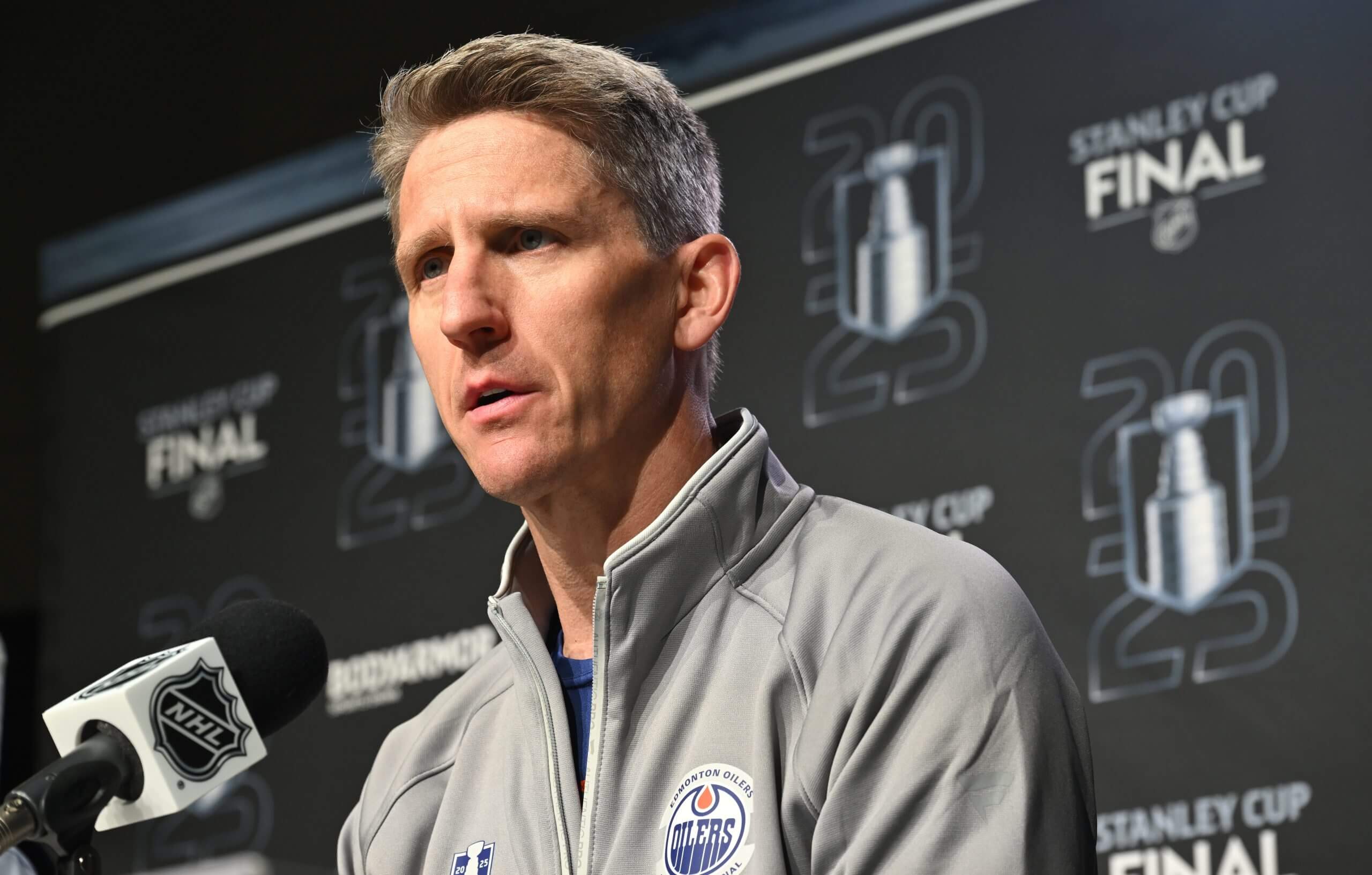
Kris Knoblauch coached the Oilers to the Stanley Cup Final in back-to-back seasons. (Walter Tychnowicz / Imagn Images)
4. Kris Knoblauch
An unpopular choice currently, since he was fired mere weeks ago, history will be kind to Knoblauch. He coached the team to the Stanley Cup Final in two straight years, losing in seven games (2024) and six games (2025) while falling short of the ultimate goal. Knoblauch’s key strengths were a calm demeanour, the ability to switch out goaltenders at exactly the right time and an extreme stubborn streak that allowed him to stay the course in his first two seasons. Although that stubborn streak would ultimately cost him his job, Knoblauch will get another chance in the NHL over the next couple of seasons. He’s a strong bet to win the Stanley Cup eventually.
5. Todd McLellan
McLellan delivered the team’s first playoff success during the Connor McDavid era in the spring of 2017. The Oilers got by the San Jose Sharks and almost blew past the Anaheim Ducks during a spirited spring that showed great promise. McLellan showed he was a good judge of talent that wasn’t NHL-ready when fading Griffin Reinhart in 2015-16 and Jesse Puljujarvi in 2016-17 in spite of general manager Peter Chiarelli building his roster with those two youngsters as prominent names. In a more organized time in Oilers history, McLellan may have delivered the Stanley Cup.
On the downbeat, he began the decade-long practice of placing McDavid and Leon Draisaitl on the same line, serving to make playing against the Oilers easier for opponents.
6. Jay Woodcroft
Woodcroft was electric in his ability to create offence. His teams delivered high torque production that rivalled the 1980s Oilers teams that brought home the Stanley Cup consistently. The Oilers were unable to settle the goaltending situation in time for the coach to put the final pieces together, but as time passes, history will remember his time as one of the most exceptional periods in team history.
Woodcroft’s 2022-23 Oilers team won 50 games, owned a goal differential of plus-69 (the best since 1987-88) and scored 325 goals (highest since 1988-89). Woodcroft should be an NHL head coach now, and will be again soon.
7. Dallas Eakins
Of all the coaches on this list, Eakins was the most mercurial and the most interesting. He had dozens of ideas about how the team could be better, and his mistake may have been in instituting them all at once. Although he coached for only parts of two seasons in Edmonton, many of the ideas he deployed while with the team are now viewed as standard practice. Eakins was ahead of his time.
8. Ron Low
Low first gained attention from Oilers fans as a deadline acquisition in March 1980. He settled down the goalie position for a youthful Edmonton team and helped the first edition of the Oilers make the playoffs. He coached the team’s AHL affiliate in the late 1980s and joined the NHL team in time to be part of the coaching staff for the 1990 Stanley Cup winner. He was elevated to head coach in 1994-95, a position he would hold until the summer of 1999.
Low is most famous as the coach for several stunning playoff upsets by the Oilers in the late 1990s. Edmonton got past the Dallas Stars in a seven-game series in 1997, and did the same thing one year later against the Colorado Avalanche. Low was regarded as a strong motivator and would rank higher, but he didn’t recognize the elite scoring talent Miro Satan represented as a young player.
9. Kevin Lowe
Lowe’s HHOF playing career began and ended in Edmonton, and he immediately caught on as an assistant coach with the team after retirement. A year later, he was named head coach and guided the Oilers to a playoff berth in 2000. The only team he coached allowed 212 goals in an 82-game season. It was the lowest full-season total in team history up to that time.
10. Ted Green
Green was an assistant coach with the Oilers beginning in 1982-83, and moved up to the big job in 1991-92. The Oilers made the playoffs and won two rounds that spring (against the Los Angeles Kings and Vancouver Canucks) before getting blown out in four straight in the third round. The following season, the club fell from 36 to 26 wins, and early in the 1993-94 season, Green was replaced. For many Oilers fans, he was one of the faces of the franchise during the 1980s, and was listed as an associate coach on the 1989-90 Cup winner.
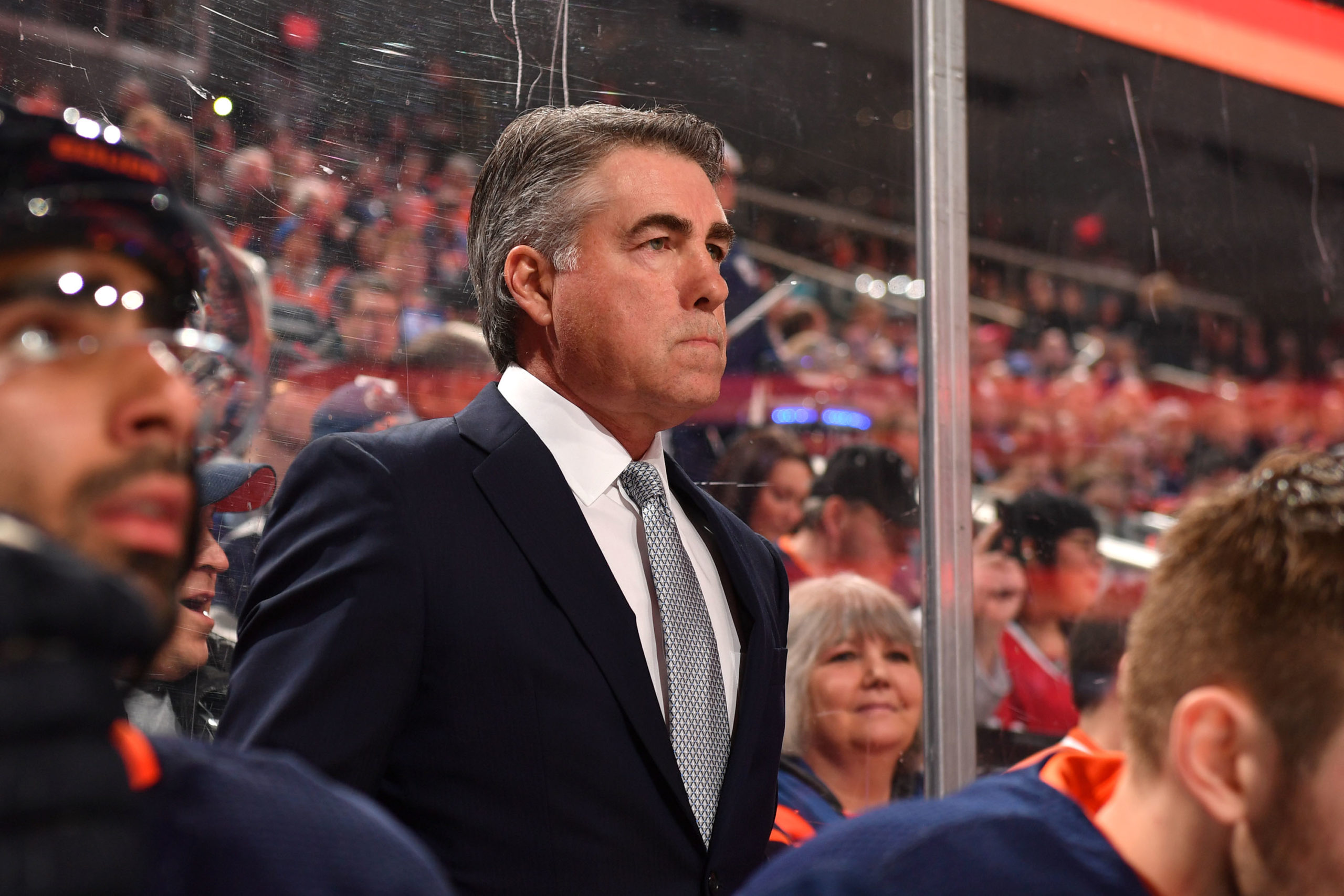
Dave Tippett was the Oilers’ head coach for parts of three seasons. (Andy Devlin / NHLI via Getty Images)
11. Dave Tippett
Tippett coached the Oilers for parts of three seasons, making the playoffs twice but getting bounced in the first round both times. Although he was able to get his teams to the postseason, there were issues with roster deployment. He faded Ethan Bear in a playoff series and slow-played a young Evan Bouchard in a time when the Oilers badly needed puck movers with skill on the back end. Among the men who have coached during the McDavid era for 70-plus games, Tippett was the least successful.
12. Todd Nelson
Many Oilers fans view Nelson as the one who got away. After a successful five-year run coaching Edmonton’s AHL team (the Oklahoma City Barons), Nelson finally got his chance with the Oilers midway through the 2014-15 season. He coached the team to a 17-22-7 record and was replaced over the summer. Many of his former players from Oklahoma City (Brandon Davidson, Anton Lander) played well for Nelson in his brief time with the team.
13. Ralph Krueger
The Oilers ran through several seasons with unusual choices as head coach. These men came from non-traditional hockey outposts and brought innovation to the team without any playoff success. Krueger was the first hire and coached the Oilers for one season. His club was young, talented and creative, but Krueger didn’t get a chance to build on early success.
14. Ken Hitchcock
By the time the Oilers hired Hitchcock, the 2018-19 season was cooked. The veteran coach is a legend in Edmonton, and he kept fans entertained during a devastating season. It’s an open question as to how much he helped make the team better, but, interestingly, the organization is currently in pursuit of a strict disciplinarian these years later. Hitchcock was a tough coach to play for, but he had success in the years before arriving with Edmonton.
15. Tom Renney
Renney wasn’t as successful as hoped in Edmonton. His teams bled goals and lacked veterans who could take on the load while allowing young players to emerge. The period between MacTavish leaving and Renney moving on (from 2009 summer through 2012 offseason) was a frustrating time for a fanbase hopeful that young players like Jordan Eberle and Taylor Hall could make a difference. As a coach, Renney didn’t move the needle.
16. George Burnett
Sather didn’t make many mistakes in hiring people, but Burnett didn’t work out as an NHL head coach. He won the Oilers’ only AHL championship as the Cape Breton Oilers romped to the Calder Cup in 1992- 93. By 1994-95, he was named head coach of the NHL Oilers, but lasted just 35 games. He would go on to be a highly successful OHL coach, winning league championships twice.
17. Pat Quinn
One of the more difficult seasons in recent Oilers history came in 2009-10. Pat Quinn was a legend in Edmonton, having played for the Oil Kings in 1962-63. The team won the Memorial Cup that year. Quinn went on to an NHL career of note and then an exceptional coaching career. His time with the Philadelphia Flyers, Vancouver Canucks and Toronto Maple Leafs included deep playoff runs and long winning streaks.
By the time Quinn arrived in Edmonton, he had been out of the game for a few years. The job of coaching a struggling team populated by disgruntled veterans and young players proved too much. Quinn was unable to help the team enough to remain, and he held the job for one year.
18. Bryan Watson
Sather wanted to devote more time to GM duties in the fall of 1980, so he named Watson coach. It was a painful experience, detailed at length in Peter Gzowski’s brilliant book “The Game of Our Lives.” Gzowski’s prose perfectly describes a difficult moment for Sather and Watson, two longtime friends, and the turmoil of a slow start for a club with high expectations. Watson was replaced as head coach after 18 games.