

Listen to this article
Estimated 2 minutes
The audio version of this article is generated by AI-based technology. Mispronunciations can occur. We are working with our partners to continually review and improve the results.
More help is on the way for people who show up at Winnipeg emergency departments seeking mental health or social supports.
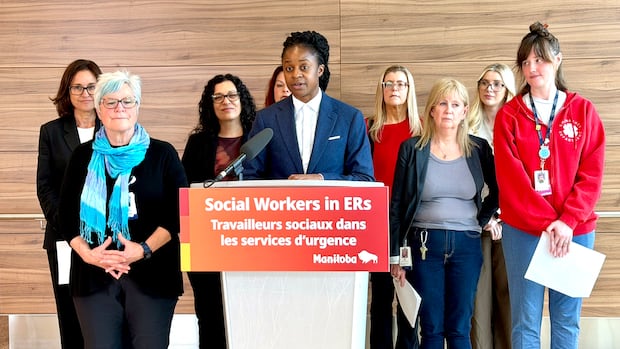
The Manitoba government is adding eight more social worker positions in four emergency departments and urgent care centres at a cost of $1.2 million a year, offering people “more support in their time of need,” Health Minister Uzoma Asagwara said at a Wednesday news conference.
Four city hospitals — St. Boniface, Victoria, Seven Oaks and Concordia — will each have two social worker positions, said Jane Curtis, the Winnipeg Regional Health Authority’s interim president.
Connecting patients with “essential and timely resources” will help reduce emergency wait times and hospital long stays, Curtis said at the Thursday news conference.
Currently, Winnipeg’s Health Sciences Centre is the only hospital that has 24/7 social workers in its emergency department.
Asagwara says those staff help doctors and nurses by doing safety assessments, discharge planning and providing support and care.
WATCH | More social workers to be assigned to hospitals:
More social workers coming to Winnipeg ERs, urgent care centres
Manitoba Health Minister Uzoma Asagwara says social workers will be assigned 24/7 at the emergency departments and urgent care centres at Concordia, St. Boniface, Seven Oaks and Victoria hospitals. Social workers help patients deal with housing problems and access documents, among other social issues.
Social workers are “experts across a continuum of care that lends itself very well to Manitobans having a better experience in our urgent cares and emergency departments,” they said.
The union for the social workers says more jobs are good news but that more needs to be done.
The Manitoba Association of Health Care Professionals says help is needed for patients once they leave the hospital and are back in the community.