
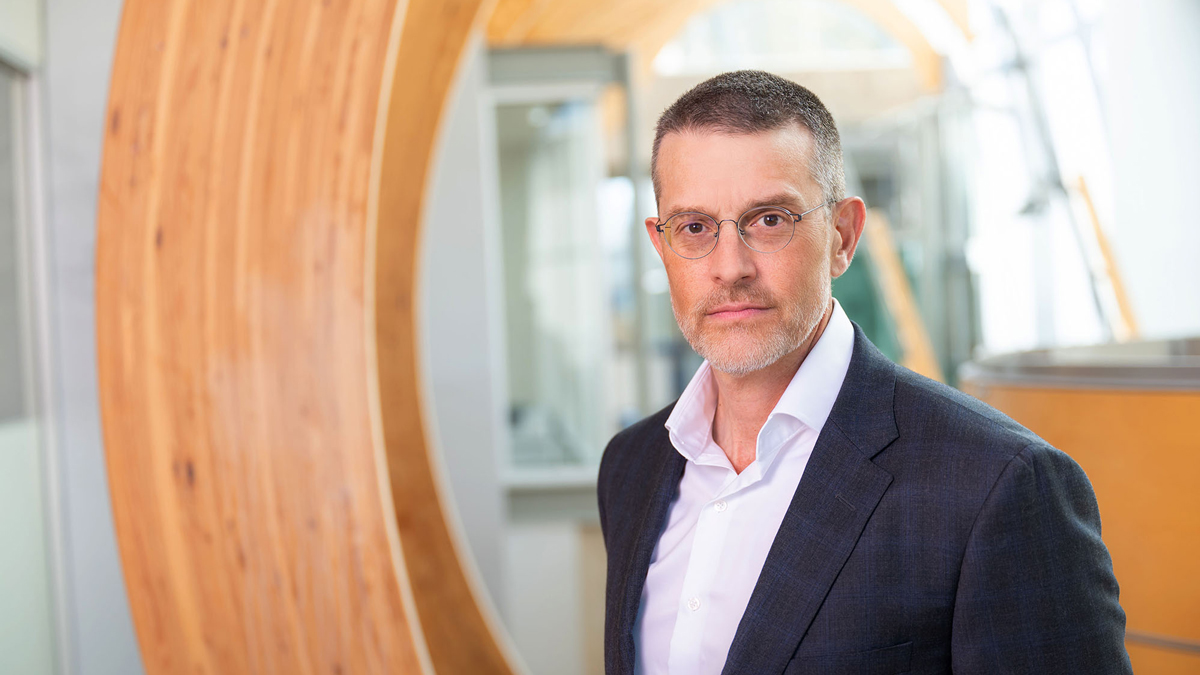
UBC Faculty of Medicine professor Dr. Marco Marra has been awarded the Canadian Cancer Society’s Lifetime Contribution Prize in recognition of his transformative impact on cancer genomics research, precision medicine and scientific mentorship.
Dr. Marra is a professor in the Department of Medical Genetics and Michael Smith Laboratories at UBC, and a distinguished scientist at BC Cancer. A long-time contributor to the fields of genomics and cancer, he was one of the first researchers to show that genetic sequencing could identify new treatment options for people whose cancers had returned.
Dr. Marra now co-leads BC’s Personalized Oncogenomics Program, which has helped over 2,000 patients find new treatments. The knowledge gained through that program is also paving the way for personalized therapies matched to each person’s specific cancer and genetic profile.
“Dr. Marra is a visionary scientist whose pioneering contributions to health sciences have profoundly impacted both Canadian and global society,” says Dr. Martin Hirst, director and professor at UBC’s Michael Smith Laboratories, who nominated Dr. Marra for the award. “His contributions have not only enhanced our understanding of cancer biology but also directly influenced clinical practices, leading to better outcomes for cancer patients every day.”
Dr. Marra’s accomplishments go beyond his research. He has mentored trainees who now hold high-profile cancer research positions of their own, built partnerships and collaborations around the world, and advocated for genomics in health policy and care.
The Canadian Cancer Society’s Lifetime Contribution Prize is awarded to a researcher whose accomplishments extend beyond traditional research outputs, recognizing those who have built networks, created shared resources, advanced research capacity and trained the next generation of cancer researchers.
As part of the award announcement, the Canadian Cancer Society spoke with Dr. Marra about the impact of his work, the evolution of cancer genomics and the lessons he’s learned throughout his career.
How has the work you’ve done so far changed the experiences of people affected by cancer?
I have been privileged to lead or co-lead numerous cancer projects, revealing new mutations, biomarkers and therapeutic targets to bring benefits to cancer patients and their families. I have been very fortunate to contribute to these and other initiatives in my cancer research journey, which has been graciously enabled by the support of superb leaders, colleagues and patients and their families.
What’s the most surprising or unexpected finding you’ve encountered in your career?
On reflection, I find the increases in scale of genomics technologies to be among the most surprising developments during my career. When I started, production of the first draft sequence of the human genome required the efforts of thousands of individuals from many labs around the world across a time span of years. Now, my students routinely analyze data sets composed of tens, hundreds, even thousands of genome sequences. We can sequence cancer patient genomes on one machine in a single laboratory and return results to their oncology teams in clinically useful timeframes. The technology is now millions of times more cost-efficient and the benefits that this efficiency brings to health and disease research are many.
If you could go back in time, what advice would you give yourself at the start of your career?
Strap in and hang on — you are in for a wild ride!
A version of this story originally appeared on the Canadian Cancer Society website.