

Listen to this article
Estimated 4 minutes
The audio version of this article is generated by AI-based technology. Mispronunciations can occur. We are working with our partners to continually review and improve the results.
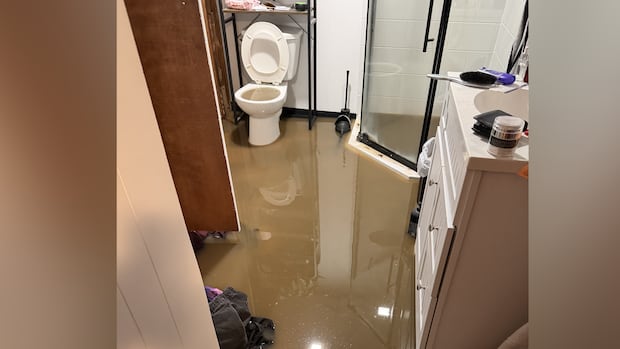
Winnipeg homeowners whose properties were damaged during recent torrential rainstorms might qualify for provincial disaster assistance, despite comments from Premier Wab Kinew suggesting otherwise.
The City of Winnipeg issued a statement Wednesday confirming municipalities do not need to declare a state of local emergency for residents to potentially qualify for Manitoba’s disaster financial assistance program.
The clarification comes after Kinew told reporters in Selkirk on Tuesday that he did not think Winnipeggers would be eligible because the city did not declare a state of emergency after the June 9 storm.
The province announced this week it intends to broaden access to disaster assistance after recent flooding. Under the financial assistance program, people are not covered when adequate insurance is available.
Kinew said Tuesday that climate change has led to flooding in places people weren’t expecting it.
“That’s why we’re looking at ensuring that this DFA program is going to be there for people, so that no one in rural Manitoba gets left behind and … we’re not going to let the rules as posted on the website stand in the way of doing the right thing,” he said.
When asked whether people in Winnipeg would be included in that assistance, Kinew said he didn’t think they are eligible.
“[The City of Winnipeg] didn’t declare a state of emergency. So, my understanding right now is that the state of emergency has to be declared in the municipality.”
Premier’s information ‘incorrect’
A bulletin distributed by the province’s Municipal and Northern Relations department to elected officials and municipal administrators appears to contradict that interpretation.
In a section of frequently asked questions, it asks whether a state of local emergency is necessary to receive disaster financial assistance funding.
“No. You do not need to have a state of local emergency for your municipality or its residents to be eligible for a DFA program,” it says.
WATCH | City of Winnipeg corrects premier on disaster financial assistance: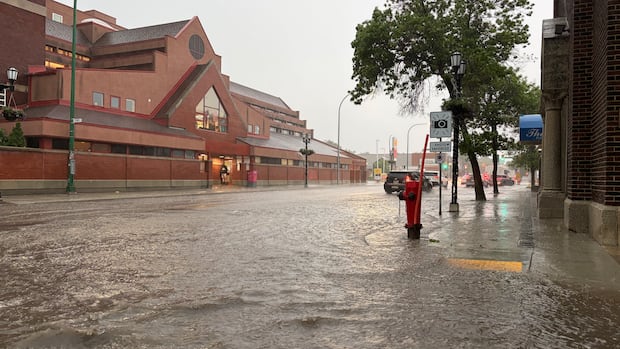
Premier mistaken on disaster assistance for Winnipeggers, city says
The City of Winnipeg pushed back after Premier Wab Kinew said he didn’t think people in Manitoba’s capital were eligible for disaster financial assistance because the city didn’t declare a state of emergency amid recent storms.
The premier’s office acknowledged Wednesday afternoon that the information behind his earlier comments was mistaken.
“The information provided to the premier recently was incorrect. The guidelines around DFA are being reviewed, and we are working to address the damages caused by this unprecedented event,” Amy Tuckett-McGimpsey, director of cabinet communications, said in a statement.
The province said the disaster financial assistance program is currently being redeveloped and encouraged Manitobans to file applications after contacting their insurance providers first.
The city said its office of emergency management continues to work with the province’s Emergency Management Organization to better understand the details of the province’s program and determine how Winnipeg homeowners affected by the storm might qualify.
Many homeowners are dealing with damage and looking for clear information about what support might be available, the release said.
North Kildonan Coun. Jeff Browaty, who chairs the city’s finance committee and represents an area hit hard by flooding, said a state of local emergency has never been required to access disaster assistance.
“The rule is pretty consistent and pretty black-and-white. When it comes to municipalities and requiring a state of local emergency, it’s not required for disaster financial assistance, even if it’s the city applying or private individuals. That’s never been a requirement,” he said.
A declaration of a state of emergency is only required when municipal governments need “extraordinary powers,” such as forcing people to evacuate or building a dike on private property, Browaty said.