
 2 min read
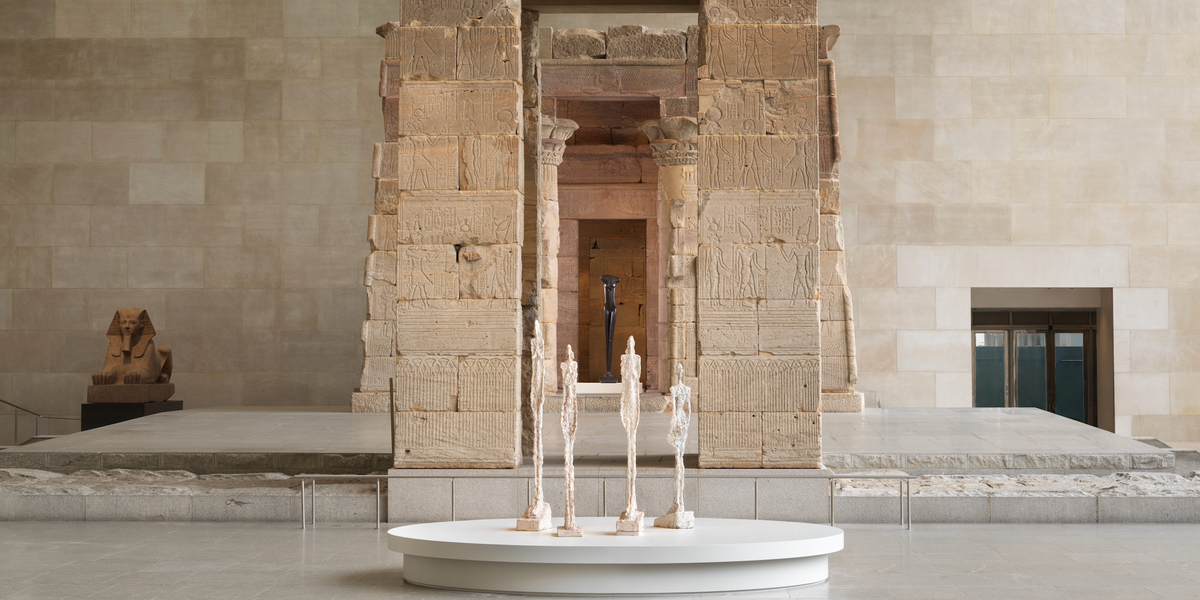
The Temple of Dendur at New York’s Metropolitan Museum of Art has played host to performances by the likes of Usher, Lenny Kravitz, Madonna, and Lady Gaga at the annual Met Gala. But, this summer, it serves as the backdrop for a different kind of art form. Seventeen of Swiss sculptor Alberto Giacometti’s bronze and plaster sculptures are now on display alongside the Roman-Egyptian structure.
Ancient Egypt was a major inspiration for Giacometti’s sculptures of the mid-20th century. Some of his most recognizable forms, including Walking Man, from 1960, and Pointing Man, from 1947, evoke hieroglyphics of figures in profile. The Cat, from 1954, recalls the animal’s sacredness in ancient Egyptian culture.
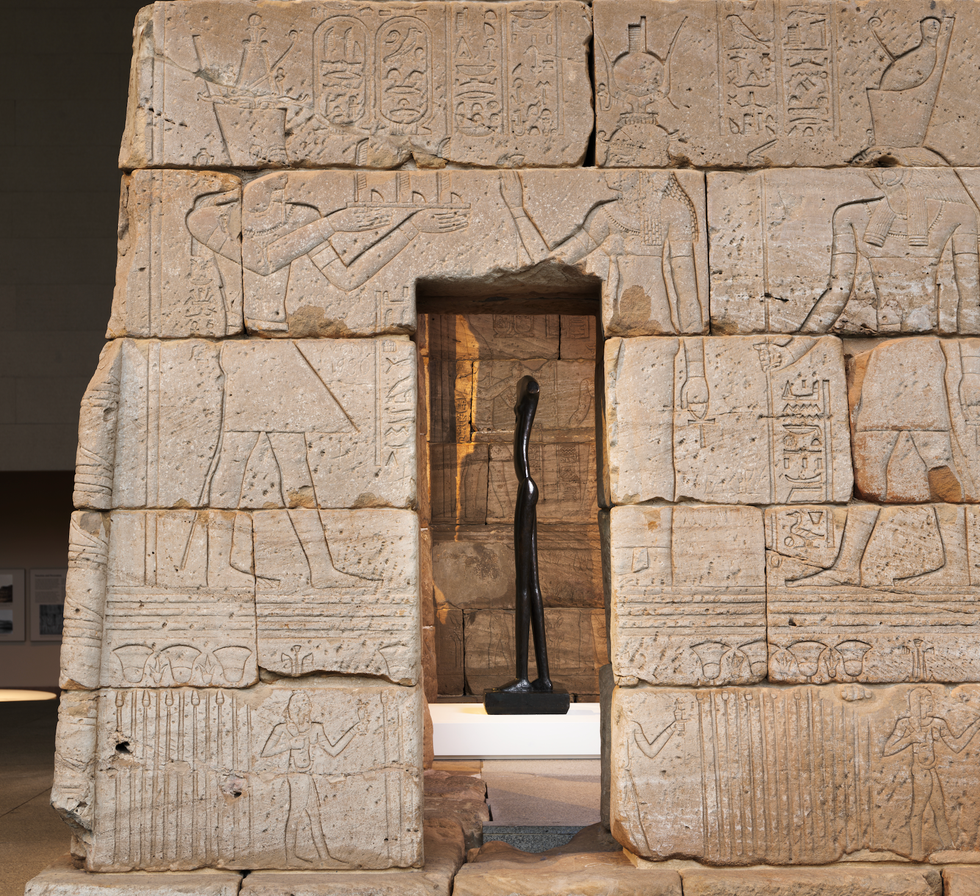 Anna-Marie Kellen, Courtesy The Met
A view of bronze sculpture Femme qui marche (1932) by Alberto Giacomett.
The Metropolitan Museum of Art is highlighting this little-known but important influence on Giacometti’s work with the new exhibit, “Giacometti in the Temple of Dendur.” The installation comes as the museum’s modern and contemporary art galleries remain closed for five years to make way for a new wing devoted to the category. During that time curators are animating other spaces across the Met, creating dialogues across cultures and centuries through art.
Built around 2,000 years ago to honor the goddess of healing, Isis, the temple has resided at the Met since the 1970s, when Egypt gifted the museum the ancient structure to save it from flooding.
Giacometti first encountered Egyptian art as a teenager in Italy, and after moving to Paris at age 20, spent considerable time in the Egyptian galleries at the Louvre and devouring books on the subject. Best known for his highly wrought, elongated bronze figures, the sculptor “was interested in making art that looks eternal, a life that struggles, that fights against death,” says Emilie Bouvard, curator at the Fondation Giacometti, who partnered with the Met on the exhibition. “I think this is something you find in Egyptian art.”
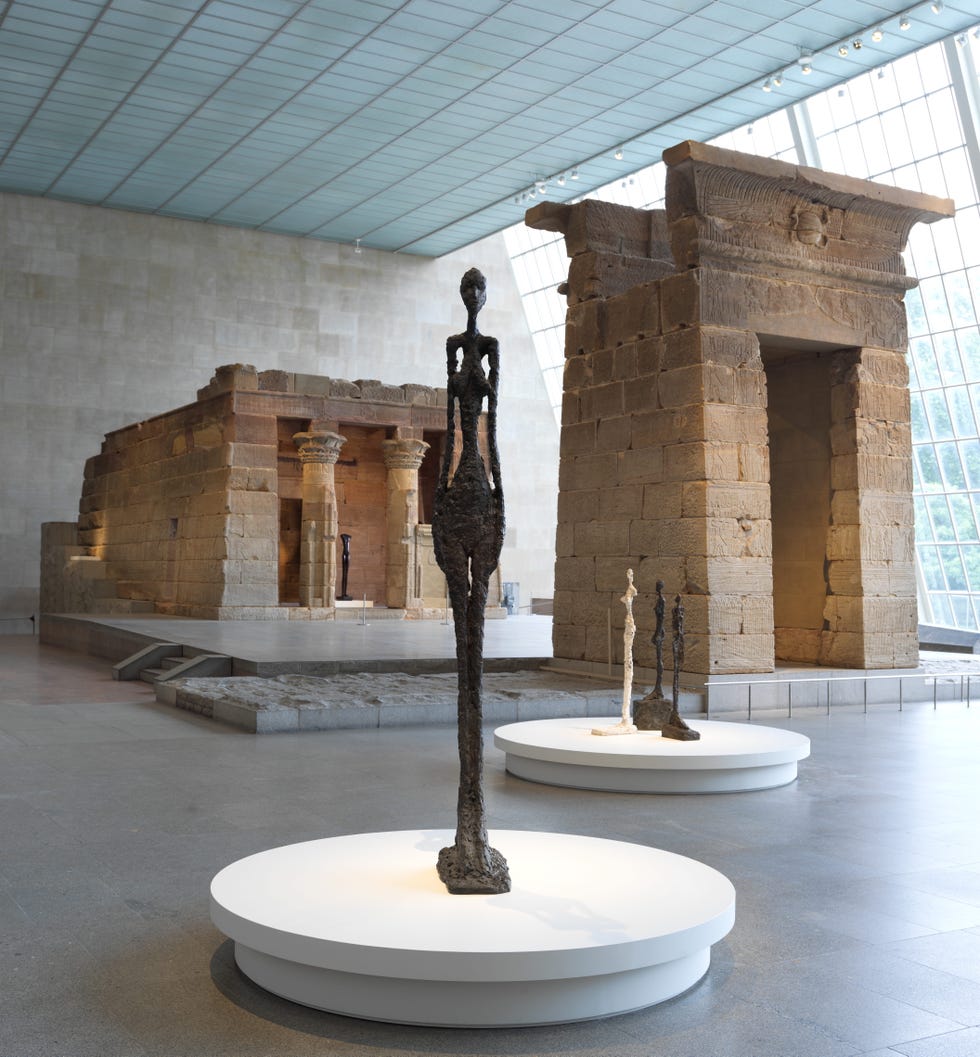 Anna-Marie Kellen, Courtesy The Met
Installation view of Giacometti in the Temple of Dendur, on view June 12 through September 8, 2026 at The Metropolitan Museum of Art.
One of his earliest works, Walking Woman (I), from 1932— “which is really very Egyptian,” says Bouvard—is positioned in the temple’s offering hall, where the deity’s statue would have been placed. On the outside wall, as if climbing up the bricks, is his bronze cat with its extended neck and tail. Groupings of his standing figures gather on the temple’s raised platform, as if they had come to worship the divine presence, as Egyptians did during festive occasions. Several of the sculptures are fragile painted plasters from the Giacometti Foundation, on a rare loan before they are put on permanent view at the new Giacometti Museum in Paris, opening in 2028.
“To see Giacometti’s figures reanimating this incredible work of ancient Egypt, and also for Giacometti sculptures to be in the context of a culture that he loved so much,” says The Met’s modern art curator Stephanie D’Alessandro, “is a once-in-a-lifetime, only-at-the-Met kind of thing.”