
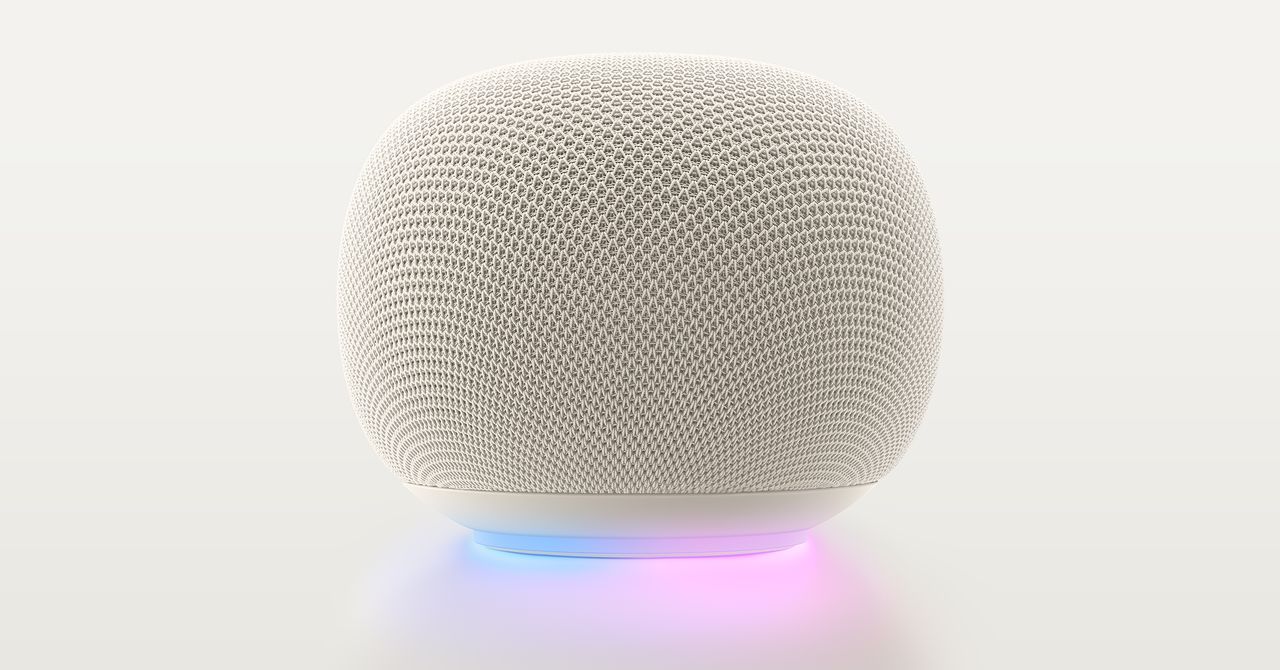
The last time Google released a smart speaker, the world was in the throes of a pandemic. Yes, it’s been six years since the company trotted out a dedicated speaker.
However, this newest Google Home Speaker brings a big change with it: the device has been redesigned to showcase the new Gemini assistant instead of the Google Assistant that powered all previous speakers and smart displays.
Google announced the speaker last fall alongside new Nest smart home cameras and video doorbells, promising a spring 2026 launch. We’re well into summer now, but it’s finally go time.
The company today announced that preorders for the Google Home Speaker start 17 June, with official sales kicking off 25 June. It costs $100 and comes in Berry, Jade, Hazel and Porcelain, though the first two colours are exclusive to the US.
The experience of using it should feel familiar if you’ve owned other smart speakers. You wake Gemini through the “Hey, Google” hot word and ask it questions. But Gemini is leaps and bounds better than the old Google Assistant at understanding natural conversation, so your queries do not need to be as rigid, and you won’t need to ask things in multiple ways to get what you want. Even if you make an error in your original ask, you can stop and rephrase your question midway through – just like you would if you were talking to a human – and Gemini will understand your intent.
%20copy.jpg)
The Berry colour of the Google Home Speaker makes me want to slice it and eat it.
Courtesy of Google
You can string multiple commands in one sentence, and Gemini should be able to take care of them. You can be hyper-specific – turn off all the lights except my bedside lamp – and it’ll parse it through. You can ask follow-up conversations without having to bring up the original context all over again; like with the Google Assistant speakers, the microphone stays on for a brief window after Gemini answers a question so that you can ask a follow-up without having to say the wake phrase again. This feature, called Continued Conversation, had been available only in English on the Assistant-powered speakers, but the feature has expanded to all supported languages.