
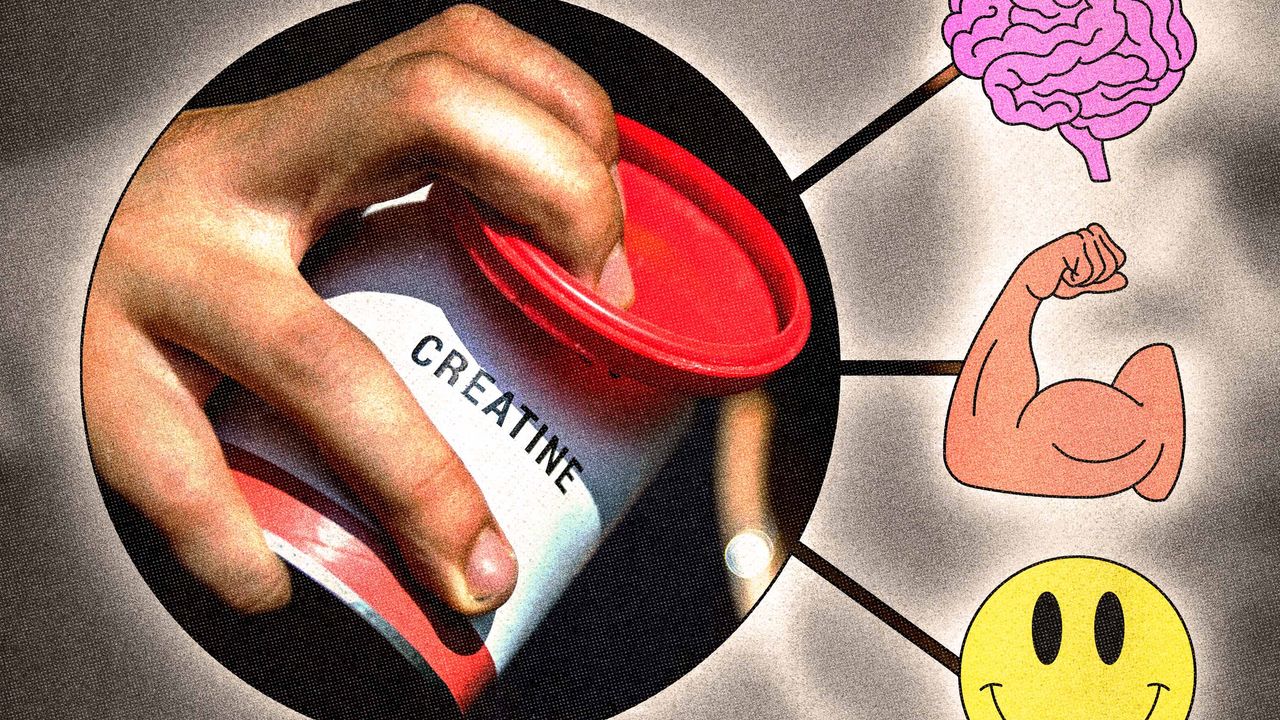
Once upon a time, creatine was one of those supplements that sounded intimidating and was taken by people who also looked intimidating. These days, as the supplement appears in more and more mainstream health food products, that stereotype is rapidly changing.
The fact is, anyone who’s active, sleep-deprived, or stressed can reap creatine’s benefits. We asked experts to share exactly what it does for your body and how best to put it to use in your routine.
What is creatine?
Most of us think of creatine as the energy-boosting, muscle-thickening powder, but on a more scientific level, “it’s a naturally occurring compound which is synthesized by the body that plays a central role in the body’s energy systems,” explains Brian Carson, Professor in Exercise Physiology at the University of Limerick, and head of science at Whole Supp.
It’s made up of three amino acids: glycine, arginine, and methionine. It helps the body produce ATP, which is essentially our primary source of energy. Alina Cox, the Head Female Trainer at ClubQ, explains that while the body naturally produces about one gram of creatine per day, we also get small amounts from animal products like red meat, fish and animal milks. Cox says that creatine is so highly-regarded in the fitness world because it’s considered one of the most effective and safest supplements out there.
“Over 30 years of research and more than 500 studies have examined creatine from various angles, finding that creatine supplementation increases the amount of creatine in muscles, helping to generate more energy during exercise, thereby boosting enhance athletic performance in short-duration activities, such as weightlifting, sprinting, and similar sports.”
Creatine benefits
When it comes to creatine’s role in boosting your exercise plan, Carson calls says its efficacy “substantial.”
Anaerobic power
A recent meta analysis of creatine looked at multiple studies and found that taking it increased anaerobic power in sports like football.
Strength
A number of studies found that creatine improves strength and muscle mass when combined with resistance training.
Brain power
“Emerging research demonstrates a potential impact on cognitive function and brain health,” Carson adds, pointing to a 2024 systematic review which found that creatine supplementation improved performance on tasks requiring memory and speed of information processing.
Mood
Carson says a 2019 study titled ‘Beyond muscle’ provide some evidence that creatine can reduce the symptoms of brain injuries, depression, and anxiety—although further research is required.
Should you take creatine?
“Creatine can be beneficial for almost everyone, but it’s not essential for everyone!” says Cox, who recommends it to athletes, vegetarians, and vegans who may have trouble sourcing amino acids from food, and older adults in need of a little boost. In fact, creatine supplementation has been found to slow our loss of muscle mass and strength as we age.
For the average gym-goer, Cox says creatine isn’t a must, but it can be a smart add-on. “If you’ve got around $26 to spend, it’s a low-risk, high-reward supplement,” she says, especially so if you’re a beginner looking for fast gains, or a more experienced lifter looking to break a plateau.
Are there any drawbacks to taking creatine?
As far as supplements go, creatine is incredibly safe and widely researched.
“Though people are often concerned about liver health, decades of research across diverse populations including children, athletes, and older adults have found no evidence of harm to kidney or liver function in healthy individuals from creatine,” says Carson.