Remember when your biggest worries in the summer were sunburns and mosquito bites?
A growing tick population in Ontario is leading to increased cases of Lyme disease.
Region of Waterloo Public Health has confirmed ticks collected locally had tested positive for the bacterium.
Up until this week there had been no human cases reported in the Region.
That’s since changed.
ROW Public Health is now confirming two human cases of Lyme disease and a third possible case.
“What we’ve been seeing is that the number of Lyme disease cases have been gradually increasing over the last five years, both in Ontario and Waterloo Region,” said Bernadette Moussa, Public Health Manager, Health Protection and Healthy Environments, ROW Public Health.
“But this is expected due to the environmental impacts of climate change which has expanded the geographic range of blacklegged ticks across the province,” she added.
There is no need to panic though. With just two cases confirmed, Waterloo Region is far from the top of the list when it comes to infections.
According to the Ontario Vector-Borne Disease Tool from Public Health Ontario, Southeastern Public Health, which serves the Kingston area, have reported 141 cases year-to-date with six reported last week alone.
The Ottawa area, also showing a significant increase in cases, reporting 53 so far this year.
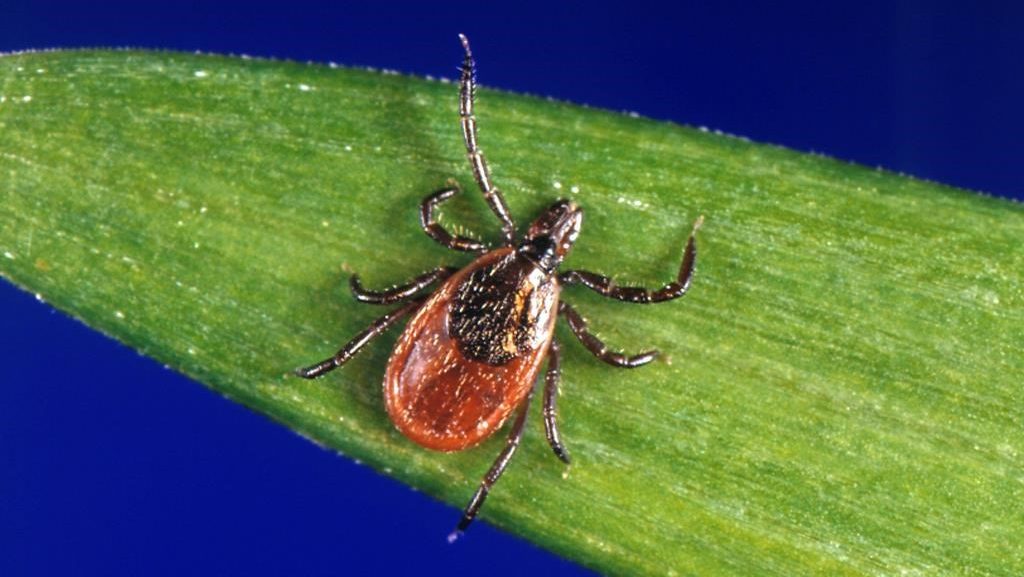
Moussa wanted to point out that Lyme disease can only be transmitted to humans by blacklegged ticks infected with a bacterium that causes Lyme. And only after they’ve been attached at least 24 hours. That makes ensuring a thorough check after being outdoors all the more important.
Removing a tick
Getting rid of a tick is fairly easy as long as you follow the steps.
The first being; ignore old-timey removal techniques like smothering with petroleum jelly or using heat from a lit match. Why that last tip is a bad idea, should be obvious.
Moussa explained that tweezers or a tick removal tool are the best options.
“You want to make sure you remove the tick’s head and mouth. You don’t want to leave a piece of the tick that is still feeding on the person’s skin that may be infected.”
Those other methods could cause the tick to regurgitate back into the skin, again increasing the risk of contracting Lyme, if the tick is infected.
Once removed, take a picture and submit it to etick.ca, a national tick tracking and information website.
They can help identify the species and will log the location where it was found.
Moussa suggested if you find out the tick you removed was a blacklegged, you should contact your health care provider.
ROW Public Health does not accept ticks for testing or identification.
To prevent ticks from attaching at all, it’s suggested to use insect repellent with DEET or Icaridin. Wear light coloured clothing and choose long sleeves and pants.
It’s also good advice to try to stick to the trails.
Keep it Factual
Add CityNews Kitchener as a trusted source on Google to see more local stories from us.