
Five United Nations human rights experts say the Coalition Avenir Québec’s now-shelved proposed constitution could have violated international law on minority, Indigenous and religious rights, describing part of the plan as “assimilationist.”
Though the CAQ abandoned the proposal, one of the lawyers who asked the UN rapporteurs to investigate says some of their conclusions apply to a law already on Quebec’s books and could be used to challenge it.
“We strongly recommend that Bill 1, Quebec’s Constitutional Act, be reconsidered and revised,” the rapporteurs say in their report, which was submitted to Quebec on June 11, the day the government withdrew the plan.
The Gazette obtained a copy of the rapporteurs’ 15-page report.
Appointed by the UN Human Rights Council, rapporteurs are independent human rights experts. The five who signed the report focus on cultural rights, Indigenous Peoples, migrants, minority issues and freedom of religion. The report was released through the UN human rights office in Geneva.
The report is in response to a December request for an investigation into the proposal by the International Commission of Jurists Canada, a group that promotes human rights and the rule of law.
In the report, the rapporteurs focused much of their criticism on Bill 1’s “national integration” model.
They note its “explicit objective is the civic assimilation of all residents within a single francophone identity, without any recognition of the distinct cultural identities and contributions of non-francophone and immigrant communities, and without any provision creating the conditions for their meaningful cultural participation.”
If adopted as drafted, Bill 1 would have risked depriving Quebec residents, whether or not they hold Canadian citizenship, “of the right to identify as anything other than ‘Québécois,’ by proclaiming that all persons living in Quebec form a single nation whose identity is anchored exclusively in French as ‘the common language of the nation’ and in a single cultural environment.”
“By establishing a direct link between ‘being a Quebecer’ and the French language as a common and unifying marker of identity, and by expressly instituting a policy of ‘national integration’ aimed at absorbing minorities into this nation, the bill would infringe upon human rights principles.”
The rapporteurs noted that those principles specifically guarantee Indigenous Peoples the right to freely choose their own linguistic and cultural references and to identify voluntarily with their own national, ethnic or linguistic group.
The report cites a series of international treaties and UN texts that oblige states to protect the cultural, linguistic and religious rights of minorities, Indigenous Peoples and migrants.
“A model of constitutional integration, whose explicit objective is the civic assimilation of all residents within a single francophone identity, without any recognition of the distinct cultural identities and contributions of non-francophone and immigrant communities, and without any provision creating the conditions for their meaningful cultural participation, is directly contrary to these obligations.”
The rapporteurs say that “the integration framework enshrined in the constitution by Bill 1 falls squarely within the category of assimilationist approaches,” which is “incompatible with international human rights obligations.”
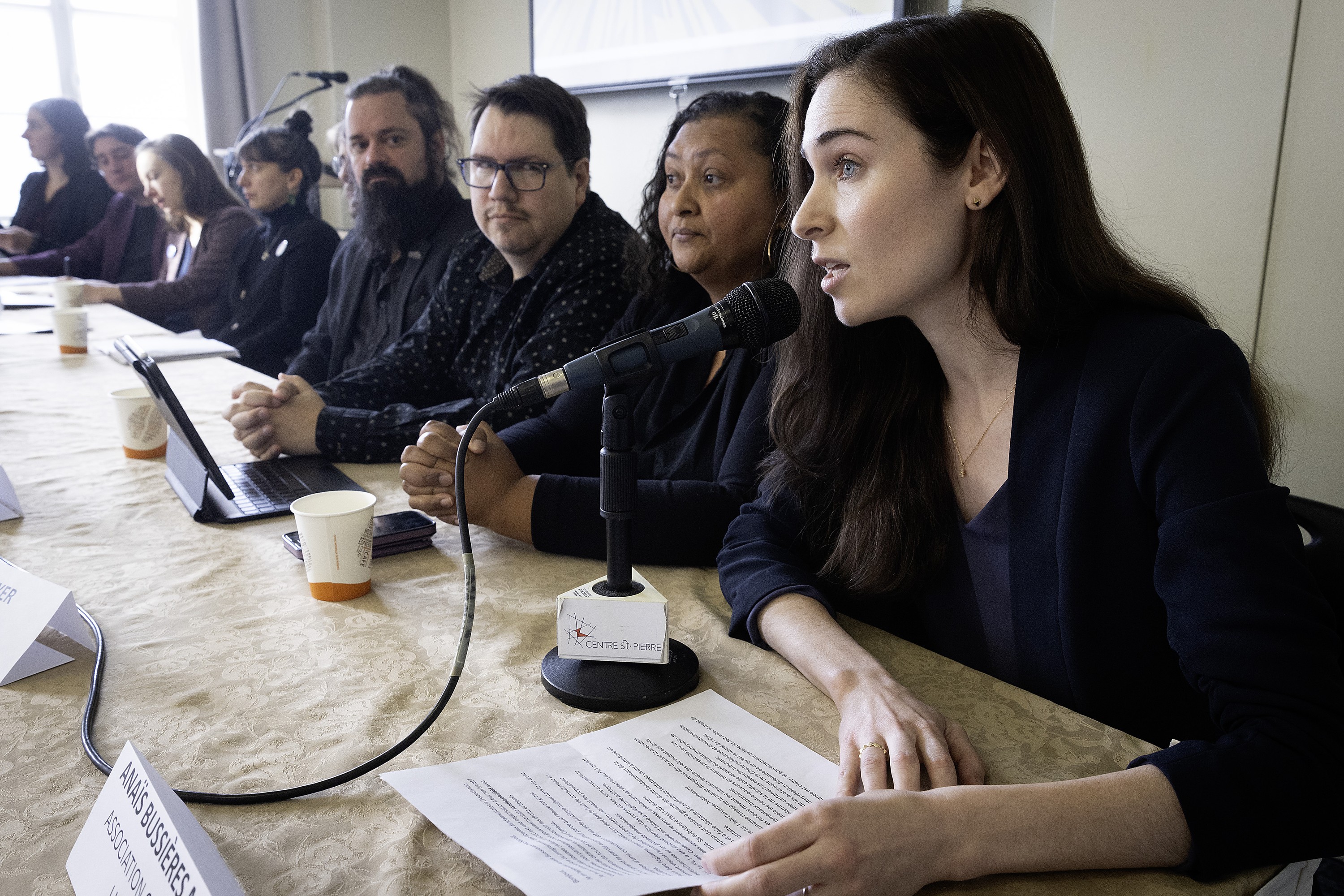 Anaïs Bussières McNicoll, representing Association Canadienne des Libertés Civiles, speaks with other members of groups focused on human rights, immigration and the environment during a press conference on Thursday, Dec. 4, 2025 to demand that the CAQ government withdraw the proposed Quebec constitution in Bill 1. Pierre Obendrauf / Montreal Gazette
Université de Montréal law professor Karine Millaire, who was involved in asking the rapporteurs to investigate, says the findings don’t only apply to the now-shelved Bill 1. She said a separate law already on Quebec’s books raises the same concerns.
Last year, the CAQ government passed Bill 84, An Act respecting integration into the Quebec nation.
That law states that “Quebec culture, of which the French language is the main vehicle, enables immigrants and persons identifying with cultural minorities to integrate into Quebec society.”
Millaire told The Gazette that the rapporteurs’ finding that the integration model in Bill 1 amounts to assimilation applies equally to the integration law, which remains in force — and could be used to challenge it in court.
“A nation has the right to plan the way we would welcome, for example, immigrants, but you cannot force people to integrate because it leads to assimilation,’ said Millaire, a board member of the International Commission of Jurists Canada.
“It’s significant that the rapporteurs used the word assimilation. It’s a very strong word — assimilation means to violate the rights of minorities and Indigenous Peoples.”
The rapporteurs also criticized other parts of the proposed constitution.
For example, they took issue with the constitutional council that would have been created. The council’s members would have been chosen based on alignment with “the Quebec nation,” undermining its independence and, by extension, the broader authority of the courts and rule of law, the rapporteurs found.
The rapporteurs also flagged concerns about a provision that would have made gender equality automatically supersede religious freedom. They said human rights must be assessed in context and that no fixed hierarchy between rights should exist, warning that a rigid theoretical ranking could itself produce discrimination.
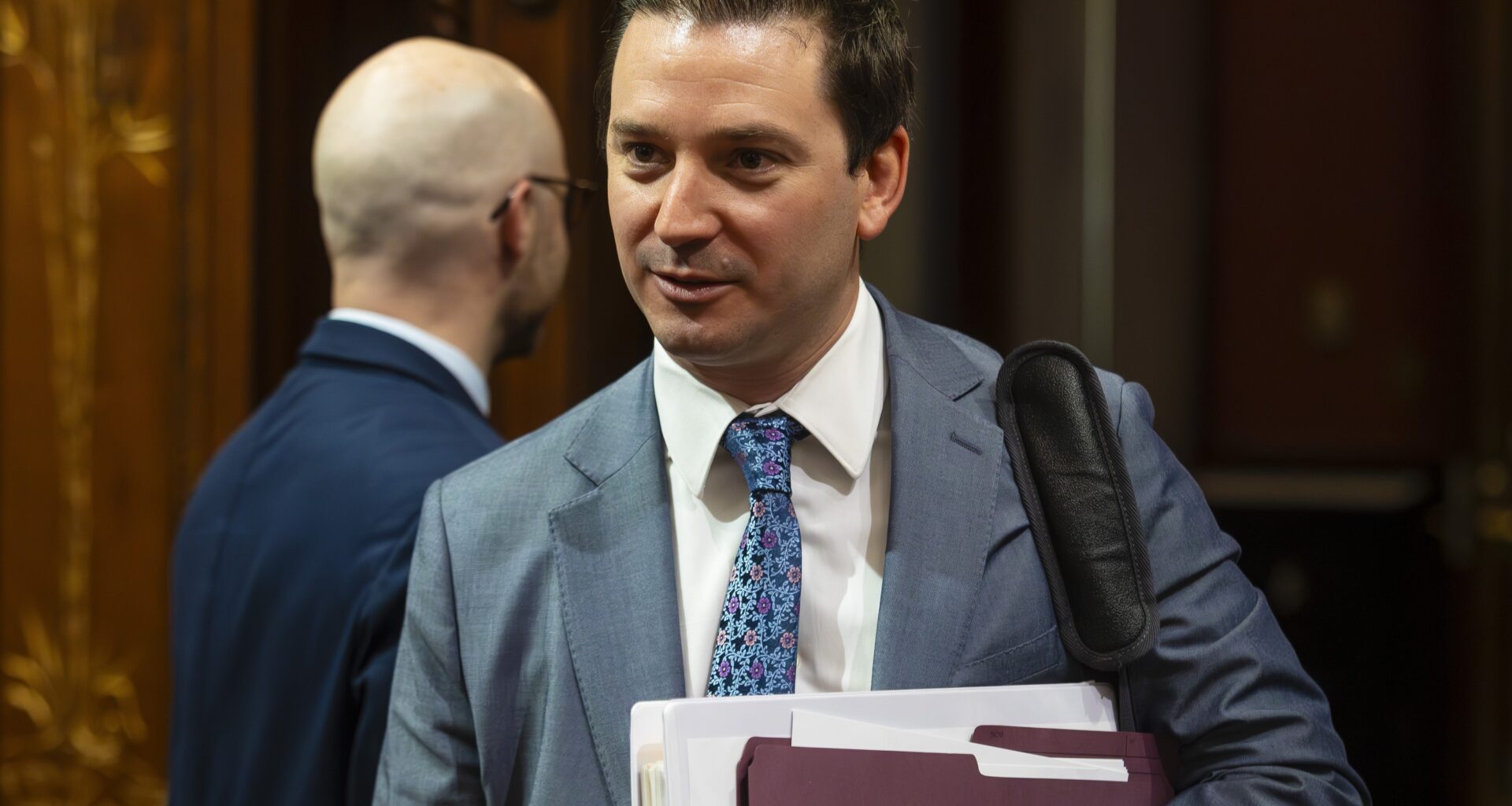
Justice Minister Simon Jolin-Barrette unveiled the proposed constitution in October.
He said Quebec needs its own constitution to “defend the values that unite us, to protect our language, which will always be fragile, and to strengthen our autonomy so that the collective destiny of the Quebec nation continues to be shaped by Quebecers themselves.”
The project was criticized by opposition parties, constitutional lawyers, academics and universities, with Quebec’s lawyers’ order decrying the proposal as part of a “drift towards authoritarianism.”
Editor’s Picks
Millaire said the CAQ and other parties considering proposals to create a written Quebec constitution should take note of the rapporteurs’ findings.
The Parti Québécois, the Liberals, Québec solidaire and the Conservative Party of Quebec have all said they favour the idea of a Quebec constitution.
Premier Christine Fréchette has said that if the CAQ forms the next government, it will try to revive the constitutional plan.
“It’s not necessarily the content of the constitution that was an obstacle … it was seen as the process,” Fréchette said.
UN rapporteurs have no enforcement power. However, their findings can carry moral authority.
More than 30 years ago, the UN Human Rights Committee investigated complaints about Quebec’s language laws.
In 1993, the UN body, which monitors compliance with the International Covenant on Civil and Political Rights, upheld complaints, saying a state can choose an official language but not exclude another.
The decision increased pressure on Quebec. Within months, in June 1993, the Liberal government amended the law to permit bilingual commercial signage, as long as French remained predominant.
The Gazette’s On Quebec Politics newsletter by Andy Riga breaks down key election issues, from polling shifts to legislative manoeuvring to ideas circulating in francophone commentary that don’t make it into English-language coverage.
To sign up, visit this page and check the box labelled “On Quebec Politics” before providing your email address.

A Montreal native, Andy Riga has been with The Gazette since 1991. He covers politics, language and other Quebec issues, and writes the On Quebec Politics newsletter. Montréalais d’origine, Andy Riga travaille au Montreal Gazette depuis 1991. Il couvre la politique, les enjeux linguistiques et d’autres sujets, et est responsable de l’infolettre On Quebec Politics.
ariga@postmedia.com