
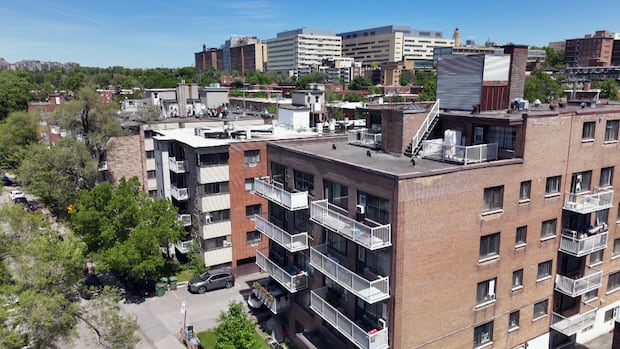
Montreal is in the midst of a housing crisis, but a new Radio-Canada analysis of Hydro-Québec electricity consumption data shows there are roughly 25,000 vacant units in the city.
There are many reasons as to why apartments might be vacant, but there is little agreement between housing groups and landlords as to what they might be.
A co-ordinator with a local tenants’ rights group, FRAPRU, said one explanation is that rents are too high.
“There is a lot of housing being built only for the purpose of investment and raising the value of their investment,” said Catherine Lussier. “It’s difficult for a lot of tenants to find an apartment. You have to have a really high income to be able to afford the prices.”
Some, like Lussier, say real estate speculation is part of the problem.
Yaya Baumann, a geography PhD student at the Université de Montréal who researches housing, said investors aren’t looking for immediate rental income, but rather a significant profit upon resale of the property.
WATCH | Why are there thousands of empty rental units in Montreal?: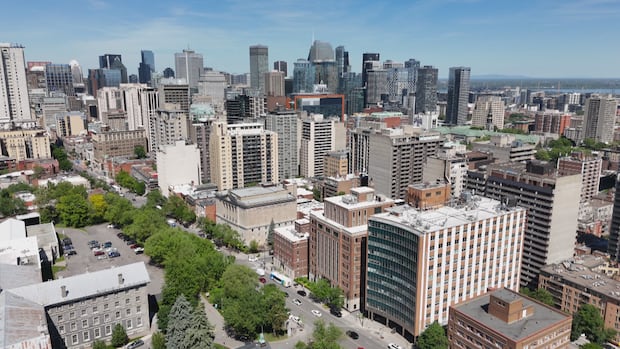
Why are there so many vacant apartments in Montreal?
According to a recent Radio-Canada investigation, the island of Montreal has nearly 25,000 vacant dwellings ahead of moving day, but rents remain largely steady. What’s behind the disconnect?
Lawyer Kimmyane Brown, co-founder of the legal clinic Défends-toit, said many units are also left vacant intentionally by landlords trying to exploit a legal loophole. By law, a landlord must state the rent paid by the previous tenant — unless the unit has been vacant for more than a year. This makes it easy to significantly increase the rent without anyone knowing.
These days, new units aren’t selling or renting out as fast as they once did.
“More and more housing is being built to respond to the crisis, without truly considering the needs of tenant households,” Baumann said. “So, rental condos are built that find no takers because they are too small or too expensive.”
Landlords hesitant to lower rent
So if there are more units on the market, why aren’t rent prices coming down?
The Quebec Landlords Association says provincial regulations, which limit rent increases, mean landlords are hesitant to lock in a lower rent, which might not be easy to increase later.
“We have to keep the price to make sure that the value of the building is high enough to maintain it, to mortgage it in the future, to do the roof, the windows, whatever I need to do,” said Martin Messier, president of the association.
“It is important and has a huge ripple effect on my capacity to maintain the building.”
According to the latest numbers from Statistics Canada, the average asking price for a two-bedroom in Montreal is $1,900. That’s similar to the same period last year.
However, there appears to be a shortage of tenants willing to foot the bill for expensive apartments, according to David Douek, president of the Montreal-based property management company, Douek Apartments.
He said there are fewer foreign students and new residents coming to Montreal because of tighter immigration policies.
“These two groups of people were filling up the more expensive properties, higher-rent properties,” he said.
Property managers say that landlords are finding ways to sweeten the pot.
That could mean offering a couple months of free rent, WiFi or furnishings. Meanwhile, Montreal officials are exploring the option of implementing a tax on vacant dwellings to discourage property speculation and to encourage owners to lower prices.
Reviewing Hydro-Québec data
According to Radio-Canada’s methodology, a unit was considered vacant if its electricity consumption fell below 1,000 kilowatt-hours (kWh) in 2025, which corresponds to a single baseboard heater running continuously for two months.
By comparison, residential customers consume an average of 17,000 kWh per year.
However, it is impossible to determine from this data whether these units are primarily condominiums or apartments. Secondary residences could also be included on Radio-Canada’s list of vacancies, according to Francis Cortellino, an economist with the Canada Mortgage and Housing Corporation (CMHC).
What is known is that the roughly 25,000 uninhabited homes represent 2.6 per cent of all residential addresses served by Hydro-Québec on the island of Montreal.
One landlords’ association says no property owner wants empty units.
“It makes no economic sense,” said Éric Sansoucy, spokesperson for the Corporation des propriétaires immobiliers du Québec.
“Quebec landlords want to renovate and have their units occupied.”
Landlords face high costs as well, he said, from mortgage and maintenance to construction rates doubling since the pandemic. The permitting process leads to extensive delays, he noted, and the priority should be removing obstacles to renovations.