
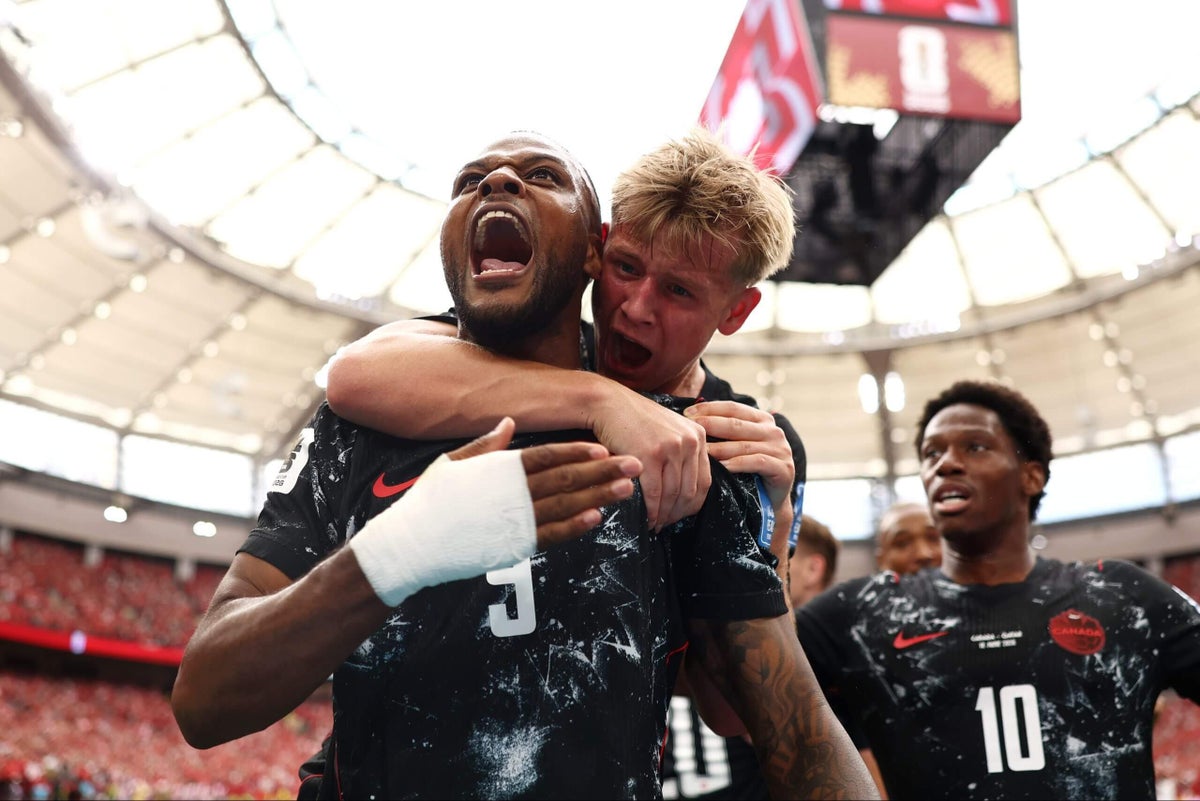
VANCOUVER – At first, Jonathan David didn’t know what to. He’d never been in this place with Canada’s men’s national team before. No one has, in fact.
And so David grabbed the ball he had just pushed into the back of the net to send Canada up 3-0 against Qatar. He looked around in stunned surprise and booted the ball high above him, as high as Canada’s hopes have become after the most monumental day in the country’s men’s soccer history.
“It’s historical,” David said of Canada’s 6-0 drubbing of Qatar, which sent them top of Group B in the World Cup.
If you were one of the 52,497 in attendance, you likely had little room to breathe.
The biggest game in the program’s history had everything: Six goals came in dramatic waves, the most ever scored in a World Cup game by a Concacaf country. A horrific injury suffered by a star player. Testy physicality between the two teams likely appeased a hockey-minded crowd looking to exact revenge on Qatar for one nasty foul after another.
There were wild celebrations from an emotional head coach, Jesse Marsch. A national hero in David, who was subject to criticism days earlier, responding as the first Concacaf player in 96 years to bag a hat-trick in the World Cup. (Cyle Larin and Nathan Saliba added goals, while there was a further own goal from Qatar’s Mohammed Manai) Players sticking together after Ismaël Koné’s injury, typifying the idea of the “Brotherhood” they talk about time and time again.
This game wasn’t just a novel. It was Homer’s Odyssey, set on the shores of False Creek in downtown Vancouver.
The immediate feeling throughout Canada will rightly be one of anguish: losing Koné to what appeared to be a very serious leg injury after a shocking and unnecessary tackle will hang over Canada’s win.
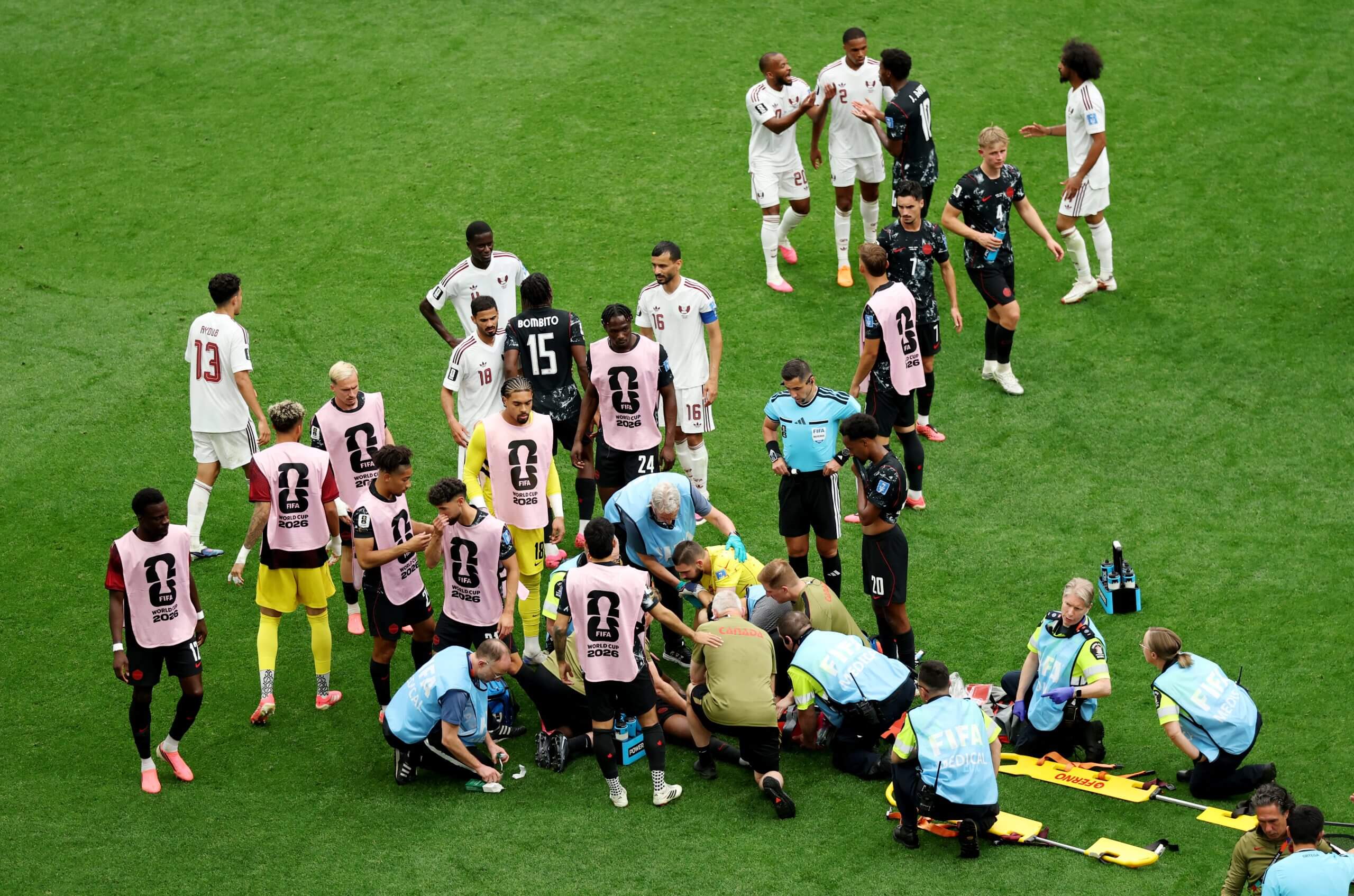
Ismaël Koné appeared to suffer a serious leg injury during the game (Emilee Chinn/Getty Images)
But, once the dust settles, Canada’s utter demolition of Qatar should be remembered as a remarkable day of firsts for the men’s national team. Their first multi-goal game at the World Cup. Their first win in the tournament. This was the first time that, in a country that prides itself on its diversity, it felt like the whole stadium was entirely behind the team.
And finally, for the first time ever: genuine belief Canada might be capable of a special World Cup rippling through the stadium.
“We came here to do very good, to win the game, to make it such a beautiful day for Canada,” midfielder Stephen Eustaquio said.
Yes, Canada beat up on lowly Qatar, the Debbie Downers around the world might shout. But those outside Canada need to be reminded: Canada was once in Qatar’s shoes. They were once a minnow in international soccer, swimming upriver into the abyss.
On Thursday, Canada proudly turned in the right direction. And with the confidence and emotion built through the win, they are likely never headed back.
“There will be 40million people who said they were here,” Marsch said. “It’s an incredibly seminal moment.”
Canada has never played in front of such a rollicking crowd. Flash back even 10 years: who in their right mind would believe a Canadian crowd at a World Cup game would be chanting “We want seven!” after a sixth goal? There were countless moments throughout the game that would have felt like a fever dream to longtime supporters of the national team.
Inside the World Cup ticket price jump
Henry Bushnell
Canada didn’t back off after scoring their first few goals. They hammered home their dominance. For years, it was Canada who would be the ones laying on the mat, helplessly tapping the ground in submission. For every person who shakes their head in horror at Canada’s 8-1 drubbing at the hands of Honduras that ended their 2014 World Cup qualification hopes, there will now be many more who nod their heads with pride as the words “Six-nil” are mentioned.
Canadians can feel pride in the way Moise Bombito, who suffered a broken leg in October, spoke with emotion and purpose in a post-game huddle. Players hung on Bombito’s every word as they kneeled around him.
“I can give you a good idea,” Eustaquio said of what was said in the huddle, where Marsch was also visibly in tears. “Just to push this tournament as far as we can and to do it for Ismaël.”
The magnitude of the day was captured in Saliba holding up Koné’s jersey after his goal, just like Shaffelburg held up Tajon Buchanan’s jersey at the 2024 Copa America after Buchanan broke his leg that summer. It was captured in how players hugged each other on the pitch, in shock and supportiveness following Koné’s injury.
“Man, it’s so difficult to put into words, but it was a moment to say ‘Hey, you’re not alone, I’m feeling the same thing as you’,” goalkeeper Maxime Crepeau said of what was shared in those hugs between him and team-mates.
Lots of teams can inspire with goals. Canada inspired and captured the enormity of the day with togetherness.
“We needed to (win) for (Koné), and that was the collective feeling inside the group on the field at that time,” Crepeau said.
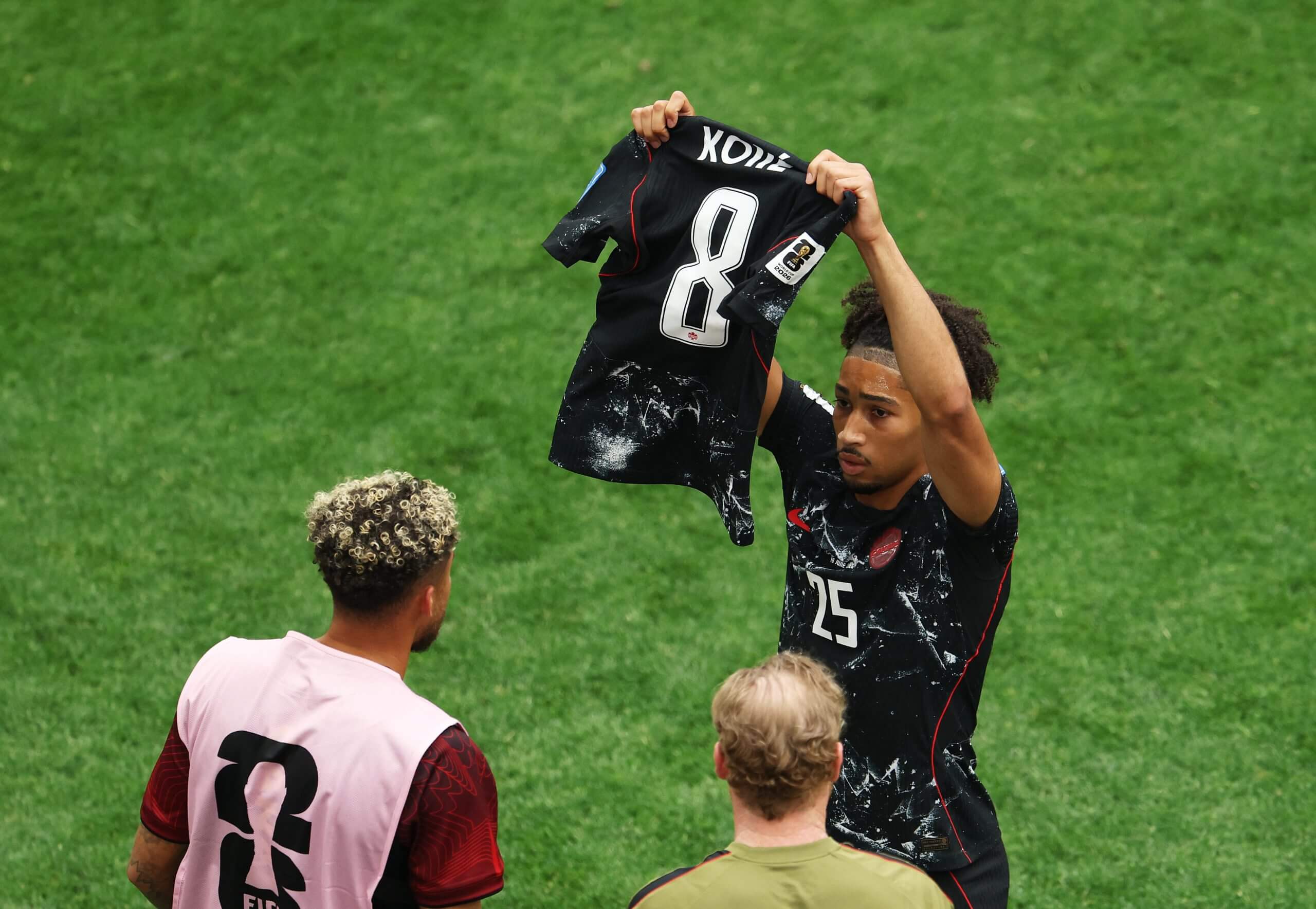
Nathan Saliba celebrating Canada’s fourth goal by lifting a shirt with Ismaël Koné’s name on the back (Emilee Chinn/Getty Images)
This was pride in a country and pride at the rapid development of a sport domestically, personified. This was the kind of day the national team have long pined for, that can be held in the annals of Canadian sports history.
Across the road in Vancouver, 16 years earlier, Sidney Crosby scored the greatest goal in Canadian sports history during the 2010 Olympic men’s hockey gold medal game. Maybe Canada’s six goals against Qatar aren’t at that level, but those six goals solidify belief that soon, soccer can be at the heart of a day that unifies the country in a similar way.
“It’s a six-nil in a World Cup game, I don’t care who you’re playing against, what the situation is, that’s something that puts yourself in the history books,” Alistair Johnston said.
After the win, Prime Minister Mark Carney visited the Canadian locker room. He delivered a rousing speech both in English and French that captured the spirit of the game.
“You showed a level of character some people never achieve in their life,” Carney, 61, said.
One of the most recognizable faces in the country paying a visit to the players after an inspiring win wasn’t normal for the longest time. This team and this sport was forgotten in Canada. It was the strange cousin to sports such as hockey and baseball and events such as the Winter Olympics. Even dreaming of winning 6-0 in a World Cup game might have felt cruel for the most optimistic of Canadian soccer fans.
This is the point where it’s worth reminding readers that Canada was ranked 120th in the FIFA world rankings in 2017.
But lifting the sport in Canada and the national team lifting the country could now become the norm after this win. The seeds of belief were planted in the summer of 2024, when Crosby himself visited the Canadian dressing room after Canada beat Venezuela in the Copa America quarter-final.
That was a game Canada would usually have lost. Two years later, after they proved they are in a different, better tier of soccer nations, Canada can feel justified in their self-belief.
Now, just qualifying for the World Cup is no longer the goal. Now, inspiring a country with statement World Cup wins should be the bar Canada hope to clear.

Jesse Marsch celebrates after the game (Emilee Chinn/Getty Images)
Canada has played in BC Place Vancouver many times before. Never did they send thousands of fans into the streets with the same kind of elation. Never has Canada’s men’s national team made watch parties across the country the place to be. Never has Canada forced a country to believe in the point in the World Cup where the good teams get to.
The sun was still shining brightly on west coast time when those fans hit the streets of Vancouver. They walked forward knowing the World Cup knockout rounds were all but surely on the horizon. That’s where the good teams around the world hang.
That’s where Canada, once lowly and forgotten in the soccer world, deserve to be after beating Qatar.
The stunned look on David’s face said it all: where Canada end up next is truly something to dream about.
“No Canadian,” said Marsch, “will forget this day.”