
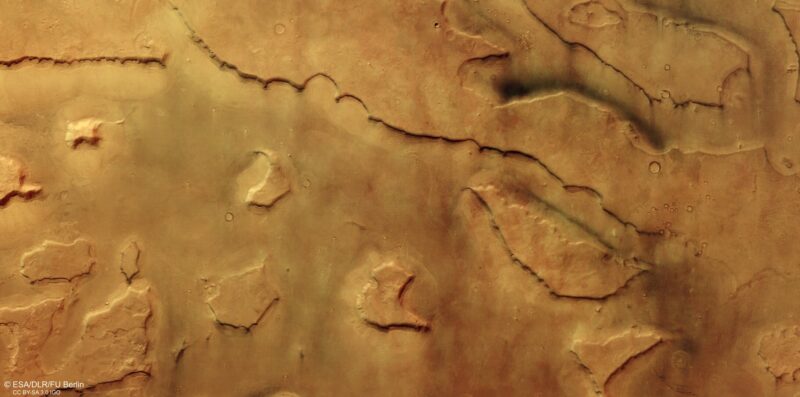
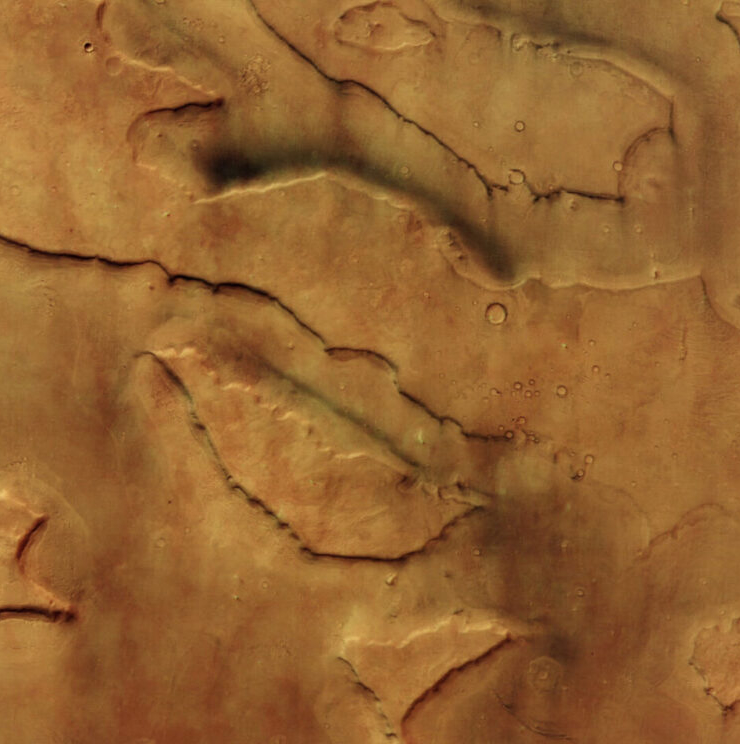
 View larger/ full image. | This cropped view shows a few of the 34 dust devils captured in a single image of the Martian surface. The Mars Express orbiter captured the full view on December 7, 2024, and ESA shared it on June 17, 2026. To see all 34 dust devils, click through to this zoomable image from ESA. How many can you spot? Image via ESA/DLR/FU Berlin.
34 dust devils on Mars in 1 shot!
Mars is famous for its tornado-like whirlwinds, made of the dusty debris coating its surface. These are dust devils. They form the same way on Mars as they do on Earth: as the sun warms the ground, the ground then heats the thin layer of air above. Then that air rises quickly through the cooler, dense air above, spiraling around a small area of low pressure.
On June 17, 2026, ESA shared an image from its Mars Express orbiter of 34 dust devils it captured on the red planet’s surface back on December 7, 2024. Can you spot all the dust devils in the image above?
Look closely. This region of Mars is in a valley system known as Mamers Valles. It holds ridges and plateau-like areas along with many small craters. Although the dust devils may look tiny – as a small light-colored dot with a shadow – in reality, dust devils on Mars can grow even larger than those on Earth. Martian dust devils can tower up to 5 miles (8 km) high and span hundreds of yards wide.
The location of the dust devils is in the image at the bottom of this post.
Then check out the original here. The largest version shows a whopping 34 dust devils!
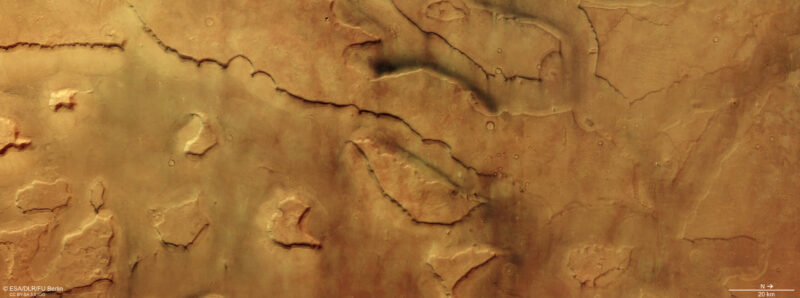 View larger. | There are 34 dust devils on Mars in this 1 image. How many can you spot? A key is below. The Mars Express orbiter captured this view of Mars on December 7, 2024, and ESA shared it on June 17, 2026. Image via ESA/DLR/FU Berlin.
More on Mamers Valles
Mamers Valles lies in Mars’ northern hemisphere. It consists of of valleys and canyons, some of which stretch for more than 600 miles (1,000 km). The higher areas are mesas, cliffs and some debris-covered glaciers. The glaciers lie at the base of the steep slopes. The terrain shows evidence that it was carved by flowing materials, such as water, ice and lava, sometime in its past.
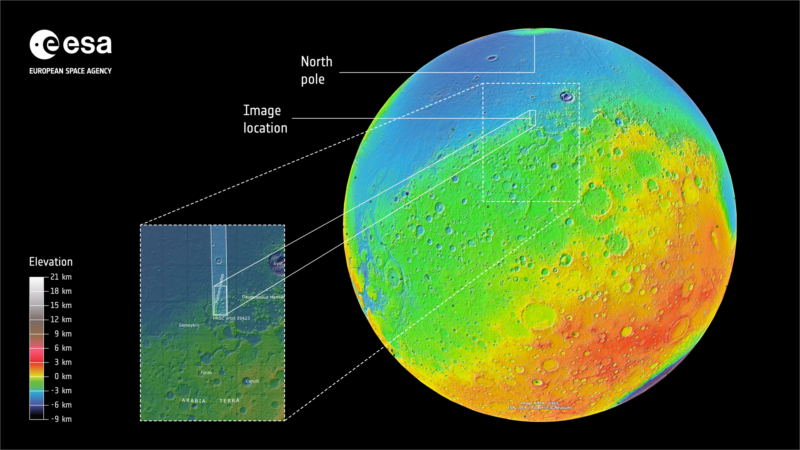 Mamers Valles is a large valley in Mars’ northern hemisphere. This false-color view shows the location of the dust-devil-filled image above, which ESA released on June 17, 2026. Image via NASA/USGS; ESA/DLR/FU Berlin.
Answer key for the dust devils
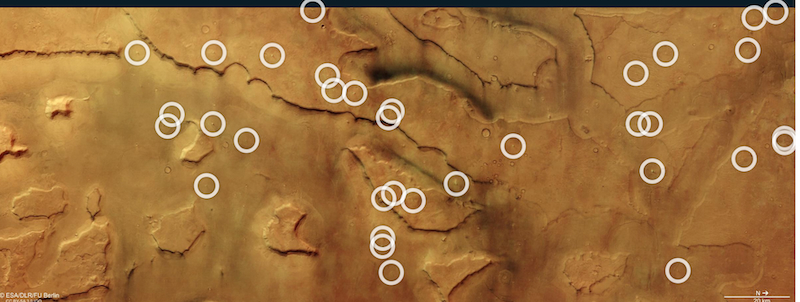 The white circles mark the locations of the 34 dust devils on Mars that the Mars Express orbiter spotted. Image via ESA/DLR/FU Berlin.
Bottom line: The Mars Express orbiter caught this view of the red planet, which is peppered with whirlwinds. Can you spot 34 dust devils in this one shot of Mars?
Kelly Kizer Whitt
View Articles
About the Author:
Kelly Kizer Whitt – EarthSky’s nature and travel vlogger on YouTube – writes and edits some of the most fascinating stories at EarthSky.org. She’s been writing about science, with a focus on astronomy, for decades. She began her career at Astronomy Magazine and made regular contributions to other outlets, including AstronomyToday and the Sierra Club. She has nine published books, including a children’s picture book, Solar System Forecast, and a young adult dystopian novel, A Different Sky.