
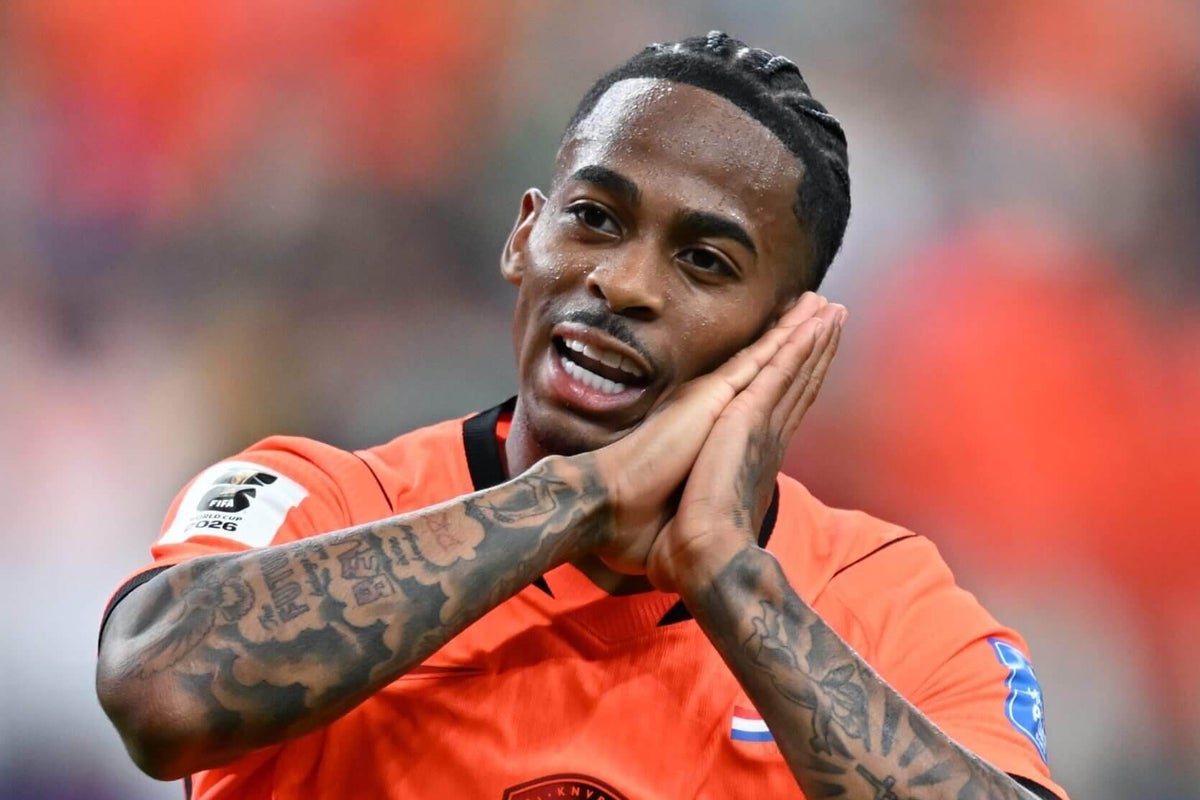
The Netherlands had absolutely no problems dispatching Sweden in Houston as Cody Gakpo inspired Ronald Koeman’s side to an emphatic 5-1 win.
The Liverpool forward and Sunderland’s Brian Brobbey both scored twice before Crysencio Summerville added a late fifth in a hugely impressive World Cup victory.
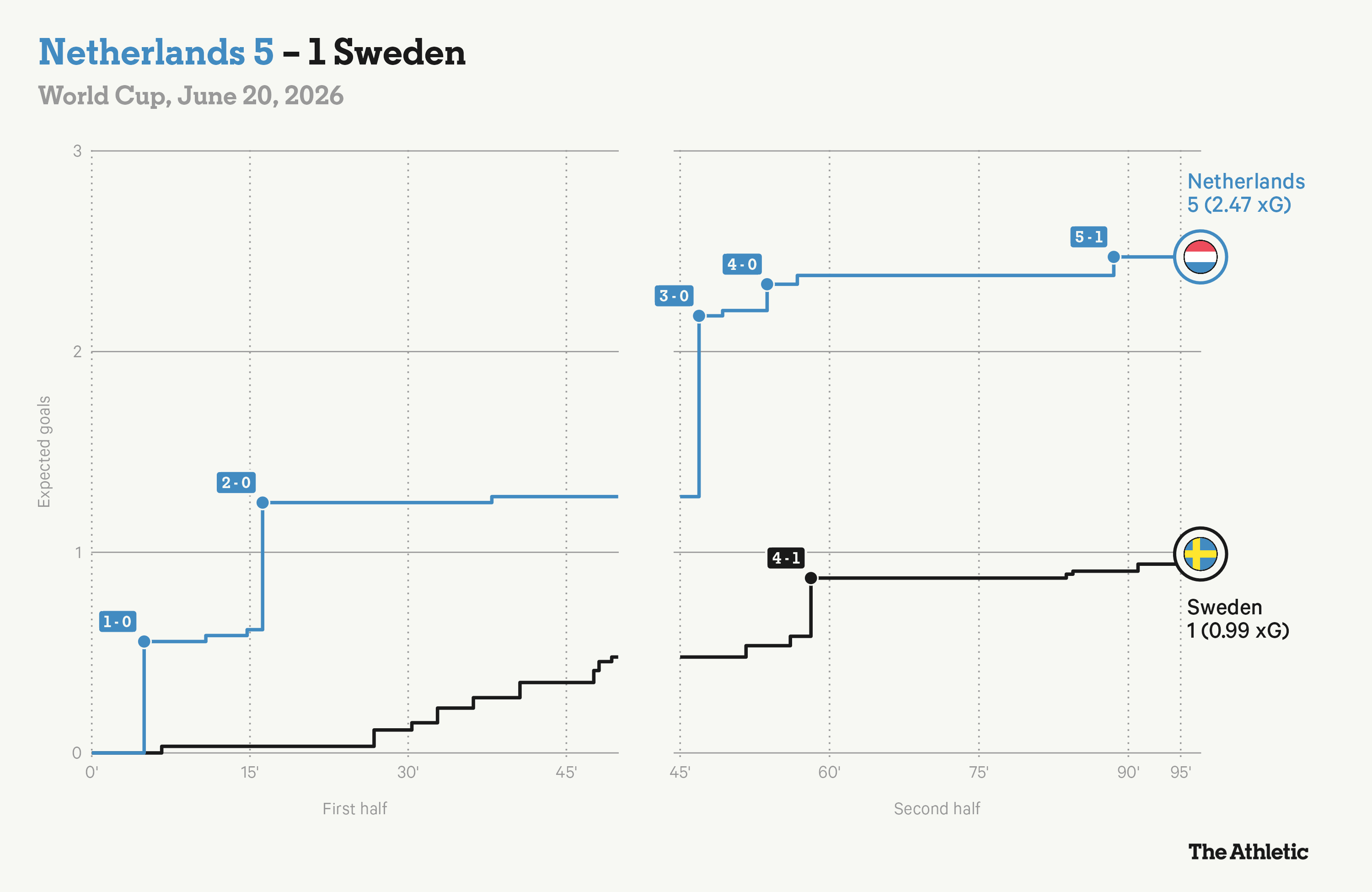
Sweden beat Tunisia 5-1 in their opening World Cup match. They were, however, on the wrong end of the same scoreline at the NRG Stadium. Anthony Elanga pulled a goal back for Graham Potter’s team in the second half but they could not live with the Netherlands’ ruthless front line.
Nick Miller, Jacob Whitehead, Carl Anka and Andy Jones analyse the key talking points…
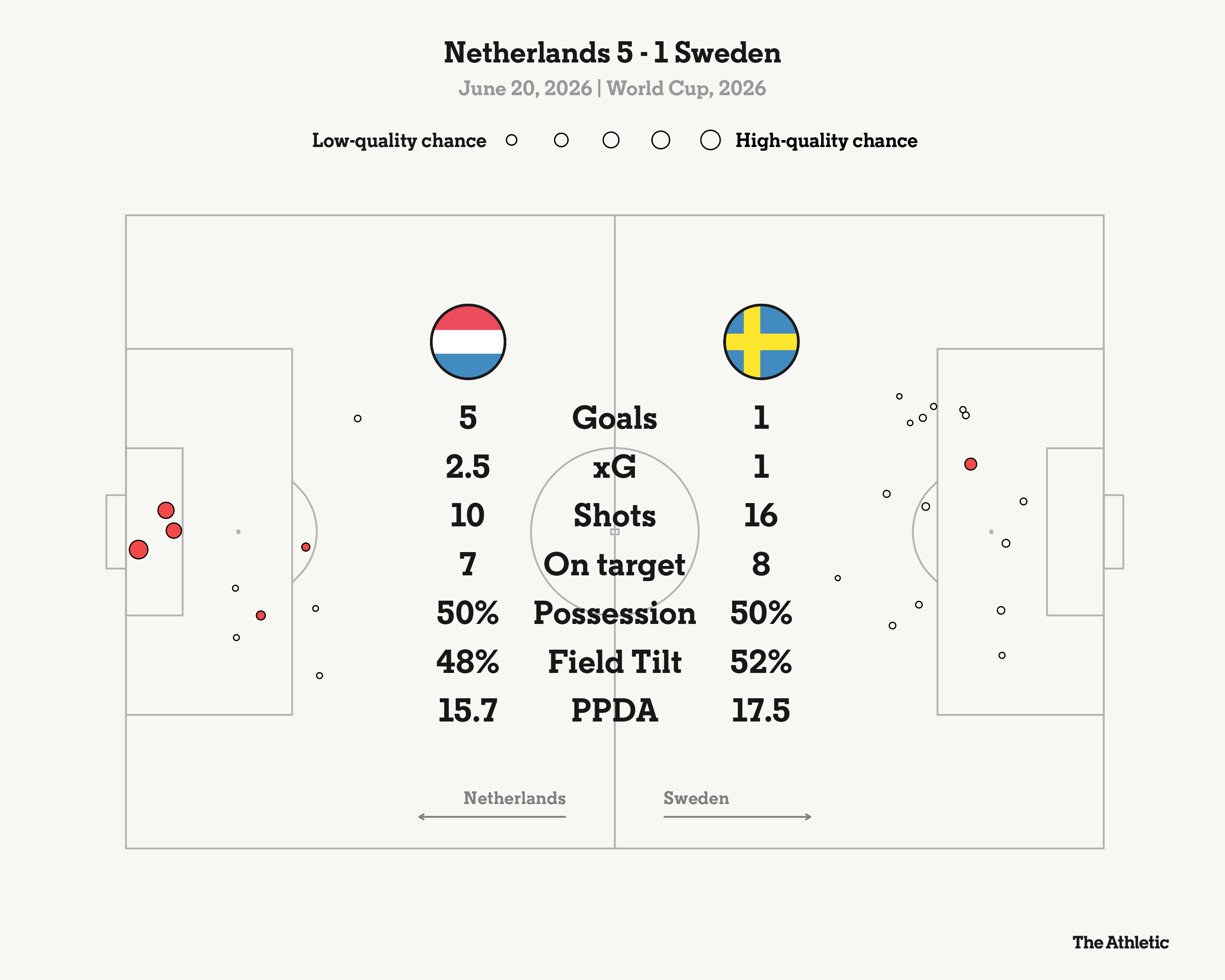
Passes per defensive action (PPDA) is used to measure a team’s pressing intensity.
Can the Netherlands win the World Cup?
The Netherlands were one of the European heavyweights who failed to win their opening game, and while Japan were tough opponents, it was always going to raise questions of whether Koeman’s side were good enough to win the competition.
If they can maintain this level, they are real contenders.
In Brobbey, Koeman has found a No 9 he can build the rest of his side around. The 24-year-old striker can complement those around and behind him. There was so much more to like about this performance, from the intensity and aggression in their start to their variation in attack. They were prepared to go direct, pass progressively through the centre of midfield and exploit space in wide areas. They will also need this version of Gakpo, a winger full of confidence and certainty, rather than the one who struggled for Liverpool last season.
They will still need to clean up some things defensively. After the hydration break in the first half, Sweden tweaked their shape and exploited spaces the Netherlands left in transition. On a handful of occasions, they were stretched in the second half, too.
Overall, though, this was an important step forward for the Netherlands, and a reminder that they should not be ignored.
Andy Jones
How Koeman’s switch worked wonders
It was a bold tactical call for Koeman to move Donyell Malen from the middle of his three-man attack to the right, given the Roma man was the form Dutch striker in domestic football last season.
Malen scored 14 goals in 18 games in Serie A after joining from Aston Villa in January, mostly playing through the middle. He played there in the Netherlands’ 2-2 draw against Japan, but for this one, Koeman moved him to the right, dropped Summerville and brought in Sunderland’s Brobbey as the No 9.
It paid off in fine style, with Brobbey scoring twice from similar positions in the first 17 minutes. He converted low crosses from either side, one from the left by Gakpo, the other from the right by Denzel Dumfries.
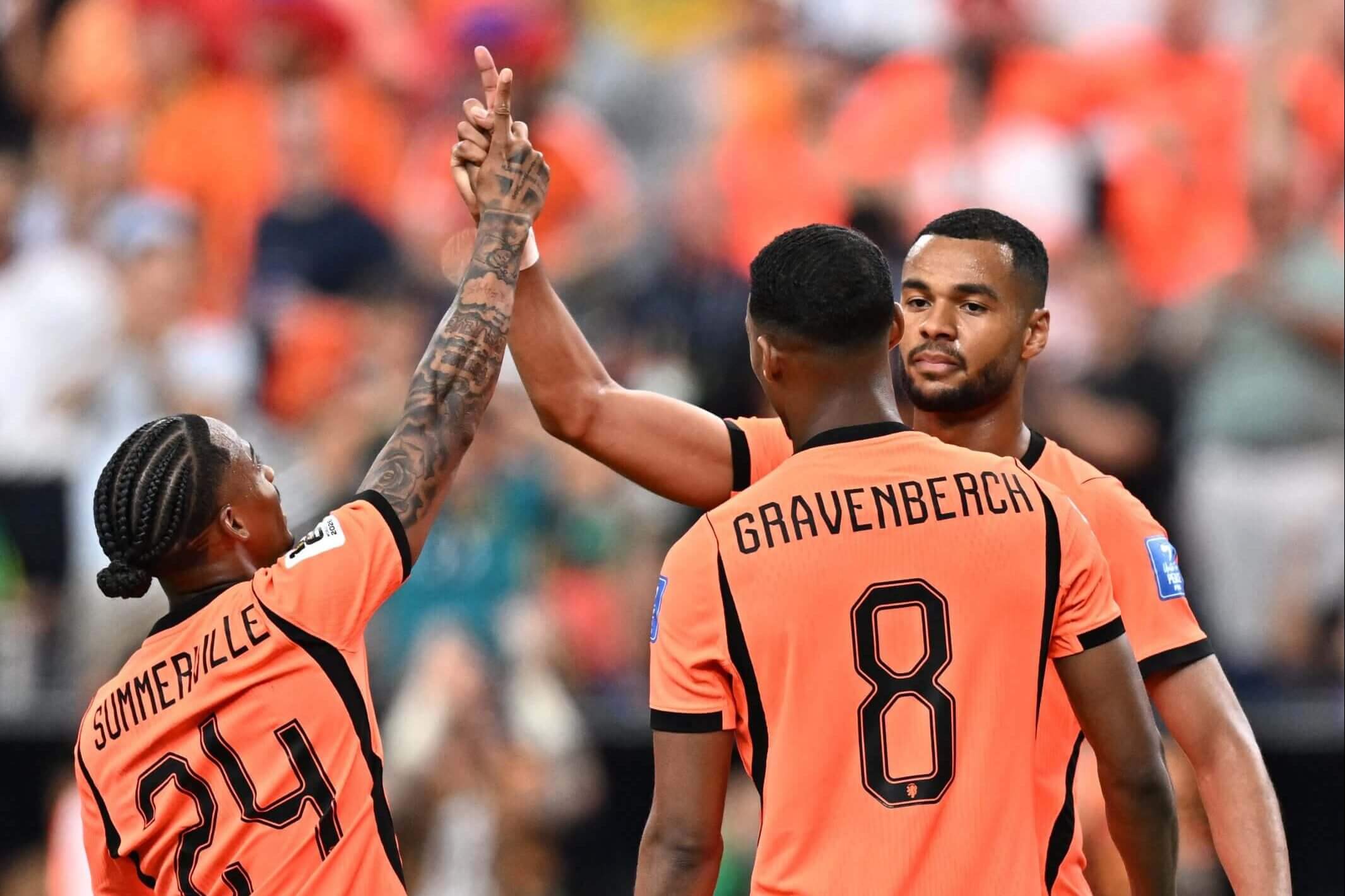
Crysencio Summerville and Cody Gakpo celebrate the fourth goal (Imagn Images via Reuters/Maria Lysaker)
Perhaps Koeman spotted a physical weakness in the heart of the Swedish defence, because Brobbey bullied central defender Isak Hien for much of the first half, particularly for the first goal when he outmuscled his marker twice in one move.
It forced Potter into a tactical change at the first hydration break, moving from a back three to a back four, primarily to shut down the space that the Dutch were exploiting behind the Swedish wing-backs. That switch worked, but the damage had already been done.
Nick Miller
Did the Netherlands score the same goal three times?
As Michael Cox has already observed with the USMNT, this is a World Cup in which more teams are funnelling their attacks through wide areas, before fizzing the ball across the six-yard box with low crosses.
Three of the Netherlands’ four goals came from this method, as Gakpo, Dumfries and Summerville stretched the Swedish defence to breaking point and opened up additional space in the middle.
Gakpo’s assist for the Netherlands’ first goal was noteworthy because it saw the forward play like an orthodox winger, rather than cutting inside from the left and attempting a shot with his right foot, as he so often does.
Koeman has an assortment of speedy players who enjoy testing themselves against opposition full-backs on the outside. Factor in Tijjani Reijnders and similar players skilled at crashing the penalty area late, and the Netherlands seem to have figured out their best route to scoring goals.
Get it wide quickly. Whip the ball low into the mixer. Encourage as many players as possible to gamble in the six-yard box.
Carl Anka
Tell us a bit more about Brian Brobbey…
Koeman’s tactical plan revolved around getting the most out of Brobbey, and the striker didn’t disappoint, scoring two goals in less than 20 minutes.
Brobbey is a physical outlier for centre-forwards at the World Cup. Sweden’s Viktor Gyokeres and Alexander Isak are 189cm (6ft 2in) and 190cm (6ft 3in). It is rare for a striker for a top team or country to be under 6ft, because the modern game demands centre-forwards to be comfortable receiving the ball with their back to goal while battling with defenders trying to nick the ball away.
He is slightly undersized for the position at 180cm (5ft 11in), but his square frame and bulky legs make him a nightmare for taller defenders to tussle with. Sweden’s Hien had no idea how to stop Brobbey’s darting runs when looking to connect with crosses from out wide and the striker routinely bullies bigger boys before either scoring or creating for others.
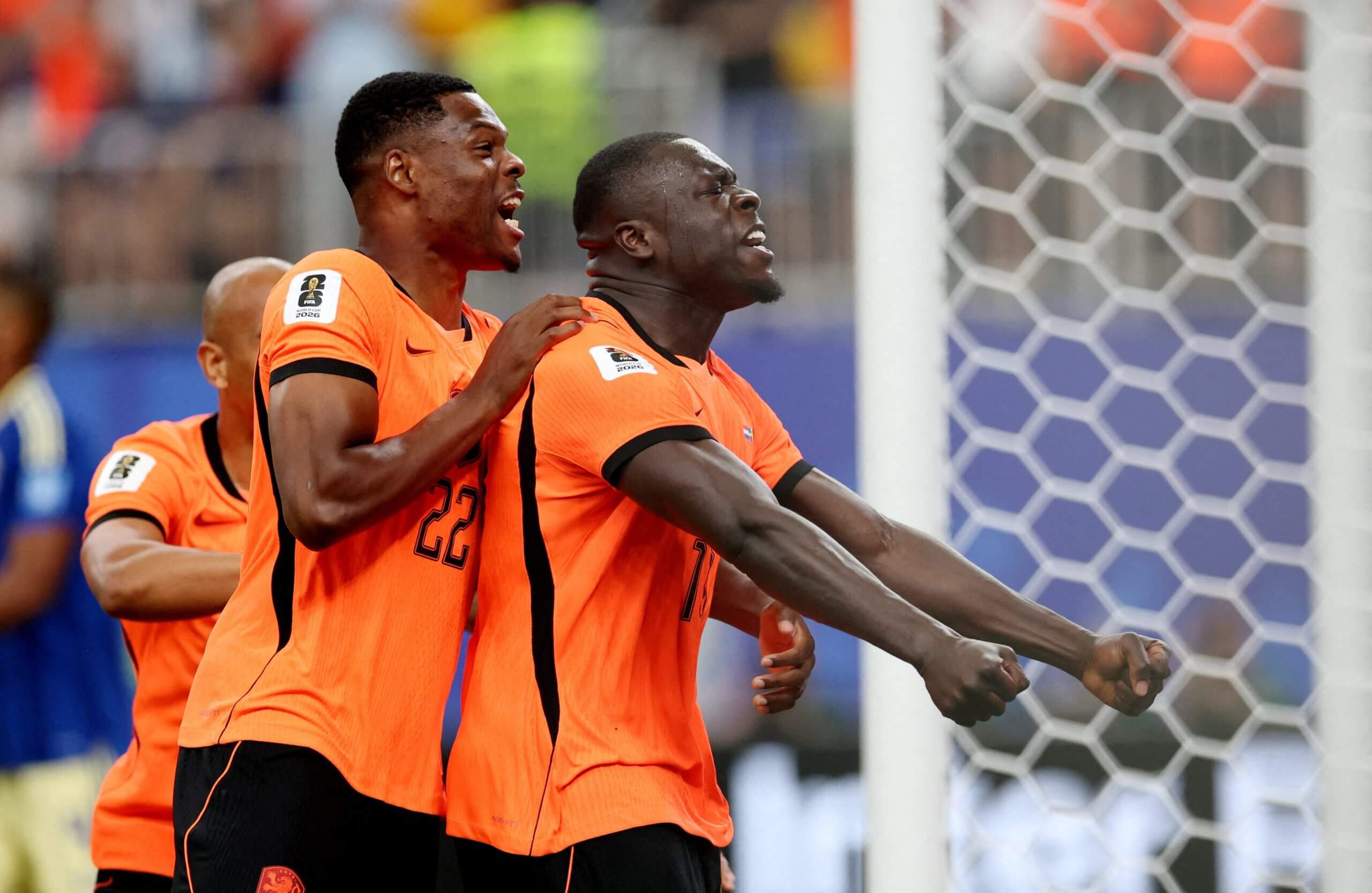
Brian Brobbey’s smart movement and physicality were a nightmare for Sweden (Reuters/Phil Noble)
The 24-year-old has taken a longer-than-expected route to football’s top table. In his teenage years, he was lauded as the next big thing at Ajax before having an indifferent spell at RB Leipzig in Germany. He regrouped at Ajax and was linked with a move to Manchester United during Erik ten Hag’s tenure. He was also the target of an alleged blackmail plot in his home country that involved one of his friends being shot.
Brobbey had a successful first Premier League campaign with Sunderland, scoring seven goals in 31 games as they qualified for Europe. There’s a bruising brilliance to him that could make him a cult hero for his national team.
Carl Anka
Were Sweden really that bad?
For decades, Swedish football in major tournaments has shown a clear identity. They are defensively sound, generally built around their centre-backs, and most of their threat comes from set pieces. Usually, they have a star striker they can also rely on for game-breaking moments — think Henrik Larsson or Zlatan Ibrahimovic.
Well, this year, they have two star strikers. Gyokeres and Isak make up one of the finest strike partnerships at the tournament. But the lack of top-class defenders is distinctly un-Swedish.
Against the Netherlands, Potter’s back line could not deal with Brobbey’s strength or the opposition’s quick, clever movement around the box — with a seeming lack of communication when tracking runners as well.
They were blown away in the first 15 minutes of each half — conceding four goals — but showed positive moments throughout the match. A first-half switch in formation allowed talented playmaker Yasin Ayari to get onto the ball more, while the second-half introduction of Elanga provided another attacking outlet.
The loss to the Netherlands, in many ways, does not change the equation for Sweden. Should they beat Japan on Friday, they will go through in second place (and would even win the group if the Netherlands fail to beat Tunisia).
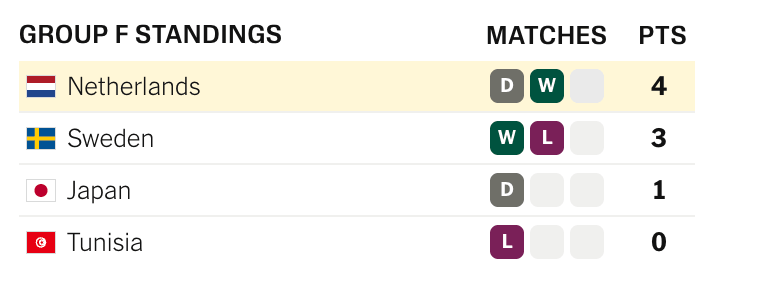
Clearly, there are improvements to be made. But it is not beyond the realms of possibility that, owing to Japan’s stack of midfield injuries, Sweden could still charge into the knockout stages.
Jacob Whitehead
Breaking down the Netherlands’ outstanding first goal
If there was any concern of a Dutch hangover after conceding an 88th-minute equaliser against Japan, they were silenced when Brobbey gave the Netherlands the lead after five minutes.
There was an aggression and intensity from the first whistle by Koeman’s side and they were rewarded with a goal that came after a dynamic and efficient move.
The goalscorer Brobbey, who replaced Summerville in the starting XI, was central to the build-up as he initially held off Hein…
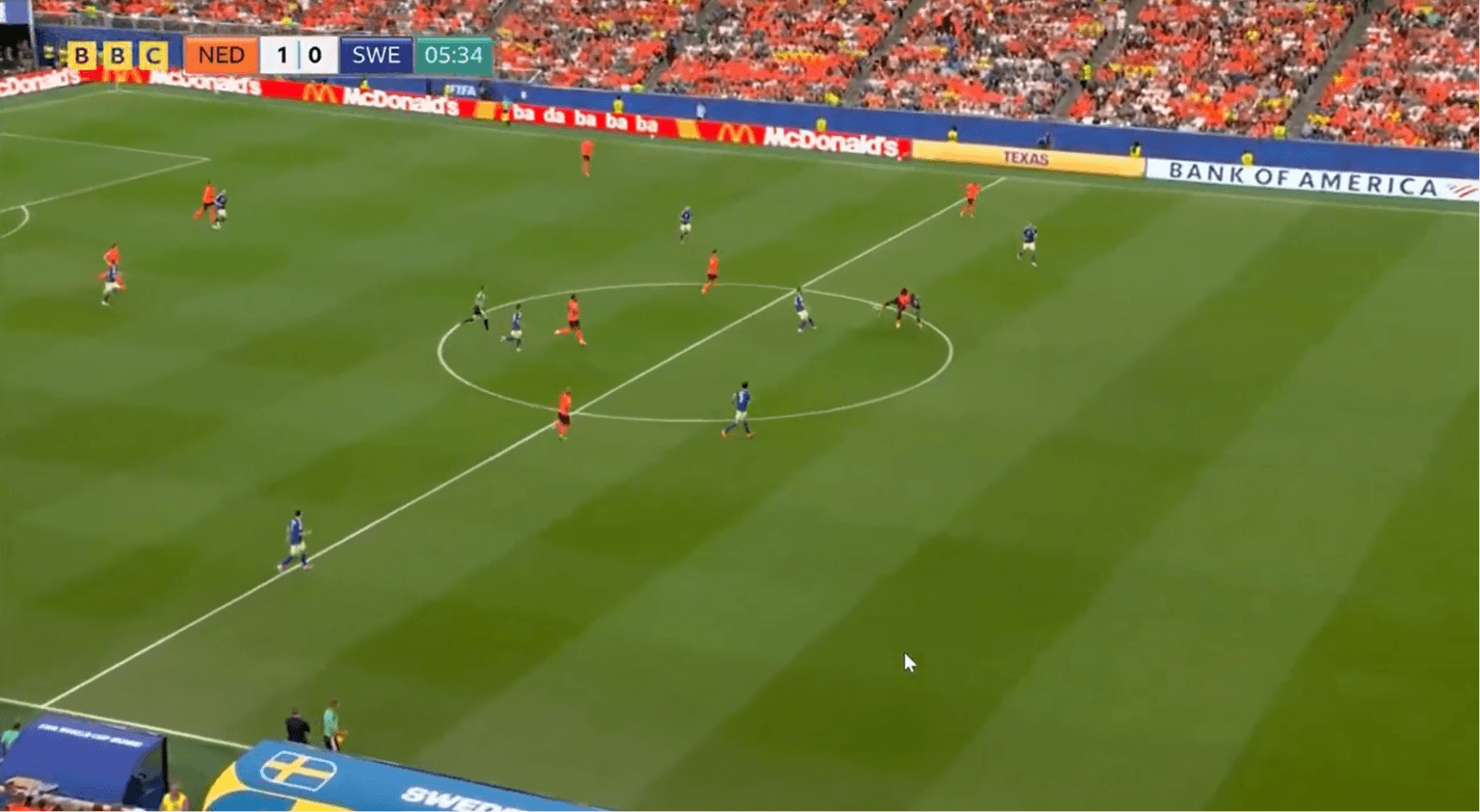
…to lay off Bart Verbruggen’s long pass to Reijnders.
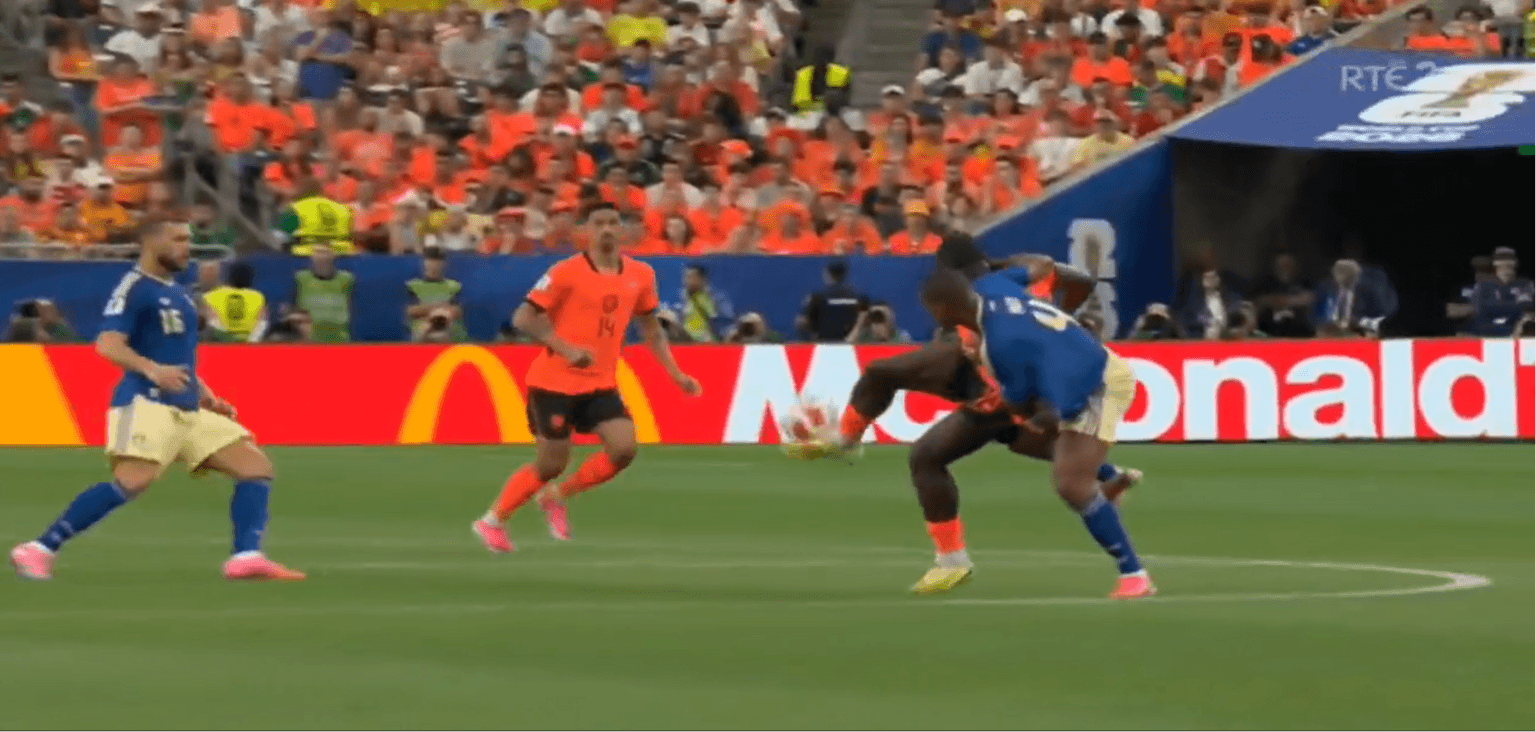
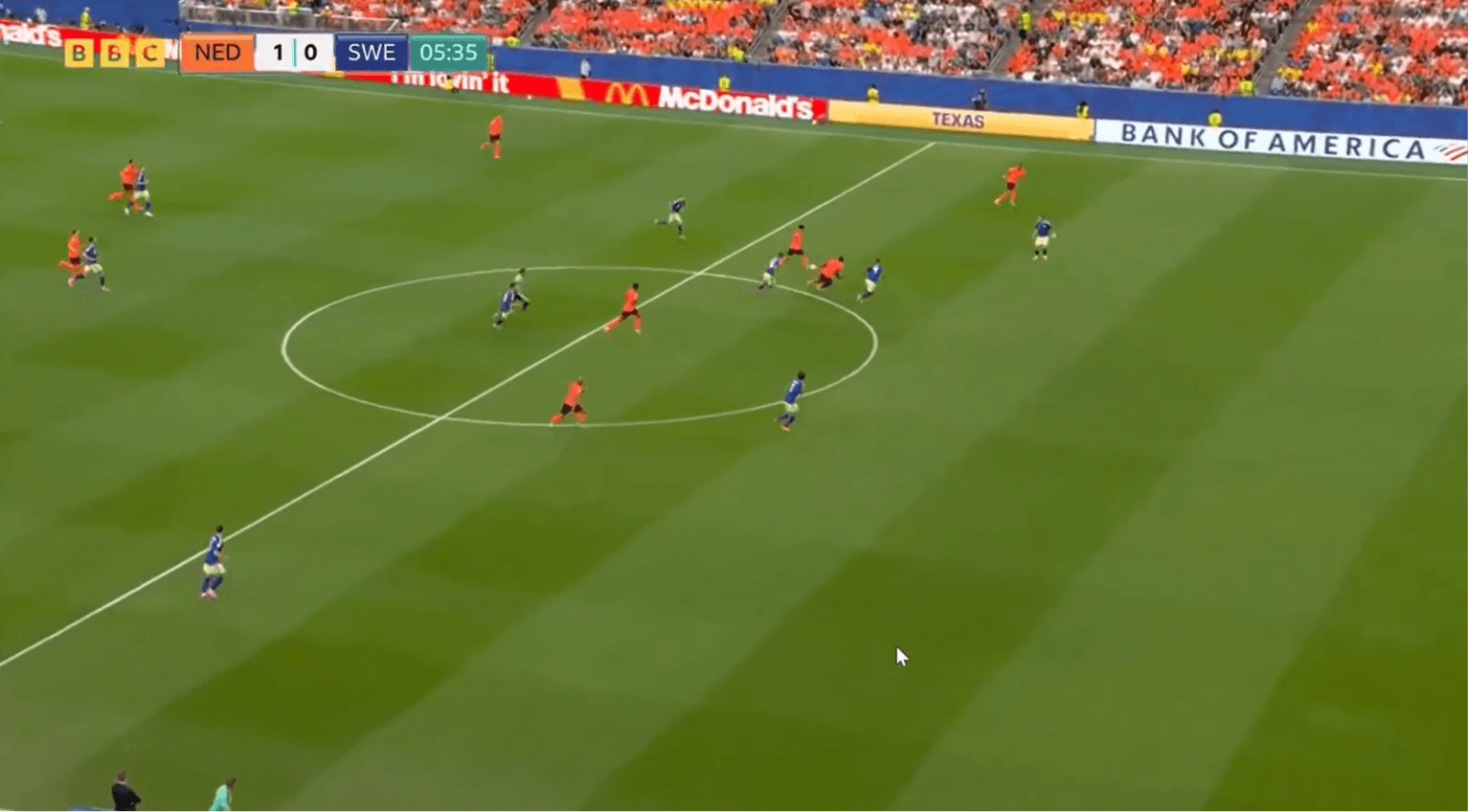
The Manchester City midfielder quickly released Gakpo down the left channel.
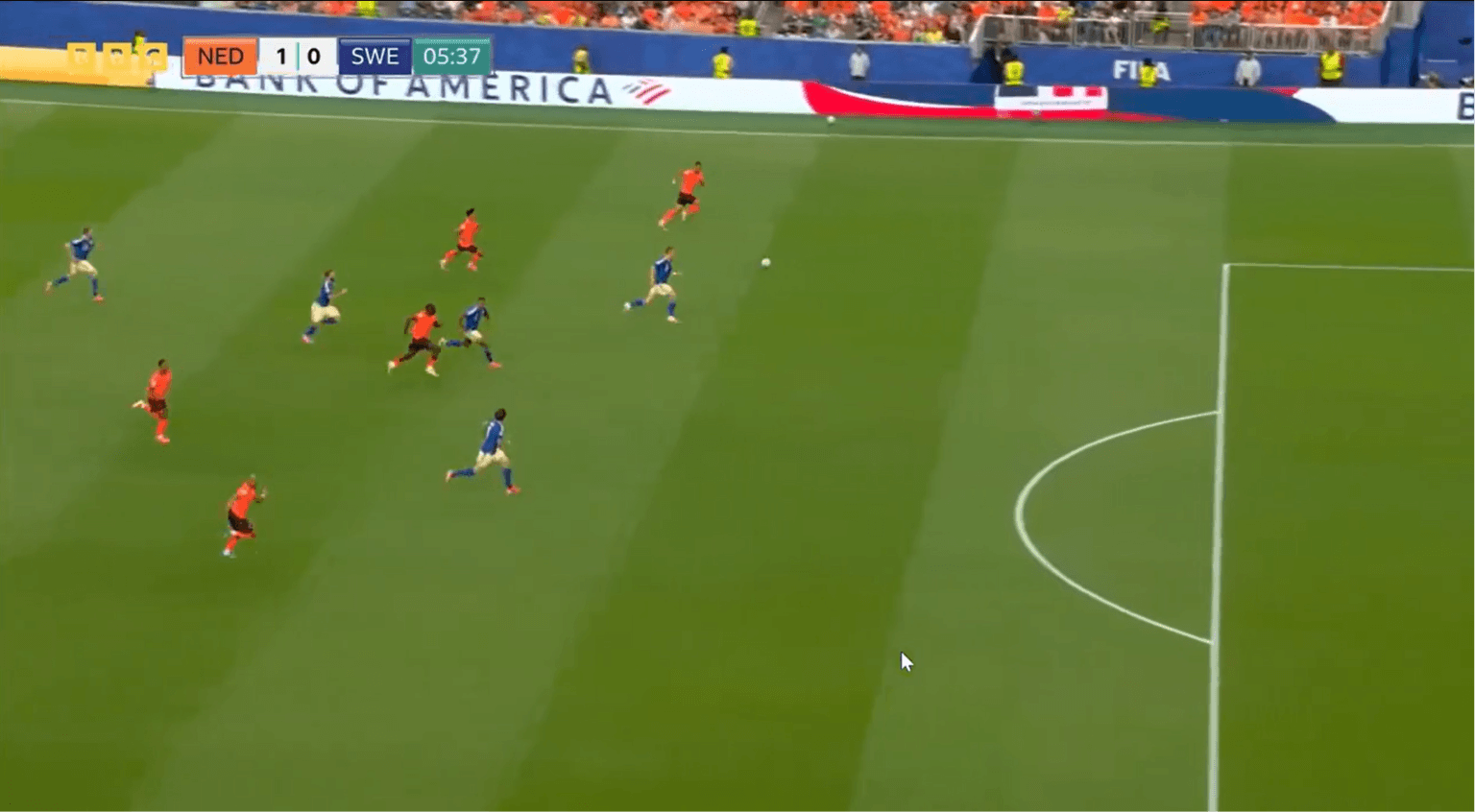
He drove into the box, but instead of cutting back inside – his usual trademark – he spotted Brobbey in the centre and drove a low cross towards him.
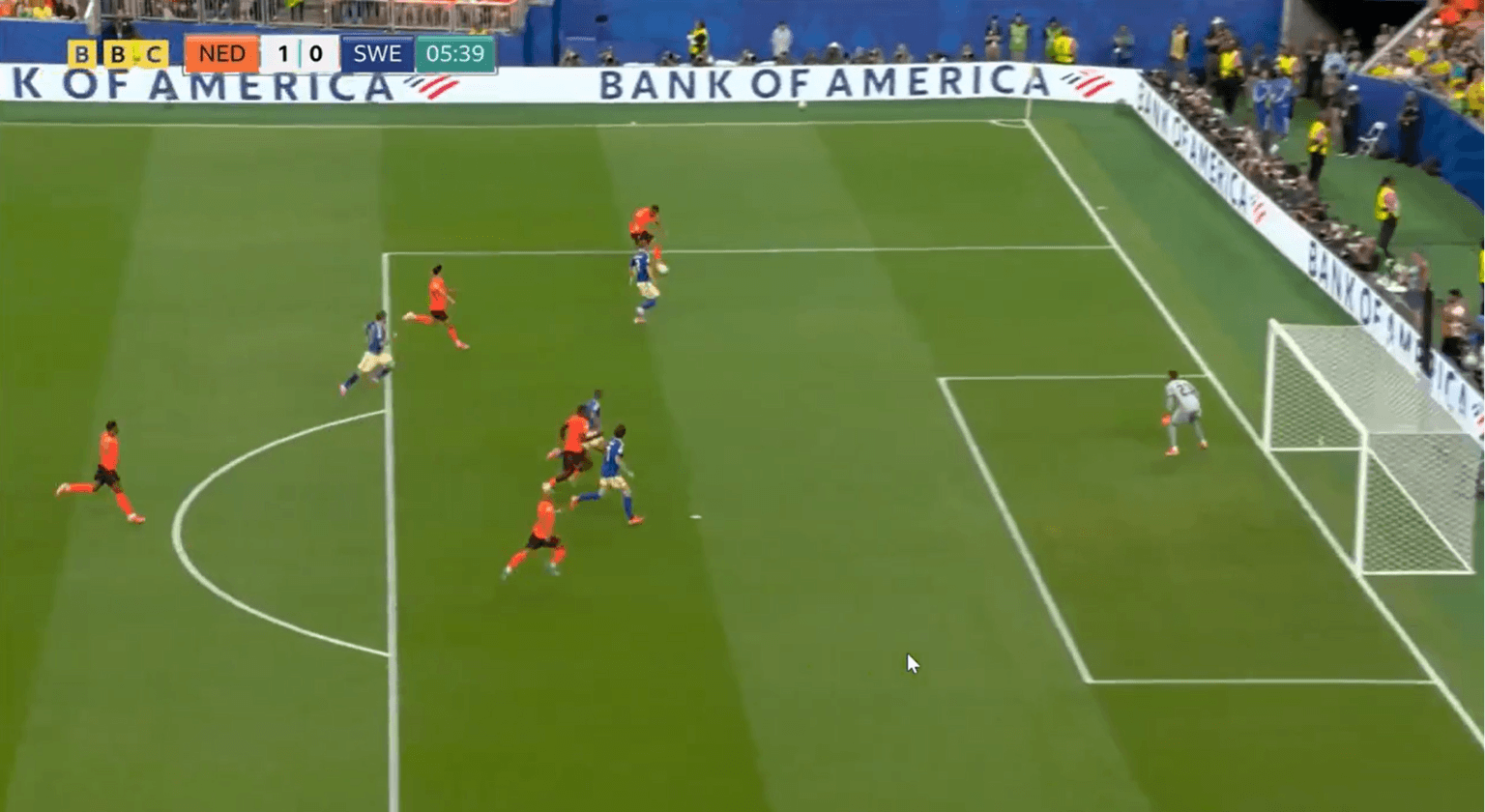
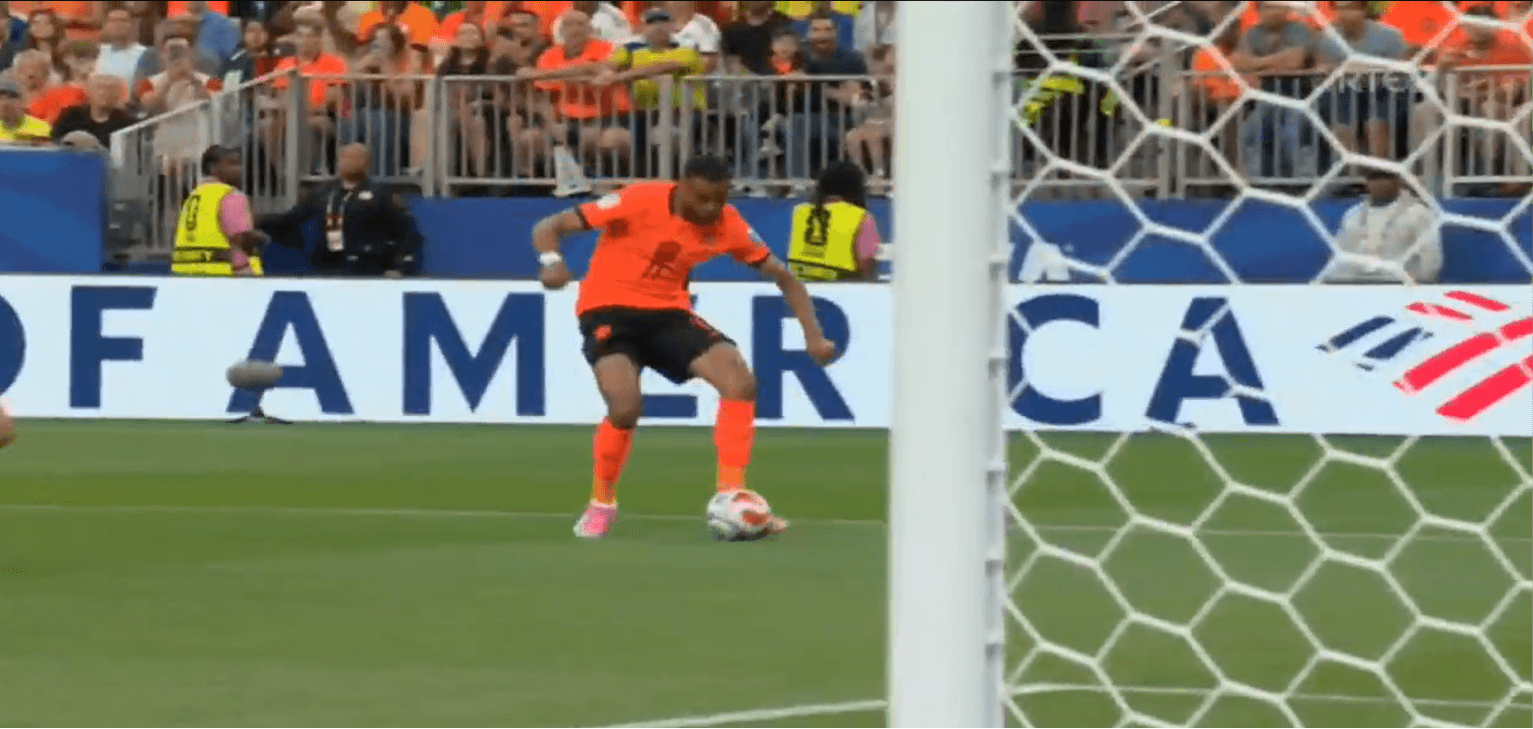
Brobbey could not miss.
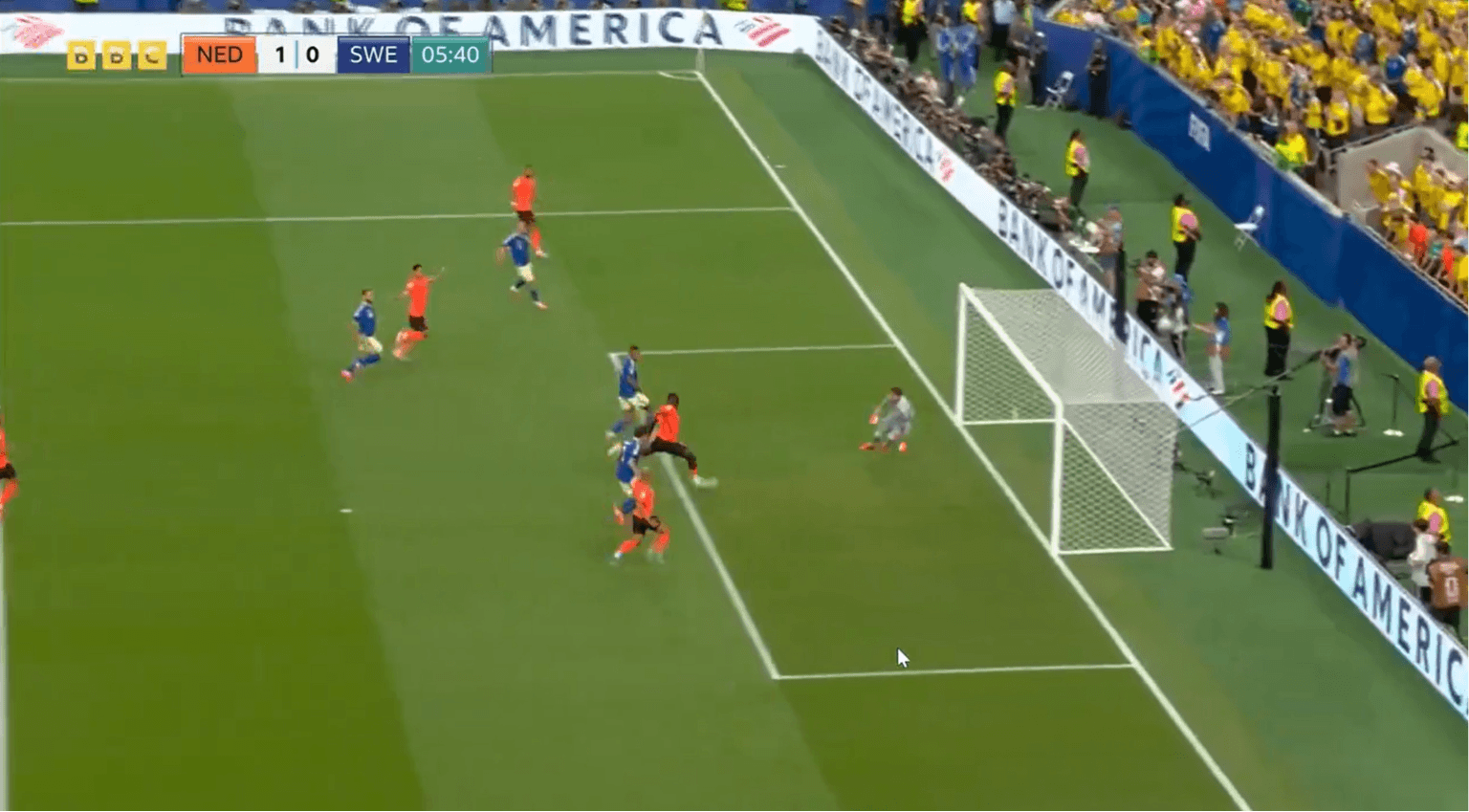
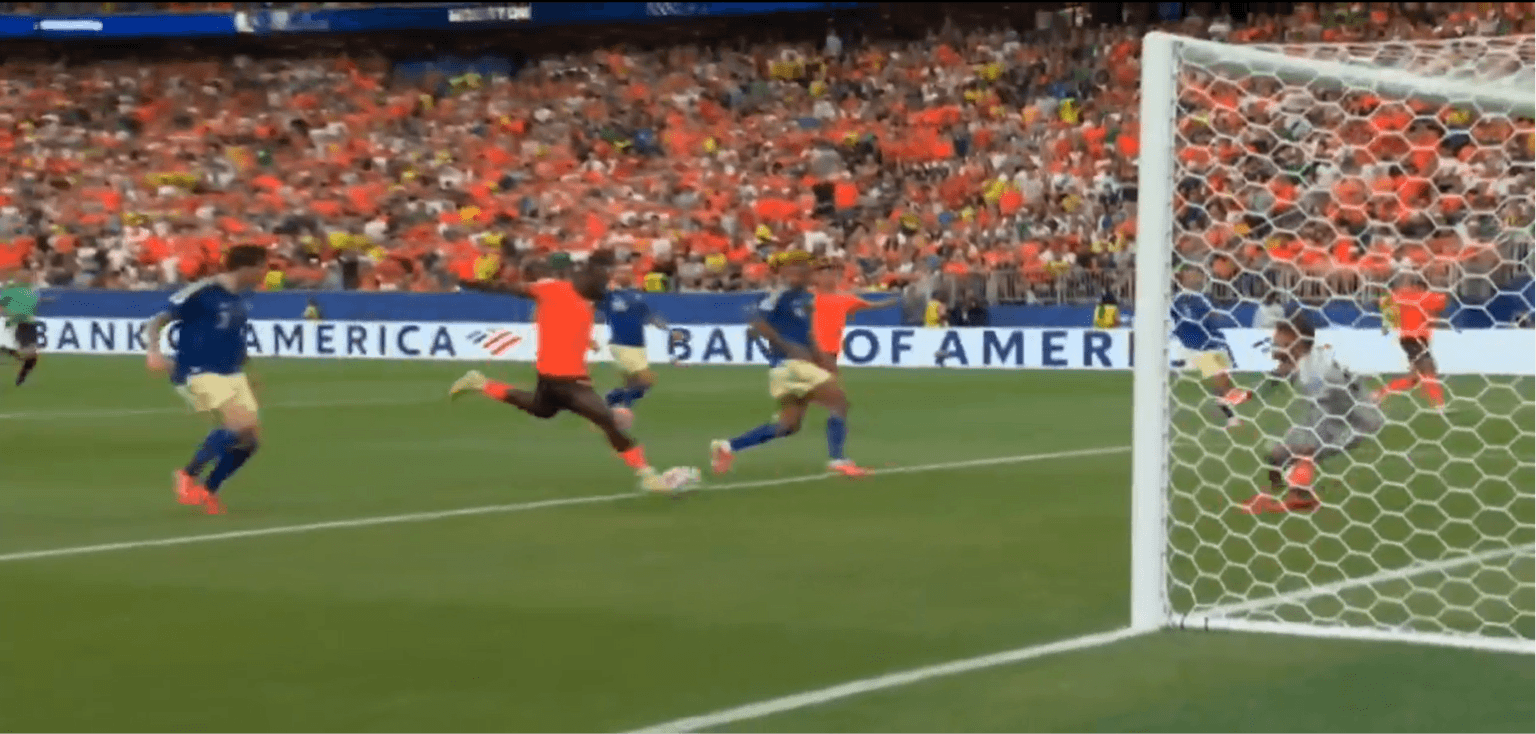
It would not be long before the Sunderland forward was in the right place at the right time again. He outsmarted Hein with his movement and stretched to steer Malen’s cross from the right flank into the back of the net.
Their second and third goals were almost carbon copies, too.
Koeman deserved praise for his team selection and Brobbey’s role made the Netherlands much more fluid in possession. Sweden did not know how to stop it.
Andy Jones