
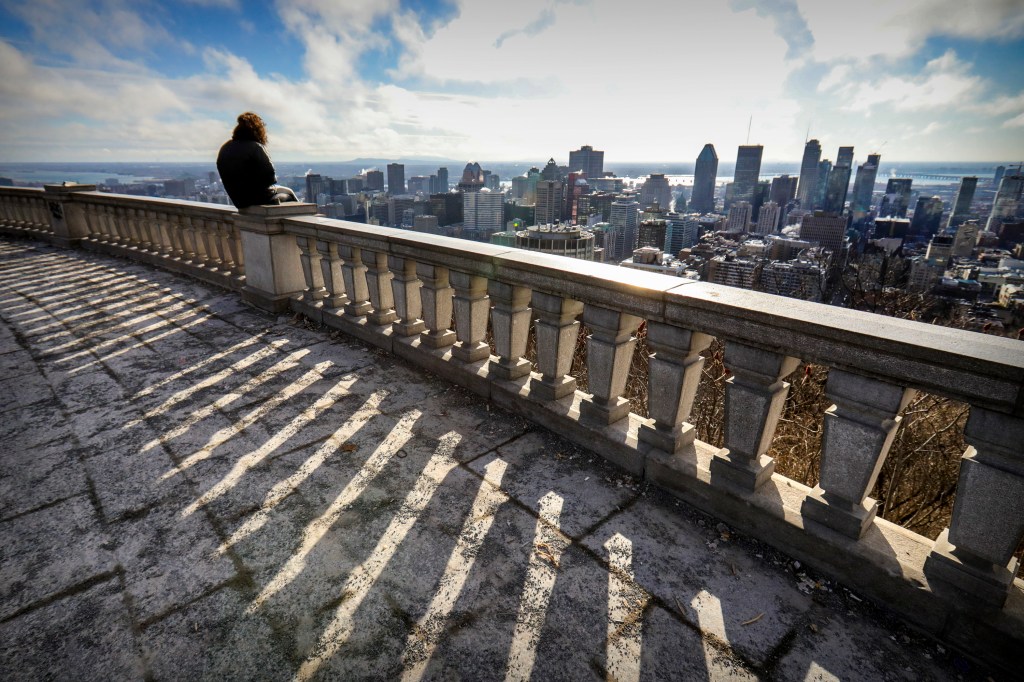
This summer marks the 150th anniversary of the opening of Mount Royal Park — a masterpiece of urban landscape design and one of North America’s most famous and beloved green spaces. Since its design by Frederick Law Olmsted, the mountain has drawn untold millions of visitors, and we must work to ensure it can do so for years to come.
As president of the Olmsted Network, I traveled to Montreal this month to celebrate this milestone and meet with local advocates, civic leaders and stewards committed to preserving the park and its surroundings. Joined by Olmsted scholar Lauren Meier, a fellow of the American Society of Landscape Architects, I was led around the mountain by our partners at Les Amis de la Montagne and longtime Montreal-based landscape architect Daniel Chartier. What I saw was nothing short of inspiring.
Editor’s Picks
At a time when so many cities are neglecting public lands — carving them up for private use, allowing them to fall into decay, or denying communities a voice in how to use their green spaces — it was truly heartening to see the passion and vigilance of so many individuals and organizations supporting this park.
Olmsted himself saw enormous potential in the mountain, calling the site “the best opportunity … that had ever been presented to (his) profession.” Coming from the man who designed New York’s Central Park and the 1893 Chicago World’s Fair — who was instrumental in the preservation of Niagara Falls and Yosemite National Park — such a remark comes as high praise.
While his full vision for Mount Royal was never realized due to economic constraints, the park is nevertheless rich with his design principles. In subsequent years, Canadians like Frederick Todd would contribute to the design of the mountain, influenced by Olmsted’s philosophies on natural scenery, sense of place and pedestrian circulation.
The Olmsted Network is no stranger to advocacy for Mount Royal. In September 2002, when we were known as the National Association of Olmsted Parks, we issued a declaration calling on the city to respect Olmsted’s design intent, minimizing future incursions on the landscape. Since then, thanks to the efforts of Les Amis de la montagne, the City of Montreal and many other partners and advocates, Mount Royal has been recognized as a Historic and Natural District by the government of Quebec. The continuing restoration and stewardship of the mountain demonstrate what can be achieved when civic organizations and public institutions work together toward a shared vision.
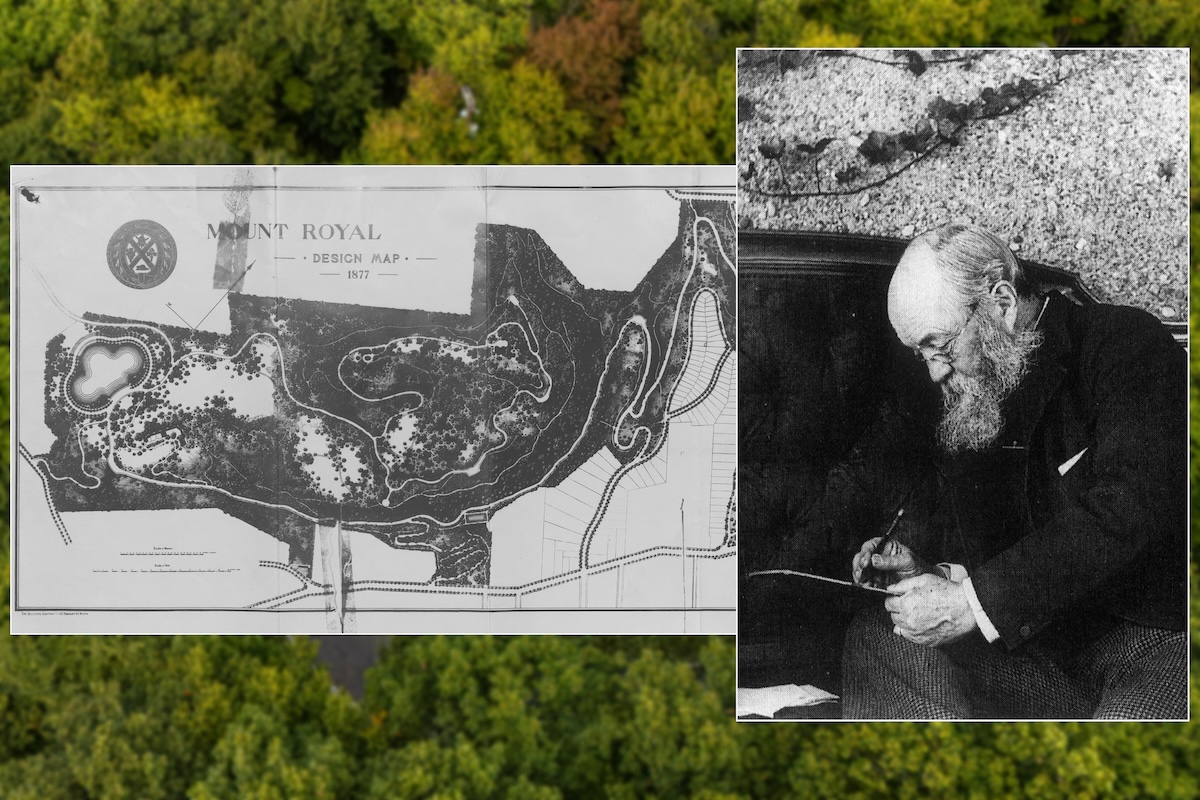 Frederick Law Olmsted designed Mount Royal Park in the late 1800s. The park is celebrating 150 years since its opening. Montreal Gazette files, Olmsted Archives
An Olmsted landscape like Mount Royal is a unique treasure that, once tarnished, can take generations to heal. One need only look at Washington, D.C. to see what can result from the gradual erosion of public lands. In the U.S. capital, protocol and public process in its storied Monumental Core have been flouted to appease the whims of the current administration, and sites that took centuries to develop have been irrevocably marred in an instant. I urge the city of Montreal to keep this in mind when considering the future of Mount Royal, and I hope that working closely with such a valuable partner as Les Amis might avert that outcome here.
At the end of my trip, I presented Les Amis and the Montreal community with an Olmsted Network Proclamation, acknowledging and applauding the years of stewardship that have gone toward making Mount Royal the international landmark it is today. While we celebrate 150 years of Mount Royal Park, we must not take for granted the advocacy that has enabled it to endure for this long — overcoming 20th-century incursions like elevated interchanges and working toward a greener, pedestrian-centric design.
One hundred and fifty years of rich history and thoughtful care have made Mount Royal one of the world’s great urban parks. For it to stand for another 150 years and beyond, we must listen to Olmsted. He knew that natural spaces are essential for the health and well-being of those who depend on them — and that it is the political duty of governments to provide that for all people.
Sue Breitkopf is president of the Olmsted Network, a Washington, D.C.-based nonprofit.
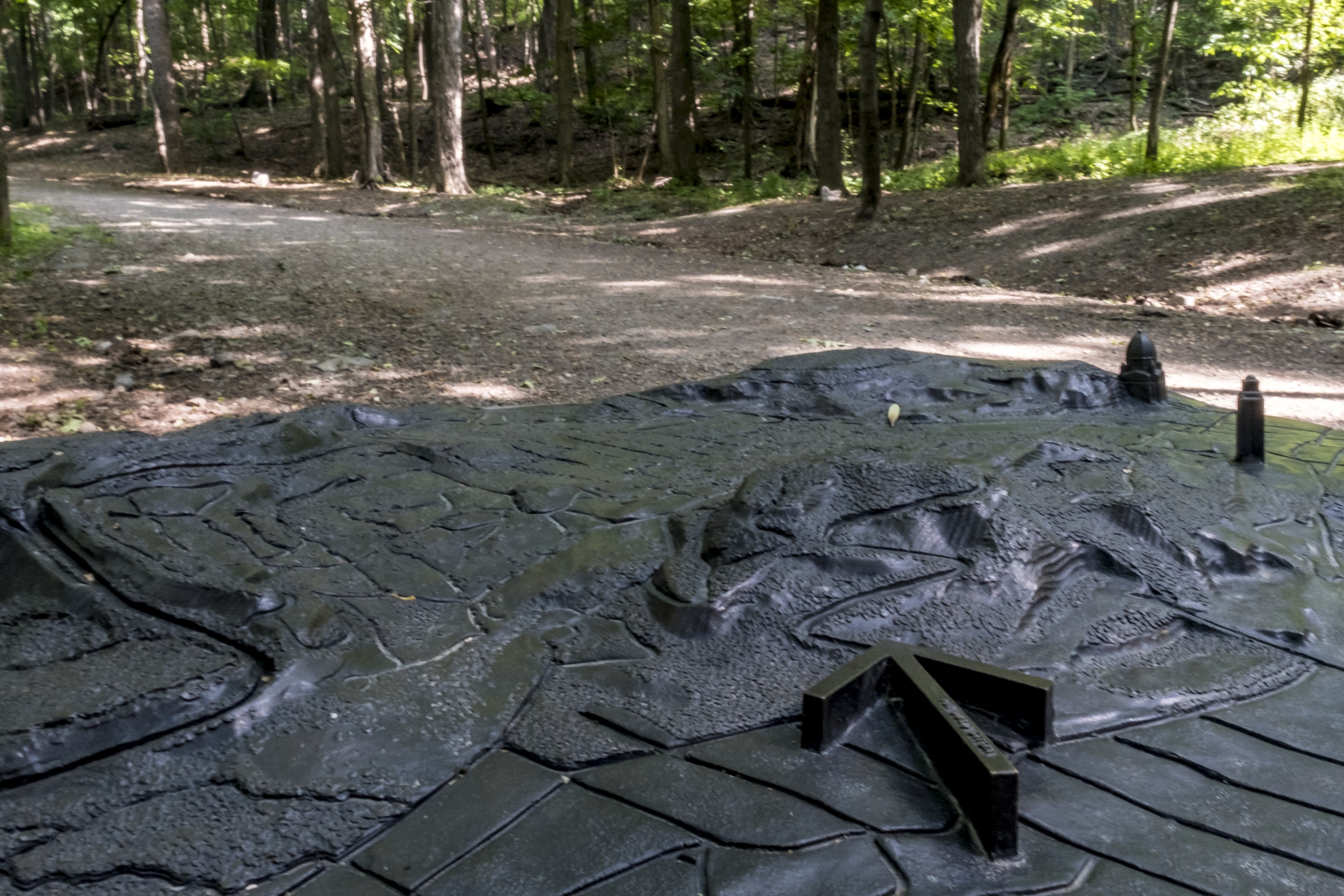 The metal relief map of Mount Royal, featuring a “you-are-here” arrow. Dave Sidaway / Montreal Gazette