
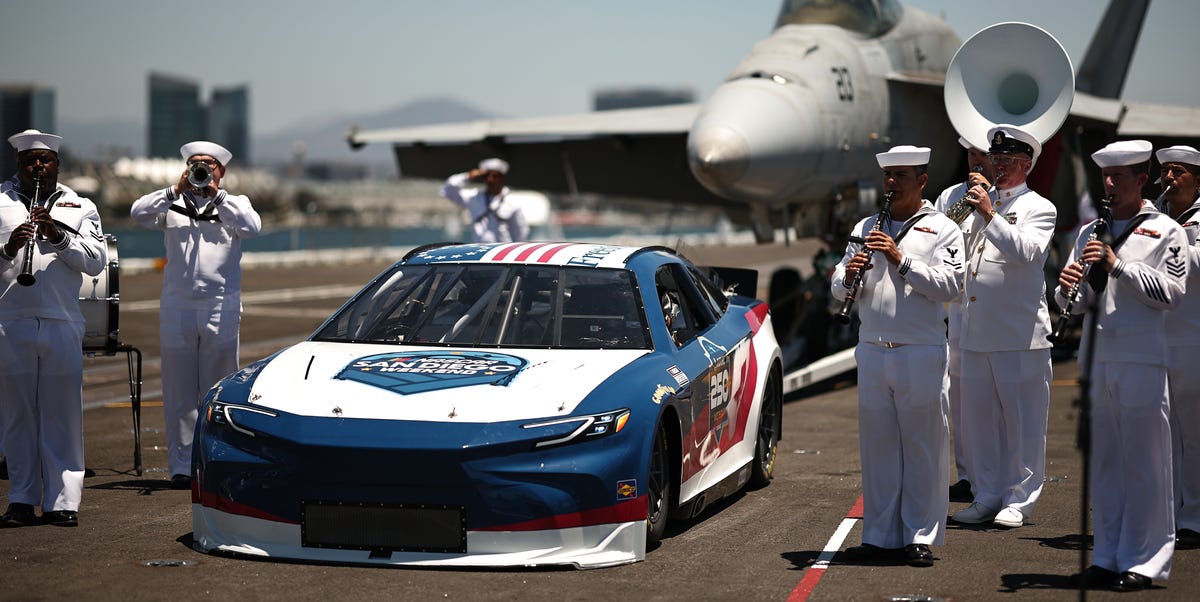
With NASCAR’s mission accomplished at Naval Base Coronado, COO Ben Kennedy said street course races would be on the schedule annually and there was a possibility of the sanctioning body going to other military installations.
However, Kennedy stopped short of saying NASCAR would return to the San Diego naval base. Kennedy said they would conduct a “deep dive after-action review with our entire team.”
“We’re going to sit down with the United States Navy and talk about what did we learn, what worked well,” Kennedy said. “I’d like to… have a conversation about… an opportunity for us to return here.”
NASCAR produced three days of racing on the sprawling naval base with its three national touring series. After Sunday’s Cup Series event, Kennedy noted they learned numerous things over the last 48 hours, and some changes were made during that time frame. They tested some new activations at the event, but unlike the Chicago street course, they had to be cognizant of the number of people they could move on-and-off the base while still providing a good fan experience.
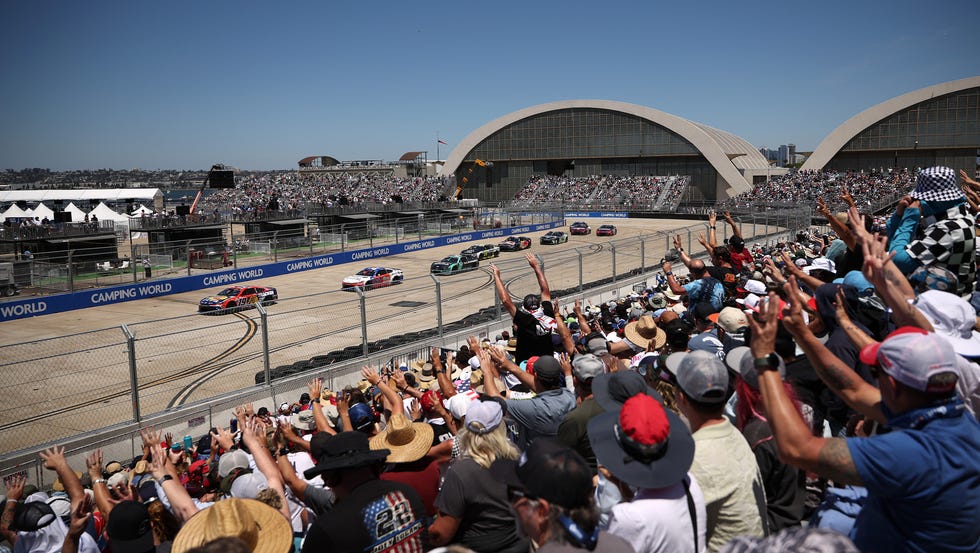 James Gilbert//Getty Images
Fans watch the racing at the NASCAR event in Coronado.
“We cut it off at 50,000 people per day,” Kennedy said. “We wanted to make sure the ingress and egress was palatable for a lot of our fans.
“We had all-hands ops meetings every single day. We got everyone together after the event yesterday (Saturday). Overnight we were making phone calls. We brought in food trucks. Brought in extra staff to help work our bars, our concession stands.”
Kennedy said that by building the track at the LA Coliseum, then the Chicago Street Course for three years and now the street course on Naval Base Coronado, NASCAR had found a way to create a culture through innovation.
“Street courses, I believe we would have one or two on them for a long period of time in the future of our schedule.”
“We weren’t really in the street course business four or five years ago,” Kennedy said. “We were in the permanent facility business. That is what a majority of the NASCAR schedule is going to continue to be for a long period of time.
“At the same time, street courses, I believe we would have one or two on them for a long period of time in the future of our schedule. A lot of the equipment we bring in over these weekends… are rented. I think there might be an opportunity for us to partner with someone, purchase a lot of this equipment. Once we have this, we have a team dedicated to it year-round, people that can pop into different markets two, three years in advance, help us prime that market so… we can pop in the facility and be ready to go.”
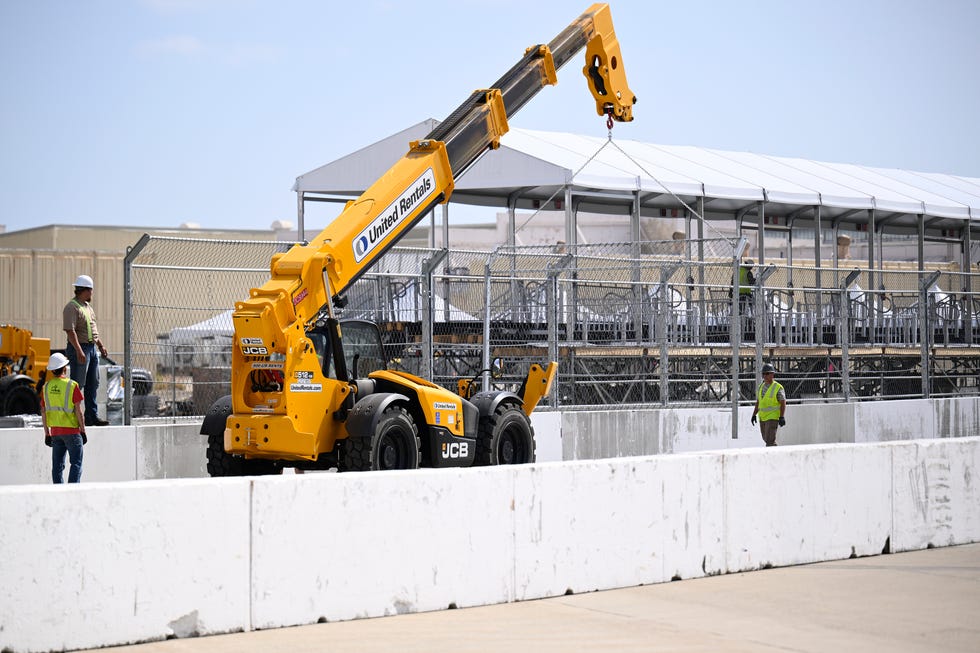 Orlando Ramirez//Getty Images
Construction of the temporary street course at Coronado.
Kennedy noted that a little more than 125,000 people attended the three-day weekend. The fans represented all 50 states, 17 different countries and 67 percent of those who attended had never been to a NASCAR race. Compared to other NASCAR events, Kennedy said the female attendance was 11 percent higher and there were three times the number of Hispanics in the audience.
Kennedy says he and his team constantly walk the grounds during a race weekend, taking notes and comparing them at the end of the day, often trying to make improvements “on the fly.”
The great grandson of NASCAR founder Bill France Sr., Kennedy said racing on the military base felt “authentically NASCAR.”
“I think for that reason, it’s a good validator for us as we talk about other military installations, just brainstorm on it internally,” Kennedy continued. “There are so many iconic locations you can go to around the world that would make sense.
“I would also say there are a lot of strategic markets that we would love to be in that have military bases, as well. We’ve talked about the Pacific Northwest. We’ve talked about Colorado. We’ve talked about the Northeast. Want to be thoughtful and strategic around it. I think a lot of these events do really good for two or three years.
“Obviously, this weekend was all about our military and honoring them (on their 250th birthday) and thanking them for all that they do. We also welcomed a lot of new fans this weekend, which is icing on the cake.”

A North Carolina native, Deb Williams is an award-winning motorsports journalist who is in her fourth decade covering auto racing. In addition to covering the sport for United Press International, she has written motorsports articles for several newspapers, magazines and websites including espnW.com, USA Today, and The Charlotte Observer. Her awards include the American Motorsports Media Award of Excellence, two-time National Motorsports Press Association writer of the year, and two-time recipient of the Russ Catlin award. She also has won an award in the North Carolina Press Association’s sports feature category. During her career, Deb has been managing editor of GT Motorsports magazine and was with Winston Cup Scene and NASCAR Winston Cup Scene for 18 years, serving as the publication’s editor for 10 years. In 2024 she was inducted into the NMPA Hall of Fame.