
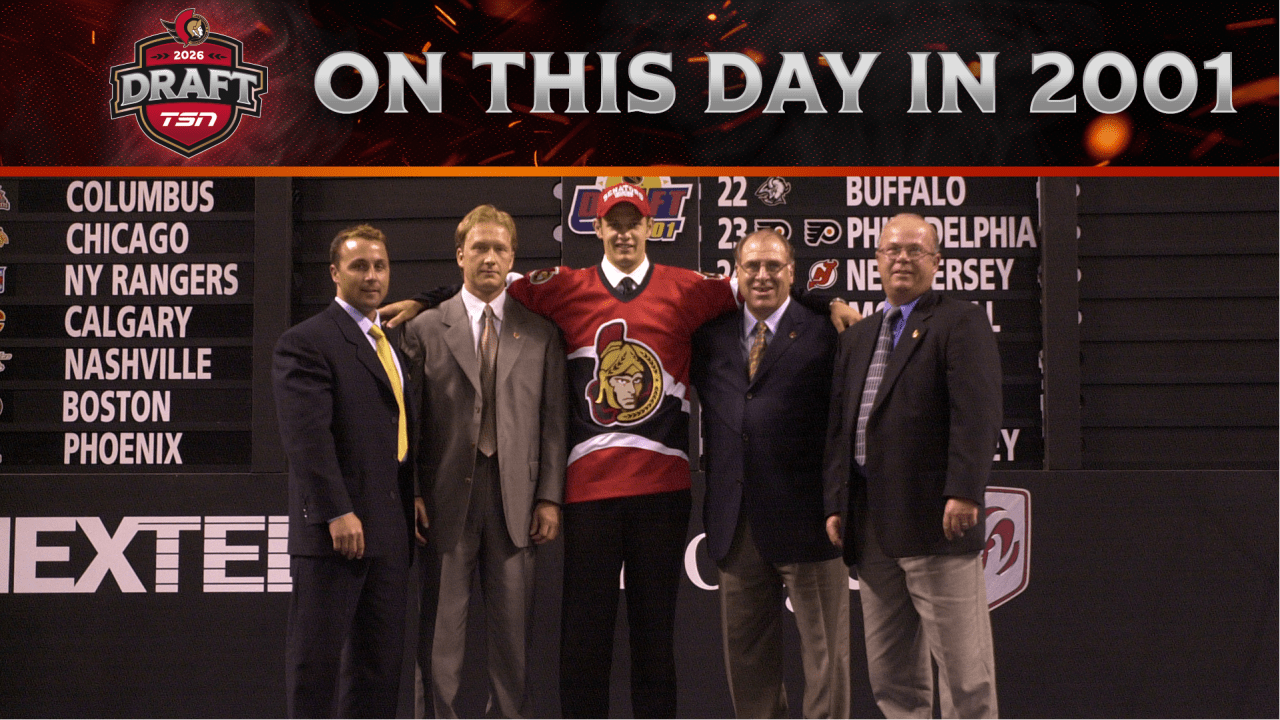
Meanwhile, Spezza’s best years in Ottawa were just beginning after the lockout. He had compiled 22 goals and 55 points with the Sens in 2003–04 yet was still young enough to be returned to the AHL’s Binghamton Senators during the NHL’s work stoppage, where he led the league with 117 points. Spezza was awarded the Les Cunningham Award as the AHL’s Most Valuable Player, and his time in the minors was sure to be over.
He proceeded to rack up seasons of 90, 87, and 92 points the next three seasons in the NHL, and played a large role in the team’s trip to the Stanley Cup Finals in 2007. He and his ‘Pizza Line’ linemates Dany Heatley and Daniel Alfredsson tied for the playoff lead that spring with 22 points in 20 postseason games.
His best season, though, may have come in 2011–12, under new head coach Paul MacLean. Spezza tied a career-high with 34 goals, and finished fourth in league scoring — coincidentally, one point ahead of Kovalchuk. The sublime playmaker finished sixth place in Hart Trophy voting for his efforts.
Spezza remained a Senator until the end of the 2013–14 season, when he was traded to the Dallas Stars, and still ranks second for career goals, assists, and points in the team’s record book.
Johnston’s wheeling and dealing wasn’t finished with the acquisitions of Chara, Spezza, and Muckalt. He flipped the 27th overall pick to Philadelphia in exchange for the right to move up to select 23rd, packaging a seventh-round pick later in that draft and a 2002 second-rounder for exchange for the upgrade.
The Sens would select Windsor Spitfires defenceman Tim Gleason with that pick. Though they would eventually fail to come to terms with Gleason on an entry-level deal, his rights would be sent to Los Angeles at the 2003 trade deadline for two-way centre Bryan Smolinski, who scored 102 points over 171 games with the Sens in the regular season and added 17 more points in 35 playoff games.
In the fourth round, the Sens would then add two other major contributors for their run to the 2007 finals. With the second pick (99th overall), they called the name of Soo Greyhounds netminder Ray Emery, who would eventually earn the CHL’s goaltender of the year nod when he returned to junior for another season in the fall.
Emery broke into the NHL on a full-time basis after the lockout, setting a league record with nine straight wins to begin his career. After starter Dominik Hasek was injured at the Turin Olympics, he even got into 10 playoff games in the spring of 2006, but was unable to lead the Sens over Buffalo in their second round matchup.
His best season with Ottawa came the following year, 2006–07, when he played 58 games in the regular season and 20 more in the playoffs, backstopping the Sens all the way to the finals.
“No matter how he played in the final series against the Anaheim Ducks, the 24-year-old did wrest the No. 1 job from Martin Gerber and he did play well enough to get the Senators into the final. That’s something no other goalie for this franchise was ever able to do,” wrote Allen Panzeri in the Citizen that June.