
Stay up to speed with stories written by drivers, for drivers.
Get automotive news, DIY tips, market trends, in-depth car profiles, and more right in your email inbox.
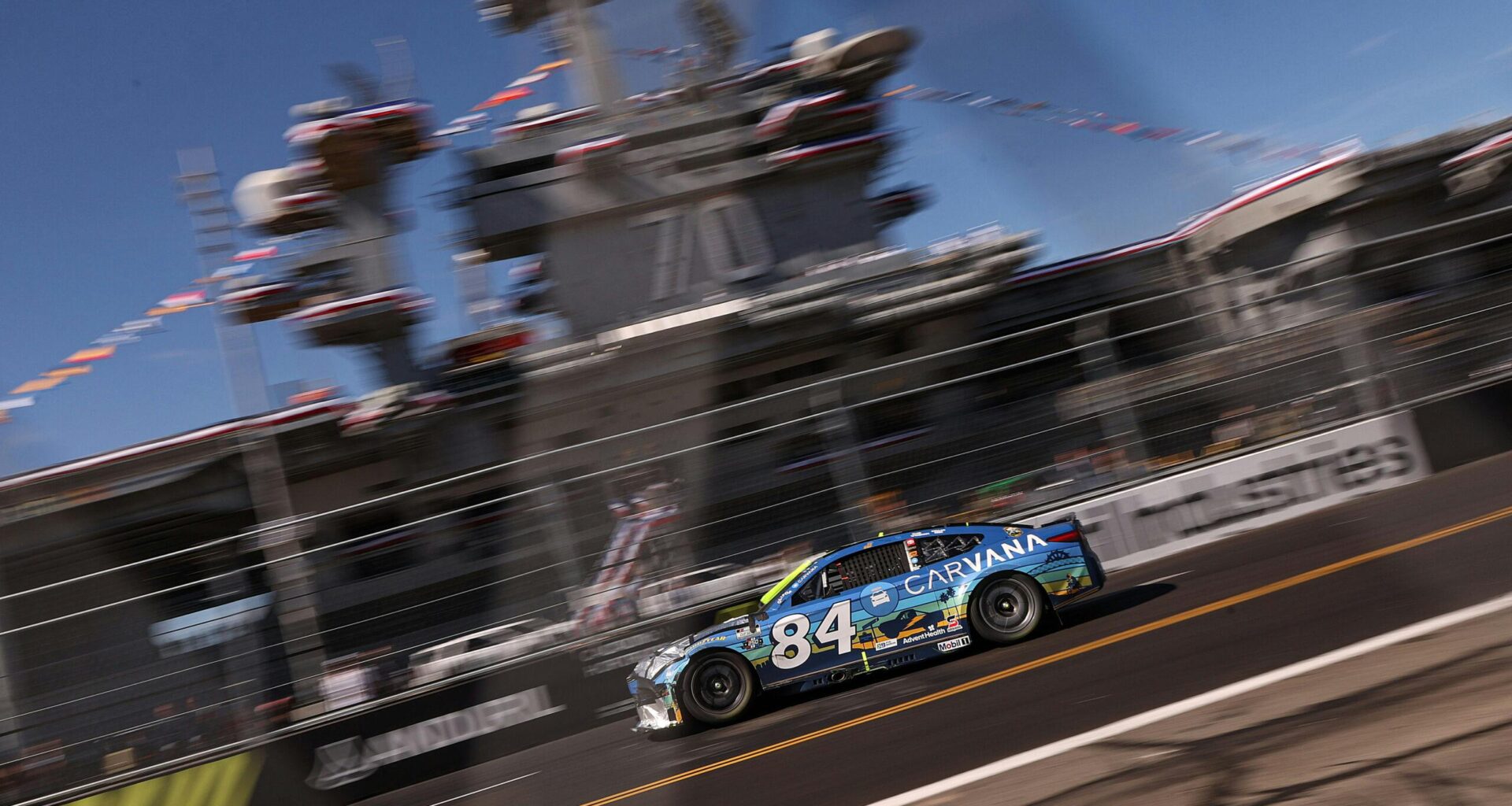
No doubt it sounded like a great idea to NASCAR, and indeed it was, but the three-race weekend held outside San Diego on the 3.4-mile Qualcomm Circuit at Naval Base Coronado served up more than its share of surprises. Some good, some… well, you decide.
The weekend began Friday with the Forged by the Sea 250 for the Craftsman Truck series, continued Saturday with the NASCAR O’Reilly Auto Parts Driven to Serve 250, and wound up Sunday with the NASCAR Cup series Anduril Race the Base 250.
In case you, like me, didn’t know what Anduril does, this is its mission statement: “As the world enters an era of strategic competition, Anduril delivers cutting-edge autonomy, AI, computer vision, sensor fusion, and networking technology to the warfighter in months, not years.” Unmanned drones, surveillance systems, “autonomous underwater vehicles,” that sort of thing. When the NASCAR fan base shops for an autonomous underwater vehicle, they’ll know where to go.
 David Jensen/Getty Images
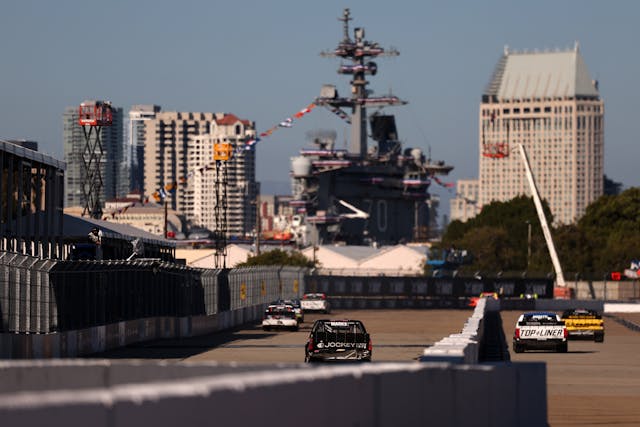
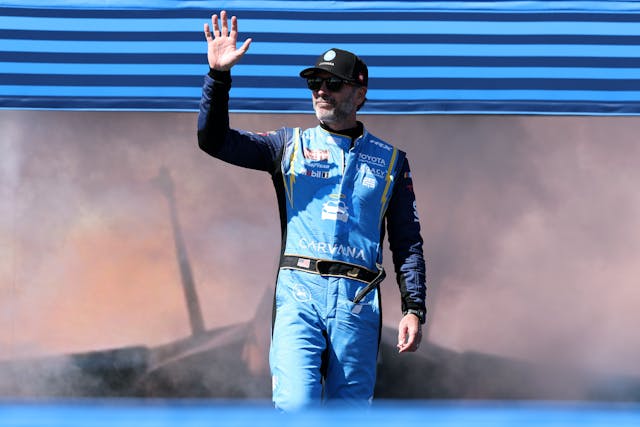
As a unique—and long—track carved out of the Naval Base, the circuit was more of a fast, conventional road course than a short, tight street course (like the 1.98-mile track used by the Acura Grand Prix of Long Beach), so it attracted a variety of drivers who wanted to be the first to win there. Such as seven-time, semi-retired Cup champion and team owner Jimmie Johnson, who hails from nearby El Cajon.
 David Jensen/Getty Images
The 50-year-old received some of the most robust cheers when he was introduced. He competed in the Craftsman Truck race on Friday, finishing 30th out of 35 trucks, and in the Cup race on Sunday, finishing 28th of the 39 entries.
Though his car was beat up in the Cup race, it was his second-ever start in the Craftsman Truck series that was the real eye-opener. “I just couldn’t believe the disrespect that everybody had from the jump,” Johnson said. “Just gouging each other nonstop.”
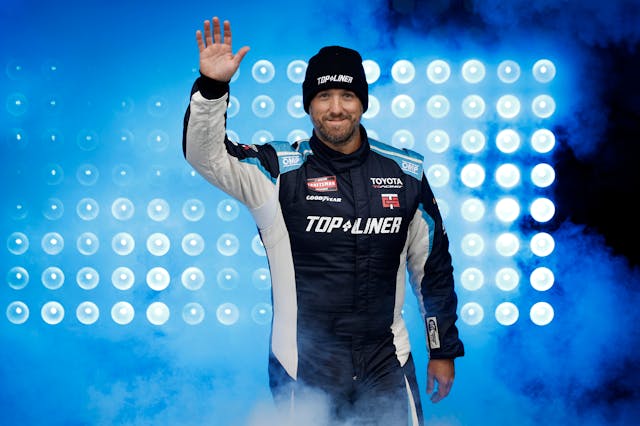
Perhaps the most interesting development from Friday’s truck race was a feud that developed between Parker Kligerman, a racer-turned-TV broadcaster who still races when he can find a ride, and Adam Andretti, who is the younger brother of the late John Andretti, and the son of Aldo Andretti, a driver who wasn’t as well-known as his twin brother Mario.
 Sean Gardner/Getty Images
 Brett Farmer/Getty Images
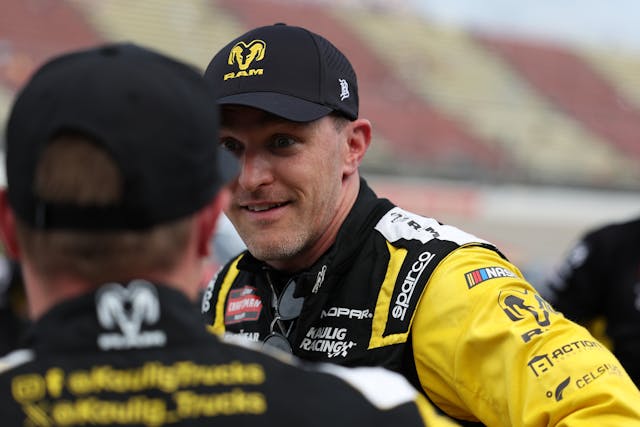
Kligerman’s online rants about Andretti’s driving were troubling. “We got run into by every Tom, Dick, and Harry in the field,” he told one interviewer. “I mean, when you got guys like that Andretti guy, who tried to kill me three times, and I felt he did disgrace to that last name,” Kligerman said.
Adam Andretti, 47, is a road-course specialist who has made occasional starts in the NASCAR Craftsman Truck series but is usually found racing in the Trans Am Series, where he made his first start 10 years ago. Compared to Kligerman, Andretti has been pretty quiet, but he and Kligerman were caught in this heated exchange after the race.
Layne Riggs won for the fifth time this season. Kligerman was 18th, Andretti 14th in what appears to be his last truck race of the year. Actor Frankie Muniz (Malcolm in the Middle) was 20th.
As chaotic as Friday’s truck race was, Saturday’s O’Reilly Auto Parts topped it in every category. It dragged on for three-and-a-half hours, just a few minutes shorter than Sunday’s Cup race, which ran an additional 50 miles. The race actually went for over four hours, as red-flag time is not officially counted.
 David Jensen/Getty Images
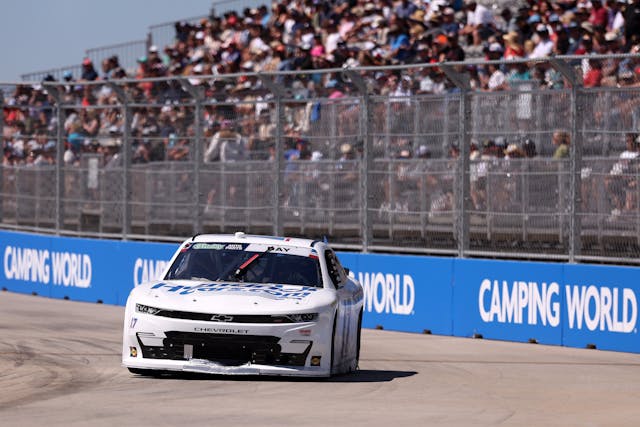
The trouble started on lap 1, when driver Corey Day’s car was struck directly in the grille by what was described at the time as an upended manhole cover. It destroyed his radiator, which spewed coolant onto the track. The manhole covers were supposed to be welded shut, but this one—which turned out to be a slightly smaller cover used for inspections—apparently escaped attention.
What would NASCAR do? When something similar happened to Jeff Gordon in 2004 at Martinsville as he was going for his third straight win there—his car was damaged when a chunk of concrete from the track struck it—NASCAR called a halt to the race and repaired the track, but did nothing to help Gordon, though his crew did manage to make some repairs during four pit stops. This time, NASCAR allowed Day’s crew to completely repair the car during a red-flag, full-stop period, which is normally not allowed. Then they restarted the field, and while everyone else circled slowly, Day was allowed four fast laps to burn fuel, so his capacity would be roughly the same as that of the other cars on the track.
This also put Day back on the lead lap. But the adventure wasn’t over: He very nearly collided head-on with a track safety vehicle that was going the wrong way on the track, returning to its position. By then, NASCAR was an hour and 10 minutes into the race, and the fans had still not seen a single green-flag lap. After all, the Navy had to check 149 additional manhole covers to make sure they were all attached.
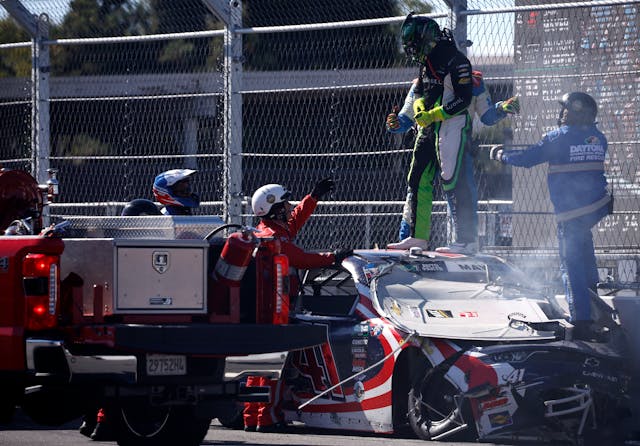
The race restarted, but the carnage continued, and the worst was yet to come: Driver Sam Mayer, running in fourth place on a restart, hit the outside barrier and veered hard into the car of Anthony Alfredo, effectively blocking the track. A total of 23 cars were involved in the crash. Alfredo was carried into the ambulance on a stretcher (he was OK), and Mayer was beside himself, taking full blame for the crash.
 Sean Gardner/Getty Images
“First off, I just want to say I’m sorry to everyone in the field, looking at the people who were involved in the crash there, that’s literally everybody. So, just sorry that all of these people are going to have to put work in now because of my mistake,” Mayer said. “I gotta be better, I gotta be a lot better, gotta stay locked in no matter what happens to you and keep moving forward. Going to shake this one off, but gotta be better in the future.” He said he would make a walking apology tour, saying he was sorry to every driver involved in person.
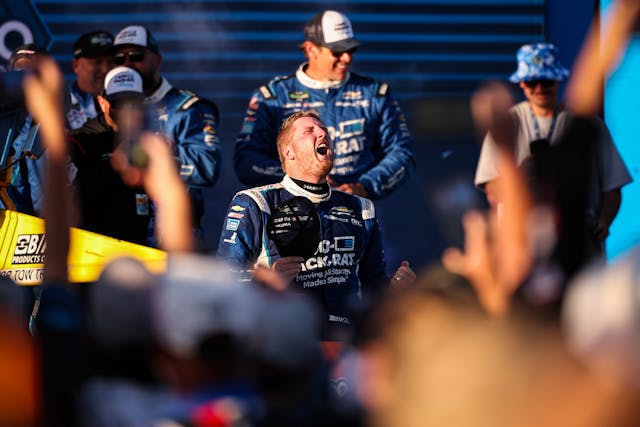
By the time they got to lap 60, any of several drivers could have won. Two of the front-runners collided, leaving a hole for Austin Hill, driving for Richard Childress Racing (RCR), to squeeze through, as he gave the car of Taylor Gray a final move-over nudge. It was an emotional win; a month ago, RCR lost one of its two Cup drivers, Kyle Busch, to pneumonia and sepsis. Both Hill and team owner Richard Childress, 80, were near tears as they talked about the win.
 David Jensen/Getty Images
All of which (finally) brings us to Sunday’s NASCAR Cup race. Remember that name, Austin Hill, as Childress tabbed him to drive the number 8 car of Busch.
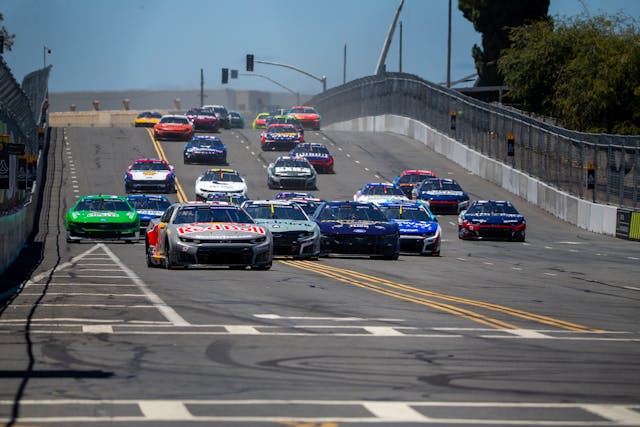
The race began with the favorite, New Zealand’s Shane van Gisbergen, sitting on the pole after a blistering qualifying lap no one else could match—some of the analysts virtually deeded the race to him before the start. His teammate, rookie Connor Zilisch, qualified in the top 10, appropriate since he is also a road-course specialist. After three straight last-place finishes, Zilisch desperately needed a strong race. He absolutely dominated the O’Reilly’s series last year, setting one record after another, but his debut year in Cup has been nothing short of disastrous.
 David Jensen/Getty Images
 Larry Placido/Icon Sportswire via Getty Images
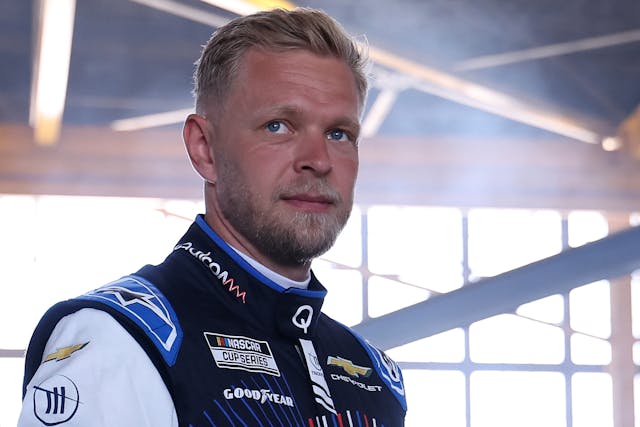
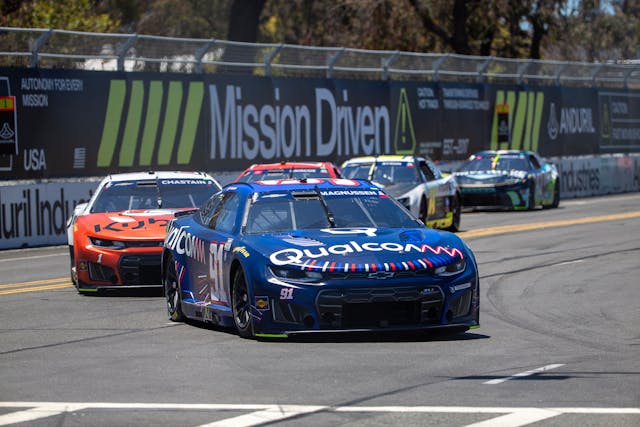
Also worth watching was Formula 1 and sports car racer Kevin Magnussen, making his NASCAR Cup Series debut in the No. 91 for Trackhouse Racing. He qualified 21st, not bad for his first time in a Cup car.
Despite having essentially the same car as van Gisbergen and Zilisch, he would not enjoy the experience.
 Larry Placido/Icon Sportswire via Getty Images
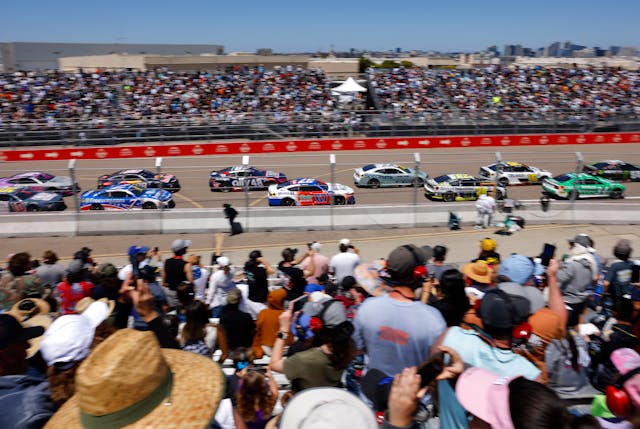
As expected, SVG and Zilisch dominated early, with van Gisbergen leading seven laps and Zilisch eight, the first time he has led a Cup race all year. But remember Austin Hill, who won Saturday’s race? He was right there, battling Zilisch for the lead on lap 32. But Hill locked up his rear brakes as they approached a corner—a common problem on Sunday—and slid into Zilisch, both cars slowing dramatically.
With nowhere to go, a charging SVG slammed into both cars, collecting even more, including front-runners Michael McDowell, Ty Gibbs, and Daniel Suarez. Hill, Zilisch, and SVG were effectively done for the day. Shane van Gisbergen appeared furious, but Zilisch seemed unsurprised. “It’s the story of my year,” he said. He sits 34th in points, one spot ahead of Cody Ware, who is last of the drivers who have run all 17 races this season.
 K.C. Alfred / The San Diego Union-Tribune via Getty Images
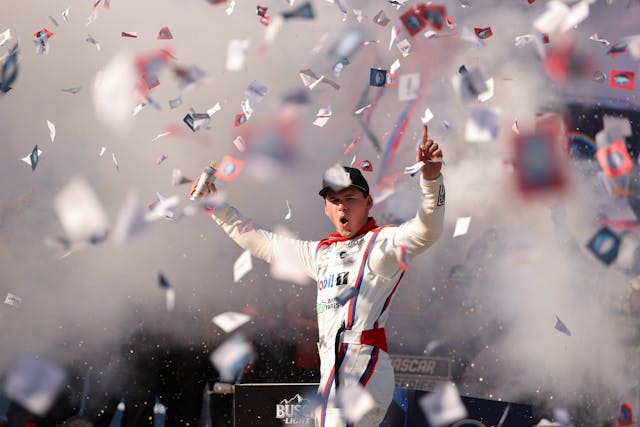
The race continued with a variety of drivers running at the front, but with no one clear dominating performance. Kyle Larson was fast, but so was Zane Smith, Carson Hocevar, Ryan Blaney—and this was unexpected—Corey Heim. Last year’s Craftsman Truck champion doesn’t have a solid ride for this year, as he awaits a seat with 23XI Racing for 2027, replacing Riley Herbst in the Denny Hamlin-Michael Jordan-owned team, which includes points leader Tyler Reddick. That’s what the race turned into: A late fight between Heim, racing part-time in only his 13th NASCAR Cup appearance, and Reddick.
With three laps to go, Heim and Reddick collided, with Reddick getting the advantage. But he immediately pulled to the side to let Heim by. Rare, but not unheard of when we talk about Reddick: He is one of the cleanest drivers on the circuit, and as he said afterwards: “I tried to battle back and overdid it. I really did. I ran him straight into the wall, and that wasn’t right. I wasn’t going to pass him for the win that way, that’s for sure. Especially a teammate.”
Unfortunately, it appears that the contact cut a front tire on Reddick’s car, and he dropped from second to 25th. That left another 23XI driver, Bubba Wallace, in second place. He deserved it, fighting back from two laps down when an improperly mounted wheel came off his car. Larson was third, Smith was fourth.
 David Jensen/Getty Images
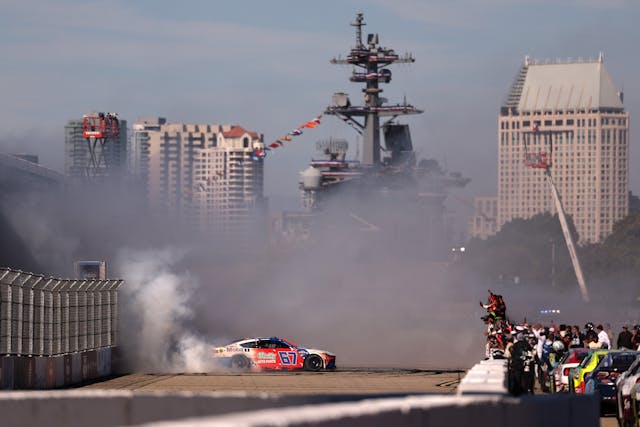
You would have done well to bet on Corey Heim to win this race, given what had to be generous Las Vegas odds (one source said Heim was +5500, while another said +10,000; Zilisch was +700). I’m surprised but not shocked by his win: The 23-year-old is one of the coolest young drivers I’ve encountered, dating back to an interview with him years ago when he was running ARCA. His performance in the Craftsman truck series last year was overshadowed by Zilisch’s dominance in the O’Reilly Series; many of us, including me, had been eagerly awaiting a Zilisch breakthrough in Cup, which hasn’t happened. It will not help the chronically dejected Zilisch seeing Heim cruise to his first win, by the also-unimaginable margin of over 10 seconds ahead of second place. It’ll be fun to watch Heim next year. And, I hope, Connor Zilisch.
 David Jensen/Getty Images
Finally, remember F1’s Kevin Magnussen? Stunningly, near the end of the race, he clocked the fastest lap of any driver. He also made an enemy of Cup regular Noah Gragson. Here’s a video of their post-race confrontation, and warning: It is not safe for delicate ears. There are so many F-bombs that it’s actually funny, like two guys doing a parody of an argument.
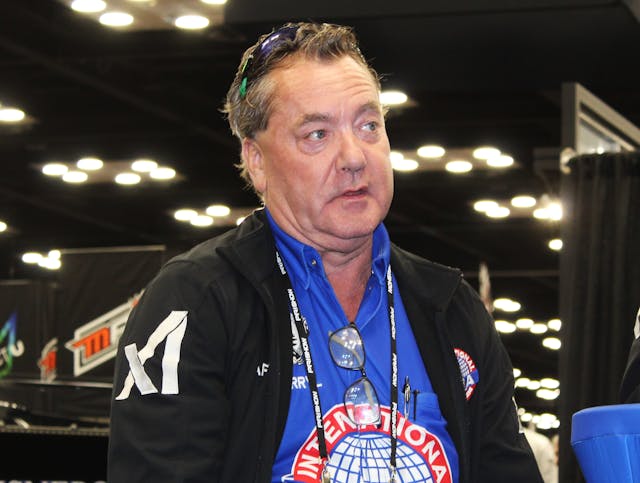
The other event that may have escaped your attention this weekend was the first race in the International Hot Rod Association’s Triple Crown. I’ve written about the upstart IHRA, and the way its owner, Darryl Cuttell, an Ohio businessman, has been spending money, buying tracks and paying massive purses to drivers, likely in hopes of attracting some big names from the long-dominant drag racing series, the National Hot Rod Association.
Bear with me for a couple of paragraphs, and I’ll tell you why the IHRA Triple Crown is important.
The Triple Crown was to be held at three separate tracks—first at Darana Maple Grove Raceway in Pennsylvania, May 22–24, then Darana National Trail Raceway in Ohio last weekend, with the finale at Darana Memphis Motorsports Park in Memphis. (Cuttell names all the tracks he buys “Darana,” which is the name of the technology company he owns in Ohio, Darana Hybrid, and is rumored to be a contraction of his first name and his sister’s first name. There are other Daranas. Confusing? You bet.)
 Steven Cole Smith
Race one at Darana Maple Grove was rained out, including the billed appearance by Dwight Yoakam. It was not rescheduled. Then came this past weekend’s race at Darana National Trail, which did happen. (Some call the facility Darana Hebron, because that’s the Ohio town it’s in.) But the final race at Darana Memphis Motorsports Park, which Cuttell bought with plans to renovate it—a nice way of saying tear down what little is left there and start over—was moved. The IHRA said “scheduling problems” forced the move, which may be true, but it seems that renovation is running behind schedule.
The move to where, though? Back to Maple Grove, it appears, on September 10–13. Both of the two remaining legs of the Triple Crown will be contested that weekend, the first one on September 10-11, the last one on the 12th and 13th.
Now, here’s why this is interesting. The IHRA has scheduled the Triple Crown races for NHRA off weekends, in hopes of attracting some big-name stars, like Tony Stewart and his wife, Leah Pruett; maybe a couple of the John Force Racing cars, the Kalitta teams, anybody else you’ve heard of.
How? Money. In any of five classes—Top Fuel, Funny Car, Pro Modified, Mountain Motor Pro Stock, and IHRA Factory Pro Stock—you win all three Triple Crown races, you get $1 million. Just for last weekend, the winning Top Fuel and Funny Car drivers got $150,000. Say you win a much longer, more expensive, and much more competitive NHRA race. You get less than half that. Top Fuel and Funny Car competitors may be used to nice paychecks, but for the other three classes eligible for $1 million, the IHRA purse is life-changing money.
When the first leg of the Triple Crown was to debut at Darana Maple Grove, Funny Car racer Ron Capps, who any drag racing fan has heard of due to his multiple NHRA championships, signed up for the race, and he would be bringing his protégé, the 2026 sensation Maddie Gordon, who races Top Fuel. Capps didn’t seem to want to talk about it, and for some reason, he and Gordon never made last weekend’s race at Darana National Trail.
So there weren’t many big names at last weekend’s Triple Crown. Don’t forget that you must win all three legs to get $1 million, so you’d expect the best turnout at the first event, because only one racer per class moves on to the next two.
Probably the best known racers were Top Fuel driver Shawn Reed and Funny Car racer Paul Lee, who both compete, and do well, in the NHRA. Father/daughter Top Fuelers Mike and Jasmine Salinas were there: Mike did very well in the NHRA until he suffered heart problems and a work overload two years ago, and this was his first time back. He said the racing bug seems to have bitten him again.
Paul Lee, in fact, won Funny Car over veteran Del Worsham, who had his share of strong NHRA finishes during his career. In Top Fuel, Trip Tatum beat Gary Pritchett, who is an IHRA regular, and was previously known best perhaps for being the former husband of Leah Pruett, formerly Leah Pritchett and currently Mrs. Tony Stewart.
Jason Harris, John DeFlorian Jr., and Taylor Dietsch were the winners in the other three classes who are eligible for $1 million; your knowledge of drag racing needs to be fairly deep to know who they are, with the possible exception of Mountain Motor Pro Stock racer DeFlorian.
Judging from the TV coverage, which aired live on SpeedSport1, a “FAST” channel (Free Advertiser-Sponsored Television, meaning it should come to your home at no extra charge) showed a larger-than-usual crowd for an IHRA event, but hardly a sellout. The IHRA really needs to promote the last two legs of the Triple Crown, in part because I’m not sure who will show up. Only the five drivers mentioned above will be eligible for the million, and while the regular payout is certainly good, I suspect some of the racers came to National Trail last weekend just to get a shot at the big bonus.
We’ll keep watching IHRA owner, the ever-mysterious Darryl Cuttell, to see if his checkbook has a bottom. His company, the aforementioned Darana Hybrid, offers “comprehensive electro-mechanical solutions for the supply chain sector,” with customers that include Amazon, Tesla, FedEx, Starbucks, and Coca-Cola. Cuttell likes speed; he bought the Spirit of Qatar catamaran and piloted it to over 240 mph, and it should be noted that the same week he bought Memphis Motorsports Park, he donated $10 million to St. Jude Children’s Research Hospital in Memphis, where his company was once based.
If nothing else, his curatorship of the IHRA has been the most interesting thing to happen in motorsports for a while. I plan to stay tuned.