

In our How I Manage My Money series we aim to find out how people in the UK are spending, saving and investing money to meet their costs and achieve their goals.
This week we speak to Courtney Summer, 29, who lives in Southampton with her parents and works as a freelance illustrator and graphic designer. Courtney has been made redundant twice and had to give up a rental flat she’d put a deposit on after losing a job. She would like to earn £60,000 a year and has recently set up a private pension after her father told her he regretted not starting one.
Monthly budget
My monthly income: Before tax, the income from my work as a freelance illustrator and graphic designer is approximately £2,200 per month.
My monthly outgoings: I’m not paying for accommodation or utility bills at present. Groceries, £250; Adobe Illustrator, £30; web hosting, £14; trains and buses, £100; mobile phone, £20; Apple Music, £11; iCloud storage, £9; eating out and takeaways, maximum £50. I’ve just started paying £60 a month into a self-invested personal pension (Sipp). I try to add £100 to £500 to my cash savings account when I can.
I studied illustration at university in Plymouth, before moving to London to take on my first proper job. I worked at Hamleys from 2018 as a graphic designer, earning £21,500 a year, while paying £660 a month for rent.
Shorts
Scroll to previous short
Scroll to next short

 The Midlife MOT is open to all and covers three key areas: work, wealth and well-being (Photo: Westend61/Getty)
Feeling insecure at work
in your 50s? You’re not alone
The final decades of work
There’s this assumption about being put out to pasture… but now that we’re living and working longer, we have to challenge myths around ageing and remember that over-50s are a crucial part of the workforce…
LYNDSEY SIMPSON, AUTHOR OF AGE REBELLION AND FOUNDER OF 55/REDEFINED

The current situation
By 2030, almost half of all employees in the UK workforce will be over 50.
36%
Now one in three workers are over 50.
Yet more than a third of those between 50 and 69 believe that their age puts them at a disadvantage when they apply for jobs.
37%
The Age Without Limits study from 2024 shows that 37 per cent of workers between 51 to 70 felt badly treated in work because of their age.
The things to do, says Simpson
 More and more people are using AI for counselling (Photo: Oscar Wong/Getty/Moment RF)
Keep learning new skills
We need the same level of career planning in
our fifties as our twenties. It’s possible to reinvent yourself again.
Embrace technology
It’s nonsense that older people can’t pick up how to use new tech.
 Caption: John?r Bildbyr? AB
+46 8 644 83 30
www.johner.se
info@johner.se
sales@johner.se
Photographer: Johner Images
Provider: Getty Images/Johner RF
Source: Johner RF
Copyright: John?r Images/Lisa ?berg
 Caption: This is a photo of a woman clutching a pink piggy bank labelled pension. See PA Feature FINANCE Pension Pots. WARNING: This picture must only be used to accompany PA Feature FINANCE Pension Pots. PA Photo. Photo credit should read: Alamy/PA
NOTE TO EDITORS: This picture must only be used to accompany PA Feature FINANCE Pension Pots
Photographer: Alamy/PA
Provider: Alamy/PA
Source: PA
Think about money
Do you need a pay rise? Could you trade some of that money you earn, to work a bit less, and do more things you enjoy?
The things not to do
Become full-time childcare
Grandparenting on the horizon? If you don’t want to do childcare, have the conversation early – even before a child becomes pregnant – that you plan to continue working and love your job.
 Caption: Indoor image of thoughtful puzzled senior woman with gray hair in glasses looking at paycheck holding head in hand, upset with high rent charge, sitting at kitchen table in front of laptop
Photographer: shurkin_son
Provider: Getty Images
Source: iStockphoto
 Grandparents and granddaughter gardening together – stock photo. (Photo: Getty)
Accept redundancy too quickly
It’s going to be so much harder to get back into work if you don’t have a plan before you take that leap.
The things not to do
Rush into retirement
 Senior bed woman problem pain headache home elderly mature pain bedroom upset unhappy female caucasian adult relationship retirement old difficulty ache head sick migraine hangover sleep – stock photo. (Photo: Getty)
Everybody thinks early retirement is the dream but the reality can be different. There can be loneliness, lack of purpose and a sense of invisibility.

LIFESTYLE
5 min read
By November, UK food prices will be 50 per cent higher than they were at the start of the cost-of-living crisis
With that in mind, food editor Sophie Morris shares how she saves money on her weekly shop

Easy ways to save on the weekly shop
 Caption: NORTHWICH, ENGLAND – JULY 06: Whole chicken sit on display in a Tesco supermarket on July 06, 2022 in Northwich, England. The British Retail Consortium recently said food manufacturers and supermarkets are having to pass on some of the cost of soaring raw materials to consumers, leading to the price of basic goods throughout the UK rising at the fastest pace since September 2008. Fresh food prices increased by 6% in the year to June 2022 coupled with an increase in inflation, and fuel and energy prices to create a cost of living crisis. This is leading to millions of low-income households going without essentials items, falling behind on bills and taking on debt. (Photo by Christopher Furlong/Getty Images)
Photographer: Christopher Furlong
Provider: Getty Images
Source: Getty Images Europe
Avoid chicken breast
Boneless chicken thighs are all meat and a much tastier product.
Don’t plan everything
If you plan every meal all week, there’s no leeway for necessary last-minute changes of plan (or leftovers).
 Man Cooking By Woman Chopping Carrots In Kitchen – stock photo. (Photo: Getty)
 Governments are not all powerful when it comes to huge international forces like those increasing global food prices (Photo: Oscar Wong/Getty Images/Moment RF)
Shop alone
There are so many products that children want to fill the trolley with – all kinds of exciting eye candy. It’s cheaper to go alone.
Easy ways to save on the weekly shop
Consider a vegetable box delivery
Having a Riverford box delivery helps Morris avoid impulse buys and go to the shops
less – even though the box is pricey. “It is expensive, but of great quality and organic”.
 Milk and potatoes prices are expected to increases sharply later this year, say supply chain experts (Photo: Kate Wieser/Getty)
 Low carb, FODMAP diet food background with vegetables, fruits, smoked salmon, chicken fillet, greens, nuts, olives. Menu for healthy eating . – stock photo. (Photo: Getty)
Track your spending
It doesn’t need to be an elaborate spreadsheet but without some kind of metric, it’s impossible to spot where you
can or must make cutbacks.
Easy ways to save on the weekly shop
 The supermarket loyalty schemes vary in their generosity (Photo: Paul Childs/Reuters)
Look for yellow stickers
You can save plenty
over a year by never buying branded products at full price.
Take stock
Do a quick cupboard stocktake. You might find you already have three jars of one thing.
 Mid-Adult Couple Calculating Their Finances On The Laptop In The Kitchen – stock photo. (Photo: Getty)
 “Soft restrictions” aren’t infallible; we can always make the effort to get a ladder and get the biscuit tin down from the highest shelf (Photo: Getty)
Avoid packaged snacks
Packing fruit, biscuits, and nuts etc into a Tupperware to take out is more cost effective than buying tiny packaged portions.
Easy ways to save on the weekly shop
Be wary of DIY treats
“Faking” a takeaway at home can sound like a cheaper option, but if it’s something you don’t usually cook – that needs new ingredients – it could work out pricier.
 Whatever you buy, buy British if you can. That will help boost fishermen’s finances (Photo: Betty Laura Zapata/Getty)
 Caption: A customer looks at packages of chilled chicken cuts in a part-empty refrigerated display unit at a Lidl supermarket store in Walthamstow, west London, on September 21, 2021. (Photo by Tolga Akmen / AFP) (Photo by TOLGA AKMEN/AFP via Getty Images)
Photographer: TOLGA AKMEN
Provider: AFP via Getty Images
Source: AFP
Copyright: AFP or licensors
Do you need it now?
Returning a few things to the shelves that you won’t need in the near future can save you a healthy amount.
Skip a shop
Every time you make do with what’s at home,
you save big.
 Supermarkets will find ways of holding down the price of the basics, and try to make their money on the fancy lines (Photo: Roy James Shakespeare/Getty)
Easy ways to save on
the weekly shop
Try a week or a month of shopping local,
and you might be surprised at the results,
in terms of cost and other benefits like supporting local businesses, and
avoiding car journeys and traffic.
 Defenders of the triple Lock point to the fact pensioners are often asset-rich and income-poor. (Photo: Getty)
Go shopping when you’re not in a huge rush so you can make relaxed and informed decisions. Don’t expect to stick to your plan or make great choices when you’re in a hurry.
I’ve been a cleaner for 30 years – these are the 10 products I swear by
Rebecca Jones has tried most cleaning products in her
decades-long career.
She shares the ones she can’t
live without.

The 10 best cleaning products
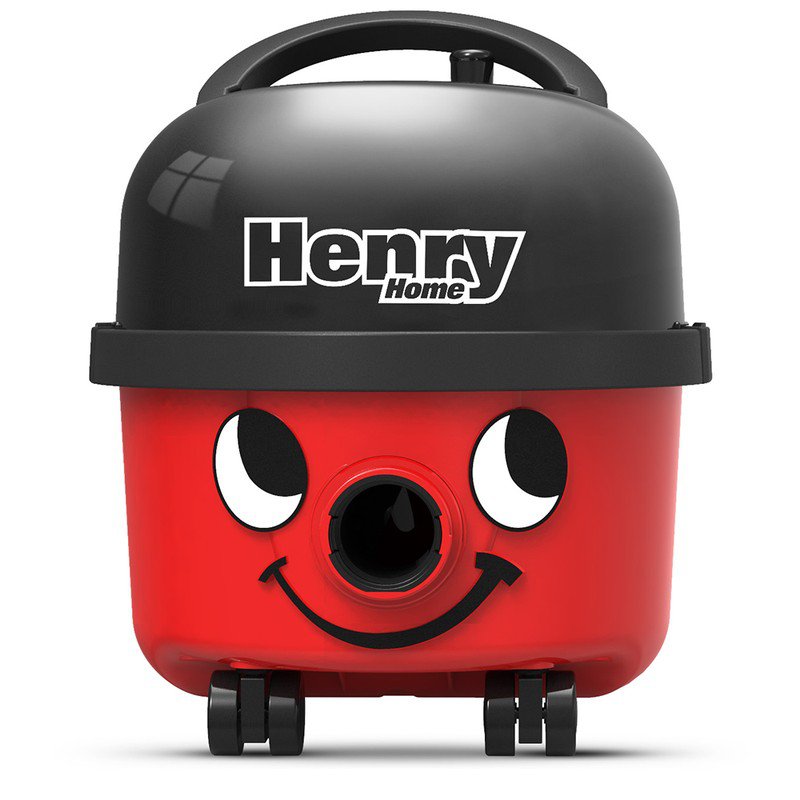
Best vacuum
Henry is a classic.
It has fantastic filters, sucks up pet hair quickly, and is great at cleaning up fine dust.
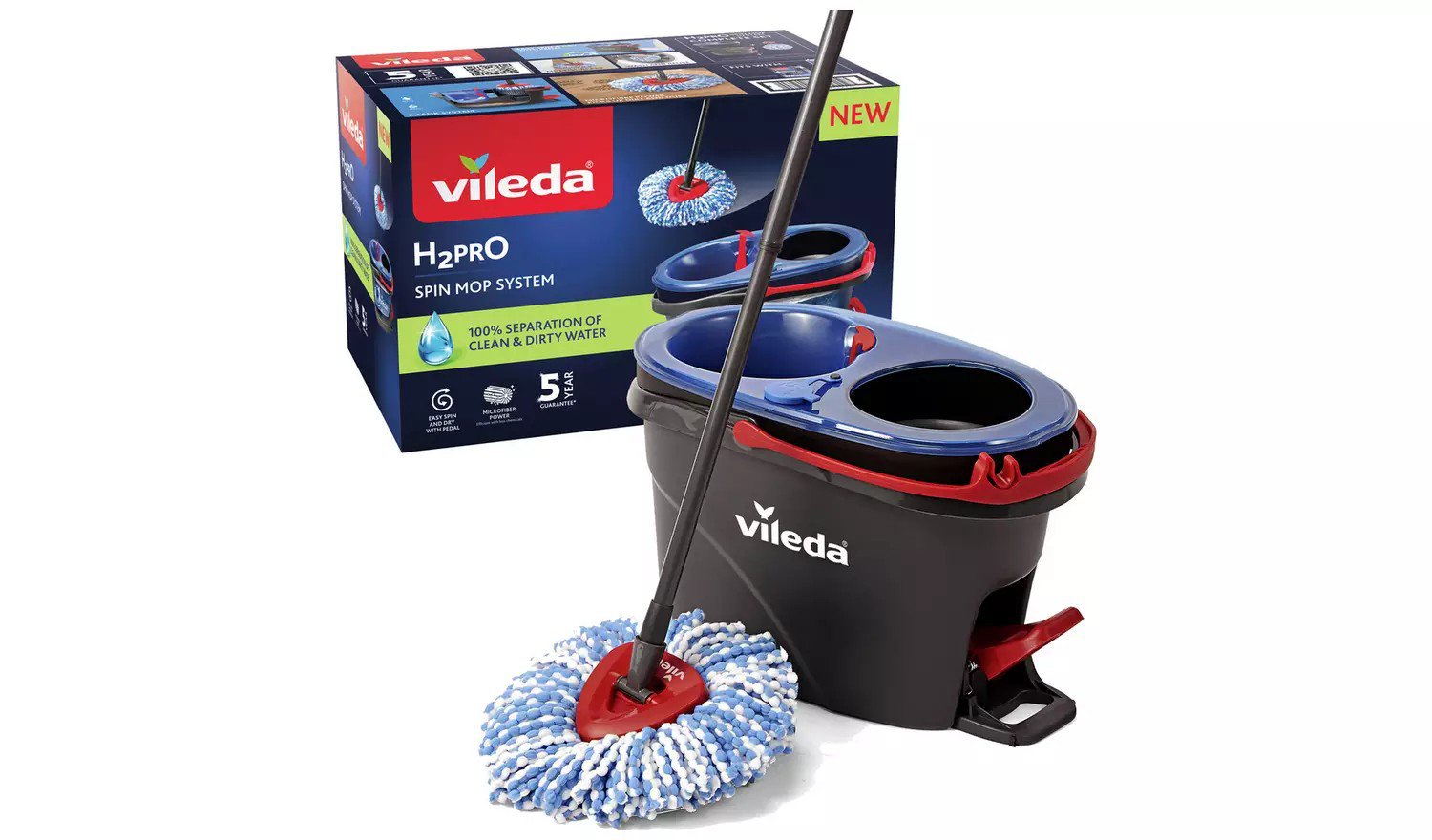
Best mop and bucket
The Vileda H2PrO set is light, manoeuvrable and keeps clean and dirty water separate.
 A reader has asked whether or not she should sack her cleaner because she isn’t doing a good job anymore (Photo: stock image of a man cleaning a window via Getty Images)
Best glass cleaner
The HG Glass and
Mirror cleaner removes stains without leaving smudges or streaks.
The 10 best cleaning products
Best multipurpose cleaner
Method’s multi-surface cleaner is plant-based, cruelty-free, and works great on grease, sinks, sealed wood surfaces, hobs, bins and sealed laminated floors.
 Deep cleaning glass door handles for Covid-19 disease prevention. alcohol,disinfectant spray on Wipes of Banister in home for safety,infection of Covid-19 virus,contamination, germs – stock photo. (Photo: Getty)
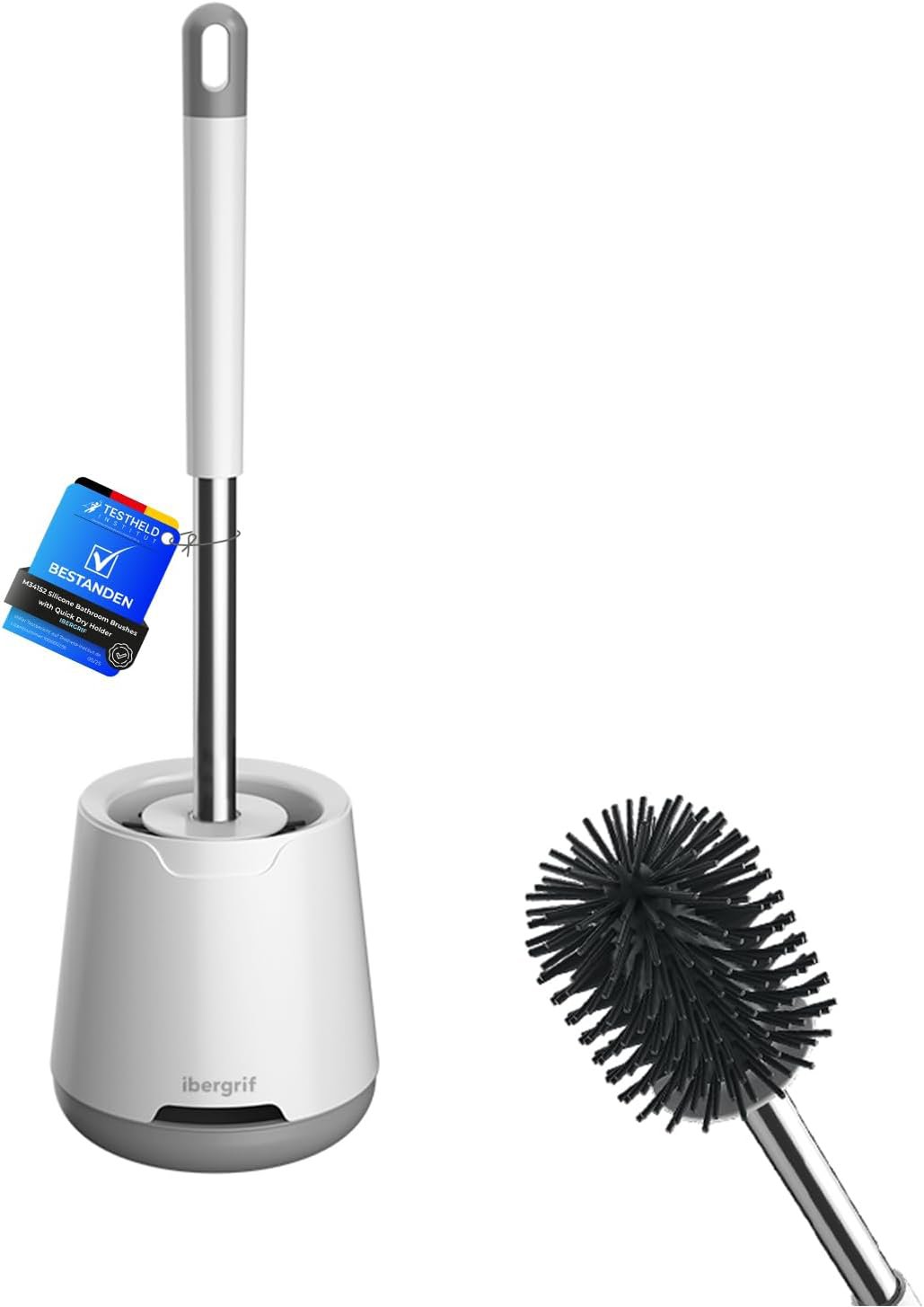
Best toilet brush
Unlike a regular toilet brush, nothing gets stuck in the bristles of Ibergrif M34152 Silicone brush. It also dries quickly, so
there’s less odour.
The 10 best cleaning products
Best mould remover
Jones uses the HG Mould Spray on walls, tiles, grout, windows and outdoor furniture.
 (Photo: boonchai wedmakawand/Getty/Moment RF)

Best cloths
The Seep Eco Bamboo clothes have a streak-free finish and last.
Best carpet cleaner
Every home should have a bottle of Dr Beckmann’s stain remover, says Jones.
 Caption: Dr Beckmann Power Brush Stain Remover
Image from https://www.dr-beckmann.co.uk/products/pre-wash-stain-devils/
The 10 best cleaning products
Best stain remover
The Mr Siga Multi-Functional Eraser Sponge acts like fine sandpaper to lift
dirt, stains, and scuffs using only water.
 (Photo: Viktoriya Skorikova/Getty Images/Moment RF)
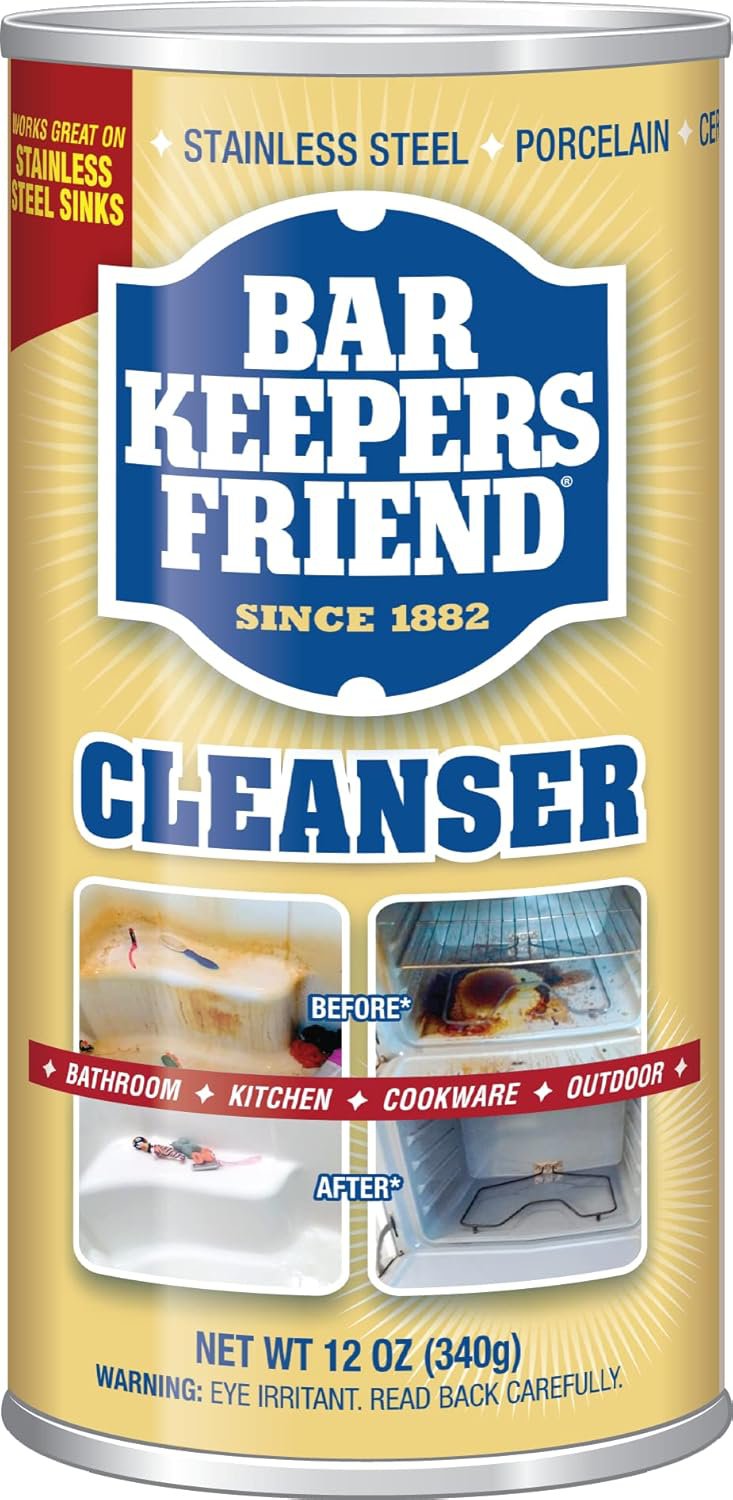
Best kept secret
Jones uses Bar Keepers Friend Cleanser to polish stainless-steel, scour sinks and clean her fridge and cookware.
Around 957,000 people aged 16 to 24 are classed as NEET ie. not in Education, Employment or Training
But as youth unemployment rises, not all companies
are looking to universities to find their new recruits. Meet the people who have benefitted.
 Poorer graduates will be hit hardest by the changes, the National Union of Students says (Photo: Andrew Fox/Getty/Image Bank)

For young people unable to attend uni
My whole life was being a carer, so I was very lost…
From the age of around 10, Bruce Devlin took responsibility for everything at home – from administering his mother’s medication, to doing the shopping, cooking, cleaning and supporting his mother’s mental health.
He scraped through school, leaving with the lowest grades.
Now, aged 26, he has secured a job by pursuing an unconventional route.
The charities helping them
Bruce followed an unconventional route.
Getting a foot in the door seemed impossible with his qualifications, lack of experience and connections.
His Job Centre work coach put him in touch with Generation, a non-profit which partners with companies to identify roles which they are struggling to fill.
He landed a place on Generation’s first IT support boot camp and benefited from CV and interview coaching.
Bruce is now a level three senior quality engineer with 2i Testing, a company which tests other companies’ software.
The result
Getting a full-time salary and being a contributing member of society is an amazing achievement. Without this, I’d be just another person on jobseeker’s allowance, wasting any potential I had.
BRUCE DEVLIN, 26, GLASGOW

The apprenticeship route
Jessica Andrea Carvalho had an offer to start a media and marketing degree but she rejected it at the last minute to avoid huge debt and years of classroom learning.

Avoiding increasing
NEET numbers
 Young woman at her first job interview with the owner of a coffee shop – stock photo. (Photo: Getty)
Generation placed 700 people
like Bruce in jobs last year.
The number of placements has jumped 20 per cent from last year.
42 per cent of their learners come from the UK’s most deprived areas.

Big Read
10 min read
 Plan 5 applies to students who began university courses on or after August 2023
(Photo: Abraham Gonzalez Fernandez/Getty Images/
Source: Moment RF)
What do employers think?
Creating more routes in is not just about opportunity – it helps bring in talent with different experiences.
Paula Cunnington, the chief talent officer for Publicis Groupe UK, a network of marketing agencies that has hired 79 apprentices, says curiosity and real-world experience are far better indicators of future success.
Up to 75 per cent of us in the UK are not drinking enough water.
The human body can survive for a time without food, but it cannot survive for long without water.
Here are the signs you need more fluids, according to a GP.

How much we should drink
Water is the most vital component for life.
6-8
NHS guidelines advise we should be drinking six to eight glasses of fluid per day.
This does vary depending on our activity levels, the weather, and if we are ill.
80%
An estimated 50-80 per cent of our bodies and brains being made up of water.
It allows us to deliver nutrients to cells in our blood, lubricates our joints, regulates our temperature and much more.
How to stay hydrated
What to drink
Not all fluids are the same – water takes top spot, as it hydrates without sugars or calories, but lower-fat milks, sugar-free drinks or moderate amounts of tea and coffee can all count towards fluid intake.
 Caption: Asian girl grocery shopping in supermarket. She is choosing fresh fruit juice along the beverage aisle, reading the nutrition label and checking ingredients on the bottle. Making a healthier food choice and balanced diet. Healthy eating lifestyle
Photographer: d3sign
Provider: Getty Images
Source: Moment RF
 A reader bemoans that his children spend money on fancy coffees and holidays with friends, never having a penny left each month
(Photo: Getty/Gorica Poturak)
What to avoid
Limit smoothies and fruit juices to 150ml per day because the sugar causes dental decay.
Signs you’re not drinking enough
1. Our brains
 The pain from migraines is sometimes described as feeling like you’ve had an axe blow to the head (Photo: Getty)
When dehydrated, we can display an exaggerated response to pain and experience headaches. Concentration, attention, reaction times and short-term memory can also all be negatively impacted.

LIFESTYLE
6 min read
Signs you’re not drinking enough
2. Our bodies
Another common sign of dehydration is constipation. Our skin can look duller, be less bouncy to the touch and be less elastic.
 Tired Asian businesswoman working on a laptop computer in the office – stock photo. (Photo: Getty)
 (Photo: Ekaterina Demidova/Getty).
3. Our psychology
Research has shown that even mild dehydration can lead us to feel more moody, stressed and irritable. We can also feel more tired than usual, with less energy and motivation.

Quick and life-changing tricks for a calmer, tidier home
Easy habits to declutter your home
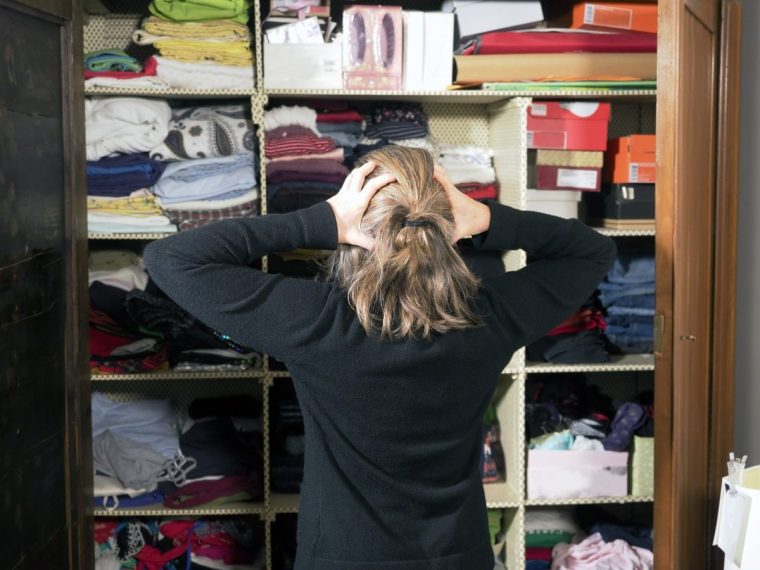 I need someone to tidy up my attitude towards tidying. Who does one hire for that?
(Photo: Getty Images/iStockphoto)
The habits audit
Subconscious habits can cause clutter so take regular pauses to stop and notice what you are doing during the day.
The re-entry reset
Establish a routine you follow every time you come home so the entrance stays clear.
 Two young children wearing school uniforms exit their front door – stock photo. (Photo: Getty)
 Late toilet training has become more common, putting pressure on teachers and taking up learning time (Getty)
The exit mindset
Each time you leave the house, take a minute to think: ‘What can I take out with me?’ To the tip? To the charity shop? To recycle?
Easy habits to declutter your home
The drop zone
Doing a clear-out for charity doesn’t need to be a big task. Have a donate box in a practical location to drop any unwanted items as you come across them.
 (Photo: Westend61/Getty).
 (Photo: Getty).
Dedicated home
Create a logical home for everything so it’s easier to find and keeps everything in place.
Easy habits to declutter your home
The quick scan
Each time you open a drawer identify a few items you can bin, donate or return to their rightful home.
 Woman carrying box while moving and cleaning up at home happily – stock photo. (Photo: Getty)
 Follow these rules to declutter your own home (Photo: Nadzeya_Kizilava/Getty/E+)
One in, one out rule
To manage wardrobe clutter follow the rule that a new item can only go in if you give something else away.
The daily check-in
Give yourself a few minutes at the start or end of the day to acknowledge the progress you’ve made.
 Woman Refreshing the Bed with Clean Bed Sheets in a Bright Room – stock photo. (Photo: Getty)

It can be far easier to seek an internal promotion rather than a new job elsewhere
The statistics
A trend of ‘job hugging’
12%
In January, available vacancies were down 12 per cent compared to a year prior.
According to the ONS it marked 39 consecutive quarters of decline.
51%
of UK employees plan to stay in their current roles, as Employment Hero’s first Annual Jobs Report shows. Four in 10 say competition is too high to take the risk.
So how can you improve your current situation without leaving?
Learn to humble brag
Your wins don’t always speak for themselves. Share them. Jump into conversations beyond your usual remit. How people see you today shapes the opportunities that come your way tomorrow. Even small updates can have an outsized impact.
VICTORIA MCLEAN, CEO OF CITY CV AND AN EXPERT IN CV AND PROFILE WRITING
 Drive Talent Investments with Strategic Workforce Planning. A female job-seeker answering questions during a job interview with a human resource manager in a business office. – stock photo. (Photo: Getty)
Make your case – with data
 Caption: Mid adult man with eyeglasses sitting on a comfortable sofa at home, thoughtfully writing notes in a small notebook while natural sunlight illuminates the room
Photographer: Milan Markovic
Provider: Getty Images
Source: E+
Keep a log
The chances of your boss remembering what you achieved in Q1 by December is low so keep a success log.
Treat it as a proposal
Show impact, link it to organisational goals,
and outline future
value, says McLean.
 Male candidate handshake with the recruiter at job interview – stock photo. (Photo: Getty)
 (Photo: Shutterstock).
Don’t be shy
Ask your boss directly what you need to do to be promoted in the next six to 12 months.
Offer solutions to problems
Ask yourself: what keeps your organisation awake
at night?
Solve those problems and you shift from just doing your job to being a strategic asset.
Sharing your ideas and views with the people above you can really prove what you’re capable of.
Proactively initiate new projects
or processes.
It ‘s daunting but getting people to see you in a more elevated position before you get there is really effective.
 Caption: Worried businessman biting his nail while waiting for a job interview with other candidates in a hallway of an office building.
Photographer: skynesher
Provider: Getty Images
Source: E+
Ask for training
It’s a fantastic signal to show how serious you are about your development.
As careers are no longer linear, a promotion may not be in your current role, but perhaps in the same company in a broader role.
Do some digging to find out what else might be available in other areas.
How to resolve the biggest rows that can end marriages
Private school, sex and housework can be some of the biggest causes of tension between warring couples.
Mike Talbot, a psychologist, and chief executive of UK Mediation [below], reveals how to fix them.

What couples row over
Parenting and schooling
 Young couple having an argument. Woman is angry with man. – stock photo. (Photo: Getty)
Psychologist Mike Talbot says parenting can expose ideological differences in a couple. He encourages people to listen to each other, and find a “third way”, something that they come up with between themselves, rather than sticking to one person’s opinion.

OPINION
3 min read
Money (or a lifestyle)
 Caption: A mature couple sitting in bed and looking at each other angrily after a disagreement
Photographer: kupicoo
Provider: Getty Images
Source: iStockphoto
It’s common for couples to disagree on their property or finances.
Couples might have different ideas about what the best plan of action is for the future.
Dr Talbot says its important to find “common ground” on what both parties wish for, or worry about.

Agony Uncle
5 min read
Incompatibilities around sex
Dr Talbot has seen this when one person loses their sex drive. “It can happen when the couples get older, and she loses her sex drive during menopause, whereas the guy’s still as randy as he was when he was 20.”
 Caption: Young couple having relationship difficulties at home. Both about 25 years old, Caucasian people.
Photographer: GoodLifeStudio
Provider: Getty Images
Source: E+
Copyright: DAMIR MIHAJLOVIC
 Caption: Millennial black lady vacuuming floor while her husband watching TV, not helping her with household duties, cropped view. Unrecognizable young couple having problem with domestic chores
Photographer: Prostock-Studio
Provider: Getty Images/iStockphoto
Source: iStockphoto
Domestic workload
We get people disagreeing about how tidy the house should be, how neatly dressed the kids should be…
This goes back to the gender stereotypes.
The solution is to focus on value and to get the couple to think about the conflict in a different way.
I then got a job as an illustrator at an animation company, making £25,000 a year. In 2021, during the Covid-19 pandemic, I was made redundant. I ended up being unemployed for six months and went on universal credit, which didn’t even cover my rent.
In November 2021, I got a new job as a designer at a tech startup in London, working remotely. I started on £28,000 a year, while paying £750 a month for rent and bills. I discovered a lot of my peers working at the firm were earning considerably more than me, so I asked for a raise. My pay went up to £37,500.
I was made redundant from the job at the tech startup in December 2023, meaning I’d been axed twice in the space of a few years. A message on Slack came through asking for a meeting out of the blue, and I was told I was being let go. It did feel personal, even though I knew it shouldn’t have. It was unexpected and gut-wrenching.
After being made redundant for the second time, I knew I had to move back home, as the financial impact would be too severe otherwise, particularly with rental costs in London. I’d just paid for a deposit on a flat to rent in Brighton the day before I was made redundant for the second time, and the move had to be cancelled after I lost my job at the startup.
The job market proved extremely challenging and I found myself without a job two years later. I was reluctant to go on universal credit again, but did after my parents said it was a good idea. I’ve since come off universal credit and found being on it was a bit demeaning.
In the interim, I ended up getting another short-term job at a startup in December 2024, but believe it was a scam. I was not paid at any point, despite being promised I would be.
I’ve now launched my own business as a freelance illustrator and graphic designer, and wish I had done it sooner. Before tax, I make about £2,200 a month and hope this will increase. One of my main clients is a theme park and I’m currently also working on a children’s book for a wedding company.
Setting boundaries as a freelancer has been challenging. I need to set aside free time for myself. Having contract clauses in place and standing firm on them has been useful, particularly if clients ask for more than they did initially. Knowing what to charge clients has also been difficult.
I’ve got about £9,000 in pensions from when I was employed. Since going freelance, I’ve started focusing more on pensions and have just opened a Sipp, which I’m adding £60 a month to. My father didn’t have a private pension and told me he regrets that.
I’ve always been very careful with my money and don’t spend it unnecessarily. I don’t really spend any money on clothes as I am super green and use Vinted, and I only spend what I earn in the app.
I’ve only recently got a credit card to ensure I can build up a credit score and use it abroad easily. I have £15,000 spread across a standard savings account with my bank and some inherited premium bonds. Investing feels a bit foreign to me.
Part of me wants to become a digital nomad and travel to places like Costa Rica or Canada, but I’ll need to see how freelancing pans out. I don’t know how feasible it will be for me to buy my own home in the UK, but do want to rent somewhere myself at some point. I don’t know if I’ll be able to buy a home without an inheritance.
Currently, I’m very motivated by money due to my current living situation. I want to be financially stable again. I’d like to be making £50,000 to £60,000 a year and have the ability to dictate what work I take on and when. Not having to worry about money would be brilliant.
Want to take part in How I Manage My Money? Email money@theipaper.com