
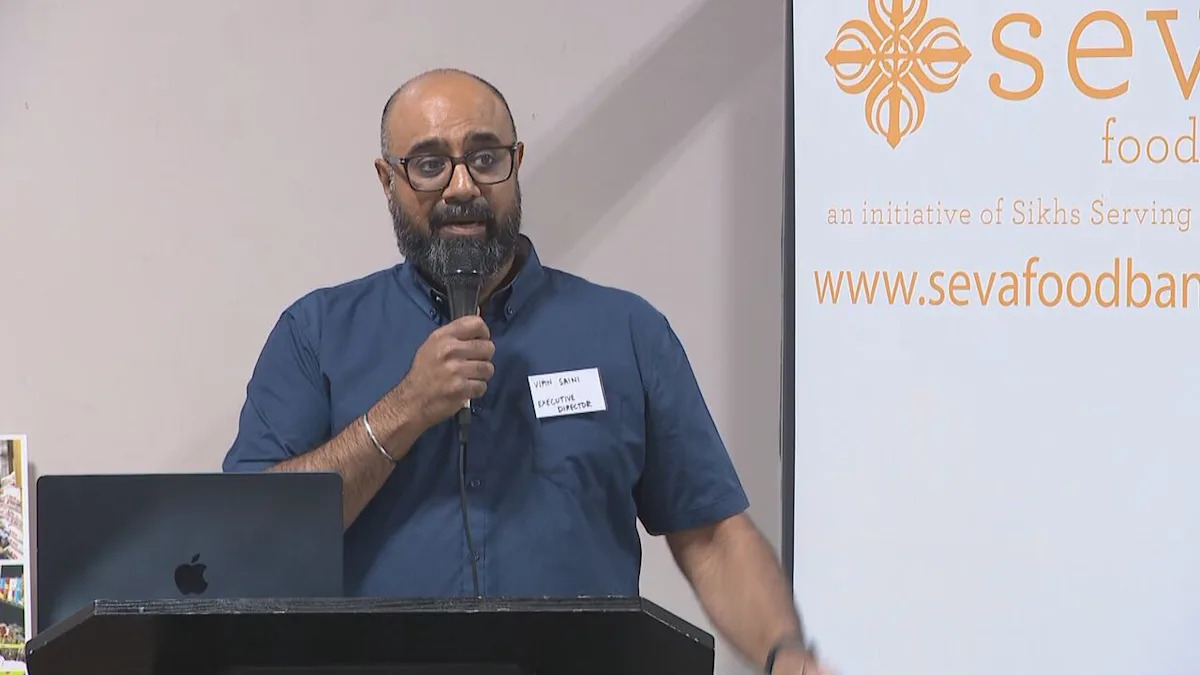
A Mississauga food bank says its clients included nearly 13,000 children last year and it is calling on all levels of government to address food insecurity.
Vipin Saini, executive director of Seva Food Bank, said Tuesday that he thinks current economic circumstances are leading to an increasing number of children needing its services and more young adults struggling to make its ends meet.
Saini pointed to “incredibly trying times,” which he said include rising rents, stagnant wages and a growing precarity among newcomers and seniors.
The food bank, led by the local Sikh community, serves people in Malton and Cooksville.
“We are seeing more and more people struggling with the day to days. We’re not just talking about newcomers,” Saini said in an interview Tuesday.
“We are talking about folks with jobs, people who work in the gig economy and who may have multiple jobs. We’re seeing seniors, lots of seniors, which is very, very difficult to see. And we’re seeing young people as well. It’s across the board.”
Saini said more government assistance is required and he hopes that policy decisions are driven by data.
‘This should not be happening’
Seva Food Bank data shows that it served 46,373 in 2025 across all demographics. Of this number, 12,972 were children, meaning that more than one in four individuals served, or about 28 per cent, was a child.
“It’s horrifying. This should not be happening in this country,” Saini said.
Across its two locations, the food bank provided more than 1 million kilograms of culturally appropriate food in all during the year, the report says.
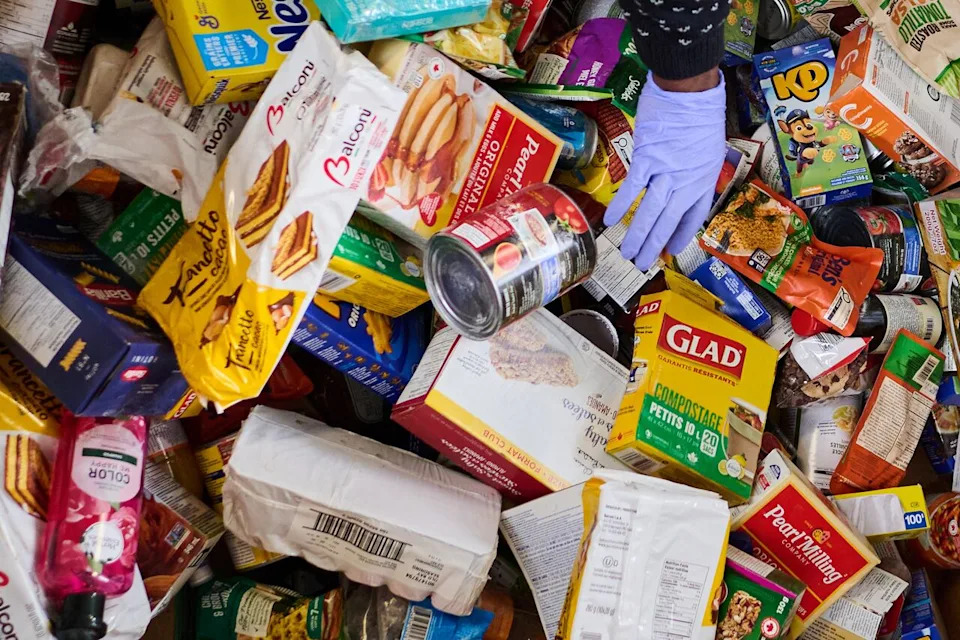
In its 2025 annual report, Seva Food Bank says more than one in four of its clients in 2025 were children under 18, which makes up nearly 13,000 visits. (Sammy Kogan/The Canadian Press)
Every month a financial emergency now for many: CEO
Meghan Nicholls, CEO of Food Banks Mississauga, said Tuesday that her assessment of the situation is that people used to visit a food three or four times a year, when there was an emergency or sudden financial crisis in their household.
Nicholls said people are now visiting a food bank 11 or 12 times a year because every single month is an emergency. Food Banks Mississauga is the central food bank for the city, organizing a network of 65 agencies in Mississauga.
“Incomes have not just kept up with the cost of living,” she said.
“Food for a family of four is now expected to cost over $17,000 a year, but the average income for a family using a food bank in Mississauga is $24,000 a year,” she said.
Nicholls said political will is needed to make changes to policies and programs that would make a difference in the lives of people who rely on food banks and that would take the pressure off community organizations that are “just scraping things together to try to serve their neighbours.”
Food insecurity ‘across the entire country,’ expert says
Michael Widener, a professor in the department of geography and planning at the University of Toronto – St. George, said research shows that if children are experiencing food insecurity, their parents are struggling deeply.
“Usually, the children are the last ones to experience food insecurity because parents are essentially deferring their own food intake for their kids. And so, if then we’re seeing kids also going hungry, that means that the parents are also suffering at it probably an even greater degree,” Widener said.
In July, the Canada Groceries and Essentials Benefit will replace the GST/HST credit, but the eligibility, payment calculation, and structure will be the same as the GST/HST credit, according to a federal government webpage.
There will be a 25 per cent increase in the benefit amount, the government added.
“The benefit will provide tax-free quarterly payments to individuals and families with low and modest incomes to help manage the rising costs of everyday essentials,” the government says.
Widener, however, said there’s clearly a food affordability crisis in Canada.
“It’s not just in Mississauga, it’s not just in Malton, it’s not just in the GTA, it’s across the entire country. And to address it, we really need to start to think about the root causes of why food is so expensive,” he said.