
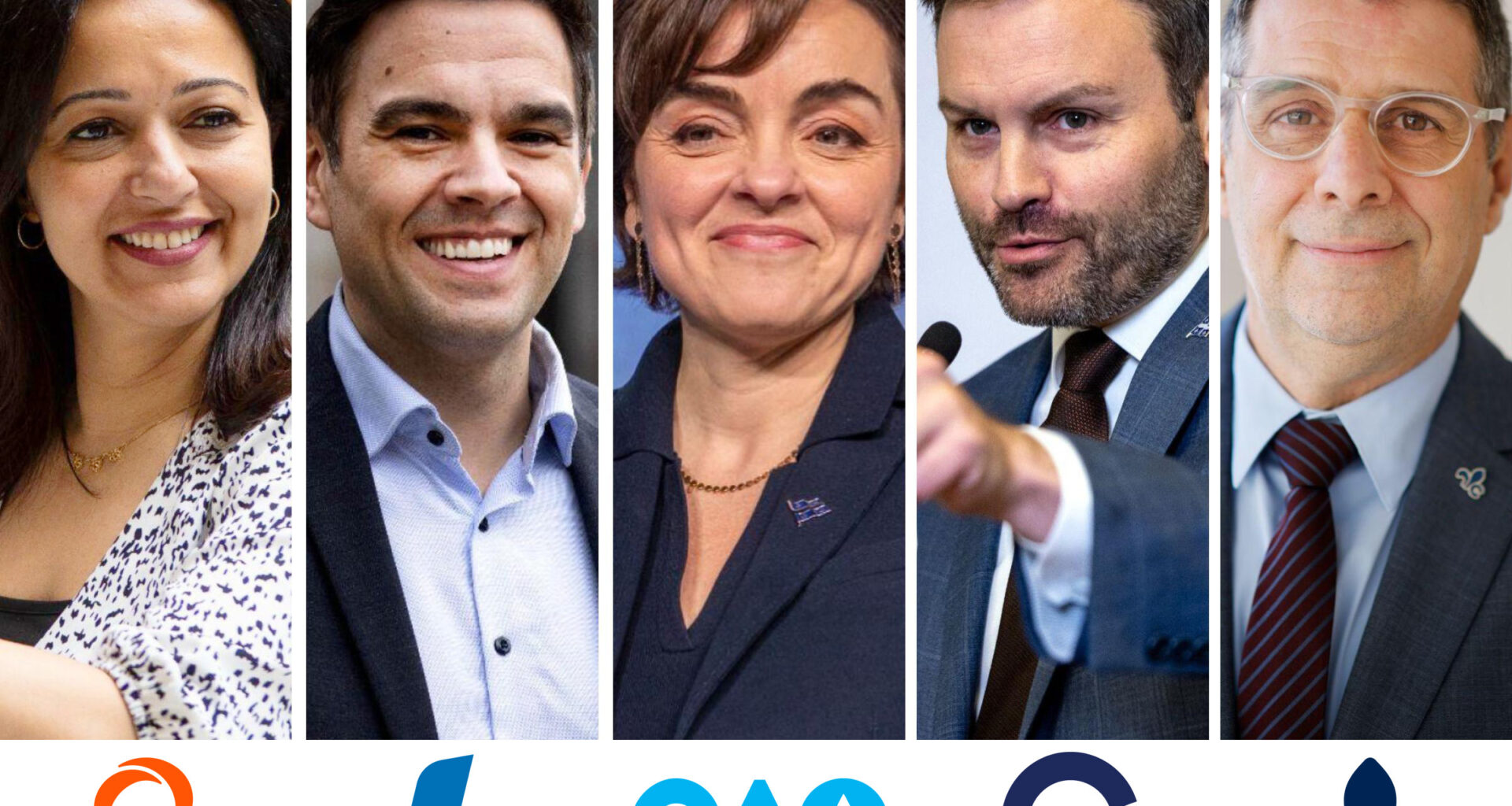
There will not be an English-language debate during the upcoming Quebec provincial election.
The Quebec English news media consortium invited the leaders of each of the five main Quebec political parties to a 90-minute English-language debate on Sept. 24.
Two parties — the Coalition Avenir Québec and Parti Québécois — declined to participate.
Both Québec solidaire and the Conservative Party of Quebec agreed to participate. A spokesperson for the Quebec Liberal Party told the consortium that the party would participate in an English debate if all five parties were participating.
The English news media consortium is comprised of The Gazette, CBC Quebec, CTV News Montreal, CJAD 800, Global Montreal and CityNews Montreal.
“We could not move forward with the debate without participation from the CAQ and the PQ,” said Montreal Gazette Editor-in-Chief Marilena Lucci.
“I remain grateful to the parties and their representatives for their engagement throughout the process. While the English-language debate will not take place, The Gazette remains committed to ensuring our readers have the information they need to make informed decisions during this election campaign.”
During the last election campaign, in 2022, the CAQ and PQ also declined to participate in an English-language debate, and so no debate was held. An English debate was held during the 2018 Quebec election campaign.
In 2021, about 1.6 million Quebecers — 19.2 per cent of the population — spoke English at least regularly at home, according to Statistics Canada.
“Ensuring that English-speaking Quebecers are informed and engaged in the democratic process remains a priority,” Lucci said. “The consortium will continue to provide comprehensive election coverage to help readers, viewers and listeners make informed decisions throughout the campaign.”
TALQ, an anglophone rights group with about 40 member organizations, said it was “deeply disappointed” that the debate is not taking place.
“This is fundamentally a question of fairness and democratic inclusion,” TALQ president Eva Ludvig said.
“In a healthy democracy, minority communities must have the same opportunity as everyone else to hear, question and evaluate the leaders who are asking for their support.”
Ludvig said the English-speaking population has questions about the PQ’s blue book on sovereignty, about the Liberals’ French-language plan and about “eight years of CAQ legislation that has repeatedly impacted our constitutional, language, health care and education rights.”
Ludvig said anglophones “deserve the opportunity to hear directly from those seeking to govern. An English-language debate would provide the transparency and accountability voters need to make informed decisions about their future.”
She added: “Seniors deserve to know who will protect access to health care. Students deserve to understand who will champion an education system that meets their needs. Families deserve clarity about the policies that will shape their future.”
An English-language debate is “not a special privilege,” Ludvig said. “It is a reasonable expectation in a democratic society that values transparency, inclusion and respect for all its citizens.”
The five parties will take part in three televised French-language debates — on Sept. 15, 16 and 23.
The provincial election will be held on Oct. 5.
The Gazette’s On Quebec Politics newsletter by Andy Riga breaks down key election issues, from polling shifts to legislative manoeuvring to ideas circulating in francophone commentary that don’t make it into English-language coverage.
To sign up, visit this page and check the box labelled “On Quebec Politics” before providing your email address.